Faculty of Life and Health Sciences, Brain Cognition and Brain Disease Institute (BCBDI), Shenzhen Institute of Advanced Technology (SIAT), Chinese Academy of Sciences, Shenzhen, 518055, Guangdong, China.
Department of Neurology, Renmin Hospital of Wuhan University, Wuhan, Hubei Province, 430060, China.
Mol Psychiatry. 2024 Oct;29(10):3040-3055. doi: 10.1038/s41380-024-02565-x. Epub 2024 Apr 24.
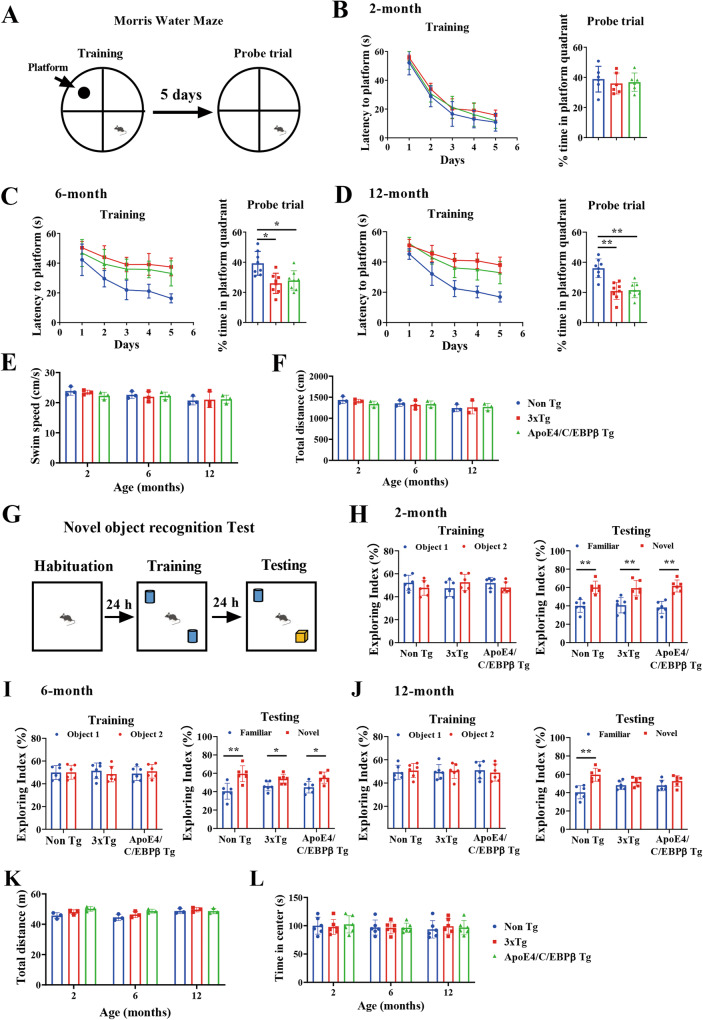
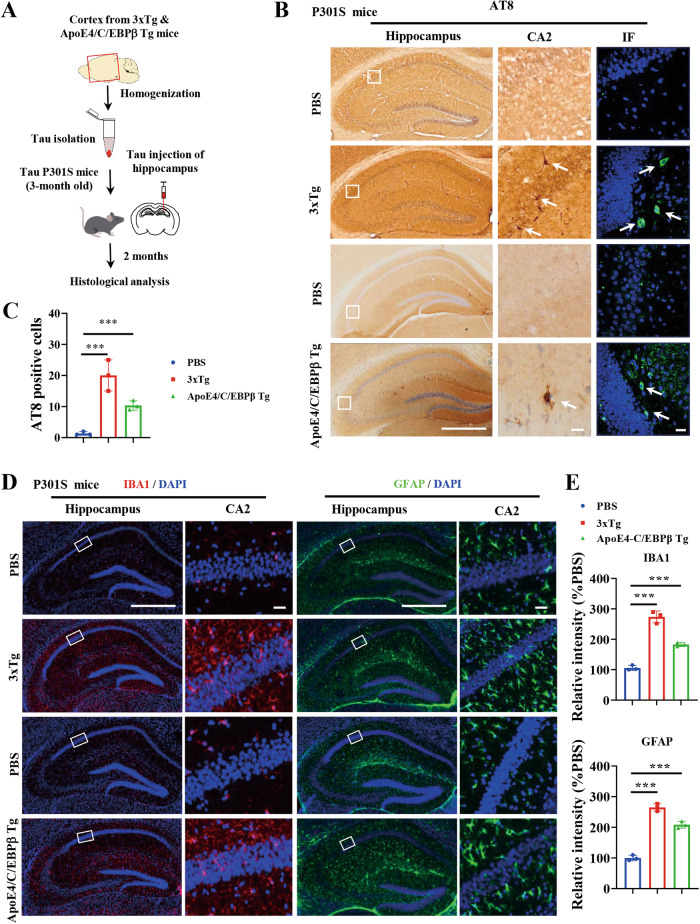
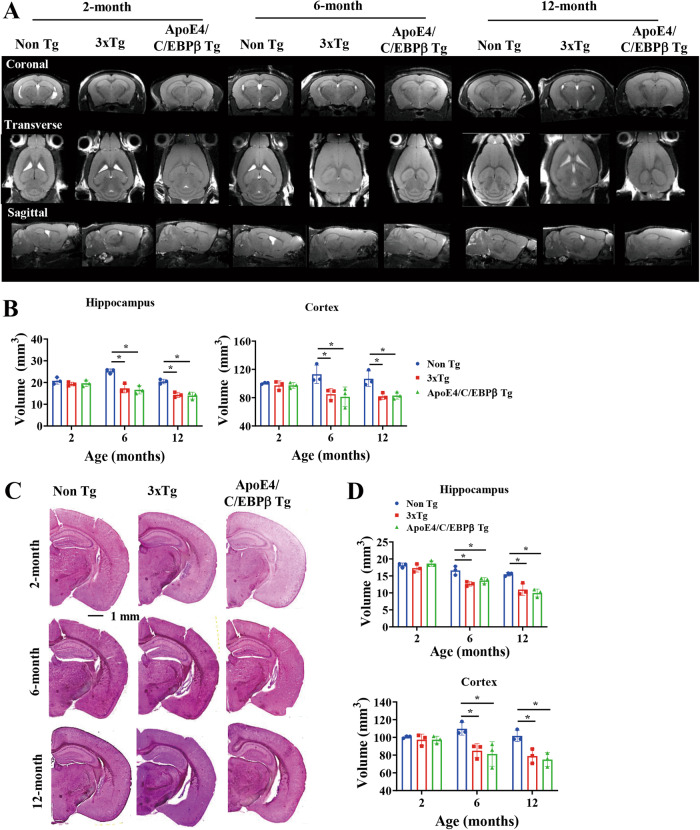
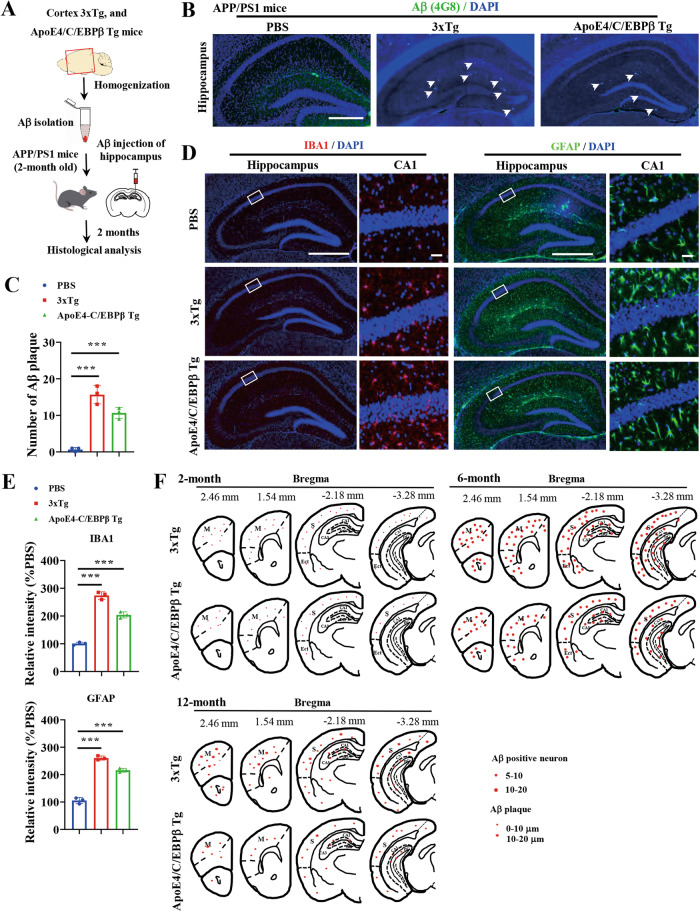
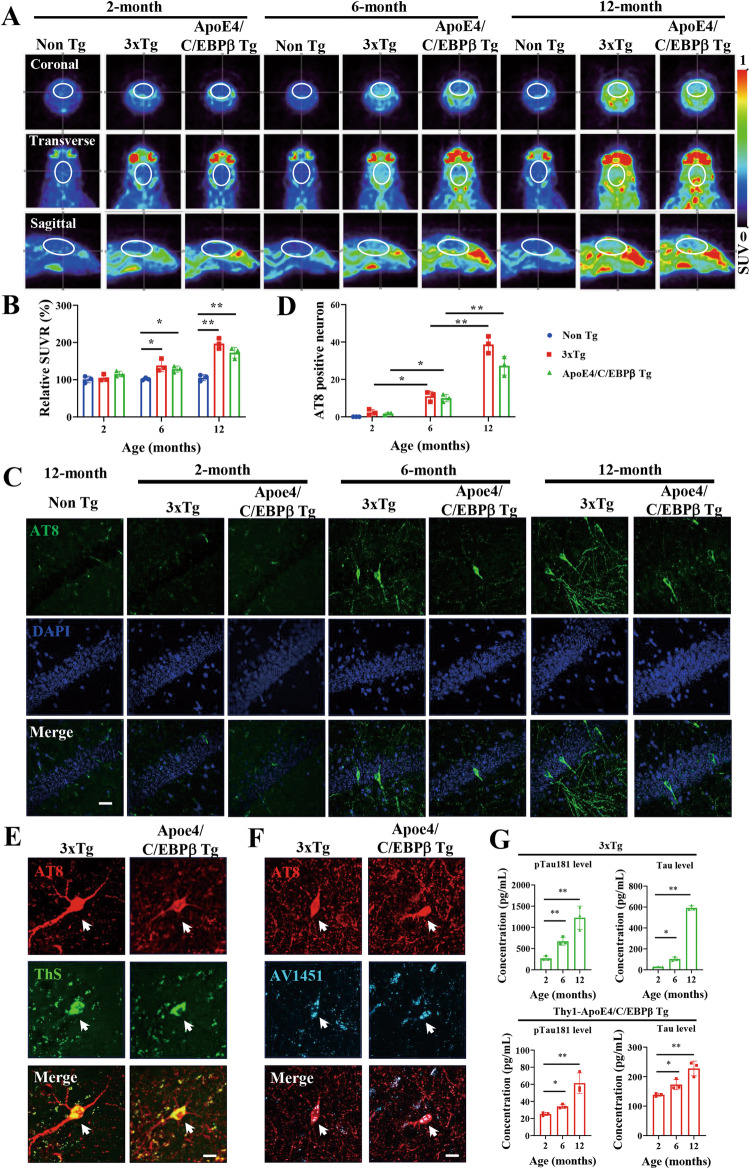
Early onset familial Alzheimer's disease (FAD) with APP, PS1/2 (presenilins) mutation accounts for only a small portion of AD cases, and most are late-onset sporadic. However, majority of AD mouse models are developed to mimic the genetic cause of human AD by overexpressing mutated forms of human APP, PS1/2, and/or Tau protein, though there is no Tau mutation in AD, and no single mouse model recapitulates all aspects of AD pathology. Here, we report Thy1-ApoE4/C/EBPβ double transgenic mouse model that demonstrates key AD pathologies in an age-dependent manner in absence of any human APP or PS1/2 mutation. Using the clinical diagnosis criteria, we show that this mouse model exhibits tempo-spatial features in AD patient brains, including progressive cognitive decline associated with brain atrophy, which is accompanied with extensive neuronal degeneration. Remarkably, the mice display gradual Aβ aggregation and neurofibrillary tangles formation in the brain validated by Aβ PET and Tau PET. Moreover, the mice reveal widespread neuroinflammation as shown in AD brains. Hence, Thy1-ApoE4/C/EBPβ mouse model acts as a sporadic AD mouse model, reconstituting the major AD pathologies.
早发性家族性阿尔茨海默病(FAD)与 APP、PS1/2(早老素)突变仅占 AD 病例的一小部分,大多数为迟发性散发性。然而,大多数 AD 小鼠模型是通过过度表达突变形式的人 APP、PS1/2 和/或 Tau 蛋白来模拟人类 AD 的遗传原因而开发的,尽管 AD 中没有 Tau 突变,也没有单一的小鼠模型能重现 AD 病理学的所有方面。在这里,我们报告了 Thy1-ApoE4/C/EBPβ 双转基因小鼠模型,该模型在没有任何人类 APP 或 PS1/2 突变的情况下,以年龄依赖的方式表现出关键的 AD 病理学。使用临床诊断标准,我们表明该小鼠模型在 AD 患者大脑中表现出时空特征,包括与脑萎缩相关的进行性认知下降,伴随着广泛的神经元变性。值得注意的是,这些小鼠在大脑中显示出逐渐的 Aβ 聚集和神经原纤维缠结形成,这通过 Aβ PET 和 Tau PET 得到了验证。此外,这些小鼠还显示出与 AD 大脑中相似的广泛神经炎症。因此,Thy1-ApoE4/C/EBPβ 小鼠模型作为散发性 AD 小鼠模型,再现了主要的 AD 病理学。