Chirilă Cristian Nicolae, Mărginean Claudiu, Ghiga Dana Valentina, Voidăzan Septimiu, Chirilă Paula Maria, Gliga Mirela Liana
Department of Internal Medicine-Nephrology, George Emil Palade University of Medicine, Pharmacy, Science and Technology of Târgu Mureș, 540142 Târgu Mureș, Romania.
Department of Nephrology, Mures Clinical County Hospital, 540103 Târgu Mureș, Romania.
Children (Basel). 2024 Apr 14;11(4):468. doi: 10.3390/children11040468.
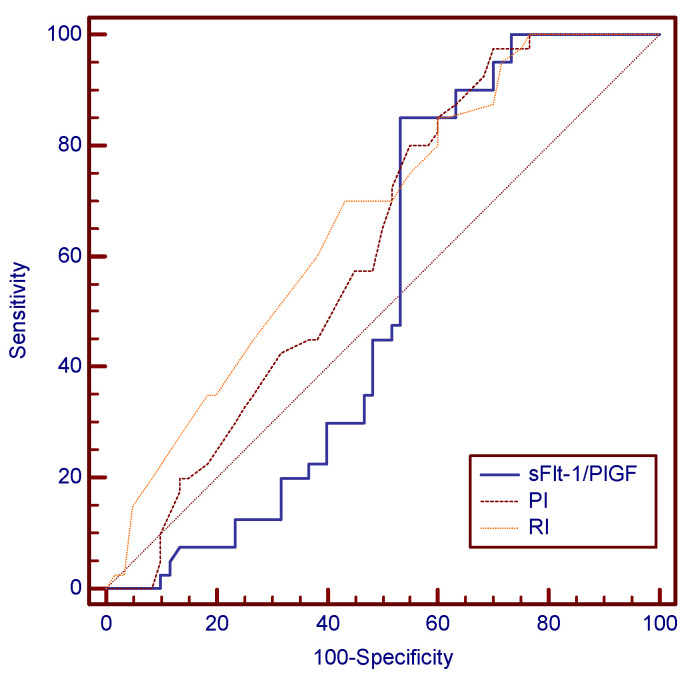
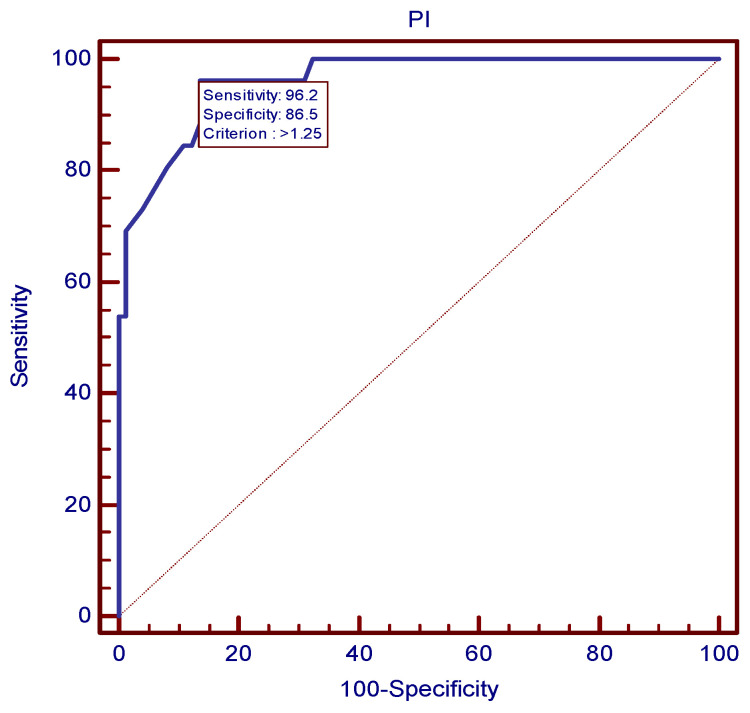
Hypertensive disorders of pregnancy (HDPs) represent a significant source of severe maternal and fetal morbidity. Screening strategies relying on traditional medical history and clinical risk factors have traditionally shown relatively modest performance, mainly in the prediction of preeclampsia, displaying a sensitivity of 37% for the early-onset form and 29% for the late-onset form. The development of more accurate predictive and diagnostic models of preeclampsia in the early stages of pregnancy represents a matter of high priority. The aim of the present paper is to create an effective second trimester prediction algorithm of early-onset HDP occurrence and severity, by combining the following two biochemical markers: a soluble fms-like tyrosine kinase 1 (sFlt-1)/placental growth factor (PlGF) ratio and uterine artery Doppler ultrasound parameters, namely the pulsatility index (PI) and the resistivity index (RI), in a population of high-risk pregnant women, initially assessed through traditional risk factors. A prospective single-center observational longitudinal study was conducted, in which 100 women with singleton pregnancy and traditional clinical and medical history risk factors for preeclampsia were enrolled at 24 weeks of gestation. Shortly after study enrollment, all women had their sFlt-1 and PlGF levels and mean uterine artery PI and RI determined. All pregnancies were followed up until delivery. Receiver operating characteristic (ROC) analysis established algorithms based on cutoffs for the prediction of the later development of preeclampsia: PI 1.25 (96.15% sensitivity, 86.49% specificity), RI 0.62 (84.6% sensitivity, 89.2% specificity) and sFlt-1/PlGF ratio 59.55 (100% sensitivity, 89.2% specificity). The sFlt-1/PlGF ratio was the best predictor for preeclampsia, as it displayed the highest area under the curve (AUC) of 0.973. The prediction algorithm for the severe form of preeclampsia, complicated by fetal growth restriction leading to preterm birth, antepartum fetal demise or acute fetal distress with a cerebro-placental ratio of <one consisted of the following cutoffs: PI 1.44 (93.75% sensitivity, 95.24% specificity), RI 0.69 (87.5% sensitivity, 100% specificity) and sFlt-1/PlGF ratio 102.74 (93.75% sensitivity, 95.2% specificity). These algorithms may significantly enhance the prediction accuracy of preeclampsia compared to traditional risk factors. The combination of the sFlt-1/PlGF ratio with mean uterine PI and RI in particular displayed an improved performance in the prediction of severe preeclampsia with the above-mentioned complications, compared to the biochemical markers or uterine Doppler parameters used alone. Therefore, HDP screening strategies should increasingly focus on implementing such algorithms for women who are initially regarded as high risk based on traditional risk factors, in order to properly diagnose HDP and properly limit or manage the later maternal and fetal complications.
妊娠期高血压疾病(HDPs)是严重孕产妇和胎儿发病的重要原因。传统上,依靠传统病史和临床风险因素的筛查策略表现相对一般,主要用于预测先兆子痫,早发型先兆子痫的敏感性为37%,晚发型先兆子痫的敏感性为29%。在妊娠早期开发更准确的先兆子痫预测和诊断模型是当务之急。本文的目的是通过结合以下两种生化标志物,在一组最初通过传统风险因素评估的高危孕妇中,创建一种有效的孕中期早发型HDP发生及严重程度的预测算法:可溶性fms样酪氨酸激酶1(sFlt-1)/胎盘生长因子(PlGF)比值和子宫动脉多普勒超声参数,即搏动指数(PI)和阻力指数(RI)。进行了一项前瞻性单中心观察性纵向研究,在妊娠24周时纳入了100名单胎妊娠且有先兆子痫传统临床和病史风险因素的妇女。研究入组后不久,测定了所有妇女的sFlt-1和PlGF水平以及子宫动脉平均PI和RI。所有妊娠均随访至分娩。受试者工作特征(ROC)分析基于预测先兆子痫后期发展的临界值建立了算法:PI为1.25(敏感性96.15%,特异性86.49%),RI为0.62(敏感性84.6%,特异性89.2%),sFlt-1/PlGF比值为59.55(敏感性100%,特异性89.2%)。sFlt-1/PlGF比值是先兆子痫的最佳预测指标,因为它显示出最高的曲线下面积(AUC)为0.973。重度先兆子痫的预测算法,伴有因胎儿生长受限导致早产、产前胎儿死亡或急性胎儿窘迫且脑胎盘比值<1,其临界值如下:PI为1.44(敏感性93.75%,特异性95.24%),RI为0.69(敏感性87.5%,特异性100%),sFlt-1/PlGF比值为102.74(敏感性93.75%,特异性95.2%)。与传统风险因素相比,这些算法可能会显著提高先兆子痫的预测准确性。特别是sFlt-1/PlGF比值与子宫动脉平均PI和RI的组合,与单独使用生化标志物或子宫多普勒参数相比,在预测伴有上述并发症的重度先兆子痫方面表现出更好的性能。因此,HDP筛查策略应越来越多地关注为那些基于传统风险因素最初被视为高危的女性实施此类算法,以便正确诊断HDP并适当限制或管理后期的孕产妇和胎儿并发症。