Burigo Luana Speck Polli, Quialheiro Anna, de Paiva Karina Mary, Dos Santos Thaiana Vargas, Woide Luciele Kauana, Cigana Luciana Berwanger, Massignani Janaina, Haas Patricia
PPGFONO-UFSC, Eng. Agrônomo Andrei Cristian Ferreira, Bairro, Trindade, CEP, Florianópolis 88040-900, SC, Brazil.
CESPU, José Antônio Vidal Street, 81, Defesa, 4760049 Famalicão, Portugal.
J Pers Med. 2024 Mar 30;14(4):372. doi: 10.3390/jpm14040372.
Hearing loss in childhood compromises a child's auditory, linguistic, and social skill development. Stimulation and early intervention through therapy and the use of personal sound amplification devices (PSAPs) are important for improving communication.
To verify the effectiveness of speech therapy intervention on the auditory and linguistic skills of Brazilian children aged between 6 and 8 years using PSAPs.
Experimental study analyzing the intervention process in children aged between 6 and 8 years with mild to severe bilateral hearing loss and prelingual deafness who are PSAP users. Diagnostic information was analyzed, and assessments and interventions were carried out using the Glendonald Auditory Screening Procedure (GASP), a phoneme discrimination test with figures (TFDF), an expressive language category classification test, and an Infant-Toddler Meaningful Auditory Integration Scale (IT-MAIS) questionnaire.
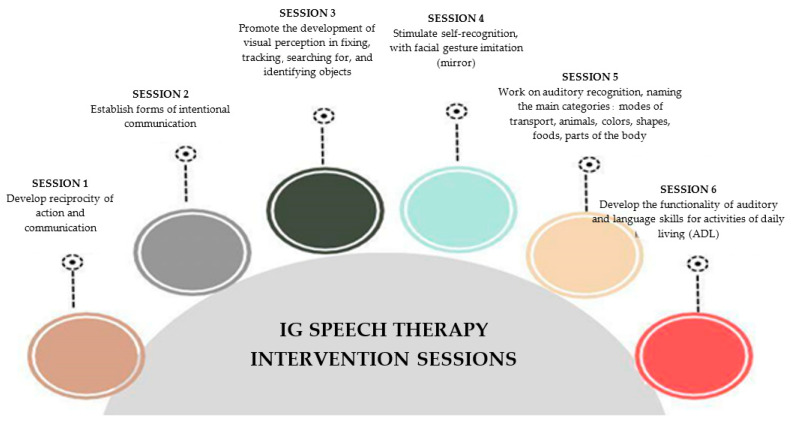
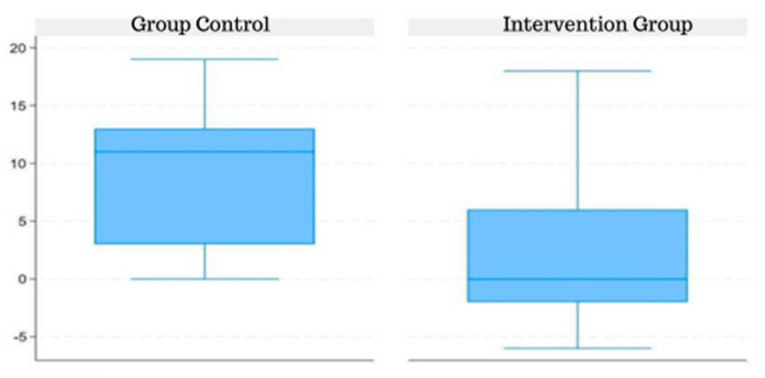
Sixteen children participated in the study; they were divided into a control group (CG) of six children and an intervention group (IG) of ten children. All research subjects underwent two protocol application sessions, and the IG underwent six speech therapy intervention sessions. In the IT-MAIS, the CG had a 9% increase in score, and the IG had an increase of 3% after intervention. The TFDF obtained a 5% increase in the IG in terms of phonemic discrimination ability. The expressive language category classification tests and GASP were considered not sensitive enough to modify the parameters of auditory and linguistic skills.
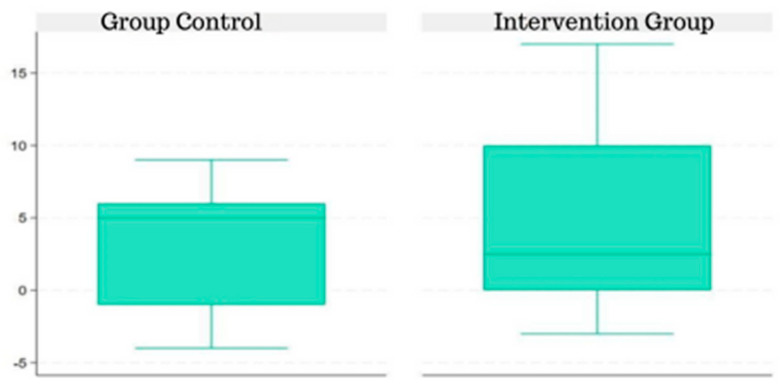
The study found a significant improvement amongst the IG in the TFDF protocol and an increase in IT-MAIS scores in both groups.
儿童听力损失会影响儿童的听觉、语言和社交技能发展。通过治疗以及使用个人声音放大装置(PSAP)进行刺激和早期干预对于改善沟通很重要。
验证言语治疗干预对使用PSAP的6至8岁巴西儿童听觉和语言技能的有效性。
实验研究,分析6至8岁、患有轻至重度双侧听力损失和语前聋且使用PSAP的儿童的干预过程。分析诊断信息,并使用格伦多纳德听觉筛查程序(GASP)、带数字的音素辨别测试(TFDF)、表达性语言类别分类测试和婴幼儿有意义听觉整合量表(IT-MAIS)问卷进行评估和干预。
16名儿童参与了研究;他们被分为一个由6名儿童组成的对照组(CG)和一个由10名儿童组成的干预组(IG)。所有研究对象都接受了两次方案应用环节,干预组接受了六次言语治疗干预环节。在IT-MAIS中,对照组干预后得分提高了9%,干预组提高了3%。在音素辨别能力方面,干预组的TFDF提高了5%。表达性语言类别分类测试和GASP被认为对修改听觉和语言技能参数不够敏感。
研究发现,干预组在TFDF方案中有显著改善,两组的IT-MAIS得分均有所提高。