• 文献检索
  • 文档翻译
  • 深度研究
  • 学术资讯
  • Suppr Zotero 插件Zotero 插件
  • 邀请有礼
  • 套餐&价格
  • 历史记录
应用&插件
Suppr Zotero 插件Zotero 插件浏览器插件Mac 客户端Windows 客户端微信小程序
定价
高级版会员购买积分包购买API积分包
服务
文献检索文档翻译深度研究API 文档MCP 服务
关于我们
关于 Suppr公司介绍联系我们用户协议隐私条款
关注我们

Suppr 超能文献

核心技术专利:CN118964589B侵权必究
粤ICP备2023148730 号-1Suppr @ 2026

文献检索

告别复杂PubMed语法,用中文像聊天一样搜索,搜遍4000万医学文献。AI智能推荐,让科研检索更轻松。

立即免费搜索

文件翻译

保留排版,准确专业,支持PDF/Word/PPT等文件格式,支持 12+语言互译。

免费翻译文档

深度研究

AI帮你快速写综述,25分钟生成高质量综述,智能提取关键信息,辅助科研写作。

立即免费体验

肝脏手术中的机器学习:益处与陷阱

Machine learning in liver surgery: Benefits and pitfalls.

作者信息

Calleja Rafael, Durán Manuel, Ayllón María Dolores, Ciria Ruben, Briceño Javier

机构信息

Hepatobiliary Surgery and Liver Transplantation Unit, Hospital Universitario Reina Sofía, Maimonides Biomedical Research Institute of Cordoba, Córdoba 14004, Spain.

出版信息

World J Clin Cases. 2024 Apr 26;12(12):2134-2137. doi: 10.12998/wjcc.v12.i12.2134.

DOI:10.12998/wjcc.v12.i12.2134
PMID:38680268
原文链接:https://pmc.ncbi.nlm.nih.gov/articles/PMC11045503/
Abstract

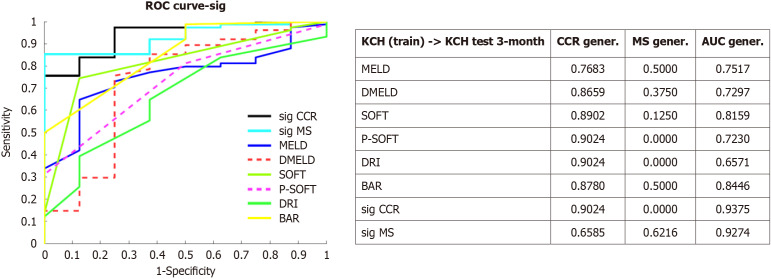
The application of machine learning (ML) algorithms in various fields of hepatology is an issue of interest. However, we must be cautious with the results. In this letter, based on a published ML prediction model for acute kidney injury after liver surgery, we discuss some limitations of ML models and how they may be addressed in the future. Although the future faces significant challenges, it also holds a great potential.

摘要

机器学习(ML)算法在肝病学各个领域的应用是一个备受关注的问题。然而,我们必须对结果持谨慎态度。在这封信中,基于已发表的肝切除术后急性肾损伤的ML预测模型,我们讨论了ML模型的一些局限性以及未来如何解决这些问题。尽管未来面临重大挑战,但也具有巨大潜力。
https://cdn.ncbi.nlm.nih.gov/pmc/blobs/2518/11045503/6608c01dd139/WJCC-12-2134-g001.jpg

相似文献

1
Machine learning in liver surgery: Benefits and pitfalls.肝脏手术中的机器学习:益处与陷阱
World J Clin Cases. 2024 Apr 26;12(12):2134-2137. doi: 10.12998/wjcc.v12.i12.2134.
2
Application of machine learning models for predicting acute kidney injury following donation after cardiac death liver transplantation.机器学习模型在预测心脏死亡后肝移植供体急性肾损伤中的应用。
Hepatobiliary Pancreat Dis Int. 2021 Jun;20(3):222-231. doi: 10.1016/j.hbpd.2021.02.001. Epub 2021 Mar 5.
3
Artificial Intelligence in Hepatology- Ready for the Primetime.肝病学中的人工智能——准备好迎接黄金时代。
J Clin Exp Hepatol. 2023 Jan-Feb;13(1):149-161. doi: 10.1016/j.jceh.2022.06.009. Epub 2022 Jun 29.
4
Artificial Intelligence Applications in Hepatology.人工智能在肝脏病学中的应用。
Clin Gastroenterol Hepatol. 2023 Jul;21(8):2015-2025. doi: 10.1016/j.cgh.2023.04.007. Epub 2023 Apr 22.
5
Prediction of the development of acute kidney injury following cardiac surgery by machine learning.机器学习预测心脏手术后急性肾损伤的发生。
Crit Care. 2020 Jul 31;24(1):478. doi: 10.1186/s13054-020-03179-9.
6
Machine learning approach to predict acute kidney injury after liver surgery.用于预测肝脏手术后急性肾损伤的机器学习方法。
World J Clin Cases. 2021 Dec 26;9(36):11255-11264. doi: 10.12998/wjcc.v9.i36.11255.
7
Artificial Intelligence, Machine Learning, and Surgical Science: Reality Versus Hype.人工智能、机器学习和外科科学:现实与炒作。
J Surg Res. 2021 Aug;264:A1-A9. doi: 10.1016/j.jss.2021.01.046. Epub 2021 Mar 18.
8
Identifying Patients at Risk of Acute Kidney Injury among Patients Receiving Immune Checkpoint Inhibitors: A Machine Learning Approach.在接受免疫检查点抑制剂治疗的患者中识别急性肾损伤风险患者:一种机器学习方法。
Diagnostics (Basel). 2022 Dec 14;12(12):3157. doi: 10.3390/diagnostics12123157.
9
Prediction of Acute Kidney Injury after Extracorporeal Cardiac Surgery (CSA-AKI) by Machine Learning Algorithms.机器学习算法预测体外循环心脏手术后急性肾损伤(CSA-AKI)。
Heart Surg Forum. 2023 Oct 25;26(5):E537-E551. doi: 10.59958/hsf.5673.
10
Using machine learning to impact on long-term clinical care: principles, challenges, and practicalities.利用机器学习对长期临床护理产生影响:原则、挑战与实际应用。
Pediatr Res. 2023 Jan;93(2):324-333. doi: 10.1038/s41390-022-02194-6. Epub 2022 Jul 29.

引用本文的文献

1
[Surgical management of giant hemangiomas in the caudate lobe: an overview on the intraoperative management and role of artificial intelligence (AI) in improvement of the surgical results].尾状叶巨大血管瘤的外科治疗:术中管理及人工智能(AI)在改善手术效果中的作用概述
Chirurgie (Heidelb). 2025 Aug 12. doi: 10.1007/s00104-025-02361-5.

本文引用的文献

1
Artificial intelligence, machine learning, and deep learning in liver transplantation.人工智能、机器学习和深度学习在肝移植中的应用。
J Hepatol. 2023 Jun;78(6):1216-1233. doi: 10.1016/j.jhep.2023.01.006.
2
Crossroads in Liver Transplantation: Is Artificial Intelligence the Key to Donor-Recipient Matching?肝移植的十字路口:人工智能是否是供受者匹配的关键?
Medicina (Kaunas). 2022 Nov 28;58(12):1743. doi: 10.3390/medicina58121743.
3
Improved deep convolutional neural networks using chimp optimization algorithm for Covid19 diagnosis from the X-ray images.
使用黑猩猩优化算法改进深度卷积神经网络用于从X射线图像诊断新冠病毒。
Expert Syst Appl. 2023 Mar 1;213:119206. doi: 10.1016/j.eswa.2022.119206. Epub 2022 Nov 4.
4
Artificial intelligence and liver transplantation: Looking for the best donor-recipient pairing.人工智能和肝移植:寻找最佳的供体-受者匹配。
Hepatobiliary Pancreat Dis Int. 2022 Aug;21(4):347-353. doi: 10.1016/j.hbpd.2022.03.001. Epub 2022 Mar 8.
5
Machine learning approach to predict acute kidney injury after liver surgery.用于预测肝脏手术后急性肾损伤的机器学习方法。
World J Clin Cases. 2021 Dec 26;9(36):11255-11264. doi: 10.12998/wjcc.v9.i36.11255.
6
Highly accurate protein structure prediction with AlphaFold.利用 AlphaFold 进行高精度蛋白质结构预测。
Nature. 2021 Aug;596(7873):583-589. doi: 10.1038/s41586-021-03819-2. Epub 2021 Jul 15.
7
Statistical methods versus machine learning techniques for donor-recipient matching in liver transplantation.统计方法与机器学习技术在肝移植中供受者匹配的比较。
PLoS One. 2021 May 21;16(5):e0252068. doi: 10.1371/journal.pone.0252068. eCollection 2021.
8
Impact of acute kidney injury after extended liver resections.肝切除术扩大后急性肾损伤的影响。
HPB (Oxford). 2021 Jul;23(7):1000-1007. doi: 10.1016/j.hpb.2020.10.015. Epub 2020 Nov 12.
9
Validation of artificial neural networks as a methodology for donor-recipient matching for liver transplantation.验证人工神经网络作为肝移植供体-受者匹配方法的研究。
Liver Transpl. 2018 Feb;24(2):192-203. doi: 10.1002/lt.24870.
10
Acute renal injury after partial hepatectomy.部分肝切除术后的急性肾损伤
World J Hepatol. 2016 Jul 28;8(21):891-901. doi: 10.4254/wjh.v8.i21.891.