Microbiology Division, Department of Science and Bioinnovation, Faculty of Liberal Arts and Science, Kasetsart University, Kamphaeng Saen Campus, Kamphaeng Saen, Nakhon Pathom, Thailand.
Department of Plant Pathology, Faculty of Agriculture at Kamphaeng Saen, Kasetsart University, Kamphaeng Saen Campus, Kamphaeng Saen, Nakhon Pathom, Thailand.
PeerJ. 2024 Apr 23;12:e17289. doi: 10.7717/peerj.17289. eCollection 2024.
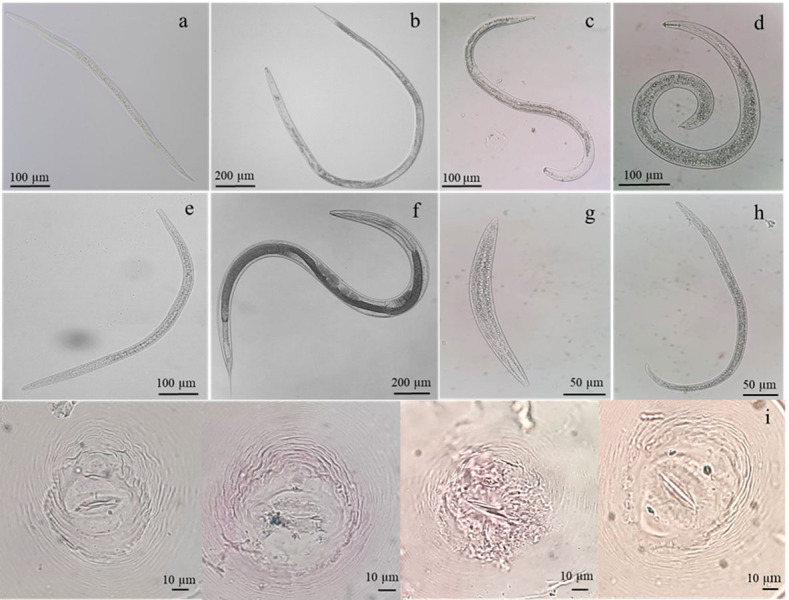
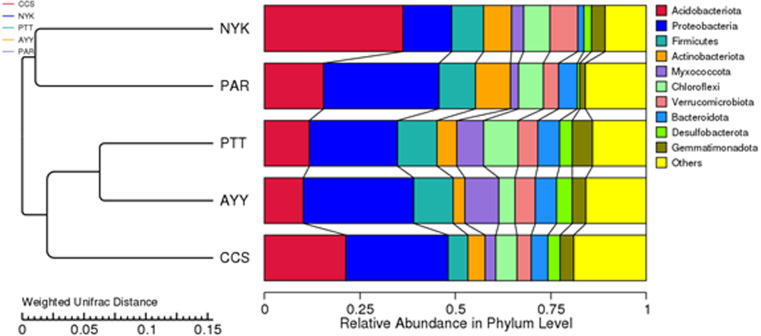
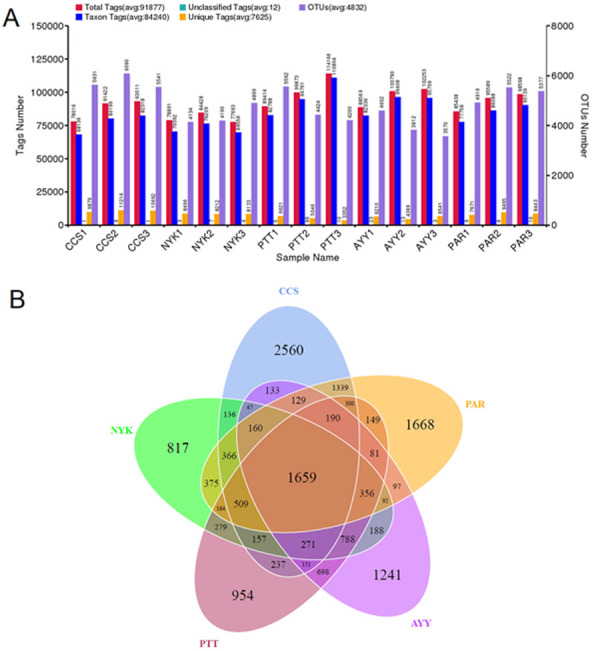
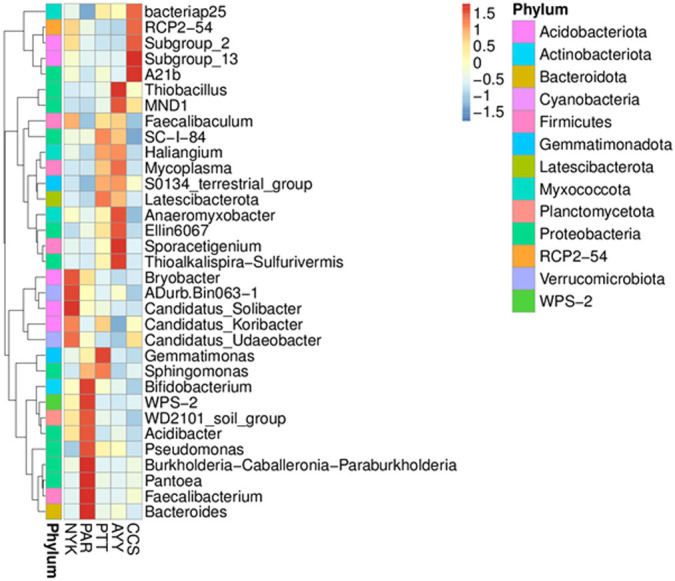
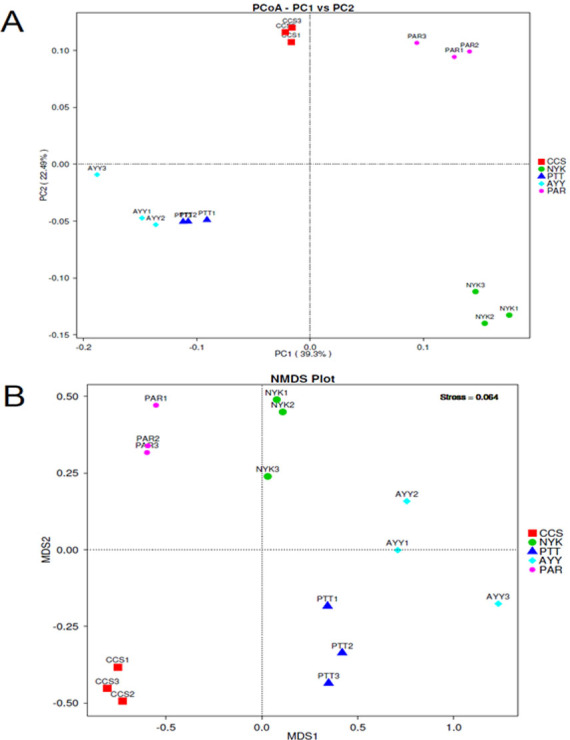
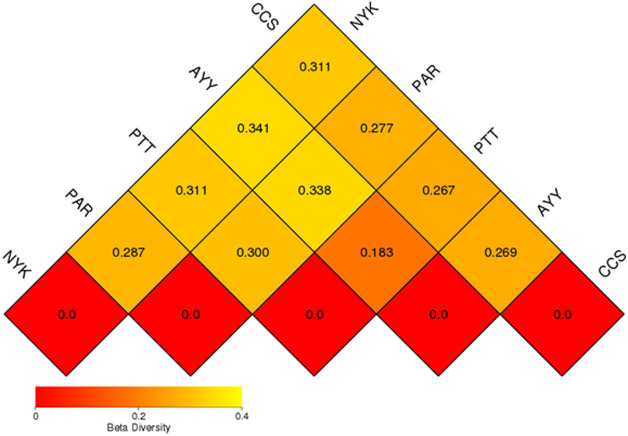
Globally, phytonematodes cause significant crop losses. Understanding the functions played by the plant rhizosphere soil microbiome during phytonematodes infection is crucial. This study examined the distribution of phytonematodes in the paddy fields of five provinces in Thailand, as well as determining the keystone microbial taxa in response to environmental factors that could be considered in the development of efficient biocontrol tactics in agriculture. The results demonstrated that and spp. were the major and dominant phytonematodes distributed across the paddy fields of Thailand. Soil parameters (total P, Cu, Mg, and Zn) were the important factors affecting the abundance of both nematodes. Illumina next-generation sequencing demonstrated that the levels of bacterial diversity among all locations were not significantly different. The , , , , , , , , , and were the most abundant bacterial phyla observed at all sites. The number of classes of the , , , and influenced the proportions of spp., spp., and free-living nematodes in the sampling dirt, whereas the number of classes of the and affected the amounts of spp. in both roots and soils. Soil organic matter, N, and Mn were the main factors that influenced the structure of the bacterial community. Correlations among rhizosphere microbiota, soil nematodes, and soil properties will be informative data in considering phytonematode management in a rice production system.
全球范围内,植物寄生线虫会导致作物大量减产。了解植物根际土壤微生物组在寄生线虫感染过程中所发挥的功能至关重要。本研究调查了泰国五个省份稻田中寄生线虫的分布情况,并确定了关键微生物类群,这些类群可作为农业中开发有效生物防治策略的环境因素的参考。结果表明, 和 是分布在泰国稻田中的主要和优势寄生线虫。土壤参数(总磷、铜、镁和锌)是影响两种线虫丰度的重要因素。Illumina 下一代测序表明,所有地点的细菌多样性水平没有显著差异。 在所有地点均观察到最丰富的细菌门是 、 、 、 、 、 、 、 和 。类群的数量 、 、 和 影响了采样土中 spp.、 spp.和自由生活线虫的比例,而 门和 门的类群数量影响了根和土壤中 spp.的数量。土壤有机质、氮和锰是影响细菌群落结构的主要因素。根际微生物群、土壤线虫和土壤性质之间的相关性将为考虑水稻生产系统中寄生线虫管理提供有价值的数据。