Laboratory of Developmental Genetics, Institute of Experimental Endocrinology, Biomedical Research Center v.v.i., Slovak Academy of Sciences, Dúbravská Cesta 9, 84505, Bratislava, Slovakia.
Department of Sensor Information Systems and Technologies, Institute of Informatics v.v.i., Slovak Academy of Sciences, Dúbravská Cesta 9, 845 07, Bratislava, Slovakia.
Sci Rep. 2024 Apr 29;14(1):9779. doi: 10.1038/s41598-024-57292-8.
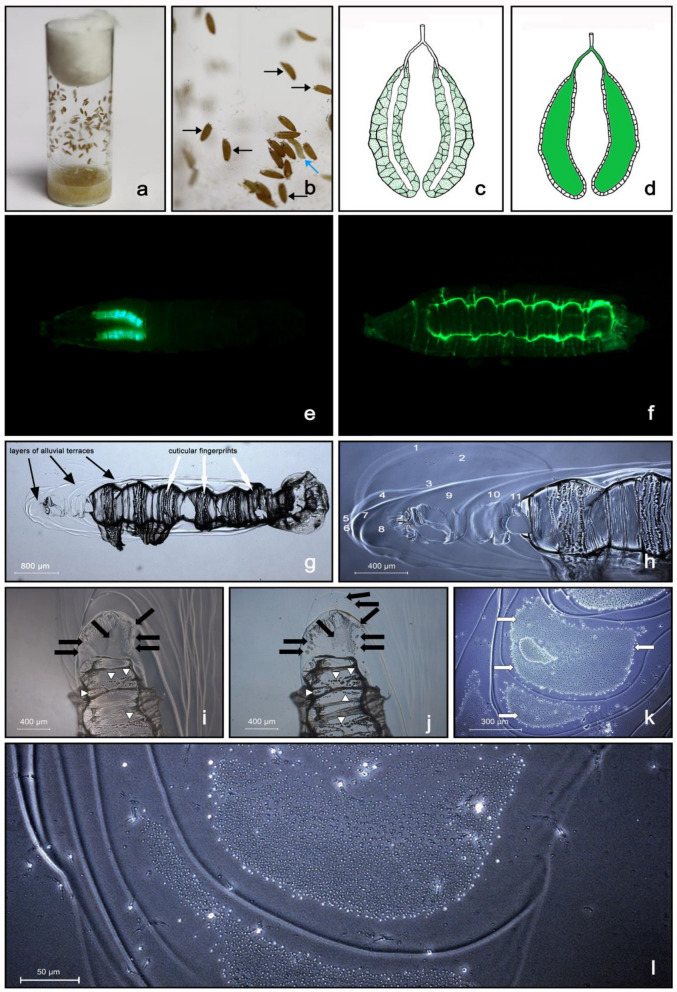
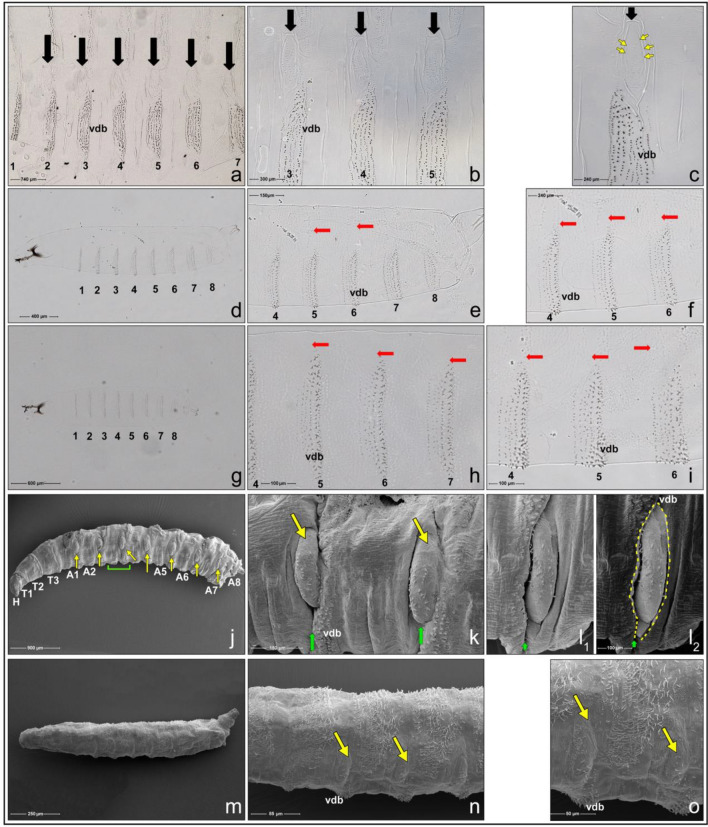
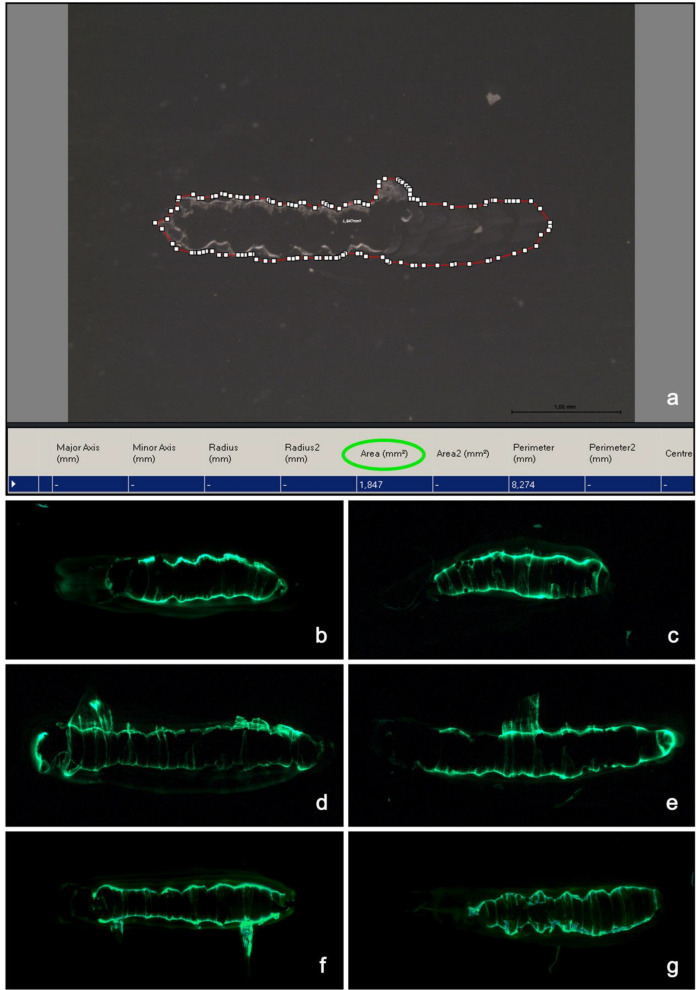
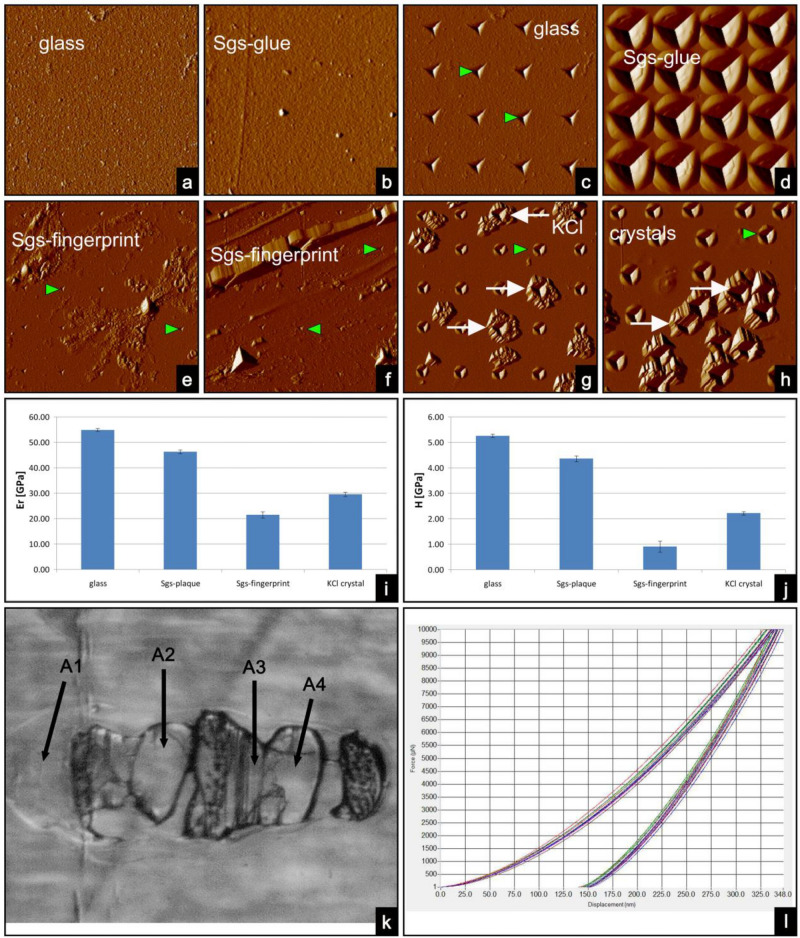
One of the major functions of the larval salivary glands (SGs) of many Drosophila species is to produce a massive secretion during puparium formation. This so-called proteinaceous glue is exocytosed into the centrally located lumen, and subsequently expectorated, serving as an adhesive to attach the puparial case to a solid substrate during metamorphosis. Although this was first described almost 70 years ago, a detailed description of the morphology and mechanical properties of the glue is largely missing. Its main known physical property is that it is released as a watery liquid that quickly hardens into a solid cement. Here, we provide a detailed morphological and topological analysis of the solidified glue. We demonstrated that it forms a distinctive enamel-like plaque that is composed of a central fingerprint surrounded by a cascade of laterally layered terraces. The solidifying glue rapidly produces crystals of KCl on these alluvial-like terraces. Since the properties of the glue affect the adhesion of the puparium to its substrate, and so can influence the success of metamorphosis, we evaluated over 80 different materials for their ability to adhere to the glue to determine which properties favor strong adhesion. We found that the alkaline Sgs-glue adheres strongly to wettable and positively charged surfaces but not to neutral or negatively charged and hydrophobic surfaces. Puparia formed on unfavored materials can be removed easily without leaving fingerprints or cascading terraces. For successful adhesion of the Sgs-glue, the material surface must display a specific type of triboelectric charge. Interestingly, the expectorated glue can move upwards against gravity on the surface of freshly formed puparia via specific, unique and novel anatomical structures present in the puparial's lateral abdominal segments that we have named bidentia.
许多果蝇物种的幼虫唾液腺(SGs)的主要功能之一是在蛹形成过程中产生大量分泌液。这种所谓的蛋白质胶被外排到中央腔室中,随后被吐出,作为一种粘性物质,在变态期间将蛹壳附着在固体基质上。尽管这一现象早在近 70 年前就被首次描述,但对胶的形态和机械特性的详细描述却很大程度上缺失了。其主要已知的物理性质是,它作为一种水样液体释放出来,很快就会凝固成固体胶。在这里,我们提供了对凝固胶的详细形态和拓扑分析。我们证明,它形成了一种独特的牙釉质样斑块,由中央指纹状图案和一系列侧向分层梯田组成。凝固的胶在这些冲积状梯田上迅速产生 KCl 晶体。由于胶的性质会影响蛹壳与基质的粘附,从而影响变态的成功,因此我们评估了 80 多种不同材料的粘附能力,以确定哪些特性有利于牢固粘附。我们发现碱性 Sgs-胶强烈地粘附在可润湿和带正电荷的表面上,但不粘附在中性、带负电荷和疏水性表面上。在不受欢迎的材料上形成的蛹可以很容易地去除,而不会留下指纹或梯田。为了使 Sgs-胶成功粘附,材料表面必须显示出特定类型的摩擦电荷。有趣的是,通过存在于蛹的侧腹部节段中的特定、独特和新颖的解剖结构,即双齿结构,被吐出的胶可以在刚形成的蛹表面上沿着重力方向向上移动,我们将其命名为双齿结构。