Ehrenfried Aaron Rodriguez, Zens Stefan, Steffens Laura K, Kehm Hannes, Paul Alina, Lauenstein Claudia, Volkmar Michael, Poschke Isabel, Meng Zibo, Offringa Rienk
Division of Molecular Oncology of Gastrointestinal Tumors, German Cancer Research Center (DKFZ), Heidelberg, Germany.
Helmholtz-Institute for Translational Oncology by DKFZ (HI-TRON), Mainz, Germany.
Bio Protoc. 2024 Apr 20;14(8):e4972. doi: 10.21769/BioProtoc.4972.
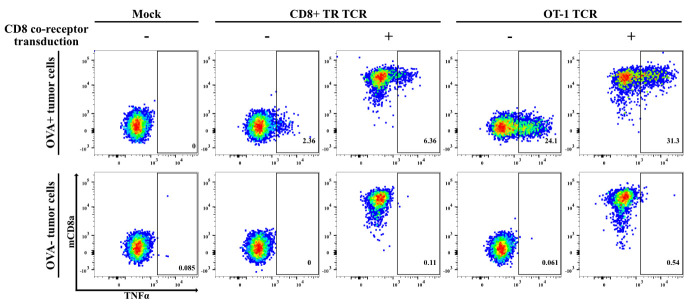
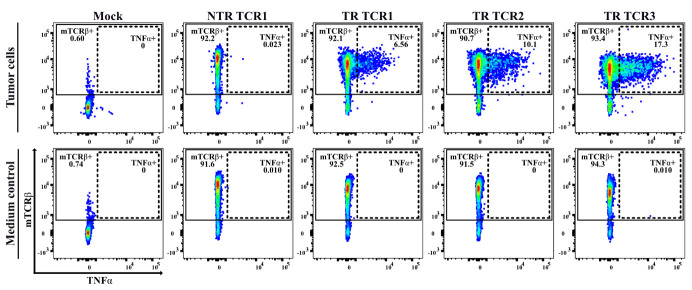
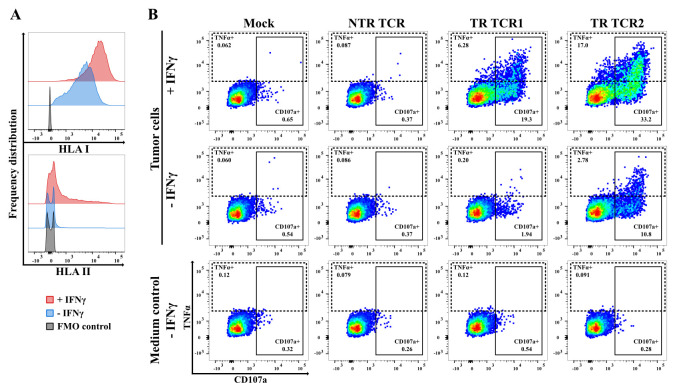
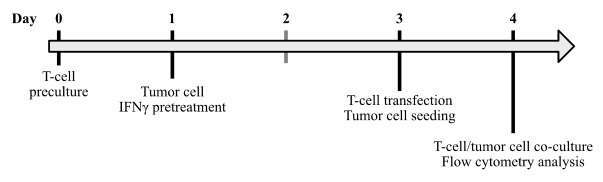
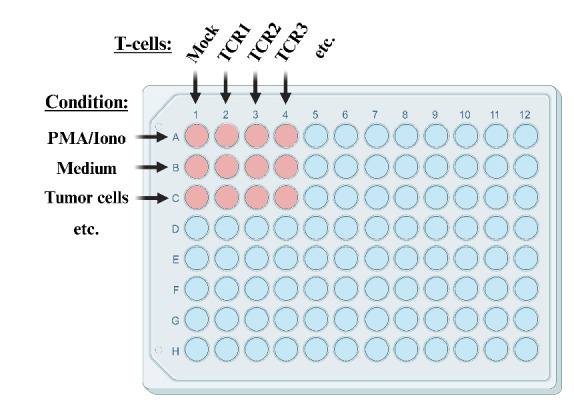
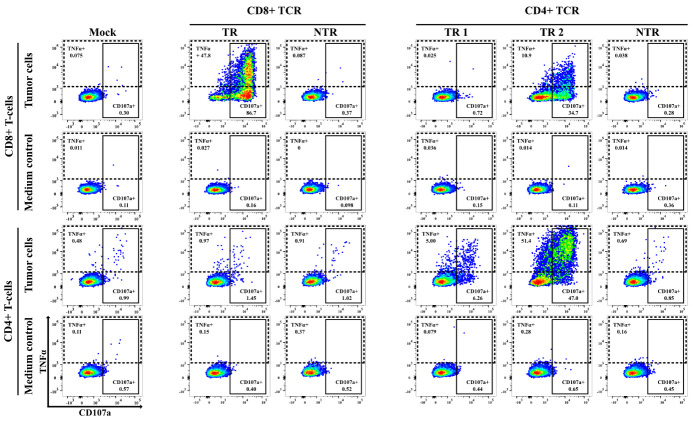
The advent of single-cell RNA sequencing (scRNAseq) has enabled in-depth gene expression analysis of several thousand cells isolated from tissues. We recently reported the application of scRNAseq toward the dissection of the tumor-infiltrating T-cell repertoire in human pancreatic cancer samples. In this study, we demonstrated that combined whole transcriptome and T-cell receptor (TCR) sequencing provides an effective way to identify tumor-reactive TCR clonotypes on the basis of gene expression signatures. An important aspect in this respect was the experimental validation of TCR-mediated anti-tumor reactivity by means of an in vitro functional assay, which is the subject of the present protocol. This assay involves the transient transfection of mRNA gene constructs encoding TCRα/β pairs into a well-defined human T-cell line, followed by co-cultivation with the tumor cells of interest and detection of T-cell activation by flow cytometry. Due to the high transfectability and the low background reactivity of the mock-transfected T-cell line to a wide variety of tumor cells, this assay offers a highly robust and versatile platform for the functional screening of large numbers of TCR clonotypes as identified in scRNAseq data sets. Whereas the assay was initially developed to test TCRs of human origin, it was more recently also applied successfully for the screening of TCRs of murine origin. Key features • Efficient functional screening of-and discrimination between-TCRs isolated from tumor-reactive vs. bystander T-cell clones. • Applicable to TCRs from CD8 and CD4 tumor-infiltrating T-cells originating from patient-derived tumor samples and syngeneic mouse tumor models. • Rapid flow cytometric detection of T-cell activation by means of TNFα and CD107a expression after a 5 h T-cell/tumor cell co-cultivation.
单细胞RNA测序(scRNAseq)的出现使得对从组织中分离出的数千个细胞进行深入的基因表达分析成为可能。我们最近报道了scRNAseq在剖析人类胰腺癌样本中肿瘤浸润性T细胞库方面的应用。在本研究中,我们证明了全转录组和T细胞受体(TCR)测序相结合,为基于基因表达特征识别肿瘤反应性TCR克隆型提供了一种有效方法。在这方面的一个重要方面是通过体外功能测定对TCR介导的抗肿瘤反应性进行实验验证,这是本方案的主题。该测定包括将编码TCRα/β对的mRNA基因构建体瞬时转染到一个明确的人类T细胞系中,随后与感兴趣的肿瘤细胞共培养,并通过流式细胞术检测T细胞活化。由于模拟转染的T细胞系对多种肿瘤细胞具有高转染性和低背景反应性,该测定为功能筛选scRNAseq数据集中鉴定的大量TCR克隆型提供了一个高度稳健和通用的平台。虽然该测定最初是为测试人类来源的TCR而开发的,但最近也成功应用于筛选小鼠来源的TCR。关键特性• 对从肿瘤反应性T细胞克隆与旁观者T细胞克隆中分离出的TCR进行高效功能筛选和区分。• 适用于来自患者来源的肿瘤样本和同基因小鼠肿瘤模型的CD8和CD4肿瘤浸润性T细胞的TCR。• 在T细胞/肿瘤细胞共培养5小时后,通过TNFα和CD107a表达快速流式细胞术检测T细胞活化。