Departamento de Bioquímica e Imunologia, Instituto de Ciências Biológicas, Universidade Federal de Minas Gerais, Belo Horizonte, Brazil.
Departament of Microbiology, Immunology and Transplantation, Rega Institute for Medical Research, KU Leuven, Leuven, Belgium.
Front Immunol. 2024 Apr 15;15:1378591. doi: 10.3389/fimmu.2024.1378591. eCollection 2024.
Pulmonary diseases represent a significant burden to patients and the healthcare system and are one of the leading causes of mortality worldwide. Particularly, the COVID-19 pandemic has had a profound global impact, affecting public health, economies, and daily life. While the peak of the crisis has subsided, the global number of reported COVID-19 cases remains significantly high, according to medical agencies around the world. Furthermore, despite the success of vaccines in reducing the number of deaths caused by severe acute respiratory syndrome coronavirus 2 (SARS-CoV-2), there remains a gap in the treatment of the disease, especially in addressing uncontrolled inflammation. The massive recruitment of leukocytes to lung tissue and alveoli is a hallmark factor in COVID-19, being essential for effectively responding to the pulmonary insult but also linked to inflammation and lung damage. In this context, mice models are a crucial tool, offering valuable insights into both the pathogenesis of the disease and potential therapeutic approaches.
Here, we investigated the anti-inflammatory effect of the glycosaminoglycan (GAG)-binding chemokine fragment CXCL9(74-103), a molecule that potentially decreases neutrophil transmigration by competing with chemokines for GAG-binding sites, in two models of pneumonia caused by coronavirus infection.
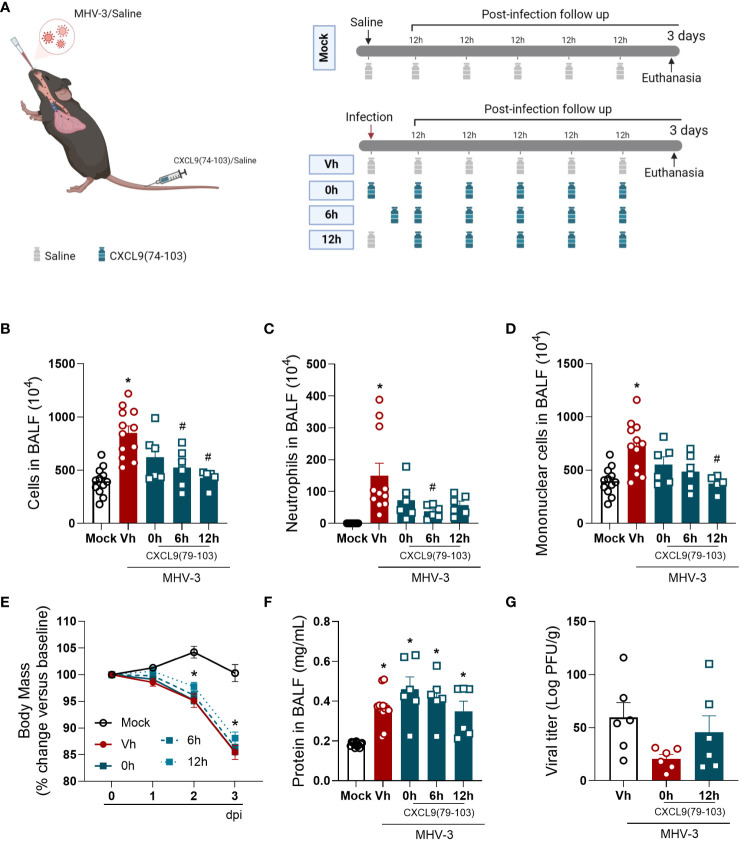
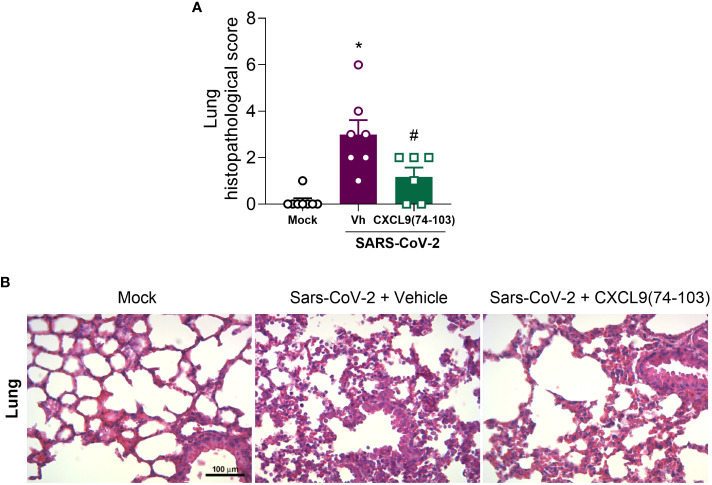
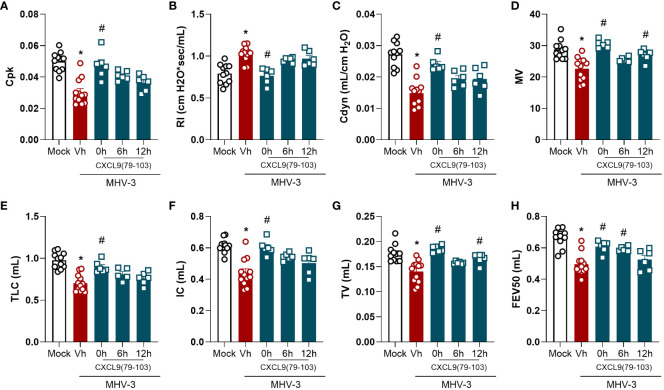
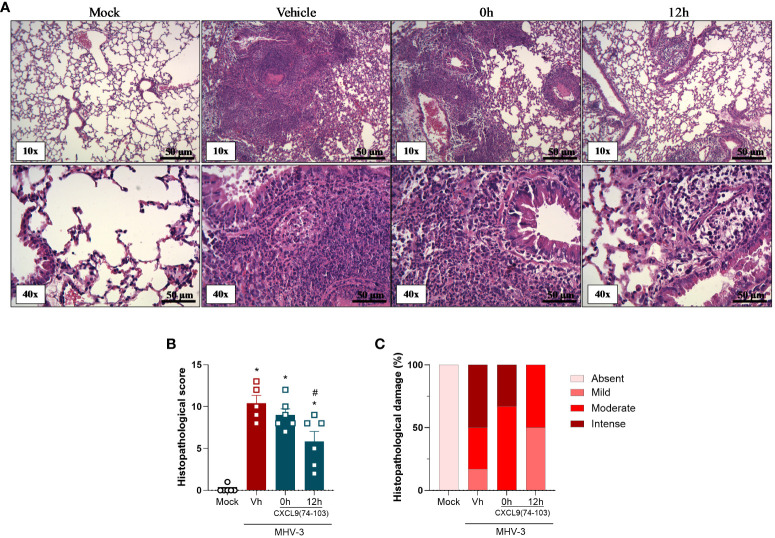
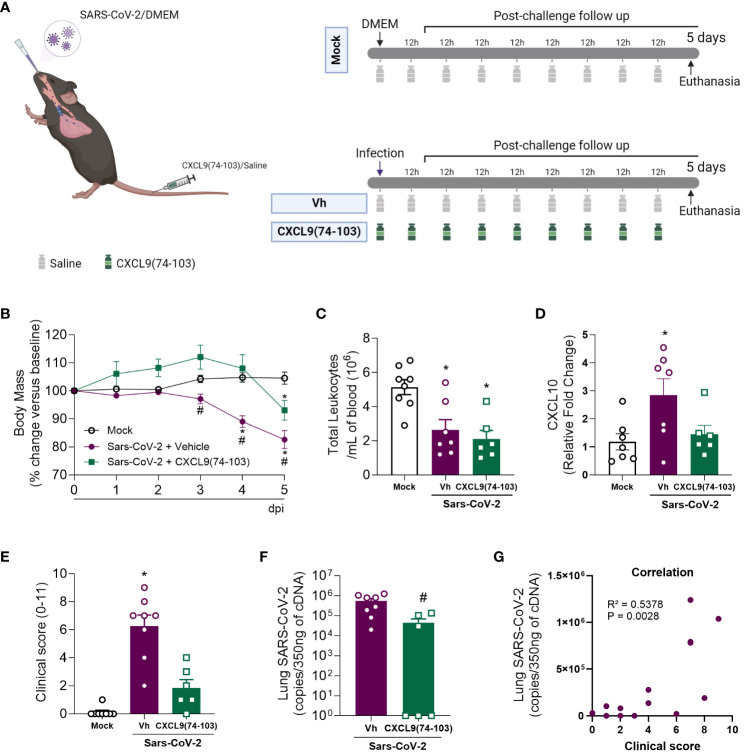
In a murine model of betacoronavirus MHV-3 infection, the treatment with CXCL9(74-103) decreased the accumulation of total leukocytes, mainly neutrophils, to the alveolar space and improved several parameters of lung dysfunction 3 days after infection. Additionally, this treatment also reduced the lung damage. In the SARS-CoV-2 model in K18-hACE2-mice, CXCL9(74-103) significantly improved the clinical manifestations of the disease, reducing pulmonary damage and decreasing viral titers in the lungs.
These findings indicate that CXCL9(74-103) resulted in highly favorable outcomes in controlling pneumonia caused by coronavirus, as it effectively diminishes the clinical consequences of the infections and reduces both local and systemic inflammation.
肺部疾病给患者和医疗系统带来了重大负担,是全球导致死亡的主要原因之一。特别是,COVID-19 大流行对全球公共卫生、经济和日常生活产生了深远的影响。尽管危机的高峰期已经过去,但根据世界各地的医疗机构报告,全球 COVID-19 病例数量仍然居高不下。此外,尽管疫苗在降低严重急性呼吸综合征冠状病毒 2(SARS-CoV-2)引起的死亡率方面取得了成功,但在治疗该疾病方面仍存在差距,特别是在控制不受控制的炎症方面。白细胞大量募集到肺组织和肺泡是 COVID-19 的一个标志因素,对于有效应对肺部损伤至关重要,但也与炎症和肺损伤有关。在这种情况下,小鼠模型是一种至关重要的工具,可以为疾病的发病机制和潜在的治疗方法提供有价值的见解。
在这里,我们研究了糖胺聚糖(GAG)结合趋化因子片段 CXCL9(74-103)的抗炎作用,该分子通过与 GAG 结合位点竞争,潜在地减少中性粒细胞的迁移,在两种由冠状病毒感染引起的肺炎模型中。
在β冠状病毒 MHV-3 感染的小鼠模型中,CXCL9(74-103)治疗可减少总白细胞(主要是中性粒细胞)向肺泡空间的积累,并在感染后 3 天改善肺功能障碍的几个参数。此外,这种治疗还减少了肺损伤。在 K18-hACE2-小鼠的 SARS-CoV-2 模型中,CXCL9(74-103)显著改善了疾病的临床表现,减少了肺部损伤,并降低了肺部的病毒滴度。
这些发现表明,CXCL9(74-103)在控制冠状病毒引起的肺炎方面取得了非常有利的结果,因为它有效地减轻了感染的临床后果,并减少了局部和全身炎症。