Division of Cardiovascular Medicine, Department of Medicine, Vanderbilt University Medical Center, Nashville, TN, USA.
Vascular Medicine Institute, University of Pittsburgh, Pittsburgh, PA, USA.
Sci Rep. 2024 May 1;14(1):9991. doi: 10.1038/s41598-024-59155-8.
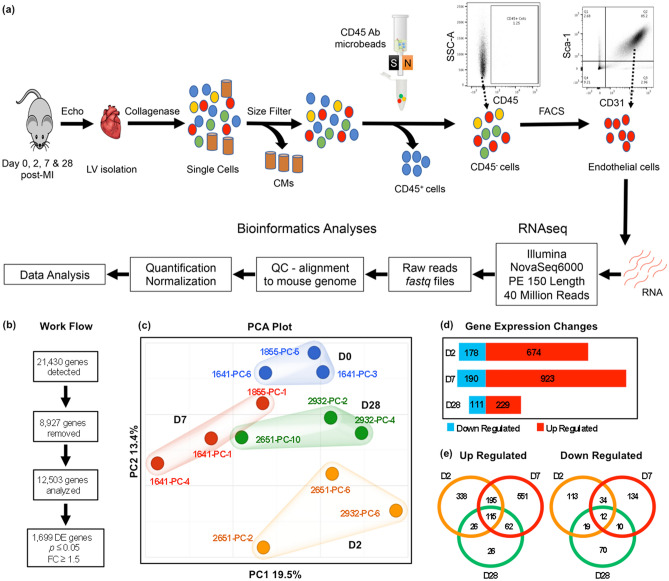
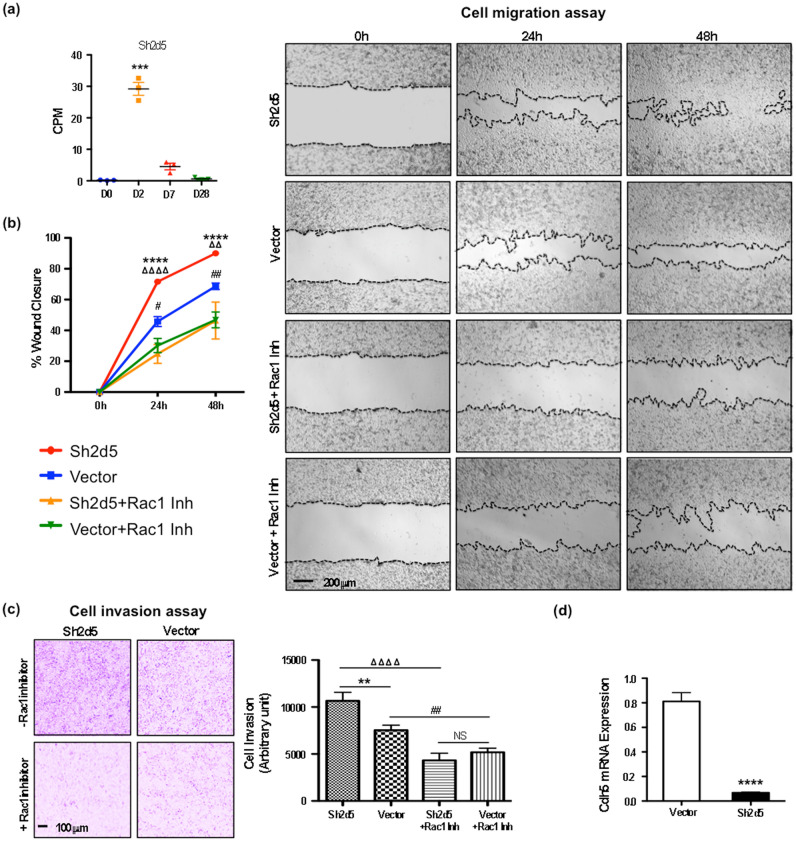
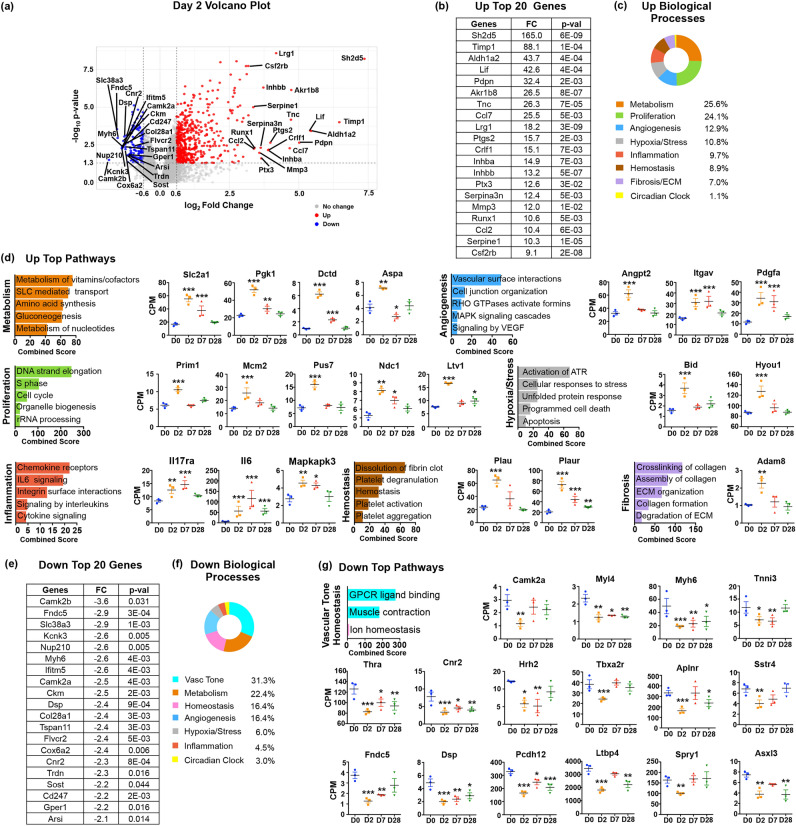
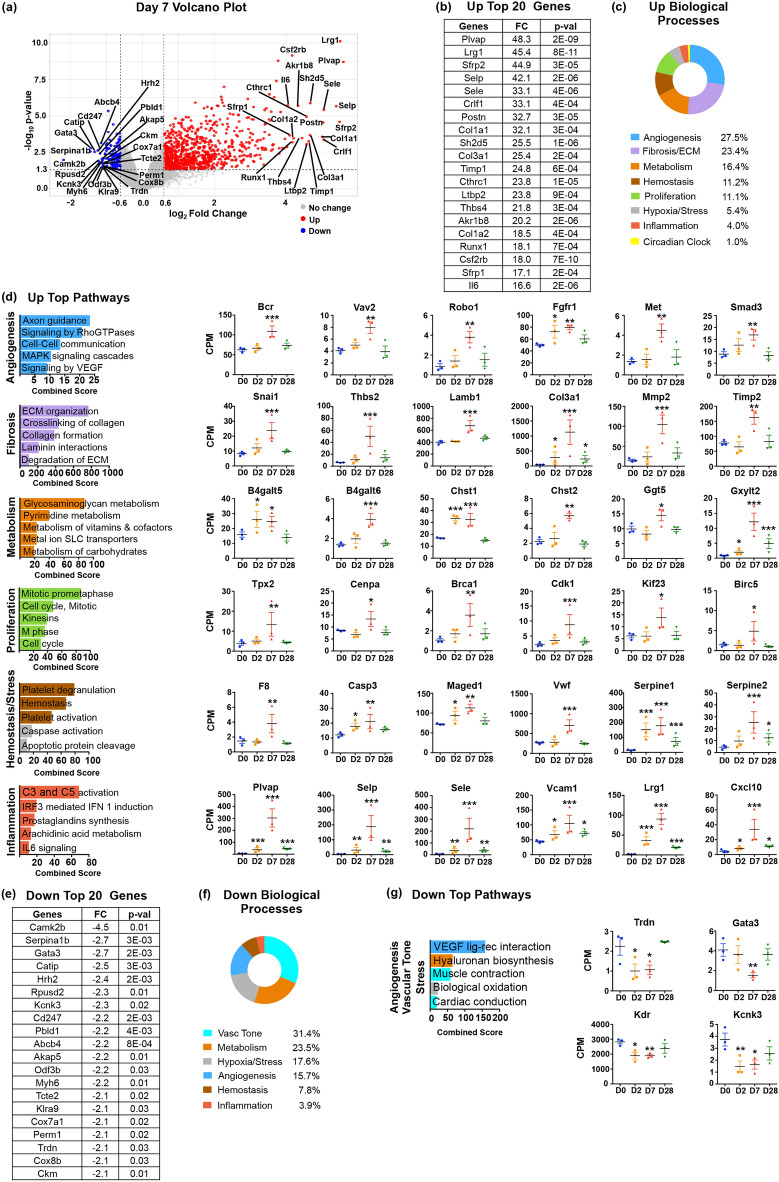
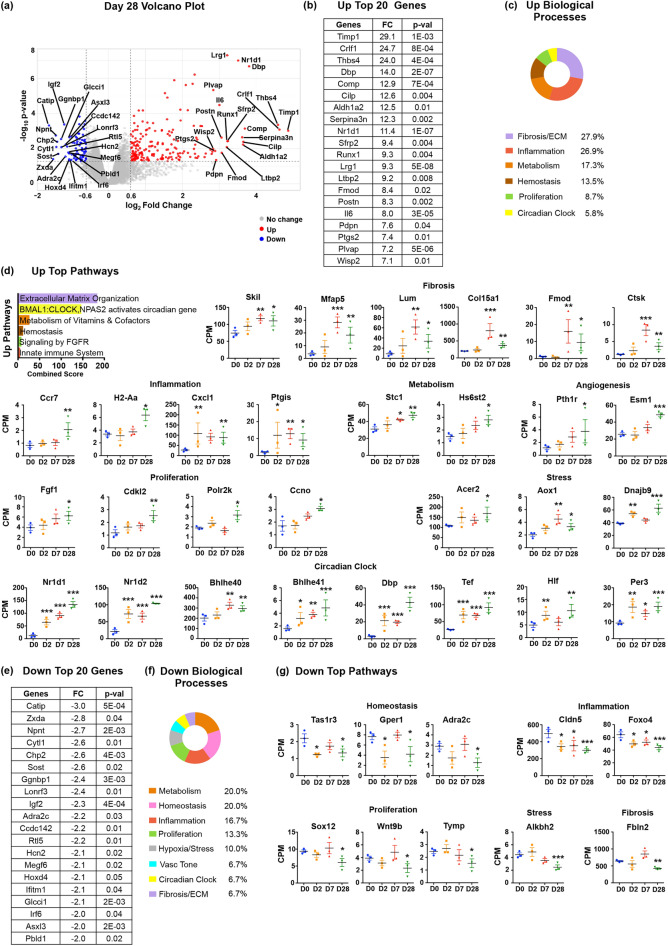
Endothelial cells (ECs) have essential roles in cardiac tissue repair after myocardial infarction (MI). To establish stage-specific and long-term effects of the ischemic injury on cardiac ECs, we analyzed their transcriptome at landmark time points after MI in mice. We found that early EC response at Day 2 post-MI centered on metabolic changes, acquisition of proinflammatory phenotypes, initiation of the S phase of cell cycle, and activation of stress-response pathways, followed by progression to mitosis (M/G2 phase) and acquisition of proangiogenic and mesenchymal properties during scar formation at Day 7. In contrast, genes involved in vascular physiology and maintenance of vascular tone were suppressed. Importantly, ECs did not return to pre-injury phenotypes after repair has been completed but maintained inflammatory, fibrotic and thrombotic characteristics and lost circadian rhythmicity. We discovered that the highest induced transcript is the mammalian-specific Sh2d5 gene that promoted migration and invasion of ECs through Rac1 GTPase. Our results revealed a synchronized, temporal activation of disease phenotypes, metabolic pathways, and proliferation in quiescent ECs after MI, indicating that precisely-timed interventions are necessary to optimize cardiac tissue repair and improve outcomes. Furthermore, long-term effects of acute ischemic injury on ECs may contribute to vascular dysfunction and development of heart failure.
内皮细胞(ECs)在心肌梗死后的心肌组织修复中具有重要作用。为了确定缺血性损伤对心脏 ECs 的阶段性和长期影响,我们在小鼠心梗后关键时间点分析了它们的转录组。我们发现,心梗后第 2 天的早期 EC 反应集中在代谢变化、获得促炎表型、细胞周期 S 期启动以及应激反应途径激活上,随后在第 7 天进入有丝分裂(M/G2 期)并获得促血管生成和间充质特性,形成疤痕。相比之下,参与血管生理和维持血管张力的基因受到抑制。重要的是,EC 在修复完成后并未恢复到损伤前的表型,而是保持炎症、纤维化和血栓形成的特征,并丧失了昼夜节律性。我们发现,诱导表达最高的基因是哺乳动物特异性的 Sh2d5 基因,它通过 Rac1 GTPase 促进 EC 的迁移和侵袭。我们的研究结果揭示了心梗后静息 EC 中疾病表型、代谢途径和增殖的同步、时间性激活,表明需要精确计时的干预措施来优化心肌组织修复并改善预后。此外,急性缺血性损伤对 ECs 的长期影响可能导致血管功能障碍和心力衰竭的发生。