Chen Jia-Nan, Yang Xiao-Jia, Cong Meng, Zhu Ling-Jie, Wu Xia, Wang Li-Ting, Sha Lei, Yu Yan, He Qian-Ru, Ding Fei, Xian Hua, Shi Hai-Yan
School of Medicine, Nantong University, Nantong, 226001, China.
Department of Pediatric Surgery, The First Affiliated Hospital of Nanjing Medical University, Nanjing, 210029, China.
Regen Ther. 2024 Apr 22;27:365-380. doi: 10.1016/j.reth.2024.04.002. eCollection 2024 Dec.
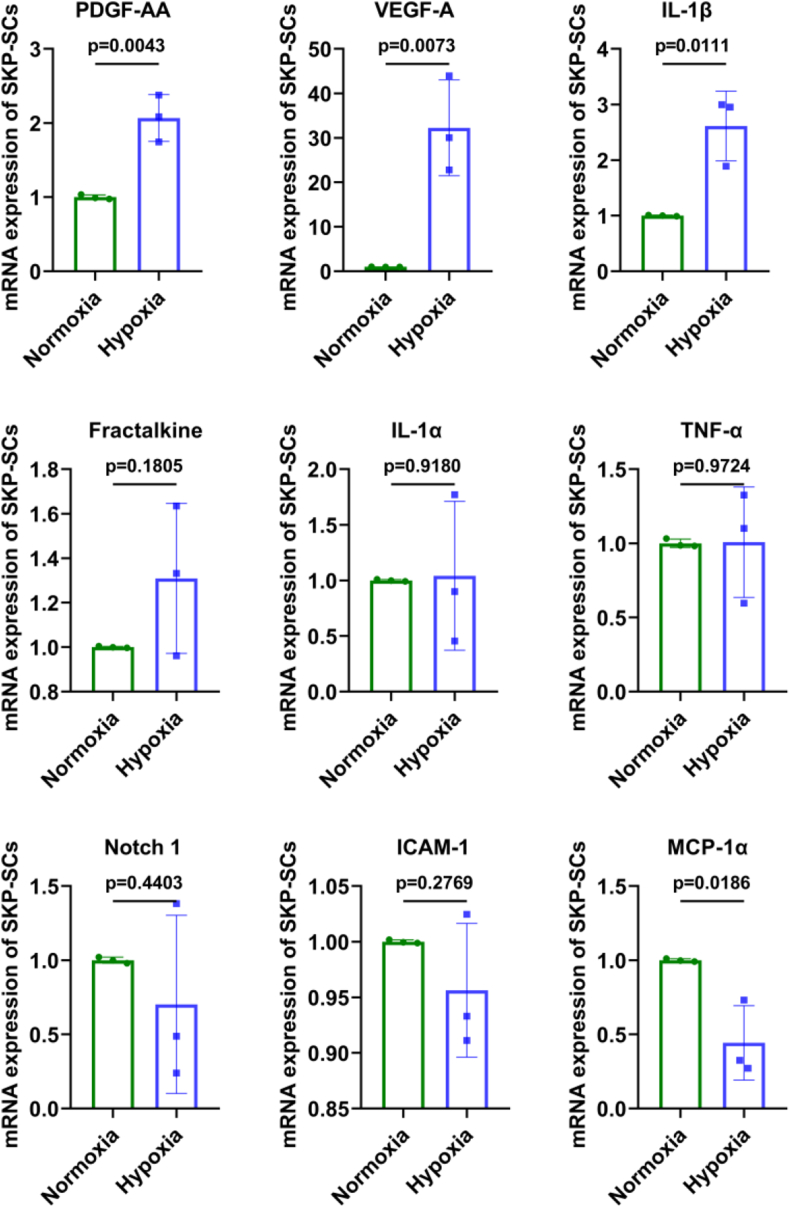
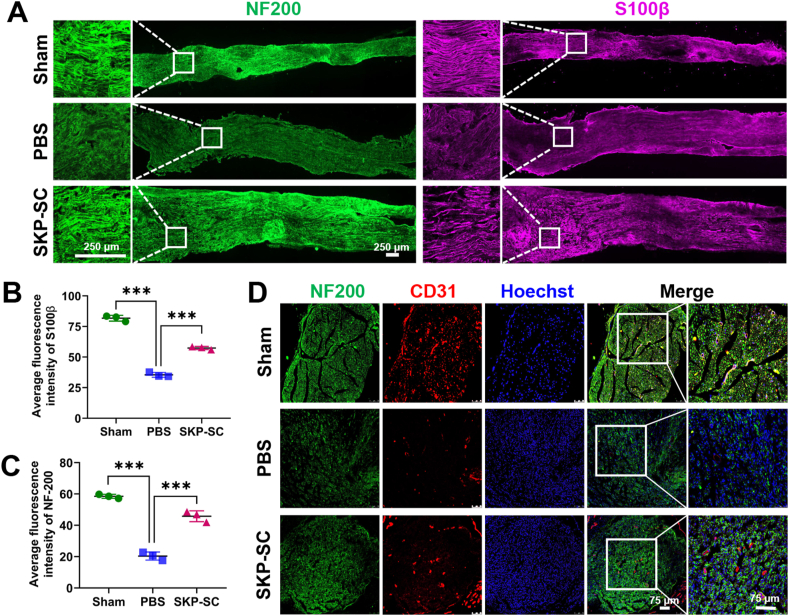
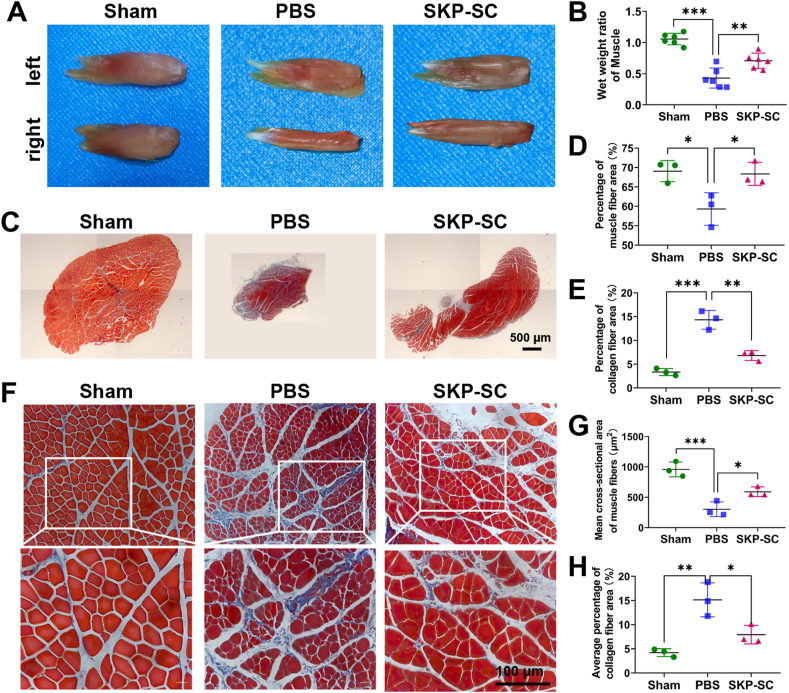
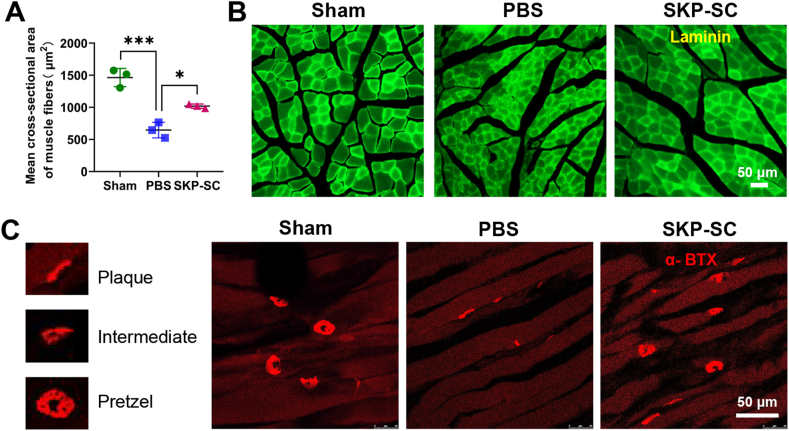
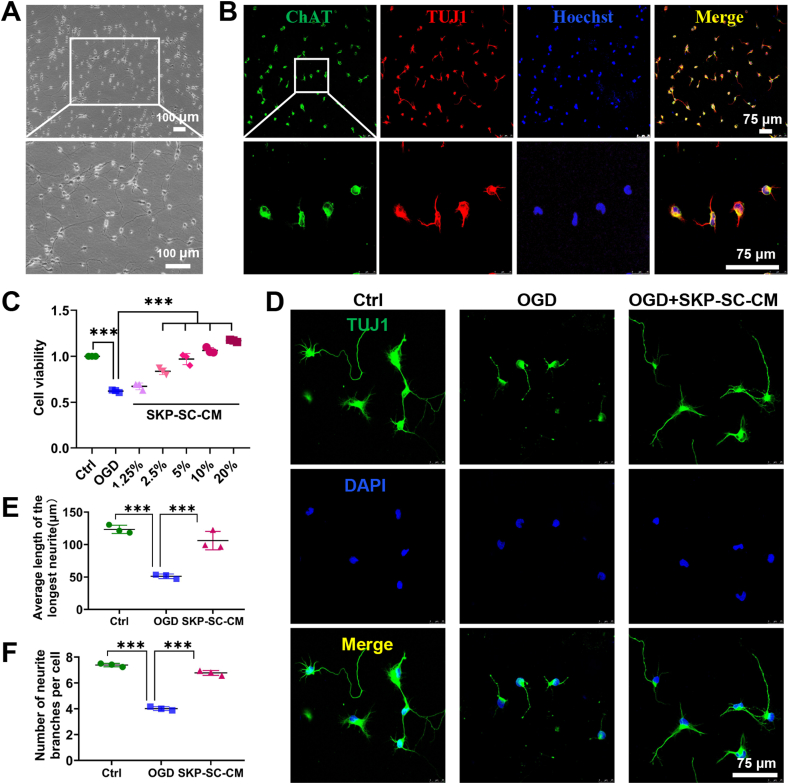
Brachial plexus injury (BPI) with motor neurons (MNs) damage still remain poor recovery in preclinical research and clinical therapy, while cell-based therapy approaches emerged as novel strategies. Previous work of rat skin precursor-derived Schwann cells (SKP-SCs) provided substantial foundation for repairing peripheral nerve injury (PNI). Given that, our present work focused on exploring the repair efficacy and possible mechanisms of SKP-SCs implantation on rat BPI combined with neurorrhaphy post-neurotomy. Results indicated the significant locomotive and sensory function recovery, with improved morphological remodeling of regenerated nerves and angiogenesis, as well as amelioration of target muscles atrophy and motor endplate degeneration. Besides, MNs could restore from oxygen-glucose-deprivation (OGD) injury upon SKP-SCs-sourced secretome treatment, implying the underlying paracrine mechanisms. Moreover, rat cytokine array assay detected 67 cytokines from SKP-SC-secretome, and bioinformatic analyses of screened 32 cytokines presented multiple functional clusters covering diverse cell types, including inflammatory cells, Schwann cells, vascular endothelial cells (VECs), neurons, and SKP-SCs themselves, relating distinct biological processes to nerve regeneration. Especially, a panel of hypoxia-responsive cytokines (HRCK), can participate into multicellular biological process regulation for permissive regeneration milieu, which underscored the benefits of SKP-SCs and sourced secretome, facilitating the chorus of nerve regenerative microenvironment. Furthermore, platelet-derived growth factor-AA (PDGF-AA) and vascular endothelial growth factor-A (VEGF-A) were outstanding cytokines involved with nerve regenerative microenvironment regulating, with significantly elevated mRNA expression level in hypoxia-responsive SKP-SCs. Altogether, through recapitulating the implanted SKP-SCs and derived secretome as niche sensor and paracrine transmitters respectively, HRCK would be further excavated as molecular underpinning of the neural recuperative mechanizations for efficient cell therapy; meanwhile, the analysis paradigm in this study validated and anticipated the actions and mechanisms of SKP-SCs on traumatic BPI repair, and was beneficial to identify promising bioactive molecule cocktail and signaling targets for cell-free therapy strategy on neural repair and regeneration.
在临床前研究和临床治疗中,伴有运动神经元(MNs)损伤的臂丛神经损伤(BPI)恢复情况仍然较差,而基于细胞的治疗方法则成为了新的策略。先前关于大鼠皮肤前体细胞衍生的雪旺细胞(SKP-SCs)的研究为修复周围神经损伤(PNI)奠定了坚实基础。鉴于此,我们目前的工作重点是探索SKP-SCs植入对大鼠BPI并联合神经切断术后神经缝合的修复效果及可能机制。结果表明,大鼠的运动和感觉功能有显著恢复,再生神经的形态重塑和血管生成得到改善,靶肌肉萎缩和运动终板退变也有所减轻。此外,经SKP-SCs分泌组处理后,MNs能够从氧糖剥夺(OGD)损伤中恢复,这暗示了潜在的旁分泌机制。此外,大鼠细胞因子阵列分析从SKP-SC分泌组中检测到67种细胞因子,对筛选出的32种细胞因子进行生物信息学分析,呈现出多个功能簇,涵盖多种细胞类型,包括炎性细胞、雪旺细胞、血管内皮细胞(VECs)、神经元以及SKP-SCs自身,这些功能簇将不同的生物学过程与神经再生联系起来。特别是,一组缺氧反应性细胞因子(HRCK)能够参与多细胞生物学过程调节,以形成有利于再生的环境,这突出了SKP-SCs及其分泌组的益处,促进了神经再生微环境的协同作用。此外,血小板衍生生长因子-AA(PDGF-AA)和血管内皮生长因子-A(VEGF-A)是参与神经再生微环境调节的重要细胞因子,在缺氧反应性SKP-SCs中mRNA表达水平显著升高。总之,通过分别将植入的SKP-SCs和衍生的分泌组概括为生态位传感器和旁分泌递质,HRCK将作为神经恢复机制的分子基础被进一步挖掘,以实现高效的细胞治疗;同时,本研究中的分析范式验证并预测了SKP-SCs对创伤性BPI修复的作用和机制,有助于确定用于神经修复和再生的无细胞治疗策略的有前景的生物活性分子组合和信号靶点。