Deblais Loïc, Drozd Mary, Kumar Anand, Antwi Janet, Fuchs James, Khupse Rahul, Helmy Yosra A, Rajashekara Gireesh
Department of Animal Sciences, The Ohio State University, OARDC, Wooster, OH, United States.
School of Veterinary Medicine and Biomedical Sciences, University of Nebraska-Lincoln, Lincoln, NE, United States.
Front Microbiol. 2024 Apr 17;15:1342573. doi: 10.3389/fmicb.2024.1342573. eCollection 2024.
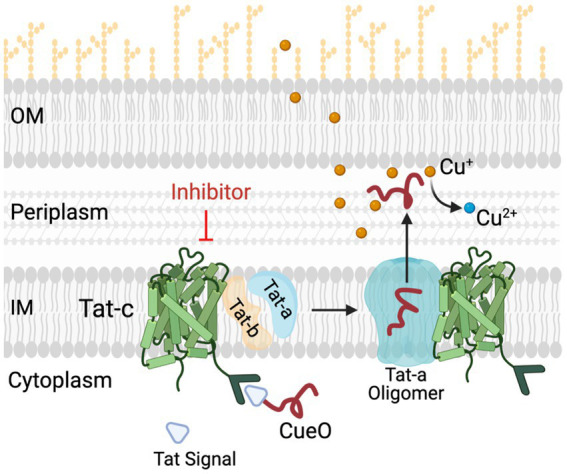
Control of from farm to fork is challenging due to the frequent emergence of antimicrobial-resistant isolates. Furthermore, poultry production systems are known reservoirs of . The twin-arginine translocation (Tat) pathway is a crucial bacterial secretion system that allows to colonize the host intestinal tract by using formate as the main source of energy. However, Tat pathway is also a major contributing factor for resistance to copper sulfate (CuSO).
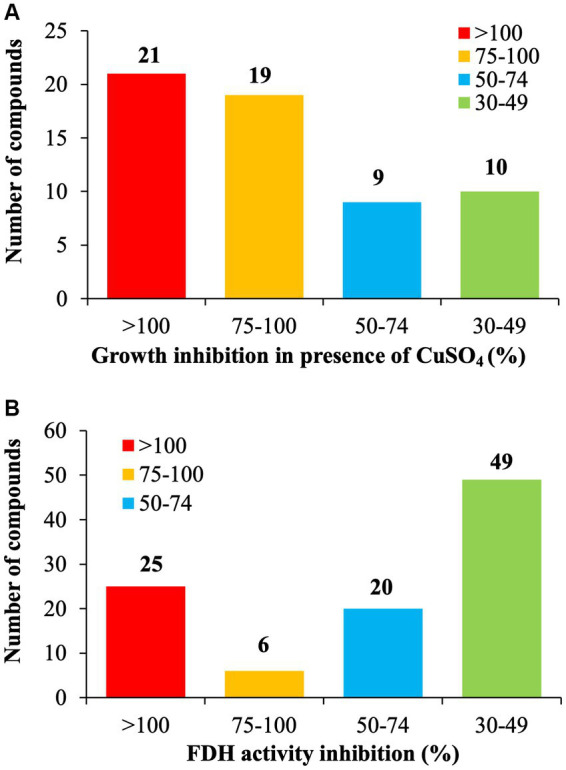
Since mammals and chickens do not have proteins or receptors that are homologous to bacterial Tat proteins, identification of small molecule (SM) inhibitors targeting the Tat system would allow the development of safe and effective control methods to mitigate in infected or colonized hosts in both pre-harvest and post-harvest. In this study, we screened 11 commercial libraries ( = 50,917 SM) for increased susceptibility to CuSO (1 mM) in 81-176, a human isolate which is widely studied.
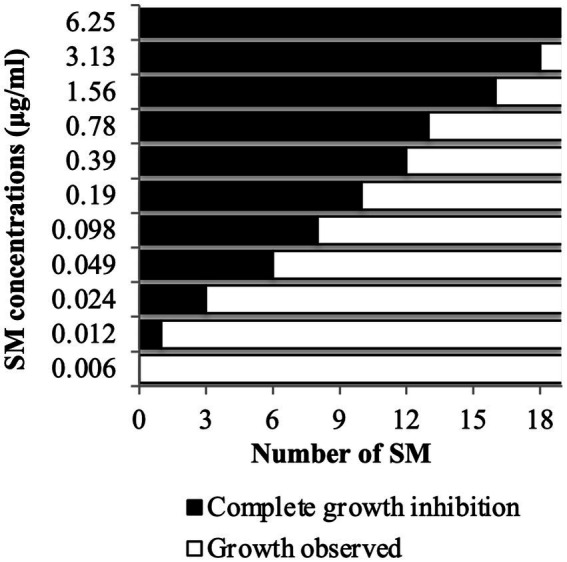
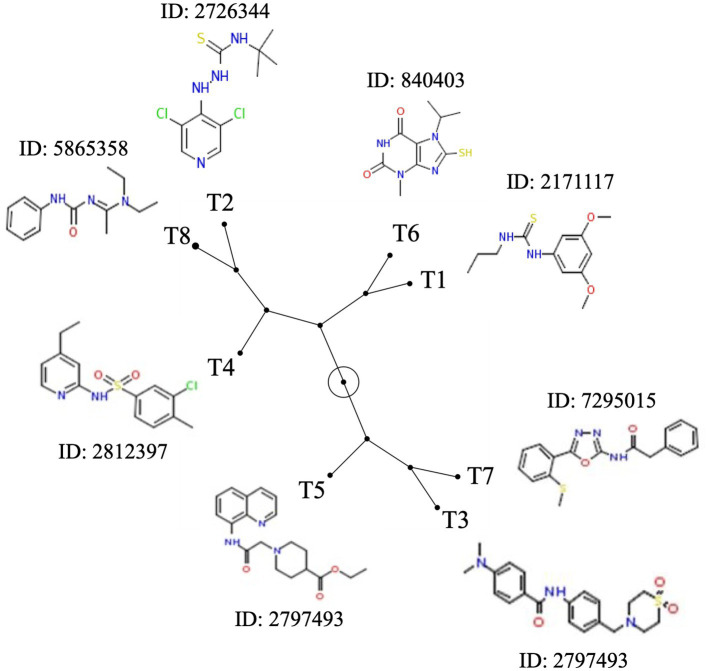
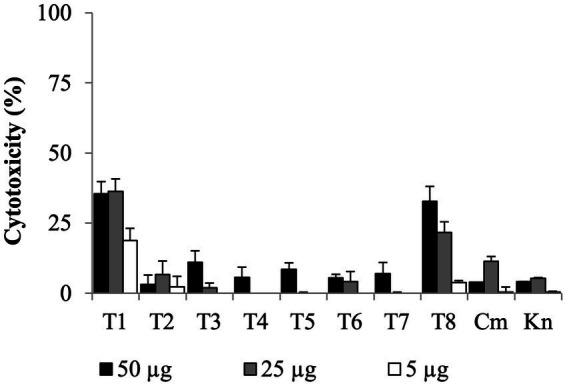
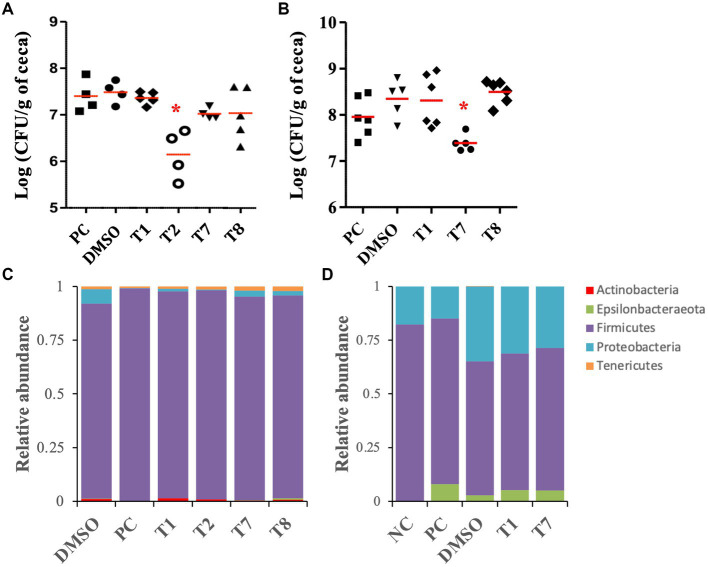
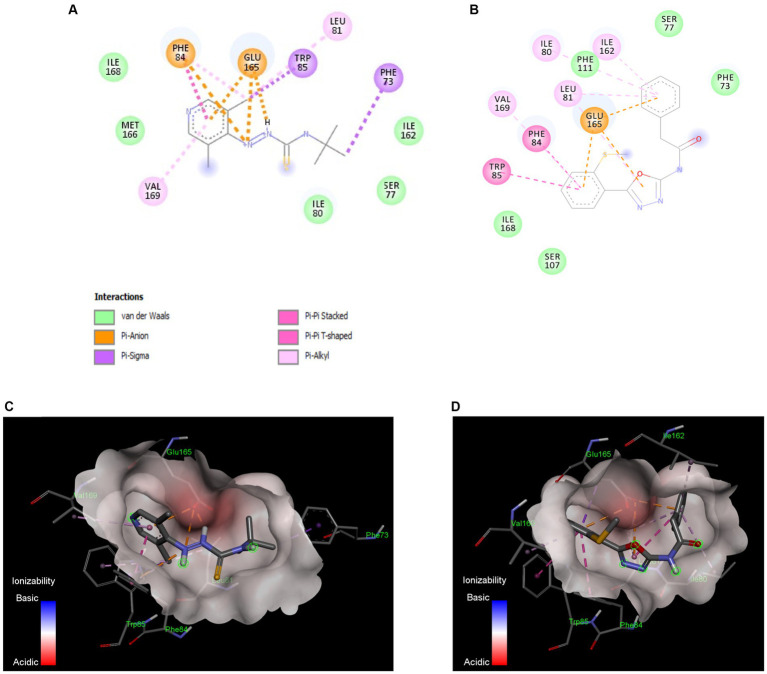
Furthermore, we evaluated 177 SM hits (2.5 μg/mL and above) that increased the susceptibility to CuSO for the inhibition of formate dehydrogenase (Fdh) activity, a Tat-dependent substrate. Eight Tat-dependent inhibitors (T1-T8) were selected for further studies. These selected eight Tat inhibitors cleared all tested strains ( = 12) at >10 ng/mL in the presence of 0.5 mM CuSO. These selected SMs were non-toxic to colon epithelial (Caco-2) cells when treated with 50 μg/mL for 24 h and completely cleared intracellular cells when treated with 0.63 μg/mL of SM for 24 h in the presence of 0.5 mM of CuSO. Furthermore, 3 and 5-week-old chicks treated with SM candidates for 5 days had significantly decreased cecal colonization (up to 1.2 log; < 0.01) with minimal disruption of microbiota. analyses predicted that T7 has better drug-like properties than T2 inhibitor and might target a key amino acid residue (glutamine 165), which is located in the hydrophobic core of TatC protein.
Thus, we have identified novel SM inhibitors of the Tat pathway, which represent a potential strategy to control spread on farms.
由于抗菌药物耐药菌株频繁出现,从农场到餐桌的控制具有挑战性。此外,家禽生产系统是已知的[病原体名称未给出]储存库。双精氨酸转运(Tat)途径是一种关键的细菌分泌系统,它使[病原体名称未给出]能够利用甲酸作为主要能量来源在宿主肠道中定殖。然而,Tat途径也是对硫酸铜(CuSO)耐药的主要促成因素。
由于哺乳动物和鸡没有与细菌Tat蛋白同源的蛋白质或受体,鉴定靶向Tat系统的小分子(SM)抑制剂将有助于开发安全有效的控制方法,以减轻收获前和收获后受感染或定殖宿主中的[病原体名称未给出]。在本研究中,我们在广泛研究的人类分离株81 - 176中筛选了11个商业文库(n = 50,917个SM),以提高对CuSO(1 mM)的敏感性。
此外,我们评估了177个对CuSO敏感性增加的SM命中物(2.5 μg/mL及以上)对甲酸脱氢酶(Fdh)活性的抑制作用,Fdh是一种依赖Tat的底物。选择了8种依赖Tat的抑制剂(T1 - T8)进行进一步研究。在存在0.5 mM CuSO的情况下,这些选定的8种Tat抑制剂在>10 ng/mL时清除了所有测试的[病原体名称未给出]菌株(n = 12)。当用50 μg/mL处理24小时时,这些选定的SM对结肠上皮(Caco - 2)细胞无毒,并且在存在(此处原文似乎不完整,推测为0.5 mM)CuSO的情况下,用0.63 μg/mL的SM处理24小时时完全清除细胞内的[病原体名称未给出]细胞。此外,用SM候选物处理5天的3周龄和5周龄雏鸡盲肠定殖显著减少(高达1.2个对数;P < 0.01),对微生物群的干扰最小。[此处似乎缺少一些关于分析的具体内容,推测为某种分析]预测T7比T2抑制剂具有更好的类药物特性,并且可能靶向位于TatC蛋白疏水核心中的一个关键氨基酸残基(谷氨酰胺165)。
因此,我们已经鉴定出Tat途径的新型SM抑制剂,这代表了一种控制[病原体名称未给出]在农场传播的潜在策略。