Chakrabarti S, Joffe S, Seidman M M
Mol Cell Biol. 1985 Sep;5(9):2265-71. doi: 10.1128/mcb.5.9.2265-2271.1985.
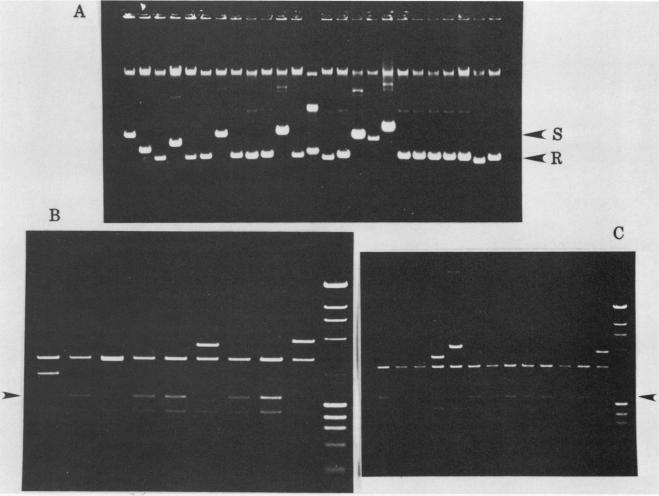
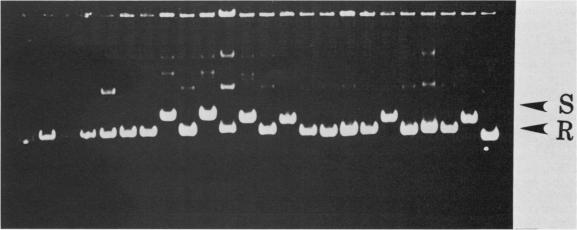
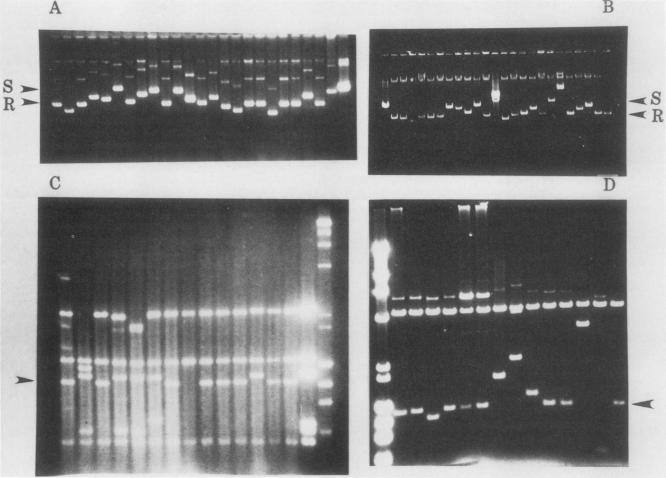
Shuttle vector plasmids were constructed with directly repeated sequences flanking a marker gene. African green monkey kidney (AGMK) cells were infected with the constructions, and after a period of replication, the progeny plasmids were recovered and introduced into bacteria. Those colonies with plasmids that had lost the marker gene were identified, and the individual plasmids were purified and characterized by restriction enzyme digestion. Recombination between the repeated elements generated a plasmid with a precise deletion and a characteristic restriction pattern, which distinguished the recombined molecules from those with other defects in the marker gene. Recombination among the following different sequences was measured in this assay: (i) the simian virus 40 origin and enhancer region, (ii) the AGMK Alu sequence, and (iii) a sequence from plasmid pBR322. Similar frequencies of recombination among these sequences were found. Recombination occurred more frequently in Cos1 cells than in CV1 cells. In these experiments, the plasmid population with defective marker genes consisted of the recombined molecules and of the spontaneous deletion-insertion mutants described earlier. The frequency of the latter class was unaffected by the presence of the option for recombination represented by the direct repeats. Both recombination and deletion-insertion mutagenesis were stimulated by double-strand cleavage between the repeated sequences and adjacent to the marker, and the frequency of the deletion-insertion mutants in this experiment was again independent of the presence of the direct repeats. We concluded that although recombination and deletion-insertion mutagenesis were both stimulated by double-strand cleavage, the molecules which underwent the two types of change were drawn from separate pools.
穿梭载体质粒构建时,在标记基因两侧带有直接重复序列。用构建好的质粒感染非洲绿猴肾(AGMK)细胞,经过一段时间的复制后,回收子代质粒并导入细菌。鉴定出那些带有缺失标记基因的质粒的菌落,对单个质粒进行纯化,并通过限制性内切酶消化进行表征。重复元件之间的重组产生了一个具有精确缺失和特征性限制性图谱的质粒,这将重组分子与标记基因存在其他缺陷的分子区分开来。在此测定中测量了以下不同序列之间的重组:(i)猿猴病毒40起始和增强子区域,(ii)AGMK Alu序列,以及(iii)质粒pBR322的一个序列。发现这些序列之间的重组频率相似。在Cos1细胞中重组比在CV1细胞中更频繁发生。在这些实验中,带有缺陷标记基因的质粒群体由重组分子和先前描述的自发缺失 - 插入突变体组成。后一类的频率不受由直接重复序列代表的重组选项的存在的影响。重复序列之间以及与标记相邻处的双链切割刺激了重组和缺失 - 插入诱变,并且在该实验中缺失 - 插入突变体的频率再次与直接重复序列的存在无关。我们得出结论,虽然重组和缺失 - 插入诱变都受到双链切割的刺激,但经历这两种类型变化的分子来自不同的库。