Calos M P, Lebkowski J S, Botchan M R
Proc Natl Acad Sci U S A. 1983 May;80(10):3015-9. doi: 10.1073/pnas.80.10.3015.
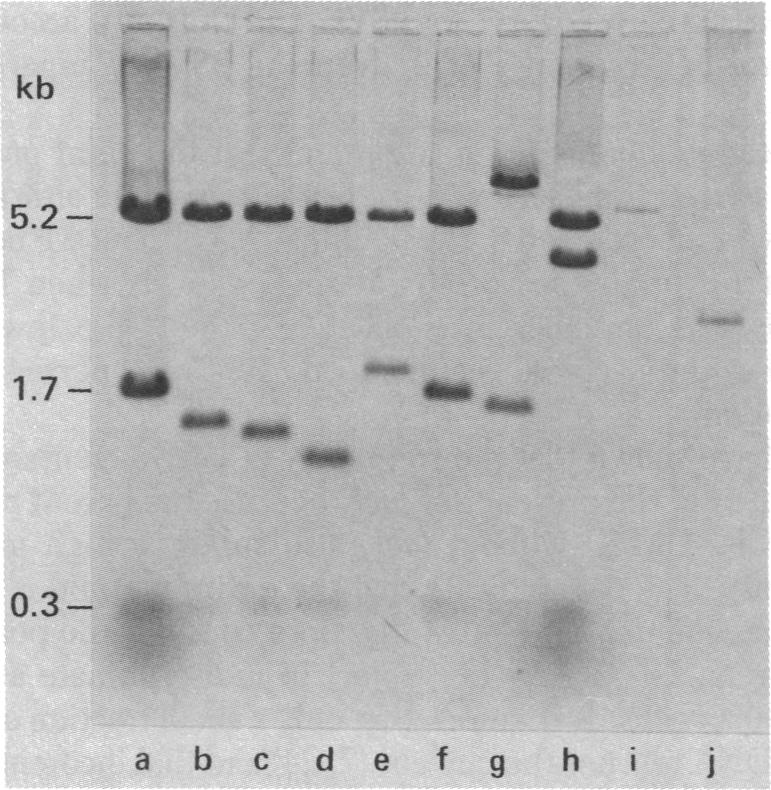
The lacI gene of Escherichia coli was used to score mutation in mammalian cells of simian virus 40-based recombinant DNA vectors that provide for replication and selection in both bacterial and mammalian cells. Plasmid DNA was introduced into COS7 simian cells by DEAE-dextran transfection, allowed to replicate in the mammalian cells, and then returned to E. coli for analysis. Mutants in lacI were observed at frequencies of one to several percent, compared with a spontaneous mutation rate in E. coli of less than 10(-5). The lesions include a large number of base substitutions, in addition to deletions, duplications, and more complex rearrangements, including insertion into the plasmid of sequences originating in the host genome. We discuss possible sources of the high mutation frequency and its implications for experiments involving DNA transfer.
利用大肠杆菌的lacI基因对基于猿猴病毒40的重组DNA载体在哺乳动物细胞中的突变进行评分,该载体可在细菌和哺乳动物细胞中进行复制和筛选。通过DEAE-葡聚糖转染将质粒DNA导入COS7猿猴细胞,使其在哺乳动物细胞中复制,然后再回到大肠杆菌中进行分析。与大肠杆菌中小于10⁻⁵的自发突变率相比,观察到lacI突变体的频率为百分之一到百分之几。这些损伤除了缺失、重复和更复杂的重排(包括宿主基因组起源的序列插入质粒)外,还包括大量的碱基替换。我们讨论了高突变频率的可能来源及其对涉及DNA转移实验的影响。