Sorbonne Université, Institut du Cerveau - Paris Brain Institute - ICM, Inserm, CNRS, APHP, Hôpital de la Pitié Salpêtrière, 75013 Paris, France.
Department of Biology, Dartmouth College, Hanover, NH 03755, USA.
Cell Rep. 2024 May 28;43(5):114186. doi: 10.1016/j.celrep.2024.114186. Epub 2024 May 2.
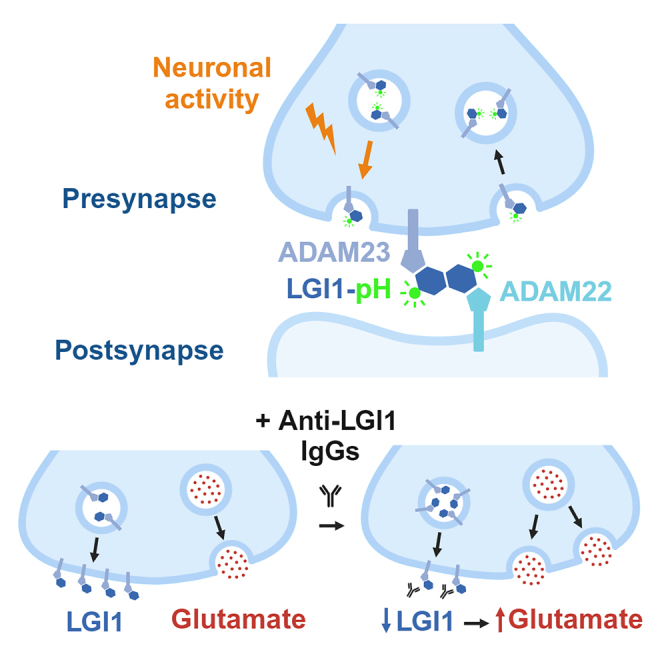
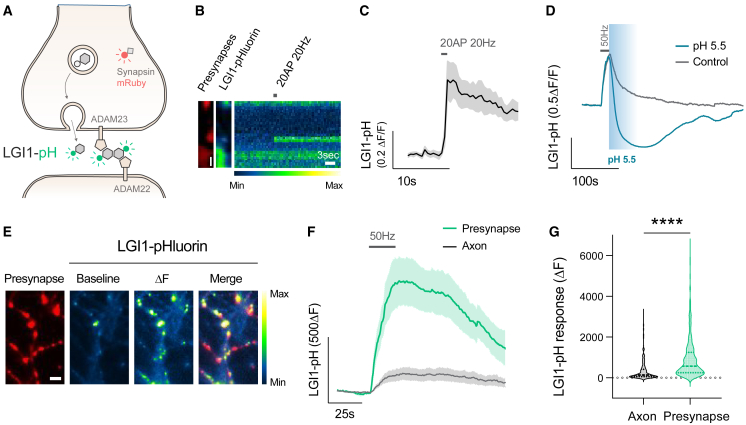
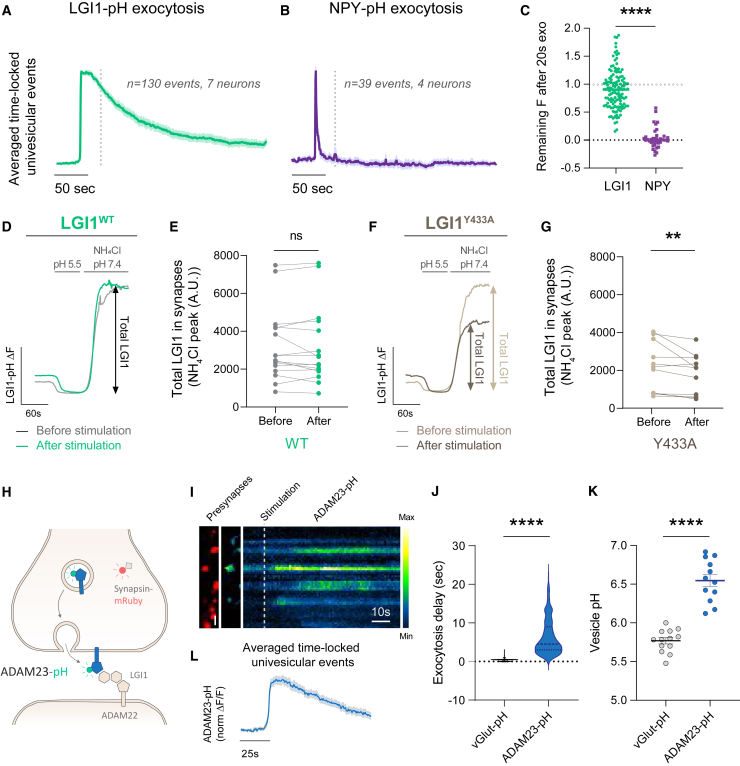
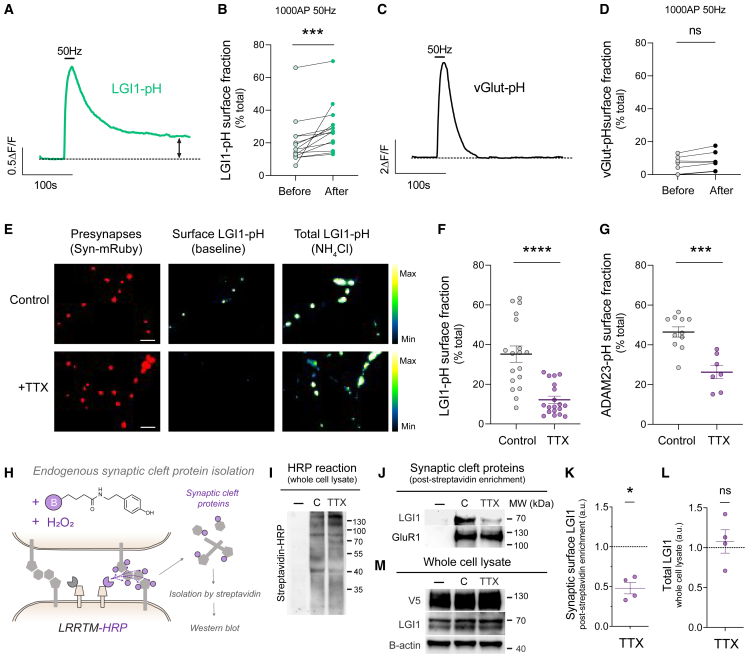
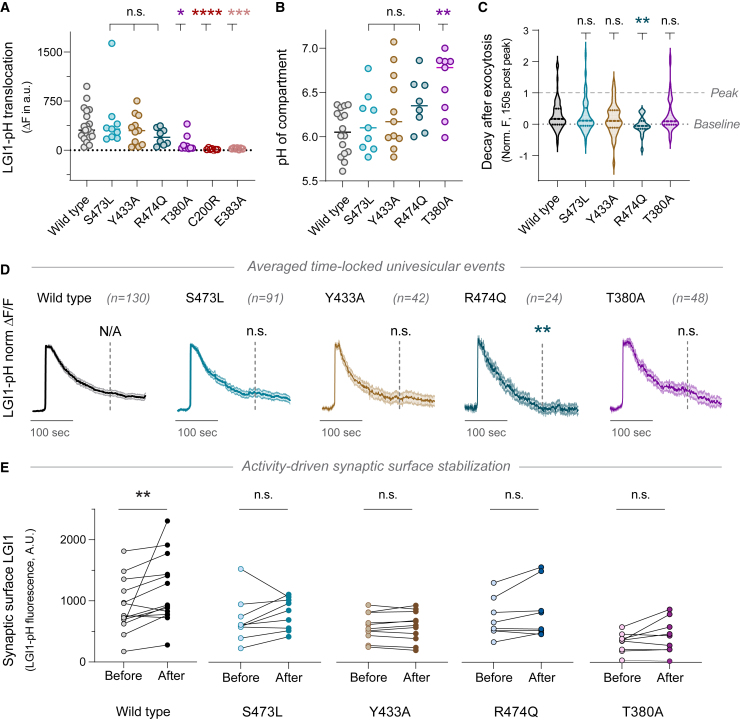
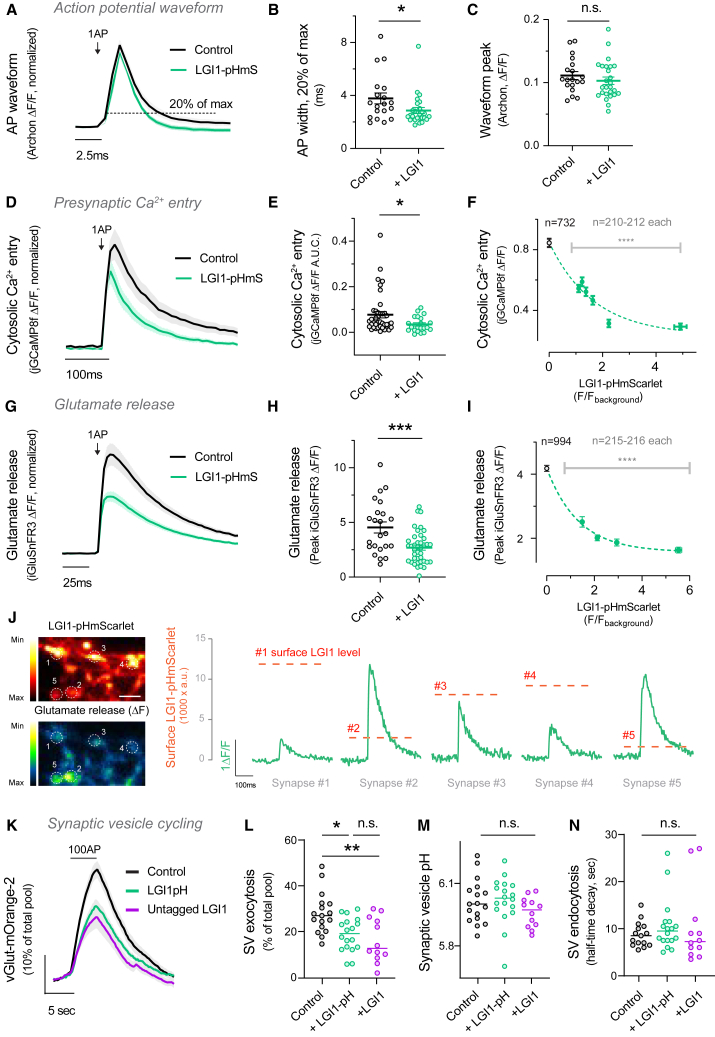
The fine control of synaptic function requires robust trans-synaptic molecular interactions. However, it remains poorly understood how trans-synaptic bridges change to reflect the functional states of the synapse. Here, we develop optical tools to visualize in firing synapses the molecular behavior of two trans-synaptic proteins, LGI1 and ADAM23, and find that neuronal activity acutely rearranges their abundance at the synaptic cleft. Surprisingly, synaptic LGI1 is primarily not secreted, as described elsewhere, but exo- and endocytosed through its interaction with ADAM23. Activity-driven translocation of LGI1 facilitates the formation of trans-synaptic connections proportionally to the history of activity of the synapse, adjusting excitatory transmission to synaptic firing rates. Accordingly, we find that patient-derived autoantibodies against LGI1 reduce its surface fraction and cause increased glutamate release. Our findings suggest that LGI1 abundance at the synaptic cleft can be acutely remodeled and serves as a critical control point for synaptic function.
突触功能的精细调控需要强大的跨突触分子相互作用。然而,目前人们对于跨突触桥如何改变以反映突触的功能状态仍知之甚少。在这里,我们开发了光学工具来可视化在发射突触中的两种跨突触蛋白 LGI1 和 ADAM23 的分子行为,并且发现神经元活动会急性地改变它们在突触间隙中的丰度。令人惊讶的是,突触 LGI1 主要不是像其他地方描述的那样被分泌,而是通过与 ADAM23 的相互作用被外排和内吞。LGI1 的活性驱动易位促进了跨突触连接的形成,与突触的活动历史成正比,从而调节兴奋性传递以适应突触的发放频率。因此,我们发现针对 LGI1 的自身抗体减少了其表面分数,并导致谷氨酸释放增加。我们的研究结果表明,突触间隙中 LGI1 的丰度可以被急性重塑,并作为突触功能的关键控制点。