Pulido Camila, Ryan Timothy A
Department of Biochemistry, Weill Cornell Medical College, New York, NY 10065, USA.
Sci Adv. 2021 Dec 3;7(49):eabi9027. doi: 10.1126/sciadv.abi9027.
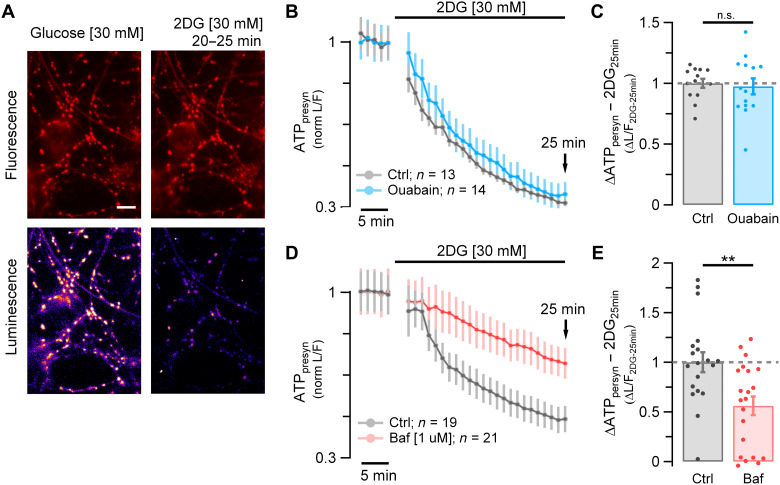
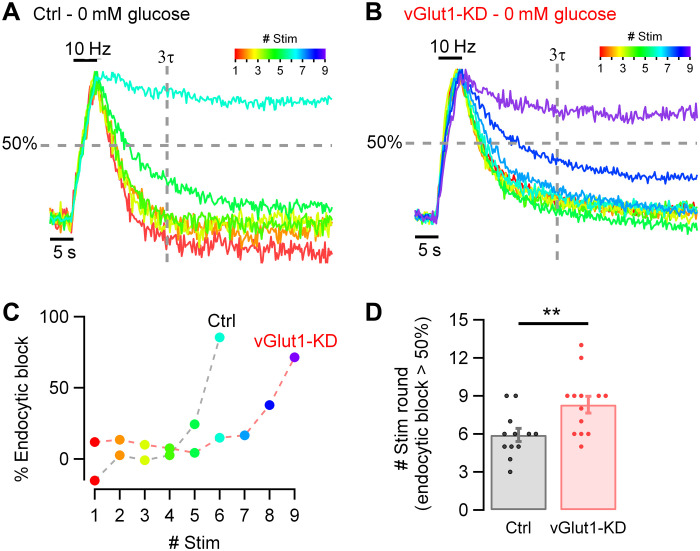
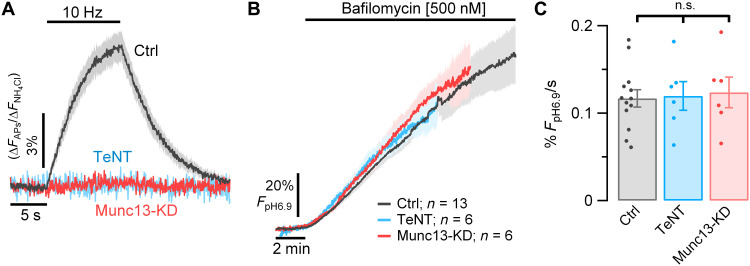
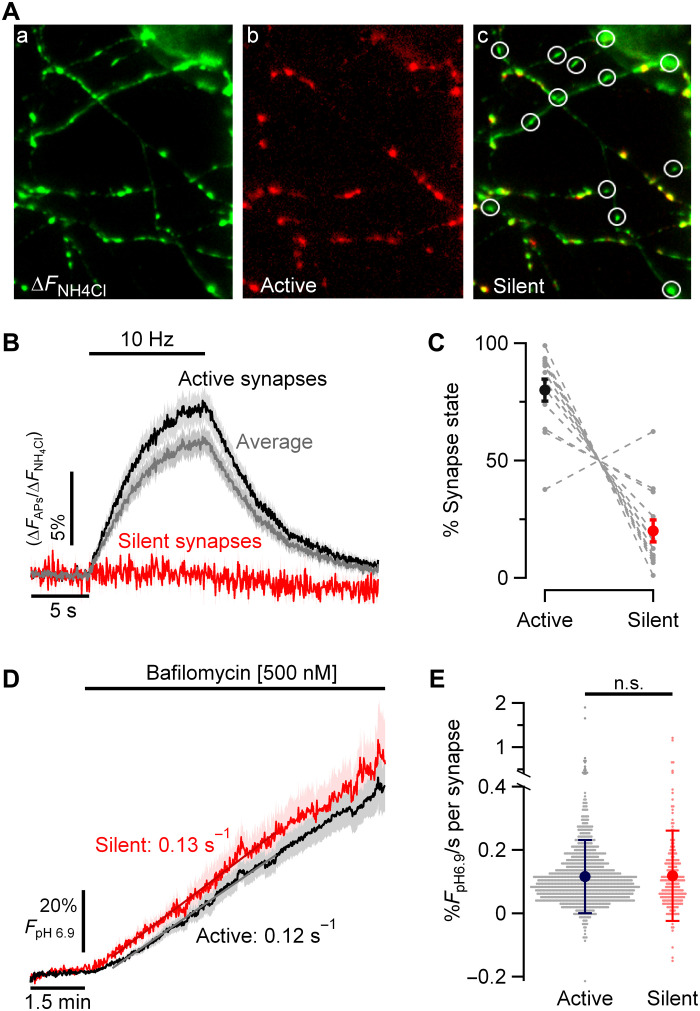
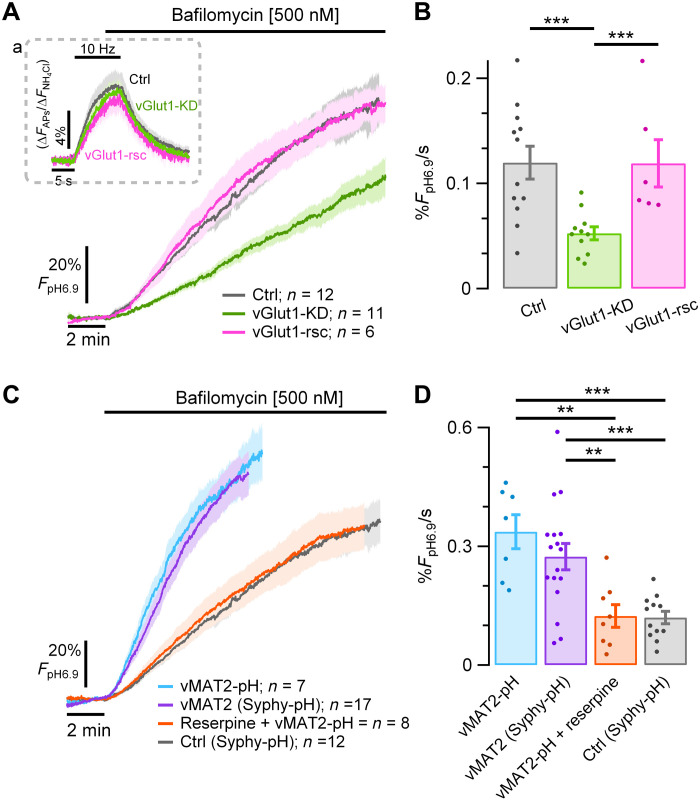
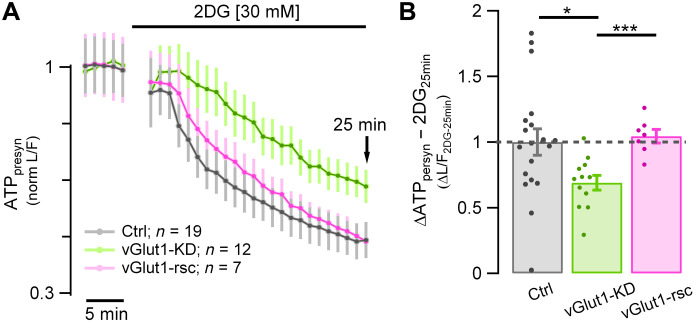
The brain is a metabolically fragile organ as compromises in fuel availability rapidly degrade cognitive function. Nerve terminals are likely loci of this vulnerability as they do not store sufficient ATP molecules, needing to synthesize them during activity or suffer acute degradation in performance. The ability of on-demand ATP synthesis to satisfy activity-driven ATP hydrolysis will depend additionally on the magnitude of local resting metabolic processes. We show here that synaptic vesicle (SV) pools are a major source of presynaptic basal energy consumption. This basal metabolic processes arises from SV-resident V-ATPases compensating for a hidden resting H efflux from the SV lumen. We show that this steady-state H efflux (i) is mediated by vesicular neurotransmitter transporters, (ii) is independent of the SV cycle, (iii) accounts for up to 44% of the resting synaptic energy consumption, and (iv) contributes substantially to nerve terminal intolerance of fuel deprivation.
大脑是一个代谢脆弱的器官,因为燃料供应的受损会迅速降低认知功能。神经末梢可能是这种脆弱性的所在部位,因为它们没有储存足够的ATP分子,需要在活动期间合成ATP,否则会在性能上遭受急性退化。按需ATP合成满足活动驱动的ATP水解的能力还将额外取决于局部静息代谢过程的强度。我们在此表明,突触小泡(SV)池是突触前基础能量消耗的主要来源。这种基础代谢过程源于驻留在SV中的V-ATP酶补偿了从SV腔中隐藏的静息H外流。我们表明,这种稳态H外流(i)由囊泡神经递质转运体介导,(ii)独立于SV循环,(iii)占静息突触能量消耗的高达44%,并且(iv)对神经末梢对燃料剥夺的不耐受性有很大贡献。