Ma Yiming, Chen Ying, Zhan Lei, Dong Qian, Wang Yuanhe, Li Xiaoyan, He Lian, Zhang Jingdong
Department of Medical Oncology, Liaoning Cancer Hospital & Institute, Shenyang, Liaoning Province, China.
Liaoning Key Laboratory of Gastrointestinal Cancer Translational Research, Shenyang, Liaoning Province, China.
Cell Death Discov. 2024 May 6;10(1):219. doi: 10.1038/s41420-024-01990-9.
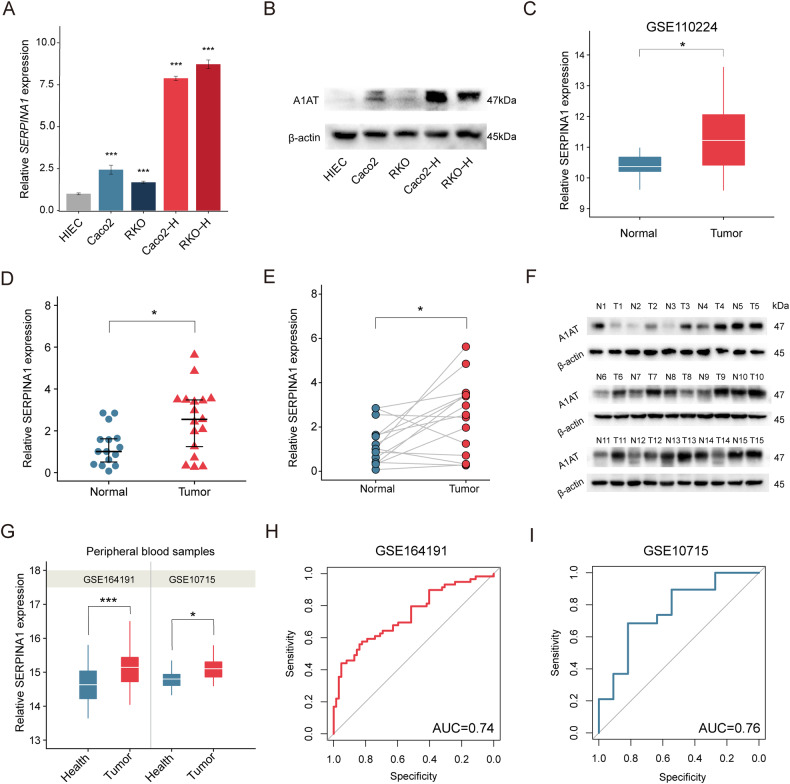
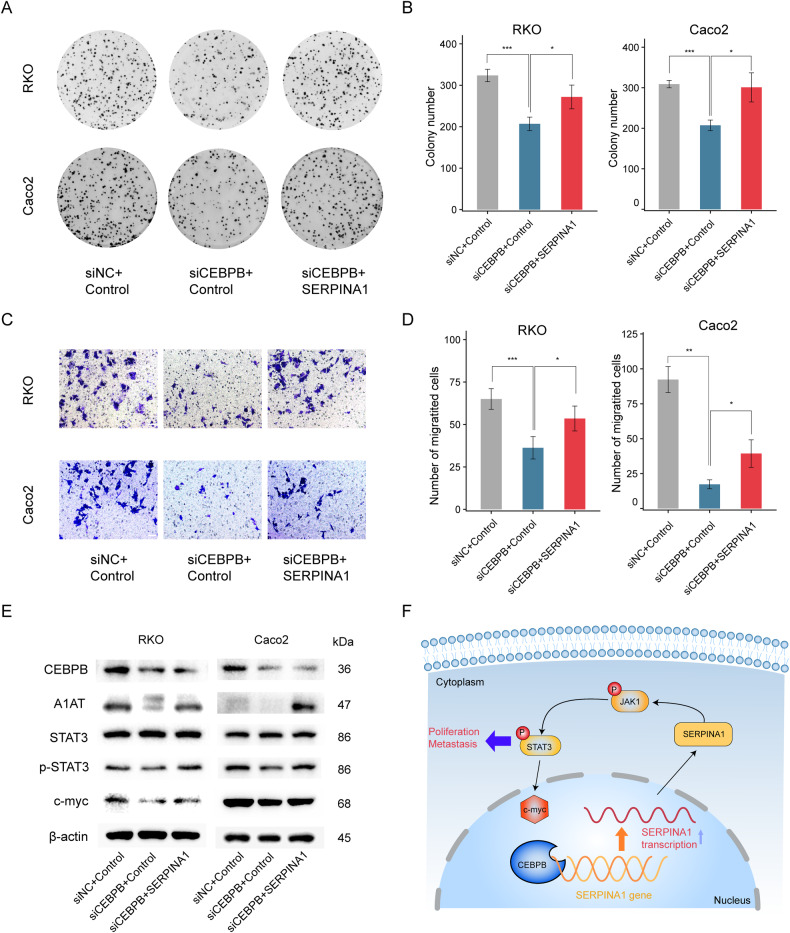
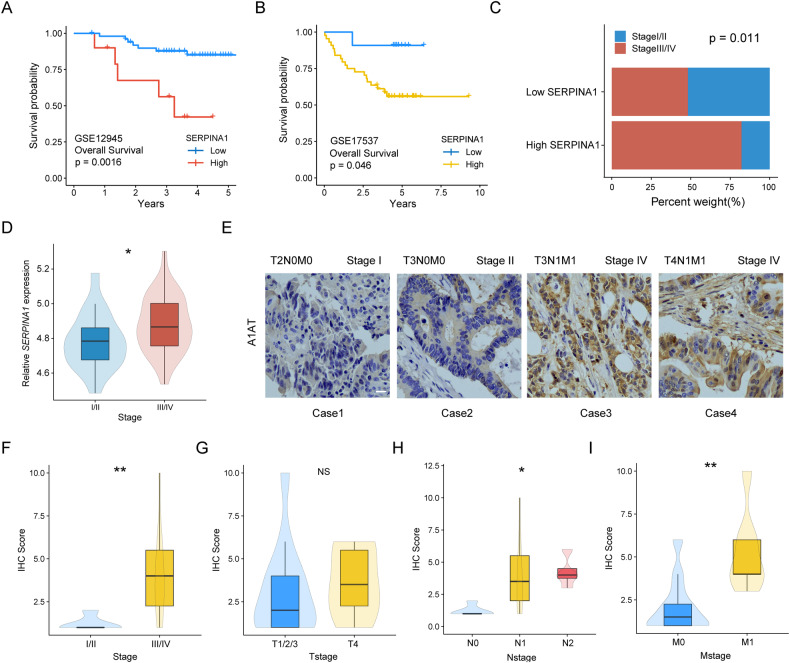
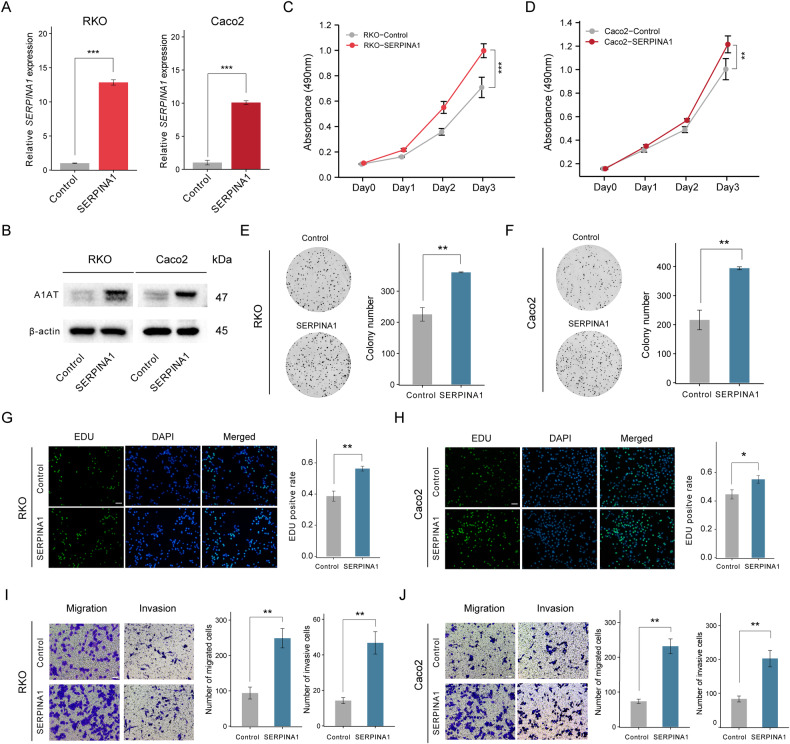
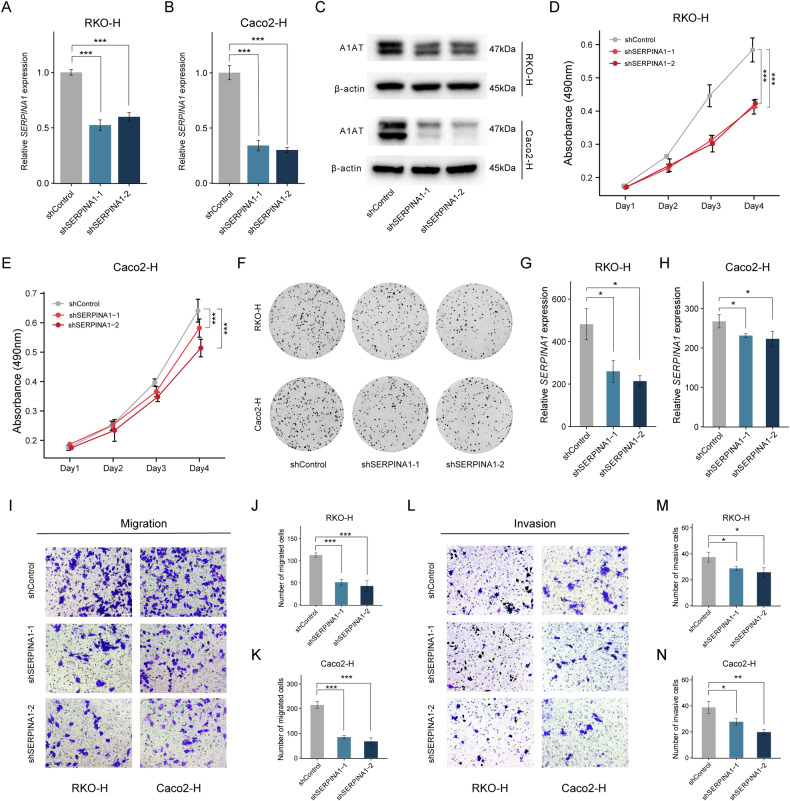
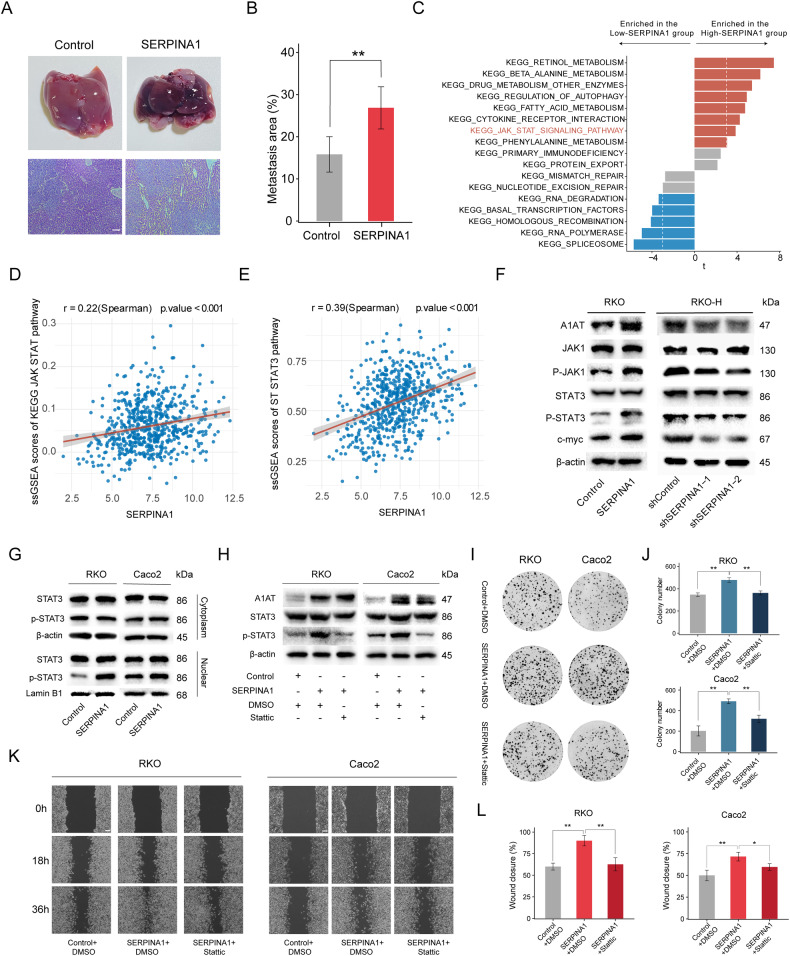
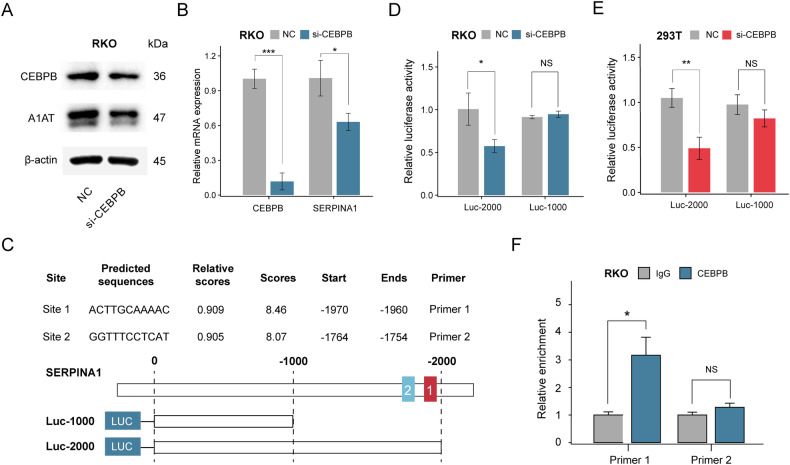
Colorectal cancer (CRC) is a highly malignant carcinoma associated with poor prognosis, and metastasis is one of the most common causes of death in CRC. Serpin Family A Member 1 (SERPINA1) is a serine protease inhibitor from the Serpin family. Till now, the function and mechanism of SERPINA1 in CRC progression have not been fully illustrated. We established highly metastatic colorectal cancer cells named as RKO-H and Caco2-H by mice liver metastasis model. By integrative bioinformatic approaches, we analyzed the prognostic value and clinical significance of SERPINA1 in CRC, and predicted potential transcription factors. Colony formation, EDU, MTS, Transwell and wound healing assay were performed to evaluate the biological functions of SERPINA1 in CRC in vitro. Experiments in vivo were conducted to explore the effects of SERPINA1 on liver metastasis of CRC. ChIP and luciferase reporter gene assays were performed to identify the transcriptional regulatory mechanism of SERPINA1 by CEBPB. Our results show that SERPINA1 is highly expressed in CRC and correlated with poor clinical outcomes. SERPINA1 promotes the proliferation, migration by activating STAT3 pathway. Mechanistically, CEBPB binds SERPINA1 gene promoter sequence and promotes the transcription of SERPINA1. SERPINA1 drives CEBPB-induced tumor cell growth and migration via augmenting STAT3 signaling. Our results suggest that SERPINA1 is a potential prognostic marker and may serve as a novel treatment target for CRC.
结直肠癌(CRC)是一种预后较差的高恶性肿瘤,转移是CRC最常见的死亡原因之一。丝氨酸蛋白酶抑制剂家族A成员1(SERPINA1)是丝氨酸蛋白酶抑制剂家族中的一种丝氨酸蛋白酶抑制剂。到目前为止,SERPINA1在CRC进展中的功能和机制尚未完全阐明。我们通过小鼠肝转移模型建立了高转移性结肠癌细胞系,命名为RKO-H和Caco2-H。通过综合生物信息学方法,我们分析了SERPINA1在CRC中的预后价值和临床意义,并预测了潜在的转录因子。进行集落形成、EDU、MTS、Transwell和伤口愈合实验,以评估SERPINA1在体外对CRC生物学功能的影响。进行体内实验以探讨SERPINA1对CRC肝转移的影响。进行染色质免疫沉淀(ChIP)和荧光素酶报告基因实验,以鉴定CEBPB对SERPINA1的转录调控机制。我们的结果表明,SERPINA1在CRC中高表达,且与不良临床结果相关。SERPINA1通过激活STAT3信号通路促进细胞增殖和迁移。机制上,CEBPB结合SERPINA1基因启动子序列并促进SERPINA1的转录。SERPINA1通过增强STAT3信号传导驱动CEBPB诱导的肿瘤细胞生长和迁移。我们的结果表明,SERPINA1是一种潜在的预后标志物,可能成为CRC的新型治疗靶点。