Department of Orthopedics, Shanghai Key Laboratory of Orthopedic Implant, Shanghai Ninth People's Hospital, Shanghai Jiao Tong University School of Medicine, Shanghai, 200011, China.
School of Medicine, Shanghai University, Shanghai, 200444, China.
Mil Med Res. 2024 May 6;11(1):28. doi: 10.1186/s40779-024-00529-4.
Intervertebral disc degeneration (IVDD) is a multifaceted condition characterized by heterogeneity, wherein the balance between catabolism and anabolism in the extracellular matrix of nucleus pulposus (NP) cells plays a central role. Presently, the available treatments primarily focus on relieving symptoms associated with IVDD without offering an effective cure targeting its underlying pathophysiological processes. D-mannose (referred to as mannose) has demonstrated anti-catabolic properties in various diseases. Nevertheless, its therapeutic potential in IVDD has yet to be explored.
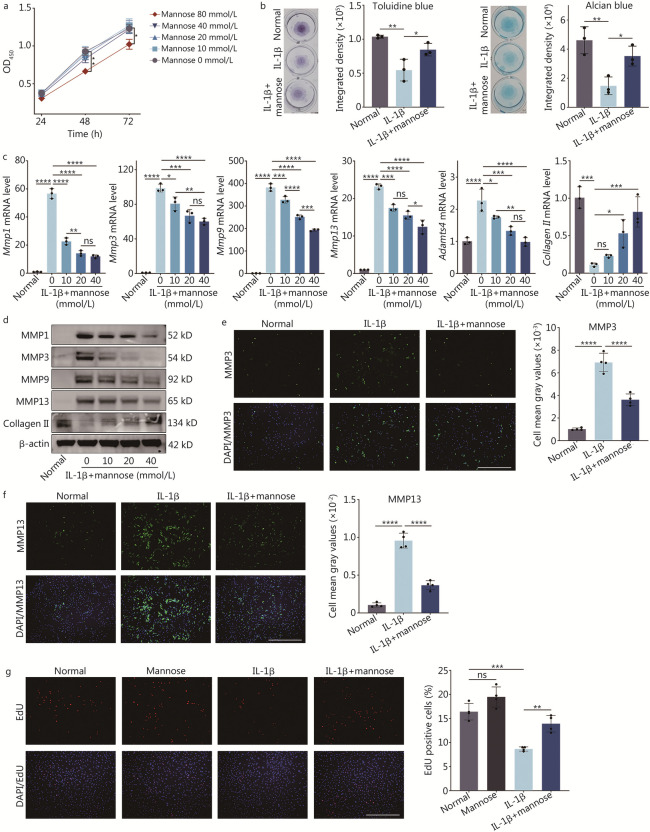
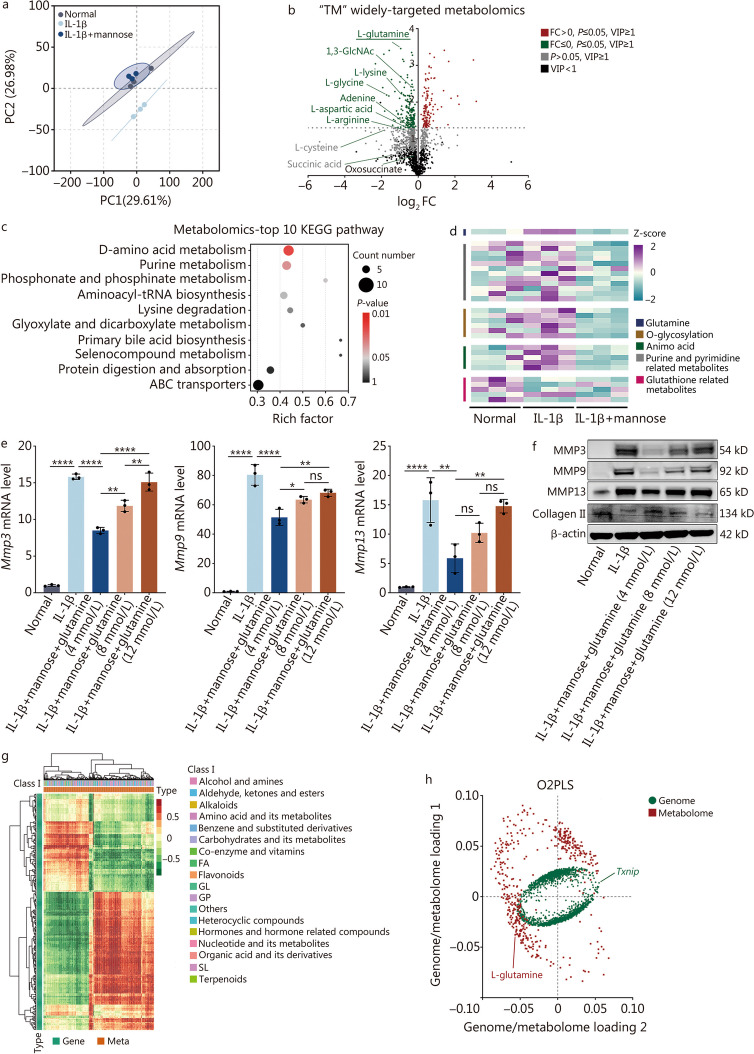
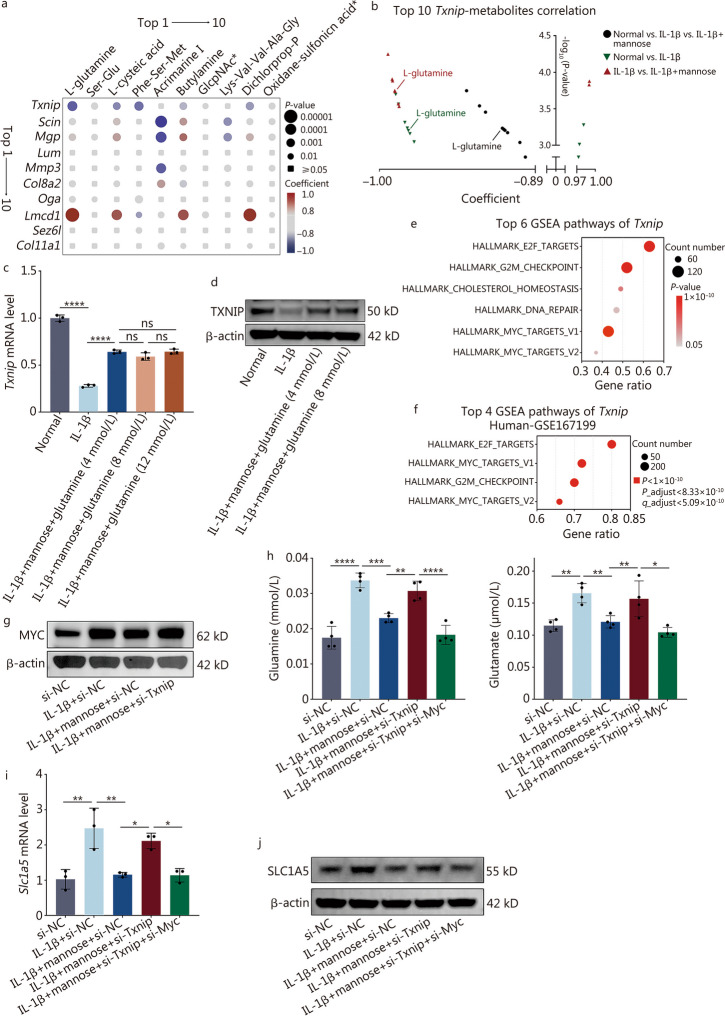
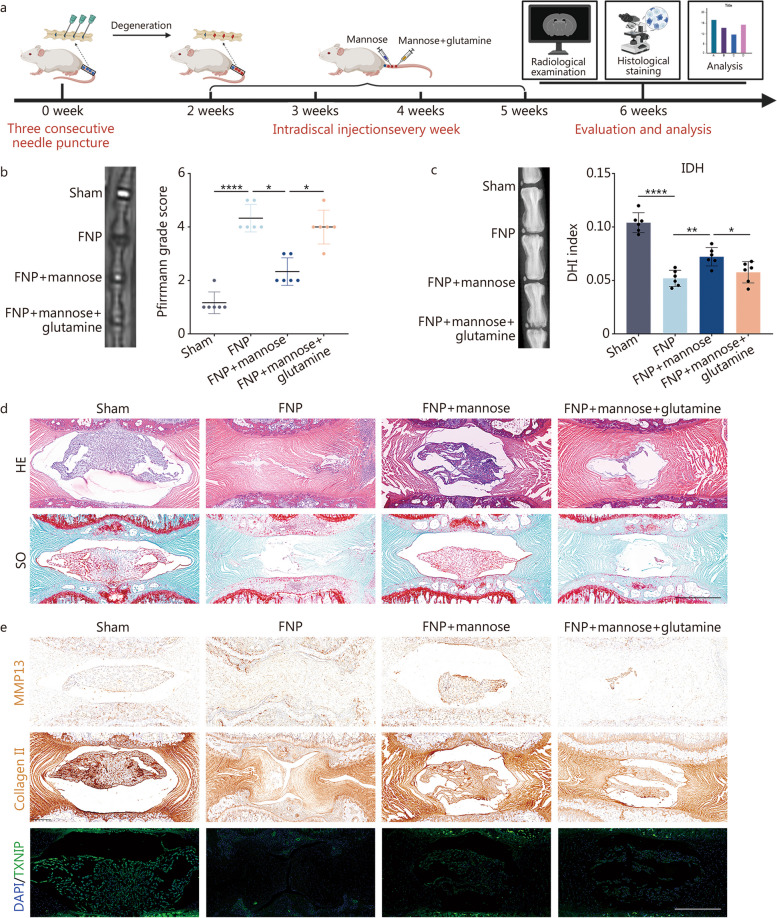
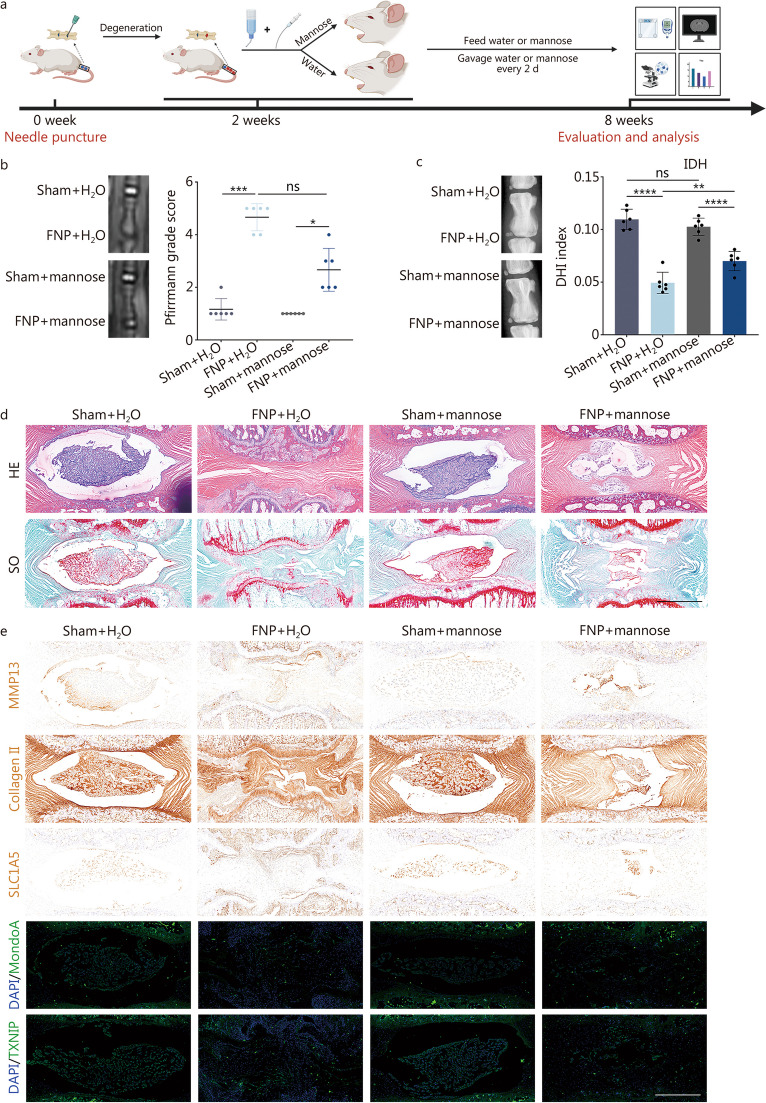
The study began with optimizing the mannose concentration for restoring NP cells. Transcriptomic analyses were employed to identify the mediators influenced by mannose, with the thioredoxin-interacting protein (Txnip) gene showing the most significant differences. Subsequently, small interfering RNA (siRNA) technology was used to demonstrate that Txnip is the key gene through which mannose exerts its effects. Techniques such as colocalization analysis, molecular docking, and overexpression assays further confirmed the direct regulatory relationship between mannose and TXNIP. To elucidate the mechanism of action of mannose, metabolomics techniques were employed to pinpoint glutamine as a core metabolite affected by mannose. Next, various methods, including integrated omics data and the Gene Expression Omnibus (GEO) database, were used to validate the one-way pathway through which TXNIP regulates glutamine. Finally, the therapeutic effect of mannose on IVDD was validated, elucidating the mechanistic role of TXNIP in glutamine metabolism in both intradiscal and orally treated rats.
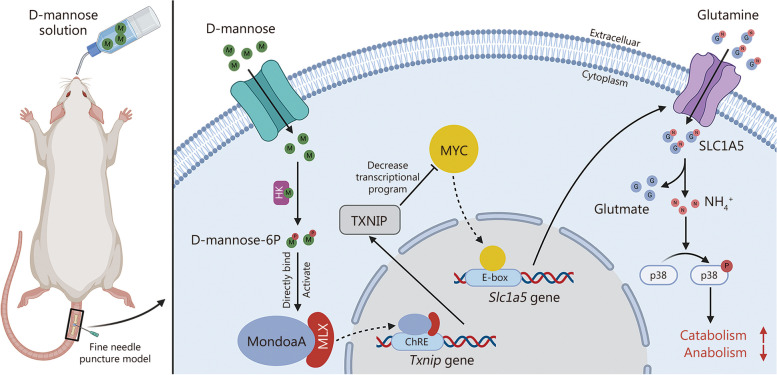
In both in vivo and in vitro experiments, it was discovered that mannose has potent efficacy in alleviating IVDD by inhibiting catabolism. From a mechanistic standpoint, it was shown that mannose exerts its anti-catabolic effects by directly targeting the transcription factor max-like protein X-interacting protein (MondoA), resulting in the upregulation of TXNIP. This upregulation, in turn, inhibits glutamine metabolism, ultimately accomplishing its anti-catabolic effects by suppressing the mitogen-activated protein kinase (MAPK) pathway. More importantly, in vivo experiments have further demonstrated that compared with intradiscal injections, oral administration of mannose at safe concentrations can achieve effective therapeutic outcomes.
In summary, through integrated multiomics analysis, including both in vivo and in vitro experiments, this study demonstrated that mannose primarily exerts its anti-catabolic effects on IVDD through the TXNIP-glutamine axis. These findings provide strong evidence supporting the potential of the use of mannose in clinical applications for alleviating IVDD. Compared to existing clinically invasive or pain-relieving therapies for IVDD, the oral administration of mannose has characteristics that are more advantageous for clinical IVDD treatment.
椎间盘退变(IVDD)是一种多方面的病症,其特征为异质性,其中细胞外基质中核髓(NP)细胞的分解代谢与合成代谢之间的平衡起着核心作用。目前,现有的治疗方法主要集中在缓解与 IVDD 相关的症状,而没有针对其潜在病理生理过程提供有效的治疗方法。D-甘露糖(简称甘露糖)在各种疾病中表现出抗分解代谢作用。然而,其在 IVDD 中的治疗潜力尚未得到探索。
本研究首先优化了甘露糖恢复 NP 细胞的浓度。采用转录组分析鉴定受甘露糖影响的介质,其中硫氧还蛋白相互作用蛋白(Txnip)基因差异最为显著。随后,采用小干扰 RNA(siRNA)技术证明 Txnip 是甘露糖发挥作用的关键基因。共定位分析、分子对接和过表达测定等技术进一步证实了甘露糖与 TXNIP 之间的直接调控关系。为了阐明甘露糖的作用机制,采用代谢组学技术确定了谷氨酰胺是受甘露糖影响的核心代谢物。接下来,使用整合组学数据和基因表达综合数据库(GEO)等多种方法验证了 Txnip 通过单一路径调节谷氨酰胺的方式。最后,验证了甘露糖对 IVDD 的治疗效果,阐明了 Txnip 在椎间盘内和口服治疗大鼠的谷氨酰胺代谢中的作用机制。
在体内和体外实验中,均发现甘露糖通过抑制分解代谢对 IVDD 具有显著的治疗效果。从机制上讲,甘露糖通过直接靶向 max 样蛋白 X 相互作用蛋白(MondoA)的转录因子,上调 Txnip,发挥其抗分解代谢作用。这种上调进而抑制谷氨酰胺代谢,最终通过抑制丝裂原活化蛋白激酶(MAPK)通路来完成其抗分解代谢作用。更重要的是,体内实验进一步表明,与椎间盘内注射相比,口服安全浓度的甘露糖可以达到有效的治疗效果。
综上所述,通过包括体内和体外实验在内的综合多组学分析,本研究表明甘露糖主要通过 TXNIP-谷氨酰胺轴对 IVDD 发挥其抗分解代谢作用。这些发现为甘露糖在缓解 IVDD 的临床应用中的潜力提供了强有力的证据。与现有的临床侵袭性或缓解疼痛的 IVDD 治疗方法相比,口服甘露糖具有更有利于临床 IVDD 治疗的特点。