Department of Gastroenterology and Hepatology, Nagoya University Graduate School of Medicine, 65 Tsurumai-Cho, Showa-Ku, Nagoya, 466-8550, Japan.
Department of Biochemistry, Shimane University School of Medicine, Izumo, 693-8501, Japan.
Dig Dis Sci. 2024 Jul;69(7):2573-2585. doi: 10.1007/s10620-024-08453-2. Epub 2024 May 7.
Numerous biological interventions and small molecules are used to treat Crohn's disease; however, the effectiveness of these treatments varies largely. Non-responsiveness to biological therapies is associated with interleukin (IL)-18 gene polymorphisms and high IL-18 expression has been implicated in the pathogenesis of Crohn's disease.
The aim of this study was to elucidate the expression of precursor and mature IL-18 in patients with Crohn's disease who exhibited varied responses to cytokine-targeted treatments and determine whether selective inhibition of mature IL-18 offers a novel therapeutic avenue.
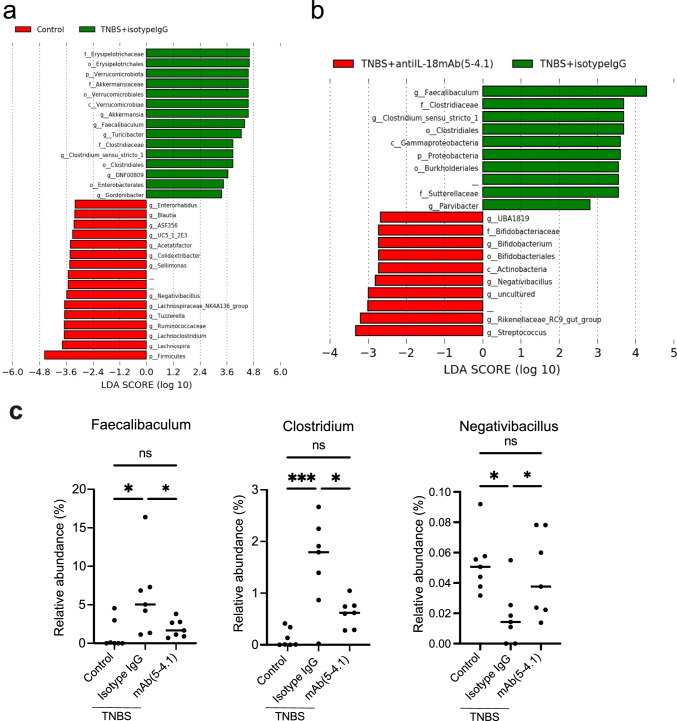
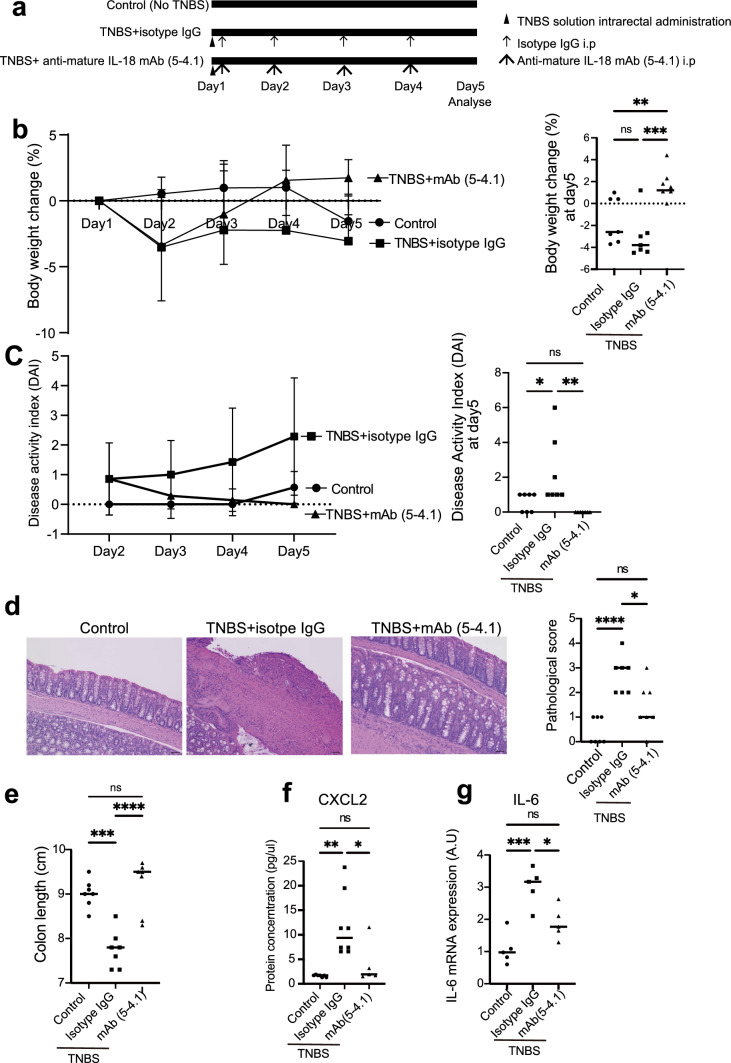
We generated a monoclonal antibody that specifically recognizes the neoepitope of caspase-cleaved mature IL-18. Expression of precursor and mature IL-18 was analyzed in patients with Crohn's disease. Anti-mature IL-18 monoclonal antibodies were intraperitoneally administered in an acute colitis mouse model, and the disease activity index, body weight loss, tissue pathology, proinflammatory cytokine expression, goblet cell function, and microbiota composition were assessed.
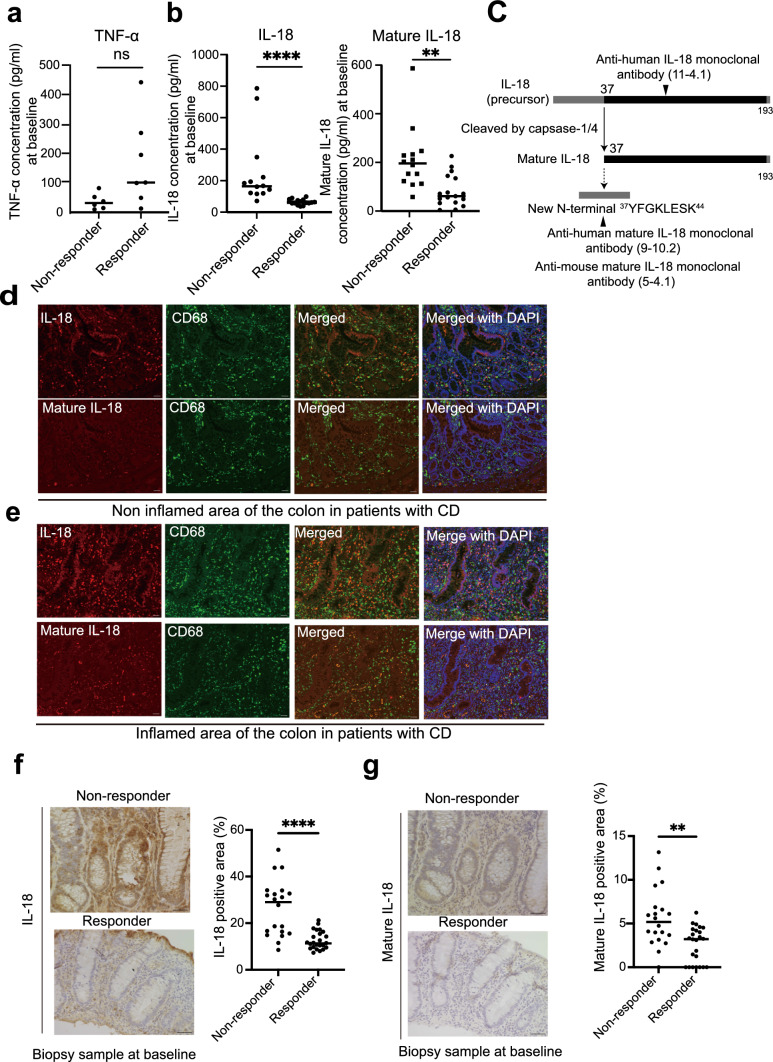
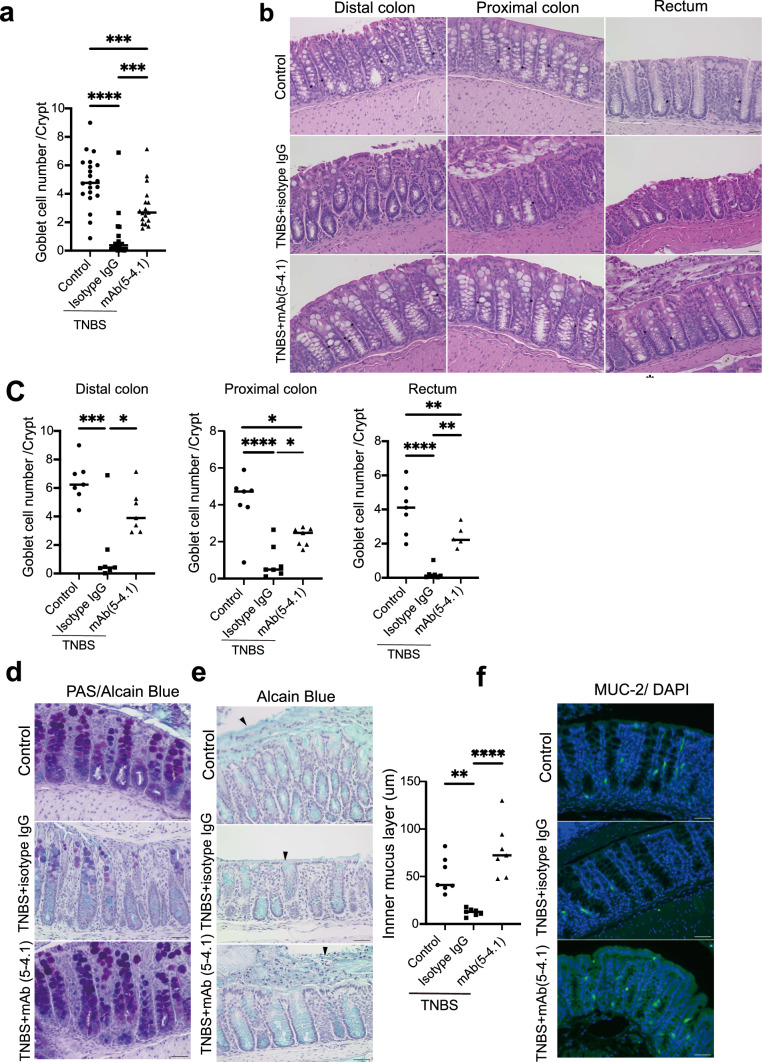
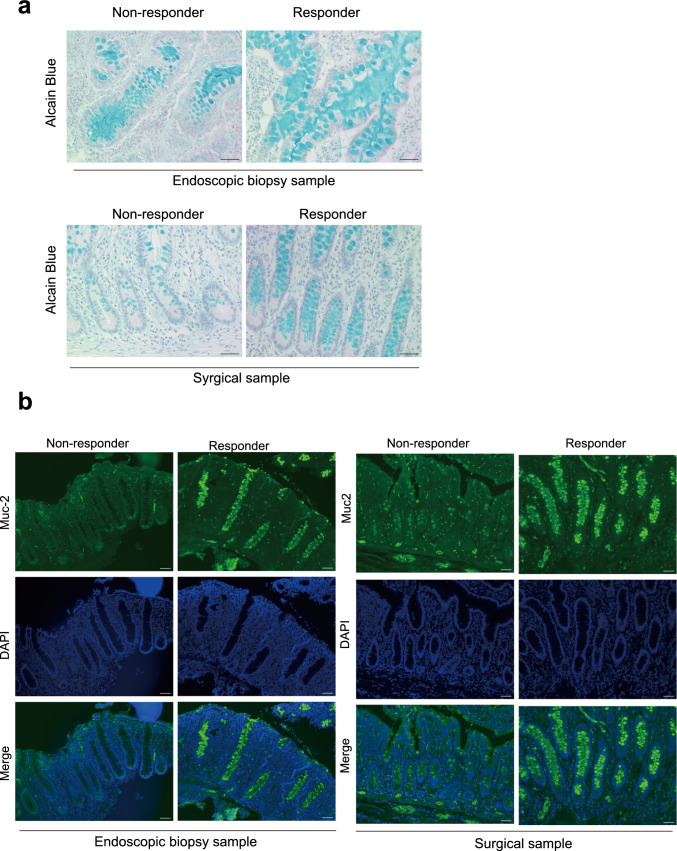
Precursor and mature IL-18 expression was upregulated and goblet cell function was impaired in patients with Crohn's disease who were unresponsive to biological therapies. Administration of anti-mature IL-18 antibodies ameliorated induced colitis by repairing goblet cell function and restoring the mucus layer.
The newly developed monoclonal antibody holds promise as a therapeutic alternative for Crohn's disease.
有许多生物干预措施和小分子被用于治疗克罗恩病,但这些治疗方法的效果差异很大。对生物疗法无反应与白细胞介素 (IL)-18 基因多态性有关,并且高水平的 IL-18 表达与克罗恩病的发病机制有关。
本研究旨在阐明对细胞因子靶向治疗反应不同的克罗恩病患者中前体和成熟的 IL-18 的表达,并确定选择性抑制成熟的 IL-18 是否提供了一种新的治疗途径。
我们生成了一种单克隆抗体,该抗体特异性识别半胱天冬酶切割成熟的 IL-18 的新表位。分析了克罗恩病患者前体和成熟的 IL-18 的表达。在急性结肠炎小鼠模型中,腹腔内给予抗成熟 IL-18 单克隆抗体,并评估疾病活动指数、体重减轻、组织病理学、促炎细胞因子表达、杯状细胞功能和微生物群落组成。
对生物疗法无反应的克罗恩病患者中前体和成熟的 IL-18 表达上调,杯状细胞功能受损。给予抗成熟 IL-18 抗体可通过修复杯状细胞功能和恢复粘液层来改善诱导性结肠炎。
新开发的单克隆抗体有望成为克罗恩病的治疗替代方法。