Faculty of Psychology and Educational Sciences, University of Geneva, Bd du Pont d'Arve 40, 1205, Geneva, Switzerland.
Université Côte d'Azur, CNRS, BCL, France.
Cereb Cortex. 2024 May 2;34(5). doi: 10.1093/cercor/bhae187.
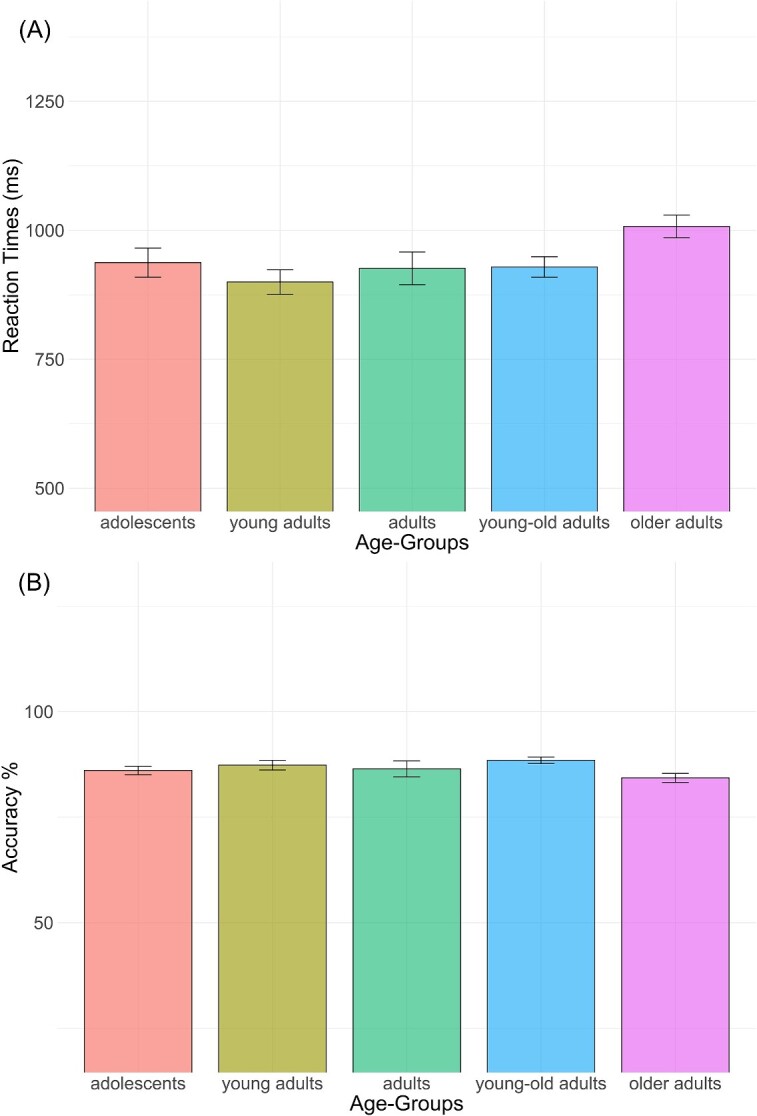
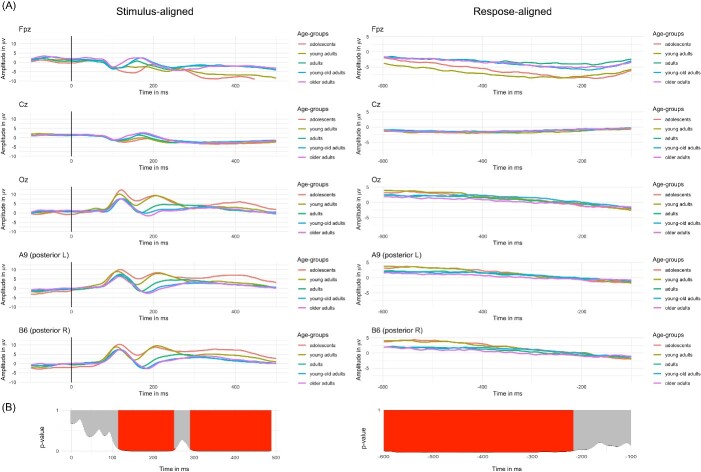
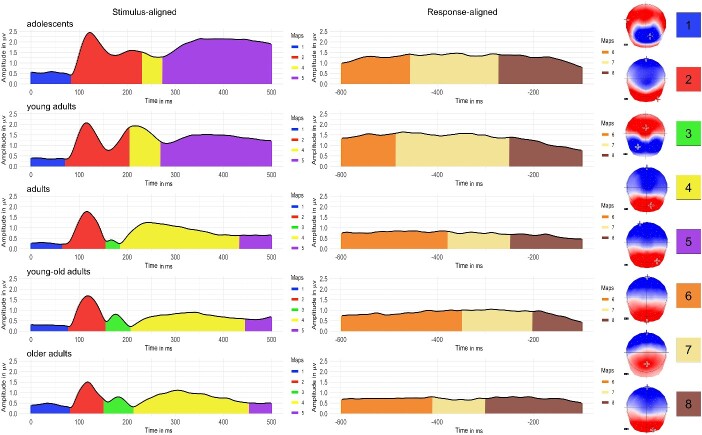
Behavioral and brain-related changes in word production have been claimed to predominantly occur after 70 years of age. Most studies investigating age-related changes in adulthood only compared young to older adults, failing to determine whether neural processes underlying word production change at an earlier age than observed in behavior. This study aims to fill this gap by investigating whether changes in neurophysiological processes underlying word production are aligned with behavioral changes. Behavior and the electrophysiological event-related potential patterns of word production were assessed during a picture naming task in 95 participants across five adult lifespan age groups (ranging from 16 to 80 years old). While behavioral performance decreased starting from 70 years of age, significant neurophysiological changes were present at the age of 40 years old, in a time window (between 150 and 220 ms) likely associated with lexical-semantic processes underlying referential word production. These results show that neurophysiological modifications precede the behavioral changes in language production; they can be interpreted in line with the suggestion that the lexical-semantic reorganization in mid-adulthood influences the maintenance of language skills longer than for other cognitive functions.
行为和与大脑相关的单词产生变化据称主要发生在 70 岁之后。大多数研究成年期的年龄相关性变化的研究仅比较了年轻人和老年人,未能确定单词产生的神经过程是否比观察到的行为更早发生变化。本研究旨在通过研究单词产生的神经生理过程的变化是否与行为变化一致来填补这一空白。在 95 名参与者的图片命名任务中,评估了行为和单词产生的事件相关电位模式,这些参与者横跨五个成年生命阶段年龄组(16 至 80 岁)。虽然行为表现从 70 岁开始下降,但在 40 岁时就出现了显著的神经生理变化,在一个时间窗口(150 至 220 毫秒之间),可能与参考性单词产生的词汇语义过程有关。这些结果表明,语言产生中的神经生理变化先于行为变化;它们可以根据以下建议进行解释,即中年时期的词汇语义重组比其他认知功能更能影响语言技能的维持。