Pun Meena, Bhatt Bhuwan Raj, Shah Shambhu, Neupane Narayan, Kaphle Krishna
Institute of Agriculture and Animal Science, Tribhuvan University, Kirtipur, Kathmandu, Nepal.
Faculty of Agriculture, School of Agriculture, Far Western University, Tikapur, Nepal.
Vet Med Int. 2024 Apr 23;2024:3058386. doi: 10.1155/2024/3058386. eCollection 2024.
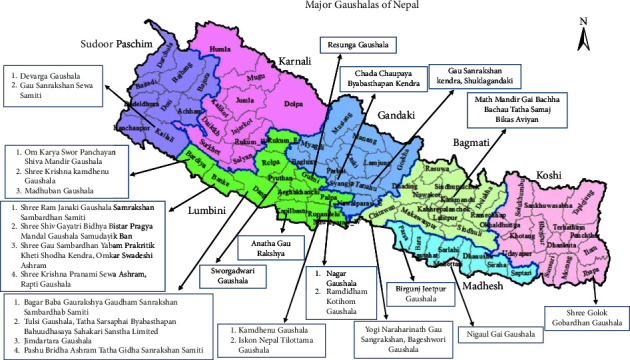
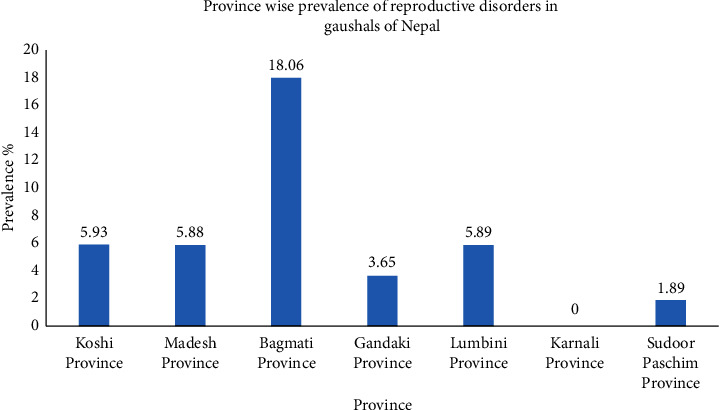
Cow is the national animal of Nepal, yet it is one of the most abused animal species here. Under realized utilities of cow that is nonlactating or pregnant is the reason for demonic cruelty. Since the Vedic period, gaushalas have been caring for cows. At present, most gaushalas have responsibility to rescue, offer refuge, and treat poorly treated or confiscated cattle from smuggling rackets in Nepal. It is no surprise that these abused animals suffer from many health issues and compromised reproductive ability. This study was conducted to know about husbandry practice and to determine prevalence of reproductive disorders in cows of Gaushala from Nepal. Altogether, 27 gaushalas were visited throughout the study period and cows (≥2 years) ( = 2959) were included for the study. From the study, respondents from 14.81% Gaushala admitted indigenous cattle only, 11.11% admitted any breed (indigenous and crossbreed), 44.44% admitted stray animals only, and 29.63% admitted all types (indigenous, crossbreed, and stray animals). The study revealed that among ( = 2959) animals examined, 5.54% ( = 164) were affected by either one or more reproductive problems. The major reproductive disorders identified in study area were repeat breeding 0.47%, cervico-vaginal and uterine prolapse 0.34%, retention of placenta 2.13%, dystocia 0.61%, and abortion 1.66%. Herd size of Gaushala had a significant difference ( < 0.05) on the overall prevalence of reproductive problems in cows of Gaushala. The main issues with gaushalas included a lack of resources like adequate fund, feeds, fodder, and water, shortage of grazing acreage, veterinary services, and difficulties in managing male cattle. To mitigate the issues and welfare related to gaushalas strict adherence to disease surveillance and biosecurity rules, avoidance of unlimited reproduction in cows, and separation of males and females, fund raising and resource management, collaboration with local government and NGOs, veterinary hospital, clinics, research, and innovation with veterinary institution and universities.
牛是尼泊尔的国家动物,但它却是该国遭受虐待最严重的动物种类之一。未实现非泌乳或怀孕母牛的利用价值是这种恶魔般残忍行为的原因。自吠陀时期以来,牛舍就一直在照料母牛。目前,大多数牛舍有责任救助、收留并治疗尼泊尔走私团伙中待遇恶劣或被没收的牛。毫不奇怪,这些受虐待的动物患有许多健康问题,繁殖能力也受到损害。本研究旨在了解饲养管理实践,并确定尼泊尔牛舍中母牛生殖障碍的患病率。在整个研究期间,共走访了27个牛舍,纳入研究的母牛为年龄≥2岁(n = 2959头)。研究表明,14.81%的牛舍受访者仅认可本地牛,11.11%认可任何品种(本地牛和杂交牛),44.44%仅认可流浪动物,29.63%认可所有类型(本地牛、杂交牛和流浪动物)。研究显示,在接受检查的2959头动物中,5.54%(n = 164)受到一种或多种生殖问题的影响。研究区域内确定的主要生殖障碍包括重复配种0.47%、子宫颈阴道和子宫脱垂0.34%、胎盘滞留2.13%、难产0.61%以及流产1.66%。牛舍的畜群规模对牛舍中母牛生殖问题的总体患病率有显著差异(P < 0.05)。牛舍的主要问题包括缺乏足够的资金、饲料、草料和水等资源,放牧面积不足,兽医服务欠缺,以及公牛管理困难。为缓解与牛舍相关的问题和福利状况,需严格遵守疾病监测和生物安全规则,避免母牛无节制繁殖,将公牛和母牛分开,筹集资金和进行资源管理,与地方政府和非政府组织、兽医医院、诊所合作,以及与兽医机构和大学开展研究与创新。