• 文献检索
  • 文档翻译
  • 深度研究
  • 学术资讯
  • Suppr Zotero 插件Zotero 插件
  • 邀请有礼
  • 套餐&价格
  • 历史记录
应用&插件
Suppr Zotero 插件Zotero 插件浏览器插件Mac 客户端Windows 客户端微信小程序
定价
高级版会员购买积分包购买API积分包
服务
文献检索文档翻译深度研究API 文档MCP 服务
关于我们
关于 Suppr公司介绍联系我们用户协议隐私条款
关注我们

Suppr 超能文献

核心技术专利:CN118964589B侵权必究
粤ICP备2023148730 号-1Suppr @ 2026

文献检索

告别复杂PubMed语法,用中文像聊天一样搜索,搜遍4000万医学文献。AI智能推荐,让科研检索更轻松。

立即免费搜索

文件翻译

保留排版,准确专业,支持PDF/Word/PPT等文件格式,支持 12+语言互译。

免费翻译文档

深度研究

AI帮你快速写综述,25分钟生成高质量综述,智能提取关键信息,辅助科研写作。

立即免费体验

通过机器学习模型,对成熟人类卵母细胞进行分割,可提供可解释的和改善的胚泡结果预测。

Segmentation of mature human oocytes provides interpretable and improved blastocyst outcome predictions by a machine learning model.

机构信息

Clinical Embryology and Scientific Operations, Future Fertility, 3 Church St, Toronto, ON, M5E 1A9, Canada.

Data Science, Future Fertility, 3 Church St, Toronto, ON, M5E 1A9, Canada.

出版信息

Sci Rep. 2024 May 8;14(1):10569. doi: 10.1038/s41598-024-60901-1.

DOI:10.1038/s41598-024-60901-1
PMID:38719918
原文链接:https://pmc.ncbi.nlm.nih.gov/articles/PMC11078996/
Abstract

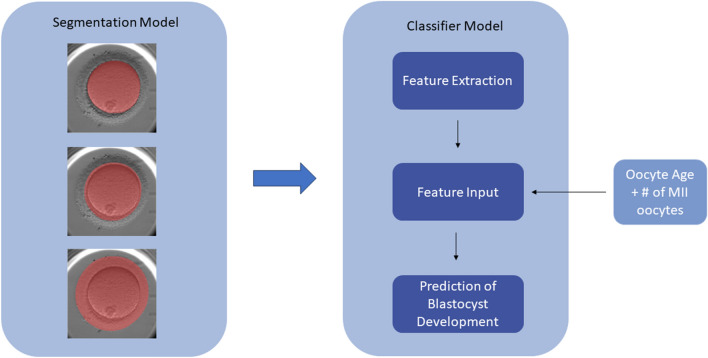
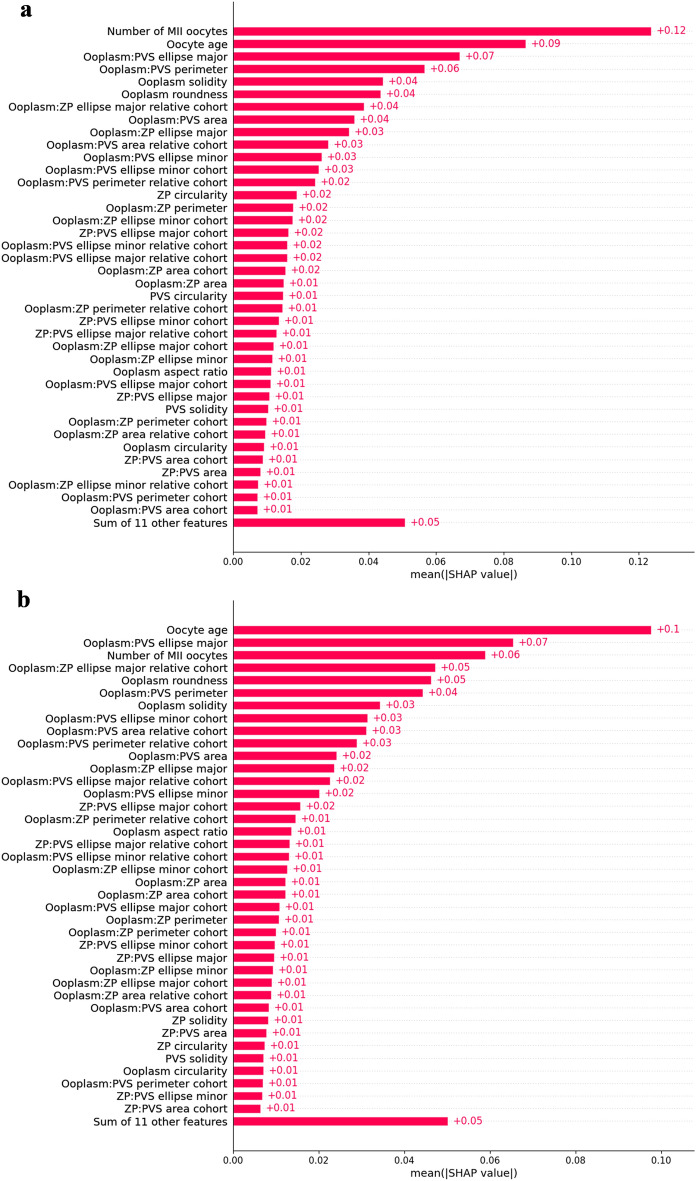
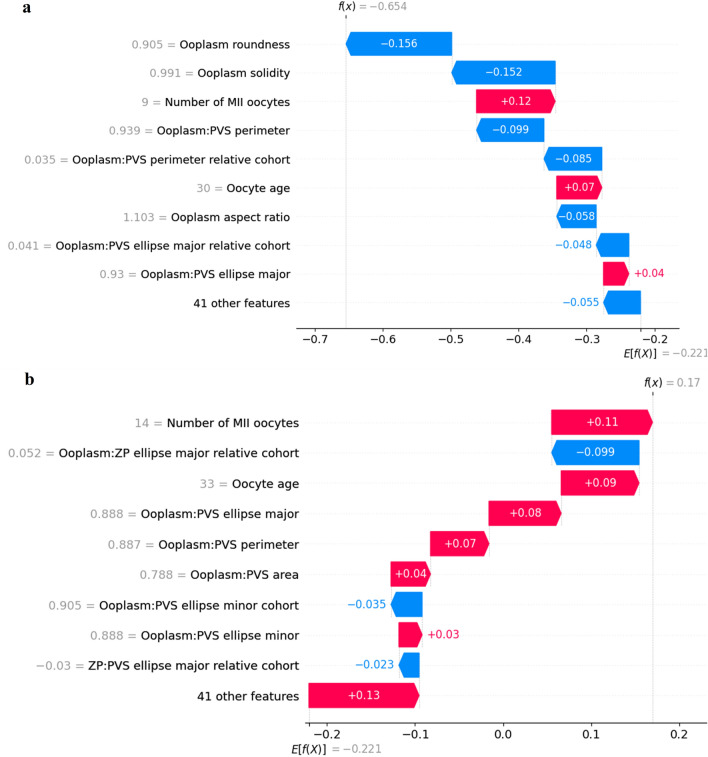
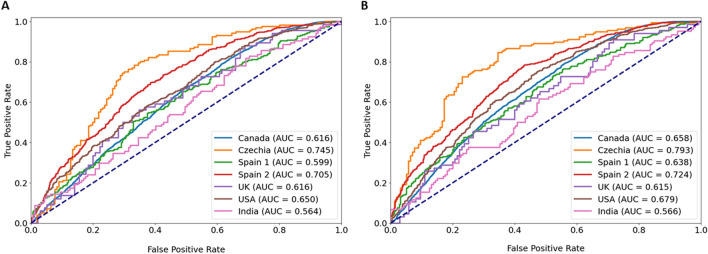
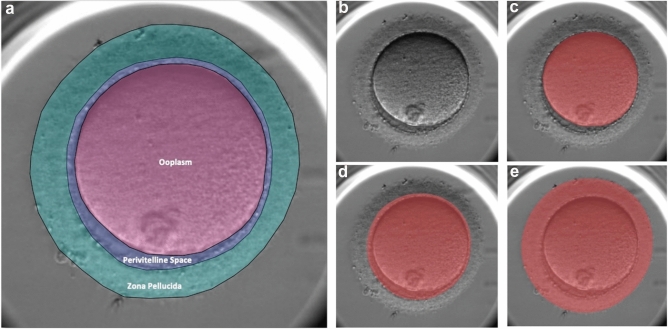
Within the medical field of human assisted reproductive technology, a method for interpretable, non-invasive, and objective oocyte evaluation is lacking. To address this clinical gap, a workflow utilizing machine learning techniques has been developed involving automatic multi-class segmentation of two-dimensional images, morphometric analysis, and prediction of developmental outcomes of mature denuded oocytes based on feature extraction and clinical variables. Two separate models have been developed for this purpose-a model to perform multiclass segmentation, and a classifier model to classify oocytes as likely or unlikely to develop into a blastocyst (Day 5-7 embryo). The segmentation model is highly accurate at segmenting the oocyte, ensuring high-quality segmented images (masks) are utilized as inputs for the classifier model (mask model). The mask model displayed an area under the curve (AUC) of 0.63, a sensitivity of 0.51, and a specificity of 0.66 on the test set. The AUC underwent a reduction to 0.57 when features extracted from the ooplasm were removed, suggesting the ooplasm holds the information most pertinent to oocyte developmental competence. The mask model was further compared to a deep learning model, which also utilized the segmented images as inputs. The performance of both models combined in an ensemble model was evaluated, showing an improvement (AUC 0.67) compared to either model alone. The results of this study indicate that direct assessments of the oocyte are warranted, providing the first objective insights into key features for developmental competence, a step above the current standard of care-solely utilizing oocyte age as a proxy for quality.

摘要

在人类辅助生殖技术的医学领域,缺乏一种可解释、非侵入性和客观的卵母细胞评估方法。为了解决这一临床空白,开发了一种利用机器学习技术的工作流程,涉及二维图像的自动多类分割、形态计量分析以及基于特征提取和临床变量预测成熟裸卵的发育结果。为此目的开发了两个独立的模型——一个用于执行多类分割的模型,以及一个用于将卵母细胞分类为可能或不可能发育成胚泡(第 5-7 天胚胎)的分类器模型。分割模型在分割卵母细胞方面非常准确,确保高质量的分割图像(掩模)被用作分类器模型(掩模模型)的输入。掩模模型在测试集上的曲线下面积(AUC)为 0.63,灵敏度为 0.51,特异性为 0.66。当从卵质中提取的特征被移除时,AUC 减少到 0.57,这表明卵质包含与卵母细胞发育能力最相关的信息。掩模模型进一步与利用分割图像作为输入的深度学习模型进行了比较。评估了两个模型在集成模型中的联合性能,与单独使用任何一个模型相比都有所提高(AUC 为 0.67)。这项研究的结果表明,有必要直接评估卵母细胞,为评估发育能力的关键特征提供了第一个客观见解,这比当前仅使用卵母细胞年龄作为质量替代物的护理标准更进一步。
https://cdn.ncbi.nlm.nih.gov/pmc/blobs/8579/11078996/b7067b7266e5/41598_2024_60901_Fig6_HTML.jpg
https://cdn.ncbi.nlm.nih.gov/pmc/blobs/8579/11078996/4a5a3be8d3a3/41598_2024_60901_Fig1_HTML.jpg
https://cdn.ncbi.nlm.nih.gov/pmc/blobs/8579/11078996/b48aad059e96/41598_2024_60901_Fig2_HTML.jpg
https://cdn.ncbi.nlm.nih.gov/pmc/blobs/8579/11078996/c2e5a751416b/41598_2024_60901_Fig3_HTML.jpg
https://cdn.ncbi.nlm.nih.gov/pmc/blobs/8579/11078996/df06d0b846bf/41598_2024_60901_Fig4_HTML.jpg
https://cdn.ncbi.nlm.nih.gov/pmc/blobs/8579/11078996/0761e83664a6/41598_2024_60901_Fig5_HTML.jpg
https://cdn.ncbi.nlm.nih.gov/pmc/blobs/8579/11078996/b7067b7266e5/41598_2024_60901_Fig6_HTML.jpg
https://cdn.ncbi.nlm.nih.gov/pmc/blobs/8579/11078996/4a5a3be8d3a3/41598_2024_60901_Fig1_HTML.jpg
https://cdn.ncbi.nlm.nih.gov/pmc/blobs/8579/11078996/b48aad059e96/41598_2024_60901_Fig2_HTML.jpg
https://cdn.ncbi.nlm.nih.gov/pmc/blobs/8579/11078996/c2e5a751416b/41598_2024_60901_Fig3_HTML.jpg
https://cdn.ncbi.nlm.nih.gov/pmc/blobs/8579/11078996/df06d0b846bf/41598_2024_60901_Fig4_HTML.jpg
https://cdn.ncbi.nlm.nih.gov/pmc/blobs/8579/11078996/0761e83664a6/41598_2024_60901_Fig5_HTML.jpg
https://cdn.ncbi.nlm.nih.gov/pmc/blobs/8579/11078996/b7067b7266e5/41598_2024_60901_Fig6_HTML.jpg

相似文献

1
Segmentation of mature human oocytes provides interpretable and improved blastocyst outcome predictions by a machine learning model.通过机器学习模型,对成熟人类卵母细胞进行分割,可提供可解释的和改善的胚泡结果预测。
Sci Rep. 2024 May 8;14(1):10569. doi: 10.1038/s41598-024-60901-1.
2
An artificial intelligence tool predicts blastocyst development from static images of fresh mature oocytes.一种人工智能工具可根据新鲜成熟卵母细胞的静态图像预测囊胚发育情况。
Reprod Biomed Online. 2024 Jun;48(6):103842. doi: 10.1016/j.rbmo.2024.103842. Epub 2024 Jan 18.
3
A pre-in vitro maturation medium containing cumulus oocyte complex ligand-receptor signaling molecules maintains meiotic arrest, supports the cumulus oocyte complex and improves oocyte developmental competence.含有卵丘卵母细胞复合物配体-受体信号分子的预体外成熟培养基可维持减数分裂阻滞,支持卵丘卵母细胞复合物,并提高卵母细胞发育能力。
Mol Hum Reprod. 2017 Sep 1;23(9):594-606. doi: 10.1093/molehr/gax032.
4
Development and evaluation of a usable blastocyst predictive model using the biomechanical properties of human oocytes.利用人卵母细胞的生物力学特性开发和评估一种可使用的囊胚预测模型。
PLoS One. 2024 May 2;19(5):e0299602. doi: 10.1371/journal.pone.0299602. eCollection 2024.
5
Artificial intelligence techniques for embryo and oocyte classification.人工智能技术在胚胎和卵母细胞分类中的应用。
Reprod Biomed Online. 2013 Jan;26(1):42-9. doi: 10.1016/j.rbmo.2012.09.015. Epub 2012 Oct 2.
6
Anti-Müllerian hormone and progesterone levels in human follicular fluid are predictors of embryonic development.人卵泡液中的抗苗勒管激素和孕酮水平是胚胎发育的预测指标。
Reprod Biol Endocrinol. 2019 Jun 19;17(1):47. doi: 10.1186/s12958-019-0492-9.
7
A robust deep learning-based multiclass segmentation method for analyzing human metaphase II oocyte images.一种基于深度学习的强大多类分割方法,用于分析人类中期II卵母细胞图像。
Comput Methods Programs Biomed. 2021 Apr;201:105946. doi: 10.1016/j.cmpb.2021.105946. Epub 2021 Jan 19.
8
Antioxidants improve IVF outcome and subsequent embryo development in the mouse.抗氧化剂可提高 IVF 结局及随后的胚胎发育
Hum Reprod. 2017 Dec 1;32(12):2404-2413. doi: 10.1093/humrep/dex330.
9
Human oocyte maturity in vivo determines the outcome of blastocyst development in vitro.人类卵母细胞在体内的成熟程度决定了其在体外囊胚发育的结果。
J Assist Reprod Genet. 2003 Dec;20(12):506-12. doi: 10.1023/b:jarg.0000013651.37866.0c.
10
Bovine non-competent oocytes (BCB-) negatively impact the capacity of competent (BCB+) oocytes to undergo in vitro maturation, fertilisation and embryonic development.牛无活性卵母细胞(BCB-)对有活性(BCB+)卵母细胞进行体外成熟、受精和胚胎发育的能力产生负面影响。
Zygote. 2016 Apr;24(2):245-51. doi: 10.1017/S0967199415000118. Epub 2015 May 6.

引用本文的文献

1
MAIA platform for routine clinical testing: an artificial intelligence embryo selection tool developed to assist embryologists.用于常规临床检测的MAIA平台:一种为辅助胚胎学家而开发的人工智能胚胎选择工具。
Sci Rep. 2025 Sep 2;15(1):32273. doi: 10.1038/s41598-025-17755-y.
2
Machine learning and microfluidic integration for oocyte quality prediction.用于卵母细胞质量预测的机器学习与微流体集成
Sci Rep. 2025 Jul 22;15(1):26532. doi: 10.1038/s41598-025-11810-4.
3
The Role of Artificial Intelligence in Female Infertility Diagnosis: An Update.

本文引用的文献

1
An artificial intelligence tool predicts blastocyst development from static images of fresh mature oocytes.一种人工智能工具可根据新鲜成熟卵母细胞的静态图像预测囊胚发育情况。
Reprod Biomed Online. 2024 Jun;48(6):103842. doi: 10.1016/j.rbmo.2024.103842. Epub 2024 Jan 18.
2
An annotated human blastocyst dataset to benchmark deep learning architectures for in vitro fertilization.注释人类囊胚数据集,用于基准测试体外受精的深度学习架构。
Sci Data. 2023 May 11;10(1):271. doi: 10.1038/s41597-023-02182-3.
3
Human oocyte area is associated with preimplantation embryo usage and early embryo development: the Rotterdam Periconception Cohort.
人工智能在女性不孕症诊断中的作用:最新进展
J Clin Med. 2025 Apr 30;14(9):3127. doi: 10.3390/jcm14093127.
人类卵母细胞面积与胚胎种植前使用和早期胚胎发育相关:鹿特丹围孕期队列研究。
J Assist Reprod Genet. 2023 Jun;40(6):1495-1506. doi: 10.1007/s10815-023-02803-1. Epub 2023 May 2.
4
A comparison of 12 machine learning models developed to predict ploidy, using a morphokinetic meta-dataset of 8147 embryos.比较 12 种机器学习模型,这些模型用于预测ploidy,使用的是一个包含 8147 个胚胎的形态动力学元数据集。
Hum Reprod. 2023 Apr 3;38(4):569-581. doi: 10.1093/humrep/dead034.
5
Development and evaluation of a live birth prediction model for evaluating human blastocysts from a retrospective study.从回顾性研究中评估人类囊胚的活产预测模型的开发和评估。
Elife. 2023 Feb 22;12:e83662. doi: 10.7554/eLife.83662.
6
A hybrid artificial intelligence model leverages multi-centric clinical data to improve fetal heart rate pregnancy prediction across time-lapse systems.一种混合人工智能模型利用多中心临床数据,改善跨时间 lapse 系统的胎儿心率妊娠预测。
Hum Reprod. 2023 Apr 3;38(4):596-608. doi: 10.1093/humrep/dead023.
7
Infertility prevalence and the methods of estimation from 1990 to 2021: a systematic review and meta-analysis.1990年至2021年不孕症患病率及其估计方法:一项系统评价和荟萃分析。
Hum Reprod Open. 2022 Nov 12;2022(4):hoac051. doi: 10.1093/hropen/hoac051. eCollection 2022.
8
ART in Europe, 2018: results generated from European registries by ESHRE.2018年欧洲辅助生殖技术:欧洲人类生殖与胚胎学会(ESHRE)基于欧洲登记处得出的结果
Hum Reprod Open. 2022 Jul 5;2022(3):hoac022. doi: 10.1093/hropen/hoac022. eCollection 2022.
9
An interpretable and versatile machine learning approach for oocyte phenotyping.一种可解释且多功能的机器学习方法,用于卵母细胞表型分析。
J Cell Sci. 2022 Jul 1;135(13). doi: 10.1242/jcs.260281. Epub 2022 Jul 13.
10
A novel system based on artificial intelligence for predicting blastocyst viability and visualizing the explanation.一种基于人工智能的新型系统,用于预测囊胚活力并可视化解释。
Reprod Med Biol. 2022 Feb 7;21(1):e12443. doi: 10.1002/rmb2.12443. eCollection 2022 Jan-Dec.