Chen Ming, Zhang Zhijun, Lin Runfeng, Liu Junkai, Xie Meizhu, He Xiang, Zheng Canze, Kang Miaomiao, Li Xue, Feng Hai-Tao, Lam Jacky W Y, Wang Dong, Tang Ben Zhong
College of Chemistry and Materials Science, Jinan University Guangzhou 510632 China
Center for AIR Research, College of Materials and Engineering, Shenzhen University Shenzhen 518060 China
Chem Sci. 2024 Apr 1;15(18):6777-6788. doi: 10.1039/d3sc06886b. eCollection 2024 May 8.
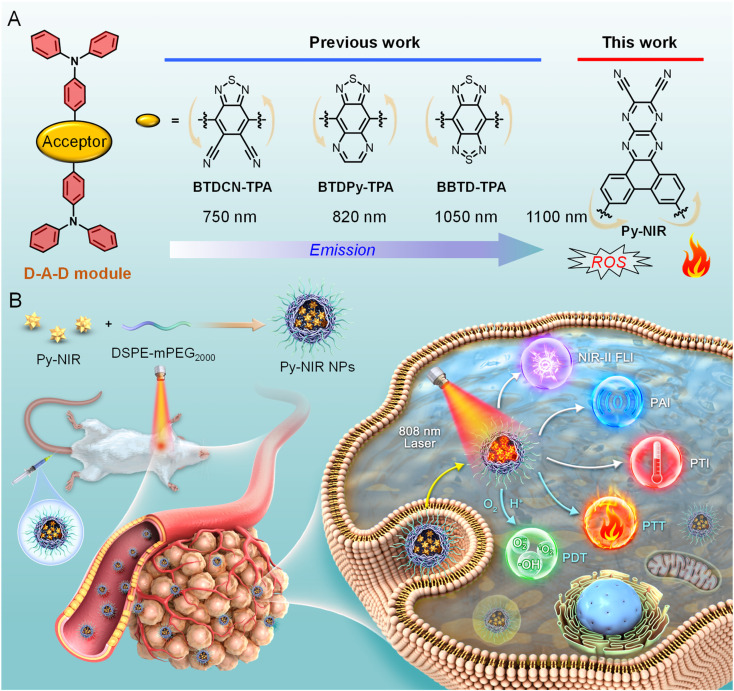
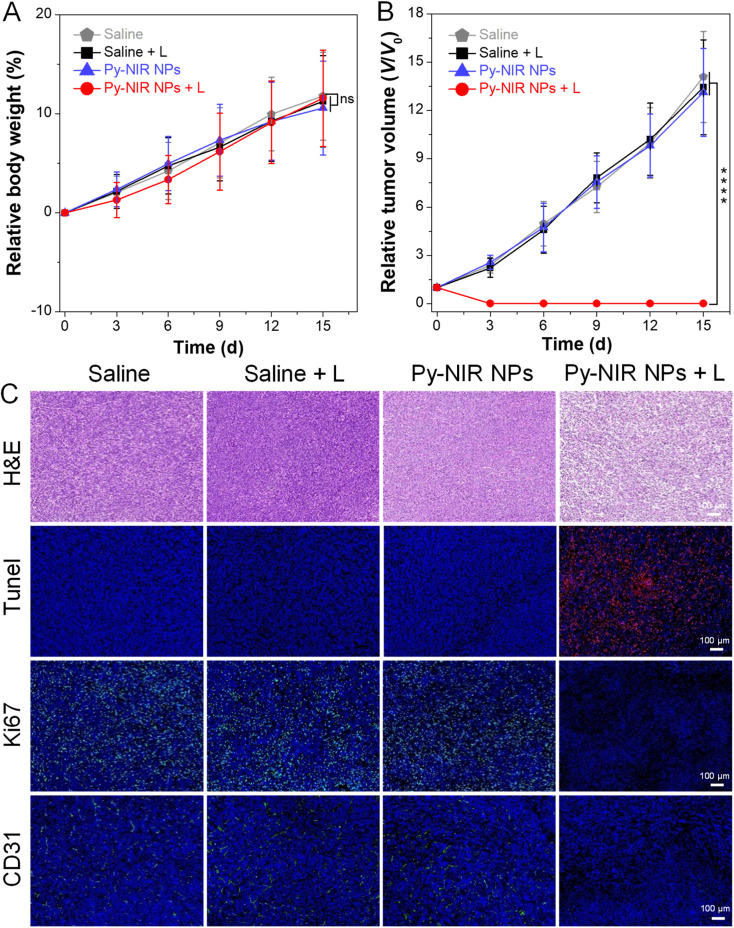
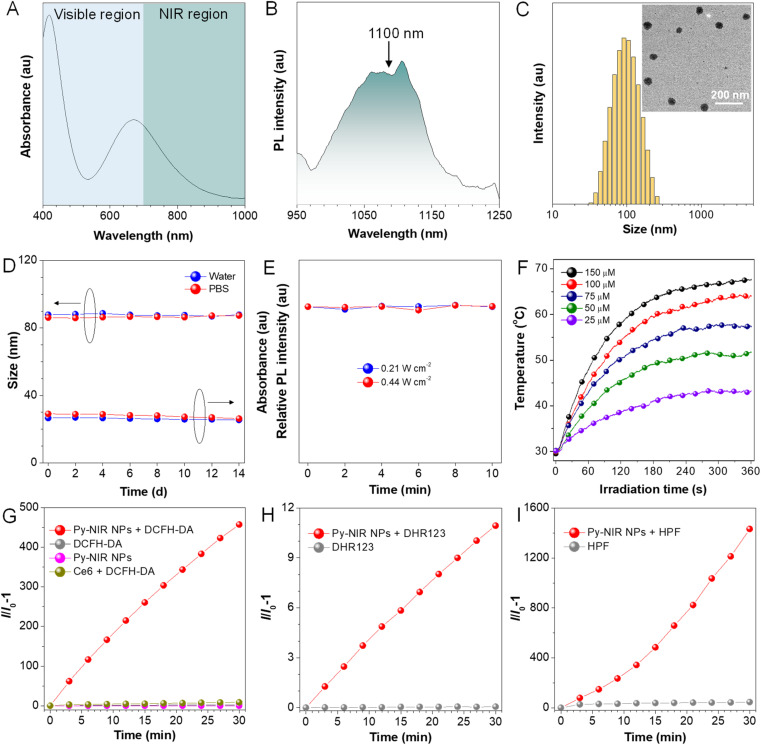
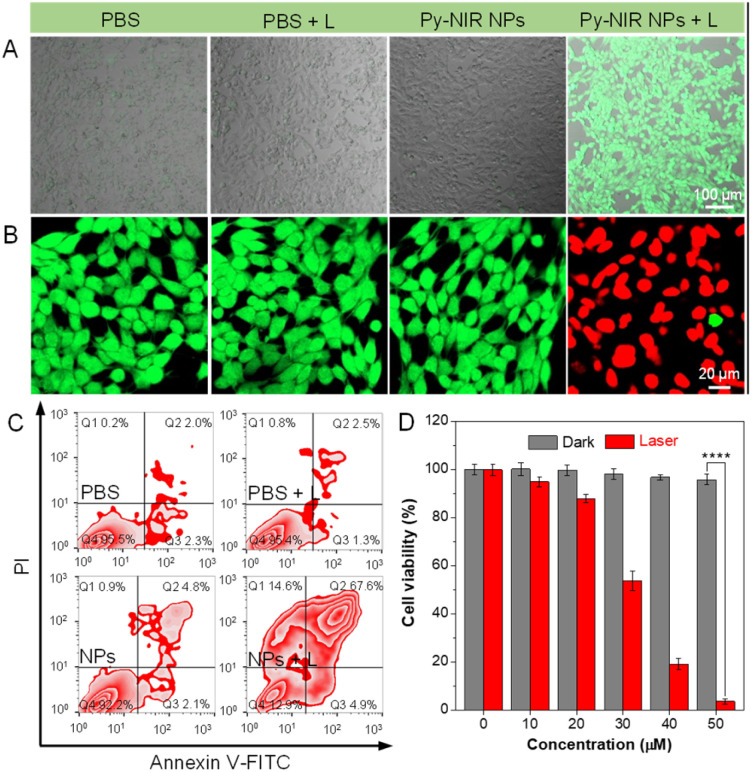
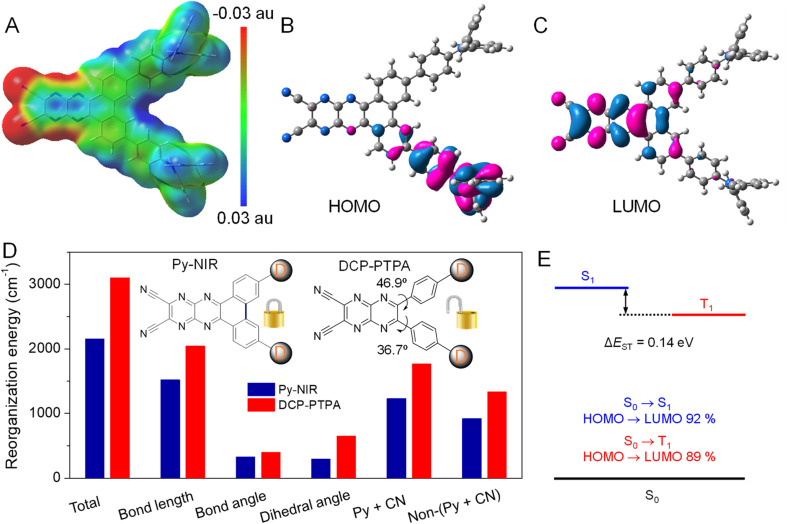
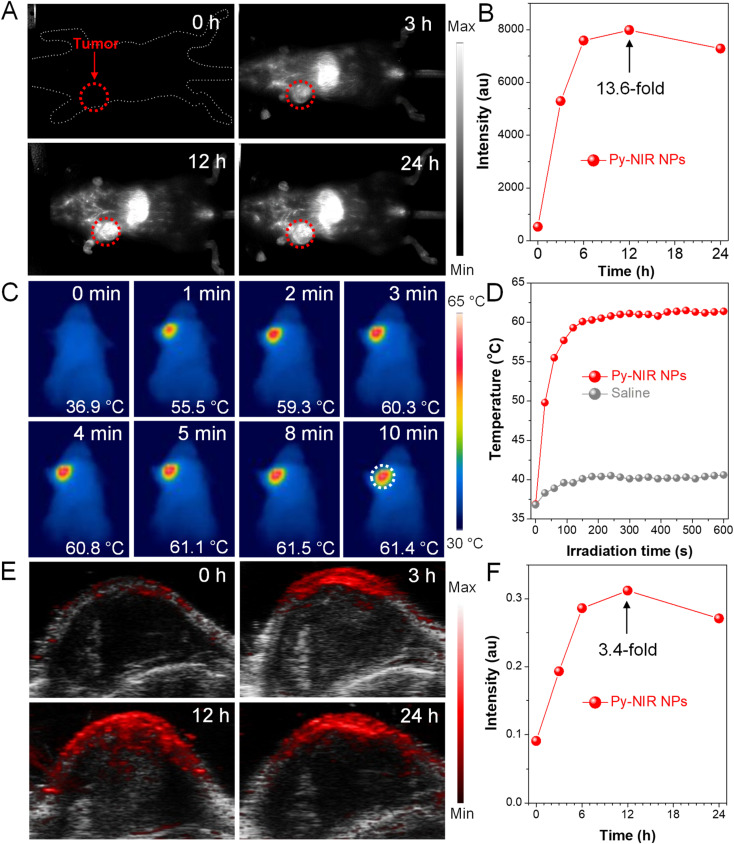
Designing molecules with donor-acceptor-donor (D-A-D) architecture plays an important role in obtaining second near-infrared region (NIR-II, 1000-1700 nm) fluorescent dyes for biomedical applications; however, this always comes with a challenge due to very limited electronic acceptors. On the other hand, to endow NIR-II fluorescent dyes with combined therapeutic applications, trivial molecular design is indispensable. Herein, we propose a pyrazine-based planar electronic acceptor with a strong electron affinity, which can be used to develop NIR-II fluorescent dyes. By structurally attaching two classical triphenylamine electronic donors to it, a basic D-A-D module, namely Py-NIR, can be generated. The planarity of the electronic acceptor is crucial to induce a distinct NIR-II emission peaking at ∼1100 nm. The unique construction of the electronic acceptor can cause a twisted and flexible molecular conformation by the repulsive effect between the donors, which is essential to the aggregation-induced emission (AIE) property. The tuned intramolecular motions and twisted D-A pair brought by the electronic acceptor can lead to a remarkable photothermal conversion with an efficiency of 56.1% and induce a type I photosensitization with a favorable hydroxyl radical (OH˙) formation. Note that no additional measures are adopted in the molecular design, providing an ideal platform to realize NIR-II fluorescent probes with synergetic functions based on such an acceptor. Besides, the nanoparticles of Py-NIR can exhibit excellent NIR-II fluorescence imaging towards orthotopic 4T1 breast tumors in living mice with a high sensitivity and contrast. Combined with photothermal imaging and photoacoustic imaging caused by the thermal effect, the imaging-guided photoablation of tumors can be well performed. Our work has created a new opportunity to develop NIR-II fluorescent probes for accelerating biomedical applications.
设计具有供体-受体-供体(D-A-D)结构的分子对于获得用于生物医学应用的第二近红外区域(NIR-II,1000-1700 nm)荧光染料起着重要作用;然而,由于电子受体非常有限,这始终面临挑战。另一方面,为了赋予NIR-II荧光染料联合治疗应用,简单的分子设计是必不可少的。在此,我们提出了一种具有强电子亲和力的基于吡嗪的平面电子受体,可用于开发NIR-II荧光染料。通过在结构上连接两个经典的三苯胺电子供体,可生成一个基本的D-A-D模块,即Py-NIR。电子受体的平面性对于诱导在~1100 nm处出现明显的NIR-II发射至关重要。电子受体的独特结构可通过供体之间的排斥作用导致扭曲且灵活的分子构象,这对于聚集诱导发光(AIE)特性至关重要。由电子受体带来的分子内运动的调节和扭曲的D-A对可导致高达56.1%的显著光热转换效率,并诱导产生具有良好羟基自由基(OH˙)形成的I型光致敏作用。值得注意的是,在分子设计中未采取额外措施,为基于这种受体实现具有协同功能的NIR-II荧光探针提供了理想平台。此外,Py-NIR纳米颗粒对活体小鼠原位4T1乳腺肿瘤可表现出优异的NIR-II荧光成像,具有高灵敏度和对比度。结合光热成像和由热效应引起的光声成像,可很好地进行成像引导的肿瘤光消融。我们的工作为开发用于加速生物医学应用的NIR-II荧光探针创造了新机会。