Chaniotis Antonis, Sousa Dias Hugo, Chanioti Anastasia
Private Practice, 17676 Kallithea, Greece.
Private Practice, Dentistry Department, CESPU-IUCS University, 4585-116 Gandra, Portugal.
J Clin Med. 2024 May 4;13(9):2703. doi: 10.3390/jcm13092703.
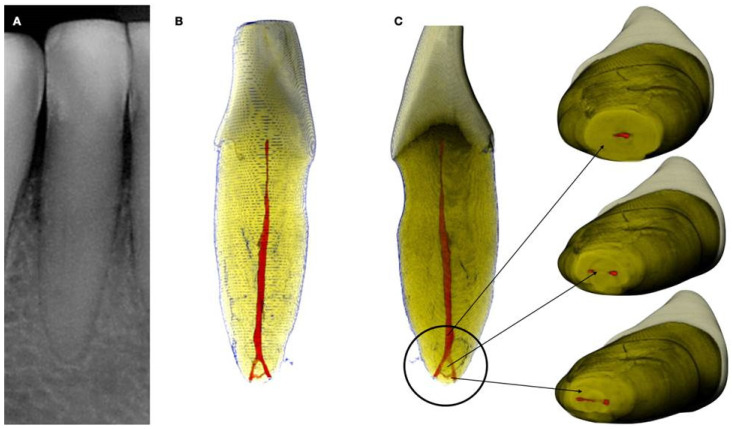
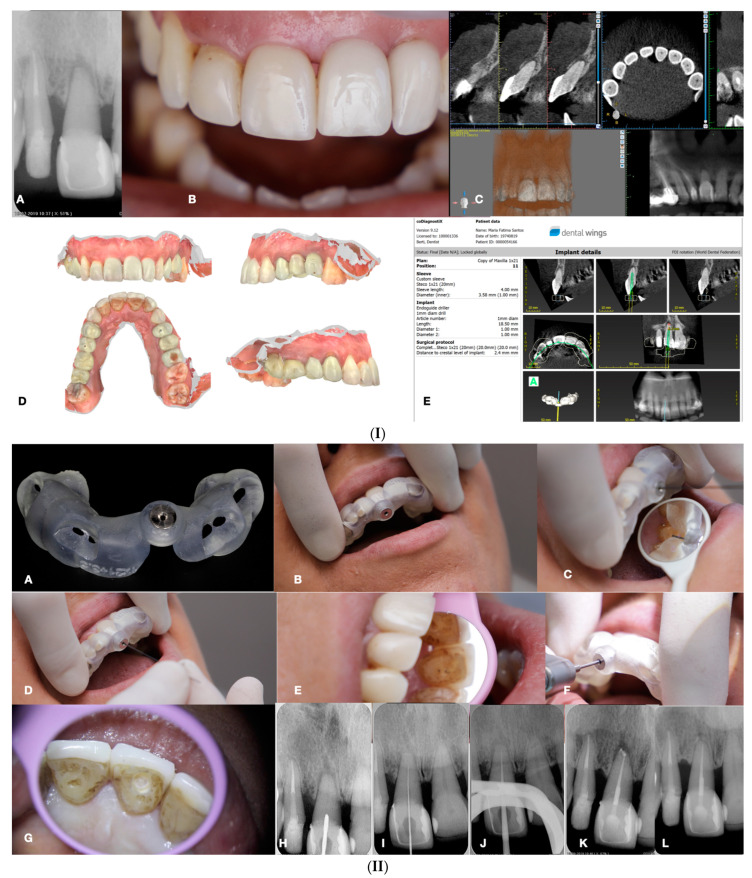
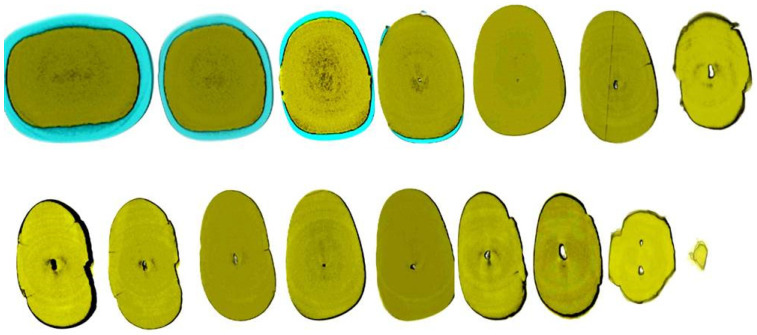
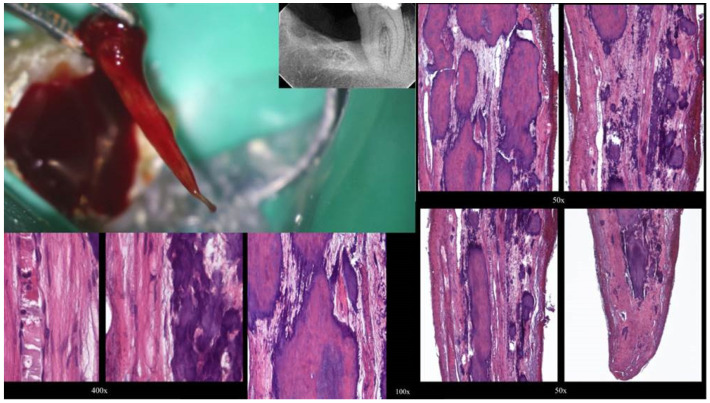
The gradual formation of hard tissue along the root canal walls is a natural process associated with aging, typically progressing slowly over time. In reaction to tooth wear, operative procedures, vital pulp treatments, or regenerative endodontic procedures, hard tissue may also accumulate within the pulp canal space at a slow rate. In certain cases, such as dental trauma, autotransplantation, or orthodontic treatment, this deposition of hard tissue can accelerate unexpectedly, resulting in rapid narrowing or complete closure of the root canal space. This situation is called calcific metamorphosis (CM), root canal calcification, or pulp canal obliteration (PCO). Performing conventional endodontic therapy on severely calcified canals presents significant challenges and increases the risk of procedural accidents. Calcified canals introduce such complexity that dedicated negotiation concepts and specially designed instruments have been developed to deal with the challenge. This article seeks to review the existing methods for effectively navigating calcified canals and to introduce the buckling resistance activation test (BRAT) technique.
沿根管壁硬组织的逐渐形成是与衰老相关的自然过程,通常随时间进展缓慢。作为对牙齿磨损、手术操作、牙髓活力治疗或牙髓再生治疗的反应,硬组织也可能以缓慢的速度在牙髓腔隙内积聚。在某些情况下,如牙外伤、自体牙移植或正畸治疗,这种硬组织沉积可能会意外加速,导致根管空间迅速变窄或完全封闭。这种情况称为钙化性变形(CM)、根管钙化或牙髓腔闭塞(PCO)。对严重钙化的根管进行传统牙髓治疗面临重大挑战,并增加了操作事故的风险。钙化根管带来了如此复杂的情况,以至于已经开发出专门的疏通概念和特殊设计的器械来应对这一挑战。本文旨在综述有效疏通钙化根管的现有方法,并介绍抗屈曲激活试验(BRAT)技术。