Centro de Investigación Biomédica en Red de Enfermedades Neurodegenerativas (CiberNed), National Institute of Health Carlos III, 28029 Madrid, Spain.
Institut de Neurociències UB, Campus Mundet, Passeig de la Vall d'Hebron 171, 08035 Barcelona, Spain.
Int J Mol Sci. 2024 Apr 26;25(9):4757. doi: 10.3390/ijms25094757.
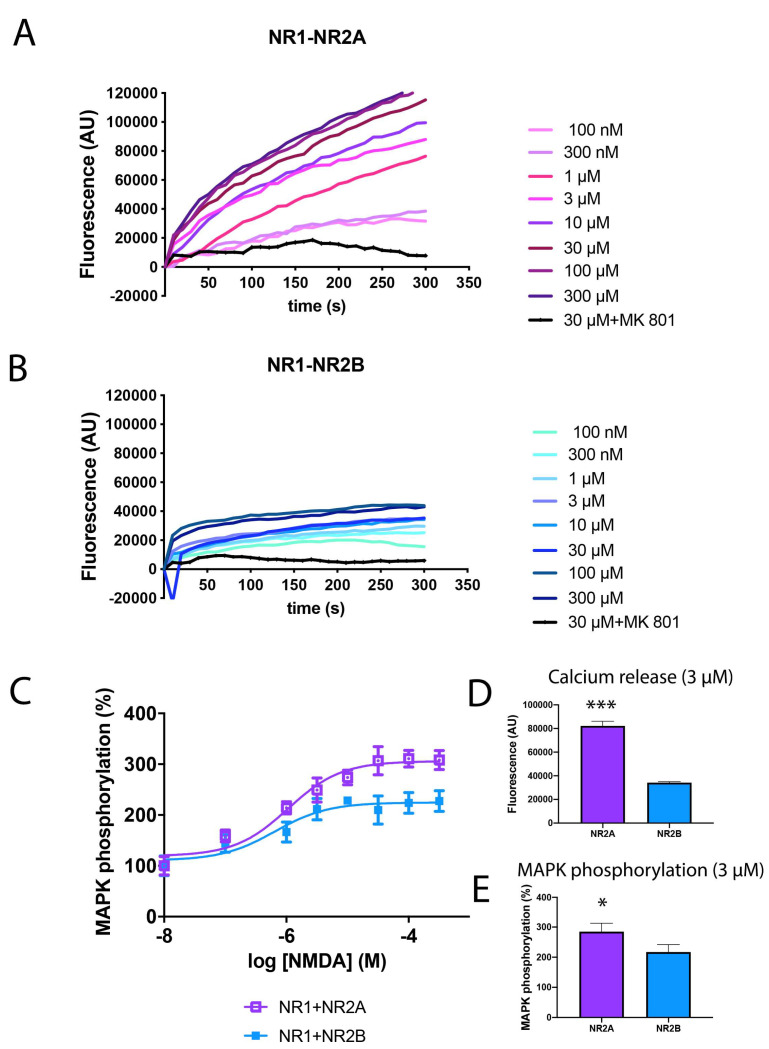
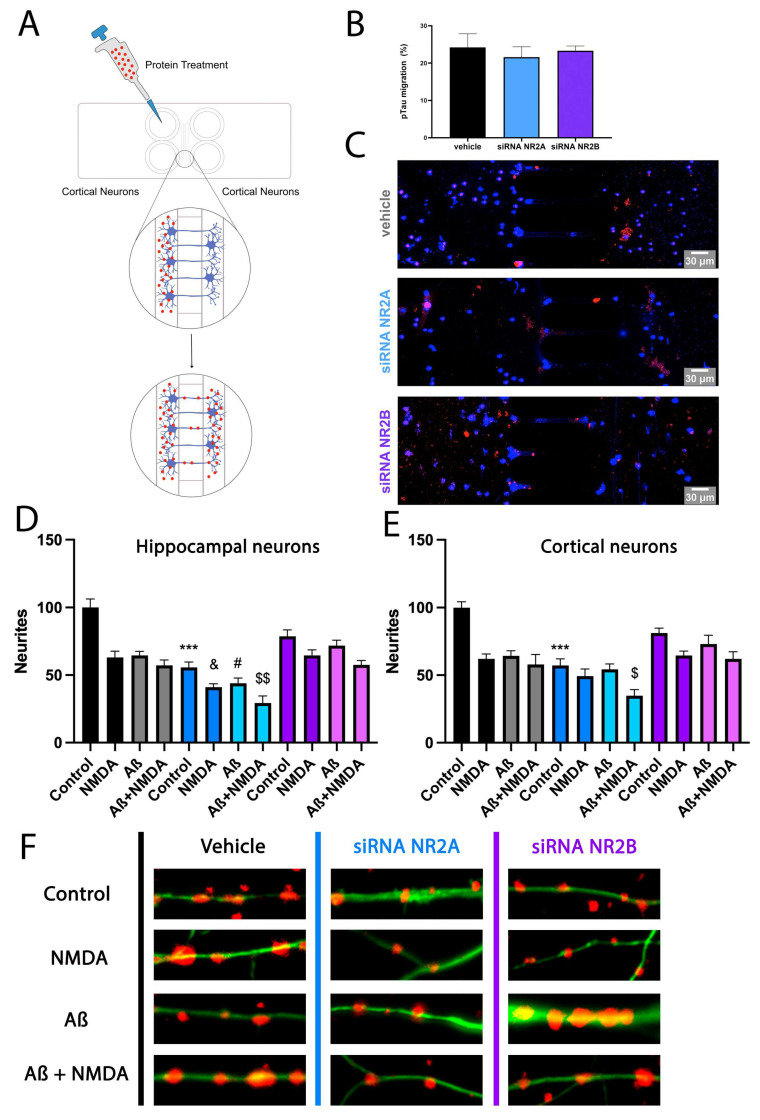
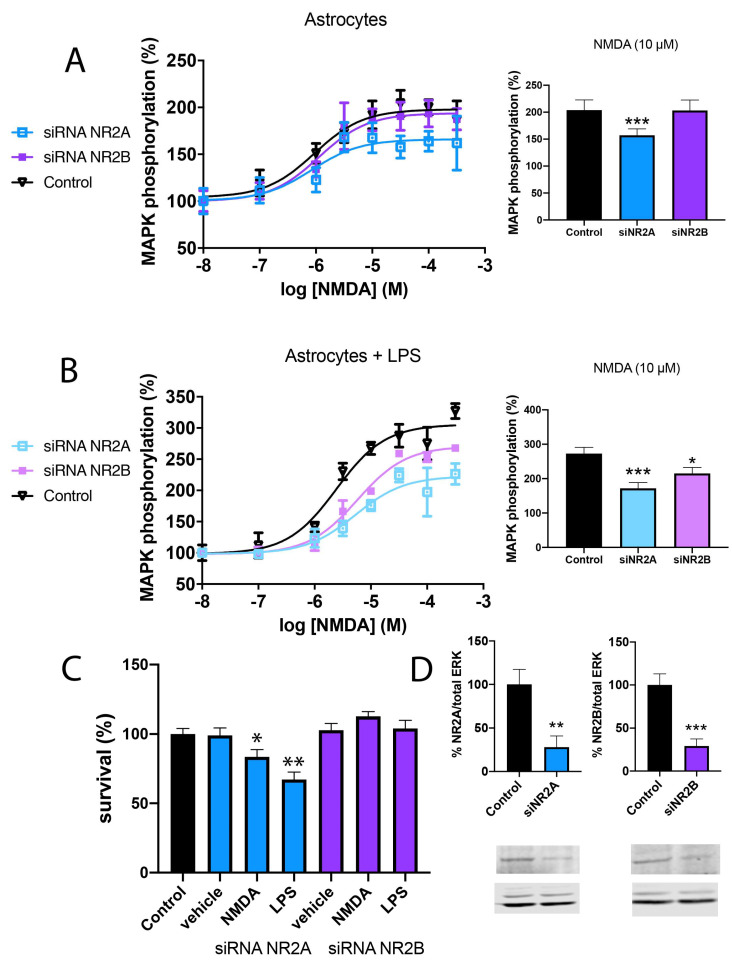
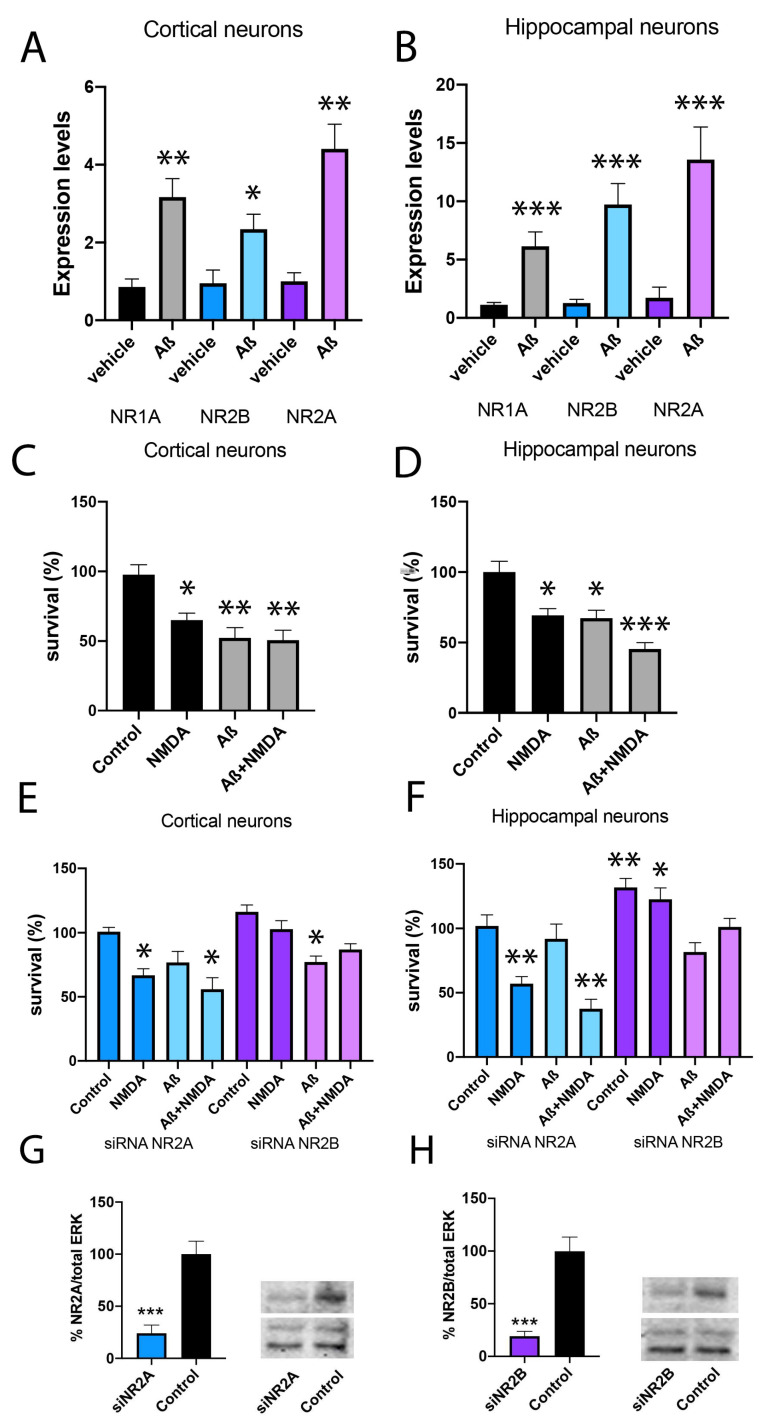
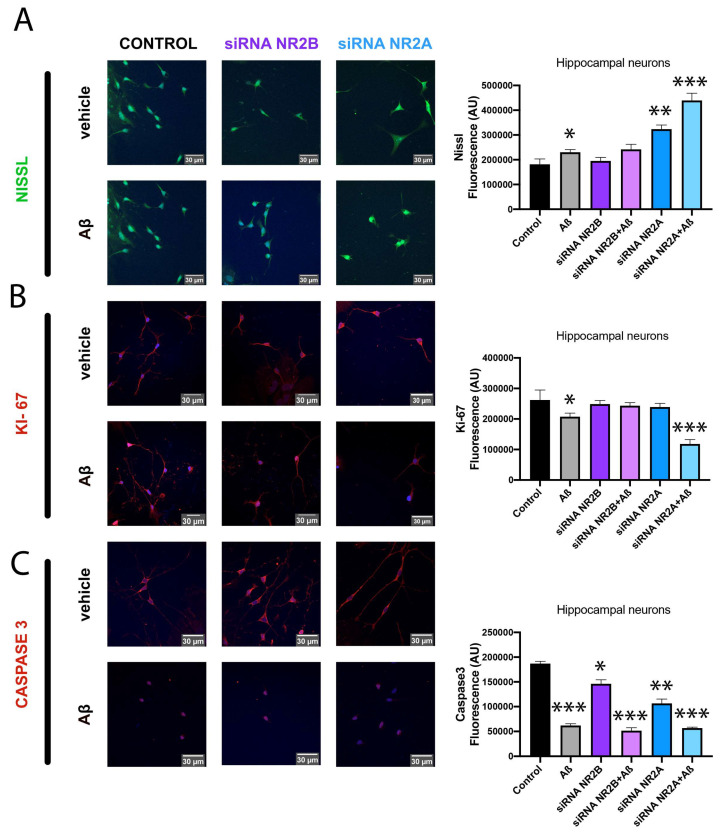
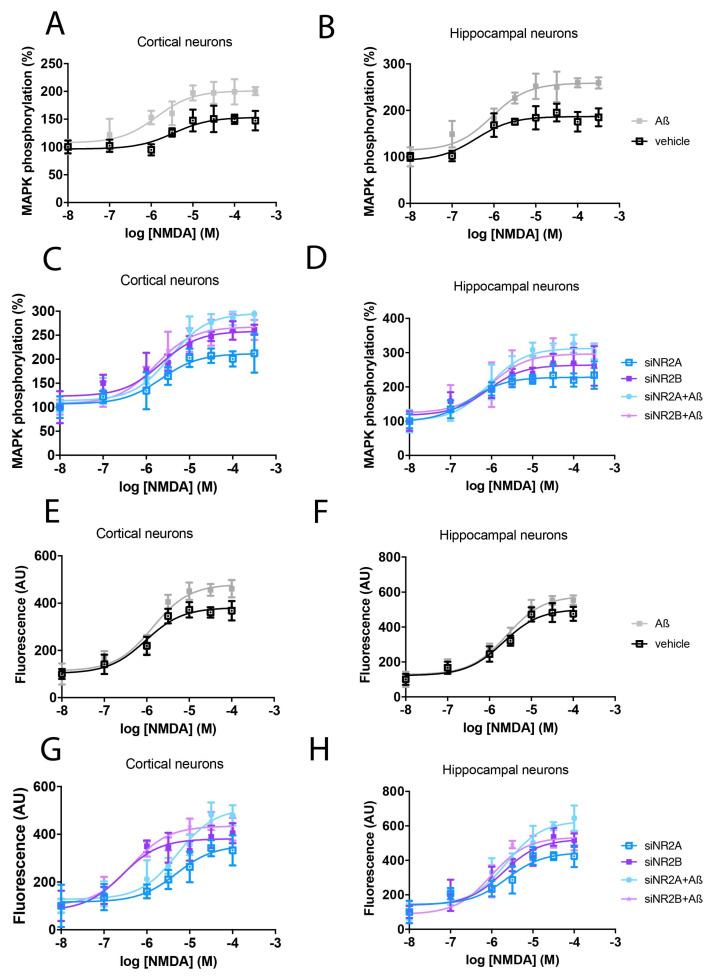
Alzheimer's disease (AD) is the main cause of dementia worldwide. Given that learning and memory are impaired in this pathology, NMDA receptors (NMDARs) appear as key players in the onset and progression of the disease. NMDARs are glutamate receptors, mainly located at the post-synapse, which regulate voltage-dependent influx of calcium into the neurons. They are heterotetramers, and there are different subunits that can be part of the receptors, which are usually composed of two obligatory GluN1 subunits plus either two NR2A or two NR2B subunits. NR2A are mostly located at the synapse, and their activation is involved in the expression of pro-survival genes. Conversely, NR2B are mainly extrasynaptic, and their activation has been related to cell death and neurodegeneration. Thus, activation of NR2A and/or inactivation of NR2B-containing NMDARS has been proposed as a therapeutic strategy to treat AD. Here, we wanted to investigate the main differences between both subunits signalling in neuronal primary cultures of the cortex and hippocampus. It has been observed that Aβ induces a significant increase in calcium release and also in MAPK phosphorylation signalling in NR2B-containing NMDAR in cortical and hippocampal neurons. However, while NR2A-containing NMDAR decreases neuronal death and favours cell viability after Aβ treatment, NR2B-containing NMDAR shows higher levels of cytotoxicity and low levels of neuronal survival. Finally, it has been detected that NMDAR has no effect on pTau axonal transport. The present results demonstrate a different role between GluNA and GluNB subunits in neurodegenerative diseases such as Alzheimer's.
阿尔茨海默病(AD)是全球痴呆的主要原因。鉴于这种病理学中存在学习和记忆障碍,NMDA 受体(NMDAR)似乎是疾病发生和进展的关键因素。NMDAR 是谷氨酸受体,主要位于突触后,调节电压依赖性钙流入神经元。它们是异四聚体,有不同的亚基可以成为受体的一部分,通常由两个必需的 GluN1 亚基加上两个 NR2A 或两个 NR2B 亚基组成。NR2A 主要位于突触,其激活参与了生存基因的表达。相反,NR2B 主要位于突触外,其激活与细胞死亡和神经退行性变有关。因此,激活 NR2A 和/或失活包含 NR2B 的 NMDAR 已被提议作为治疗 AD 的一种治疗策略。在这里,我们希望研究皮质和海马体神经元原代培养物中两种亚基信号转导的主要区别。已经观察到 Aβ 诱导含有 NR2B 的 NMDAR 钙释放和 MAPK 磷酸化信号显著增加在皮质和海马神经元中。然而,虽然含有 NR2A 的 NMDAR 减少了 Aβ 处理后的神经元死亡并有利于细胞活力,但含有 NR2B 的 NMDAR 表现出更高的细胞毒性和低水平的神经元存活。最后,已经检测到 NMDAR 对 pTau 轴突运输没有影响。本研究结果表明,在阿尔茨海默病等神经退行性疾病中,GluNA 和 GluNB 亚基具有不同的作用。