Kim Jung-Hoon, Doh Eui-Jeong, Kim Han-Young, Lee Guemsan
Division of Pharmacology, School of Korean Medicine, Pusan National University, Yangsan 50612, Republic of Korea.
Research Center of Traditional Korean Medicine, Wonkwang University, Iksan 54538, Republic of Korea.
Plants (Basel). 2024 Apr 30;13(9):1252. doi: 10.3390/plants13091252.
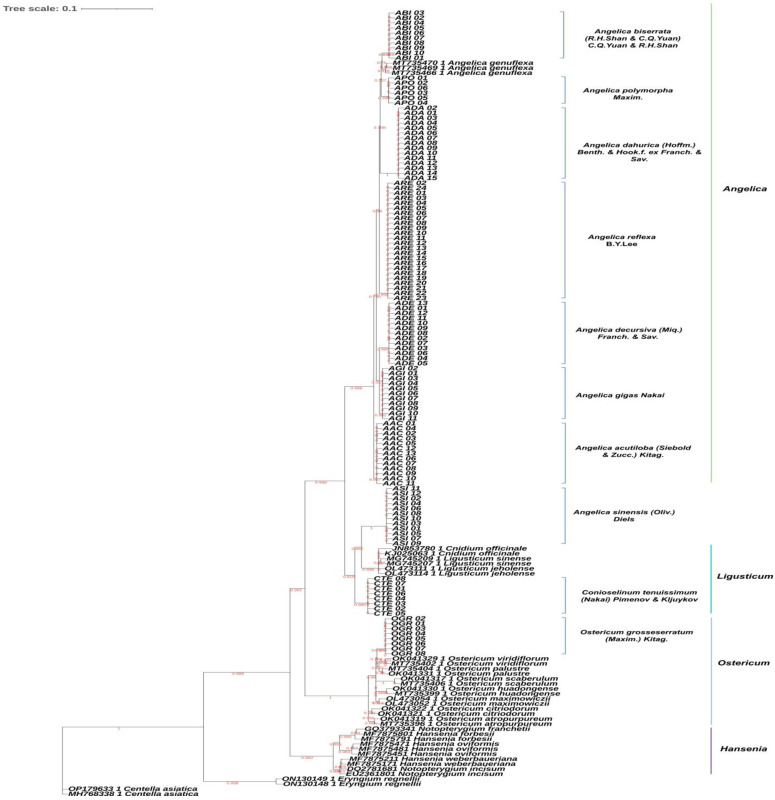
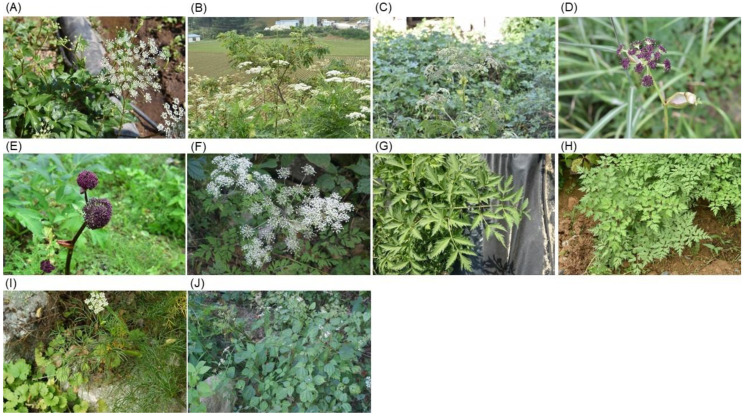
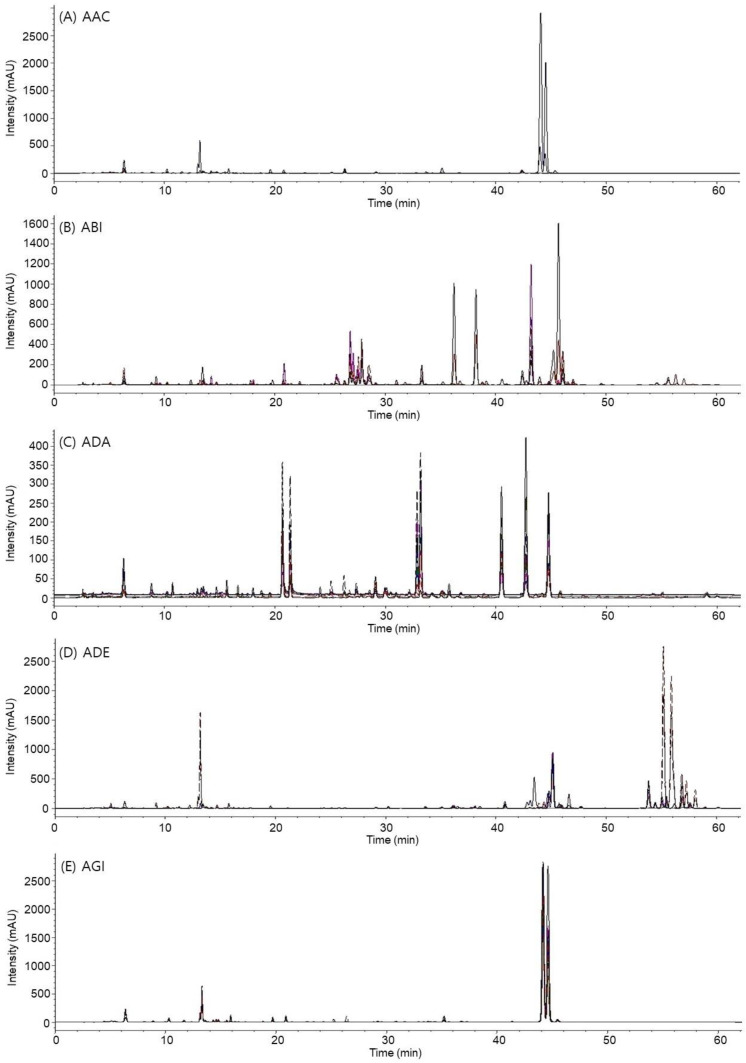
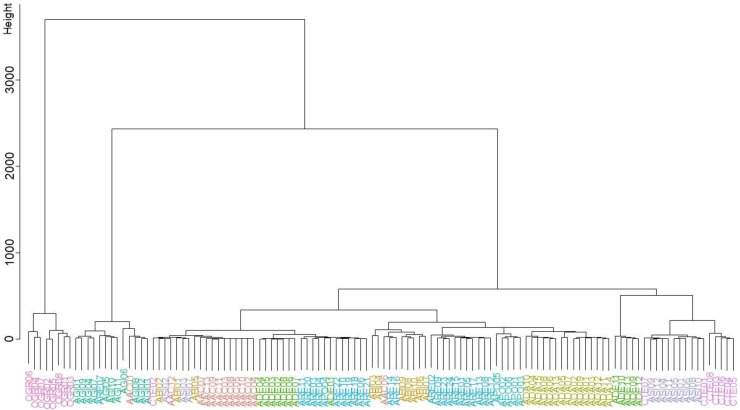
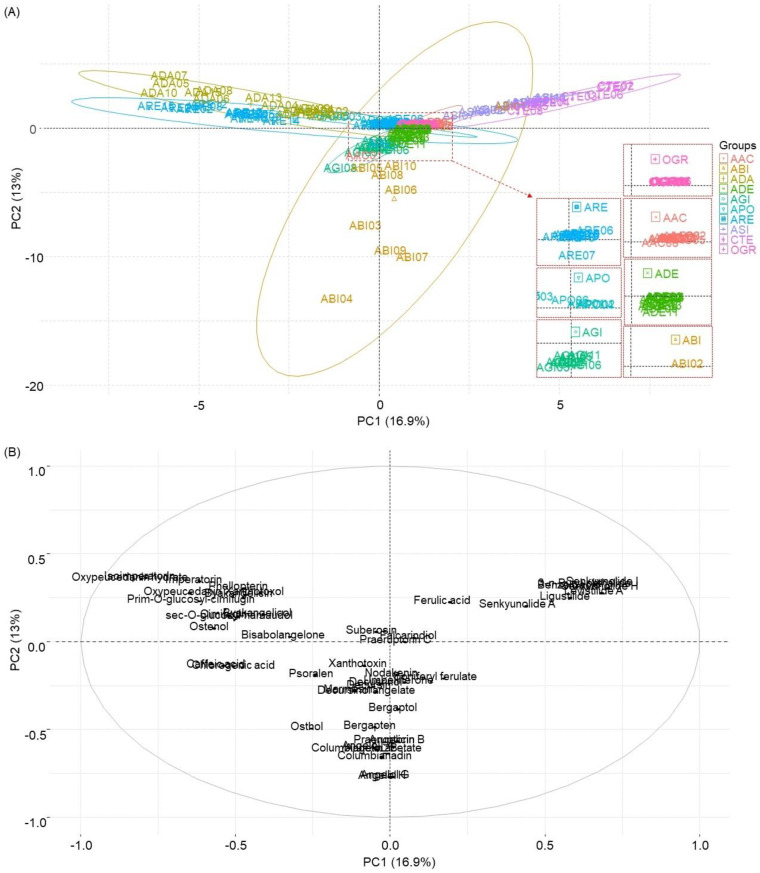
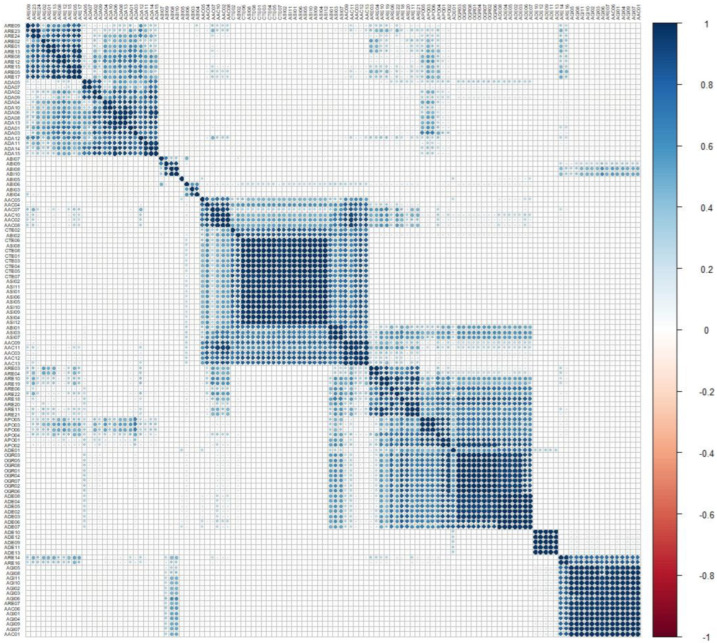
The genus comprises various species utilized for diverse medicinal purposes, with differences attributed to the varying levels or types of inherent chemical components in each species. This study employed DNA barcode analysis and HPLC analysis to genetically authenticate and chemically classify eight medicinal species ( = 106) as well as two non-medicinal species ( = 14) that have been misused. Nucleotide sequence analysis of the nuclear internal transcribed spacer (ITS) region revealed differences ranging from 11 to 117 bp, while showed variances of 3 to 95 bp, respectively. Phylogenetic analysis grouped all samples except into the same cluster, with some counterfeits forming separate clusters. Verification using the NCBI database confirmed the feasibility of species identification. For chemical identification, a robust quantitative HPLC analysis method was developed for 46 marker compounds. Subsequently, two -specific and seven -specific marker compounds were identified, alongside non-specific markers. Moreover, chemometric clustering analysis reflecting differences in chemical content between species revealed that most samples formed distinct clusters according to the plant species. However, some samples formed mixed clusters containing different species. These findings offer crucial insights for the standardization and quality control of medicinal species.
该属包含用于多种药用目的的不同物种,其差异归因于每个物种中固有化学成分的不同水平或类型。本研究采用DNA条形码分析和高效液相色谱分析,对8种药用植物( = 106)以及2种被误用的非药用植物( = 14)进行基因鉴定和化学分类。核内转录间隔区(ITS)区域的核苷酸序列分析显示差异范围为11至117 bp,而 分别显示出3至95 bp的差异。系统发育分析将除 之外的所有样本归为同一聚类,一些假冒品形成单独的聚类。使用NCBI数据库进行验证证实了物种鉴定的可行性。对于化学鉴定,开发了一种针对46种标记化合物的稳健定量高效液相色谱分析方法。随后,鉴定出两种物种特异性和七种物种特异性标记化合物以及非特异性标记物。此外,反映物种间化学含量差异的化学计量聚类分析表明,大多数样本根据植物物种形成了不同的聚类。然而,一些样本形成了包含不同物种的混合聚类。这些发现为药用植物的标准化和质量控制提供了关键见解。