Zhu Ying, Yin Lifeng, Liu Qing, Guan Yaoxing, Nie Shuang, Zhu Yongheng, Mo Fengfeng
College of Food Science and Technology, Shanghai Ocean University, Shanghai 201306, China.
Department of Naval Nutrition and Food Hygiene, Naval Medical University, Shanghai 200433, China.
Curr Res Food Sci. 2024 Apr 26;8:100754. doi: 10.1016/j.crfs.2024.100754. eCollection 2024.
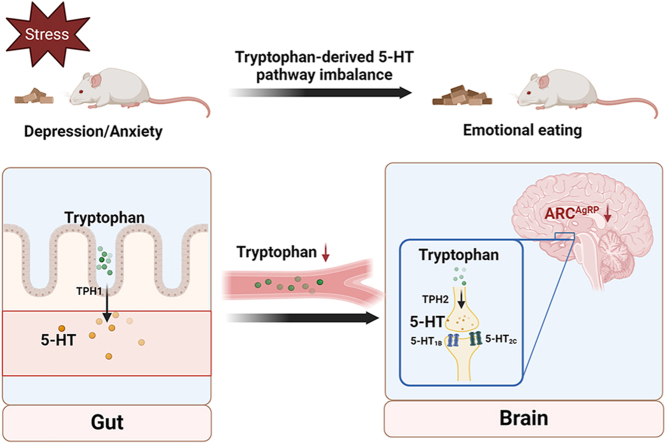
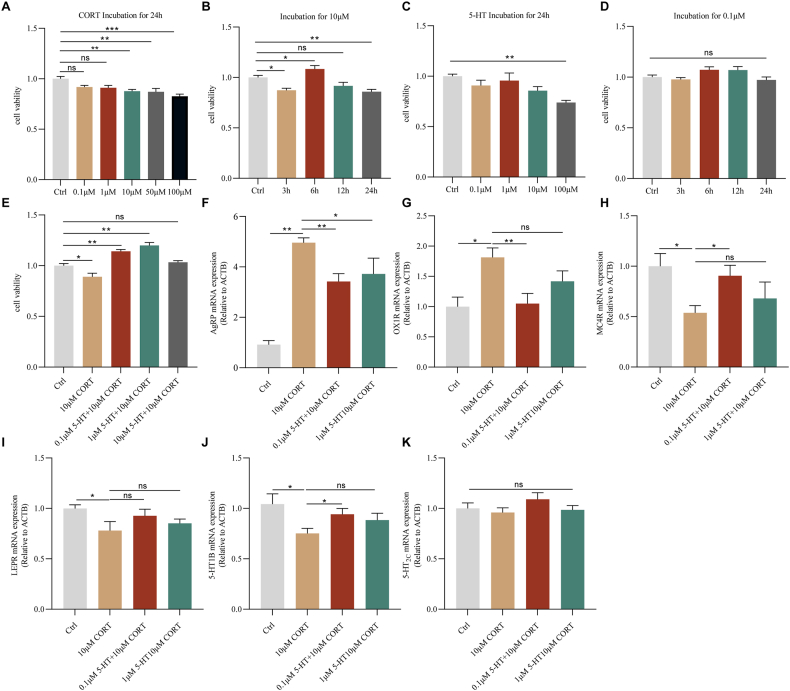
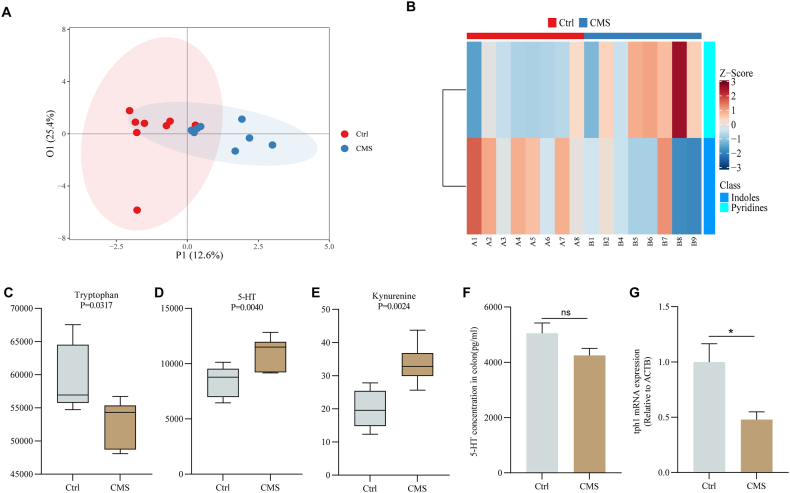
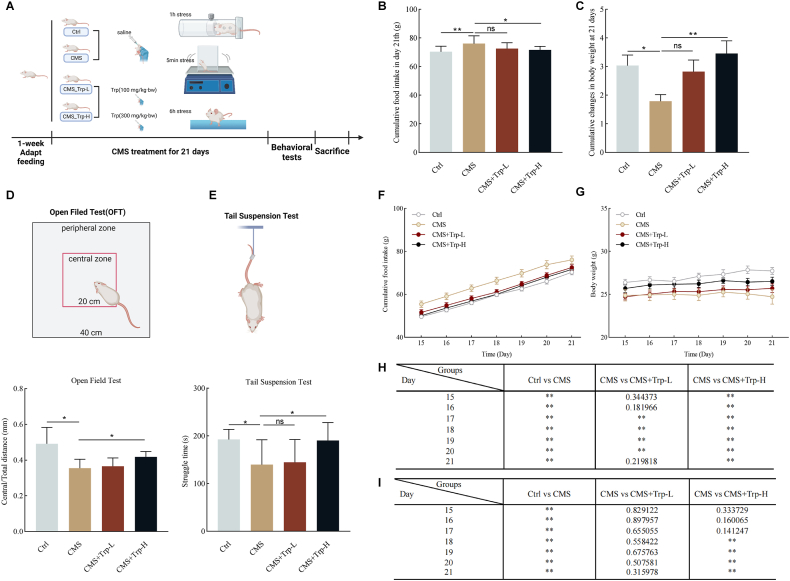
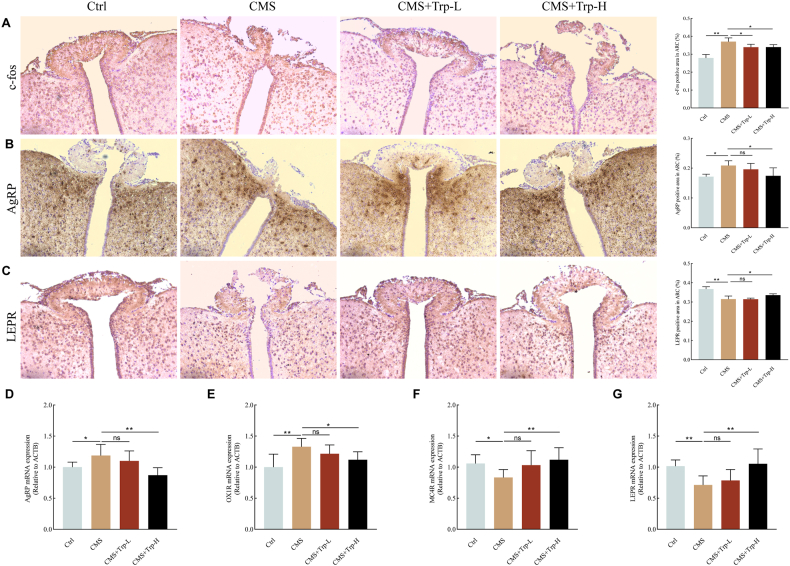
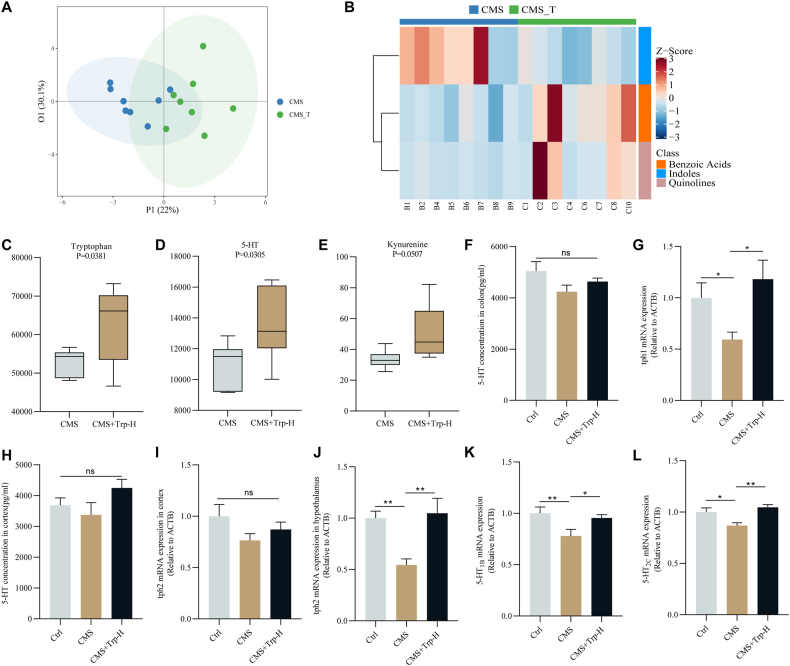
Chronic stress disrupts the emotional and energetic balance, which may lead to abnormal behaviors such as binge eating. This overeating behavior alleviating the negative emotions is called emotional eating, which may exacerbate emotional instability and lead to obesity. It is a complex and multifaceted process that has not yet been fully understood. In this study, we constructed an animal model of chronic mild stress (CMS)-induced emotional eating. The emotional eating mice were treated with tryptophan for 21 days to reveal the key role of tryptophan. Furthermore, serum-targeted metabolomics, immunohistochemical staining, qPCR and ELISA were performed. The results showed that CMS led to the binge eating behavior, accompanied by the disturbed intestinal tryptophan-derived serotonin (5-hydroxytryptamine; 5-HT) metabolic pathways. Then we found that tryptophan supplementation improved depression and anxiety-like behaviors as well as abnormal eating behaviors. Tryptophan supplementation improved the abnormal expression of appetite regulators (e.g., AgRP, OX1R, MC4R), and tryptophan supplementation also increased the tryptophan hydroxylase 2 (tph2) and 5-HT receptors in the hypothalamus of CMS mice, which indicates that the 5-HT metabolic pathway influences feeding behavior. experiments confirmed that 5-HT supplementation ameliorated corticosterone-induced aberrant expression of appetite regulators, such as AgRP and OX1R, in the hypothalamic cell line. In conclusion, our findings revealed that the tryptophan-derived 5-HT pathway plays an important role in emotional eating, especially in providing targeted therapy for stress-induced obesity.
慢性应激会破坏情绪和能量平衡,这可能导致诸如暴饮暴食等异常行为。这种通过过度进食行为来缓解负面情绪的现象被称为情绪化进食,它可能会加剧情绪不稳定并导致肥胖。这是一个复杂且多方面的过程,尚未得到充分理解。在本研究中,我们构建了慢性轻度应激(CMS)诱导的情绪化进食动物模型。对情绪化进食的小鼠用色氨酸处理21天,以揭示色氨酸的关键作用。此外,还进行了血清靶向代谢组学、免疫组织化学染色、qPCR和ELISA检测。结果表明,CMS导致了暴饮暴食行为,同时伴有肠道色氨酸衍生的血清素(5-羟色胺;5-HT)代谢途径紊乱。然后我们发现补充色氨酸改善了抑郁和焦虑样行为以及异常进食行为。补充色氨酸改善了食欲调节因子(如AgRP、OX1R、MC4R)的异常表达,补充色氨酸还增加了CMS小鼠下丘脑的色氨酸羟化酶2(tph2)和5-HT受体,这表明5-HT代谢途径影响进食行为。实验证实,补充5-HT可改善皮质酮诱导的下丘脑细胞系中食欲调节因子(如AgRP和OX1R)的异常表达。总之,我们的研究结果表明,色氨酸衍生的5-HT途径在情绪化进食中起重要作用,特别是为应激诱导的肥胖提供靶向治疗。