Tumor Biomechanics, INSERM UMR_S1109, Strasbourg, France.
Université de Strasbourg, Strasbourg, France.
Nat Commun. 2024 May 13;15(1):3297. doi: 10.1038/s41467-024-47516-w.
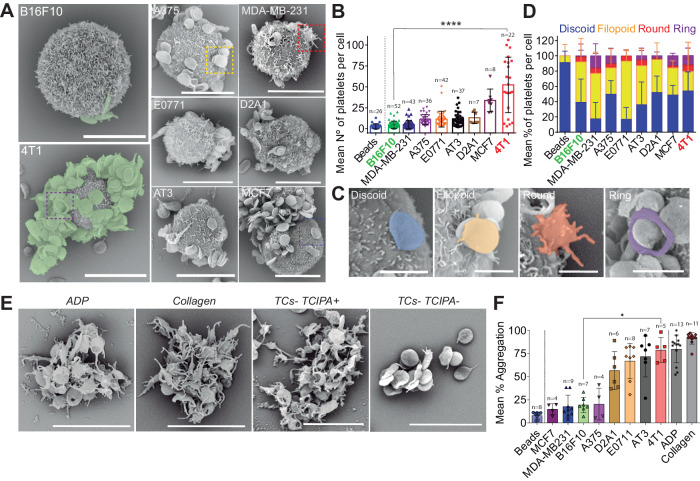
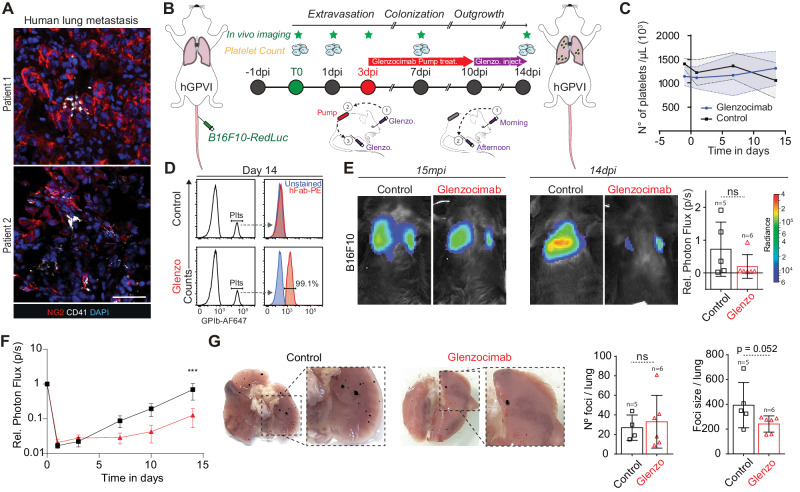
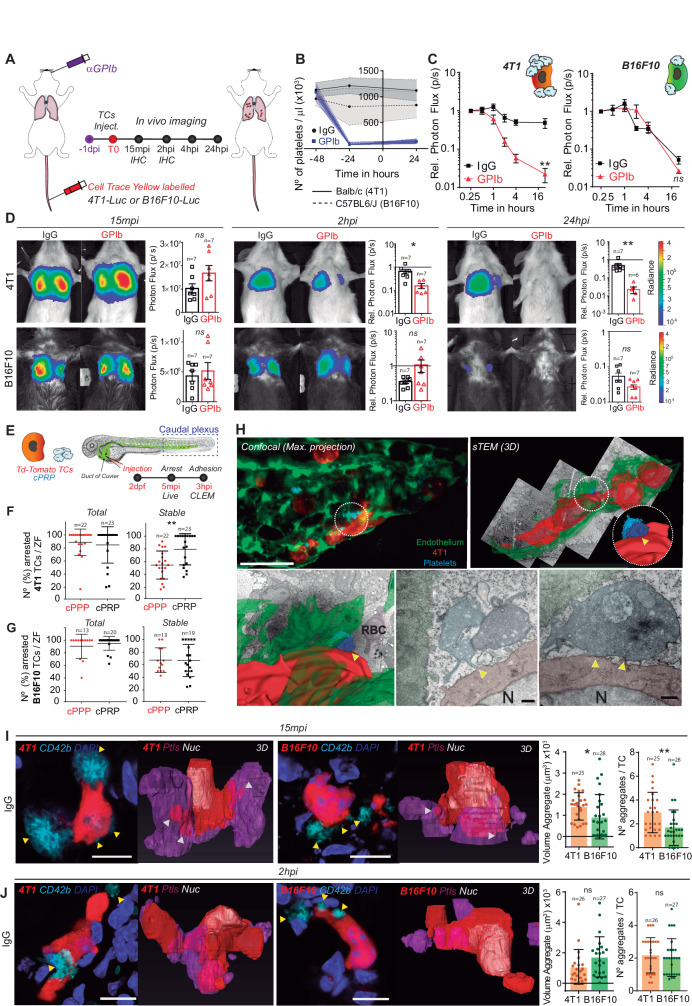
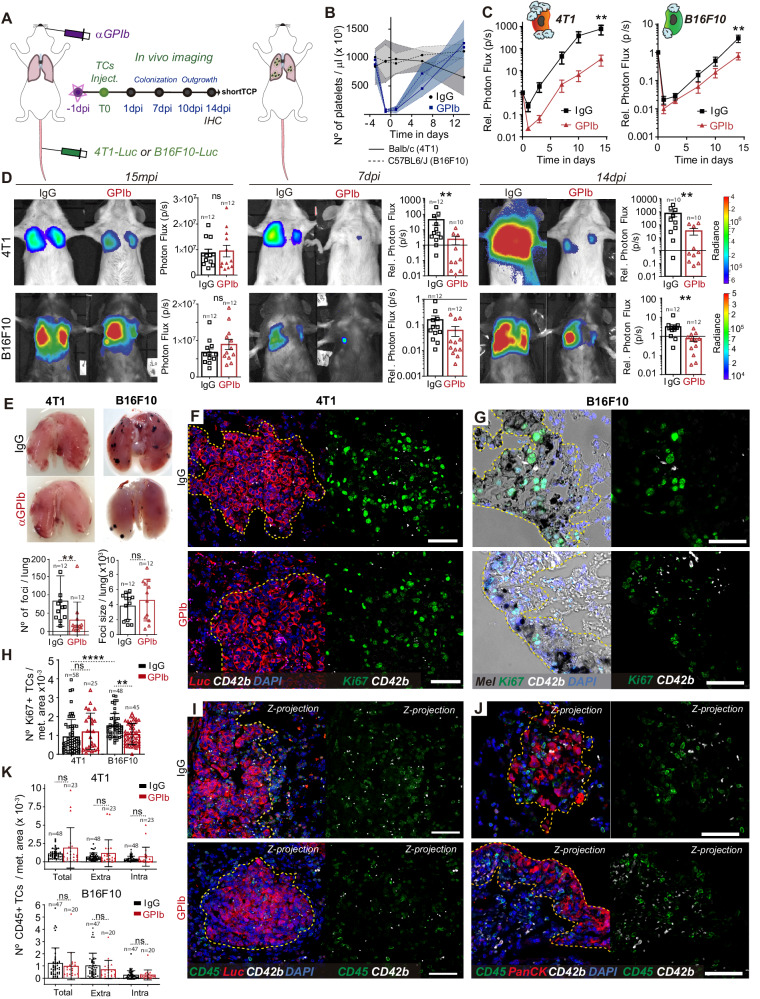
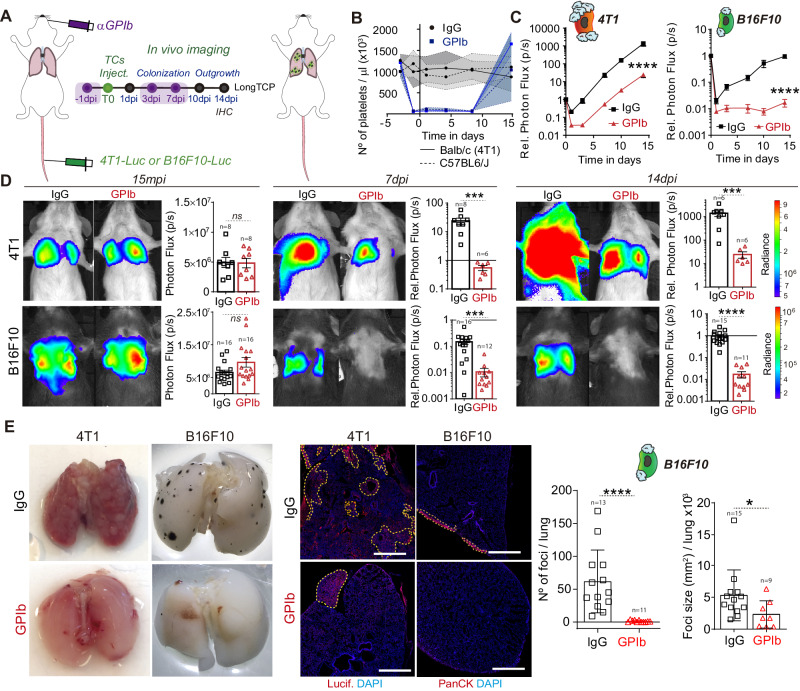
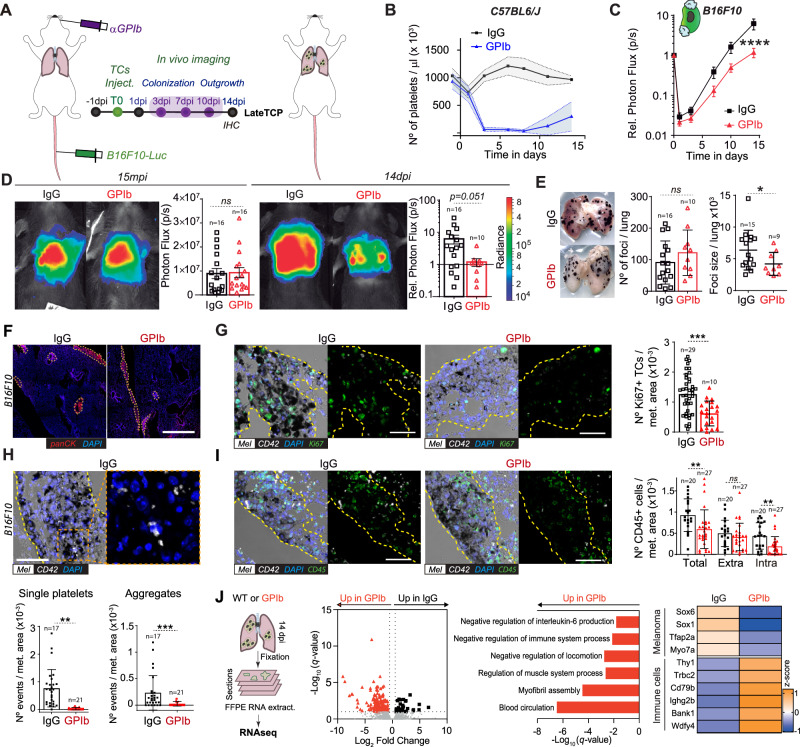
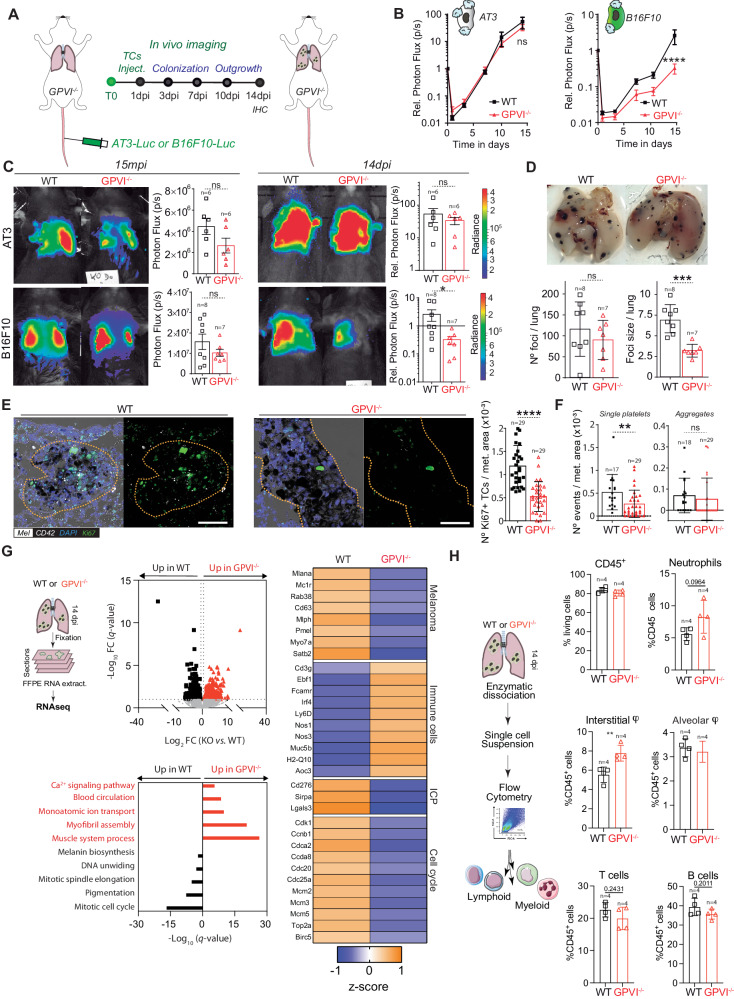
Despite abundant evidence demonstrating that platelets foster metastasis, anti-platelet agents have low therapeutic potential due to the risk of hemorrhages. In addition, whether platelets can regulate metastasis at the late stages of the disease remains unknown. In this study, we subject syngeneic models of metastasis to various thrombocytopenic regimes to show that platelets provide a biphasic contribution to metastasis. While potent intravascular binding of platelets to tumor cells efficiently promotes metastasis, platelets further support the outgrowth of established metastases via immune suppression. Genetic depletion and pharmacological targeting of the glycoprotein VI (GPVI) platelet-specific receptor in humanized mouse models efficiently reduce the growth of established metastases, independently of active platelet binding to tumor cells in the bloodstream. Our study demonstrates therapeutic efficacy when targeting animals bearing growing metastases. It further identifies GPVI as a molecular target whose inhibition can impair metastasis without inducing collateral hemostatic perturbations.
尽管有大量证据表明血小板促进转移,但由于出血风险,抗血小板药物的治疗潜力较低。此外,血小板是否能在疾病的晚期调节转移仍不清楚。在这项研究中,我们使同种移植模型发生不同程度的血小板减少症,以显示血小板对转移有双相作用。虽然血小板与肿瘤细胞在血管内的有效结合能促进转移,但血小板通过免疫抑制进一步支持已建立转移的生长。在人源化小鼠模型中,通过基因敲除和血小板特异性受体糖蛋白 VI(GPVI)的药物靶向,可有效减少已建立转移的生长,而与血小板在血流中与肿瘤细胞的结合无关。我们的研究表明,当针对生长中的转移瘤动物时,这种治疗是有效的。它进一步确定了 GPVI 作为一个分子靶点,其抑制作用可以在不引起继发性止血紊乱的情况下损害转移。