Abdelaal Ahmed M, Sohal Ikjot S, Iyer Shreyas G, Sudarshan Kasireddy, Orellana Esteban A, Ozcan Kenan E, Dos Santos Andrea P, Low Philip S, Kasinski Andrea L
Department of Biological Sciences, Purdue University, West Lafayette, IN 47907, USA.
Department of Chemistry, Purdue University, West Lafayette, IN 47907, USA.
Mol Ther Nucleic Acids. 2024 Apr 23;35(2):102193. doi: 10.1016/j.omtn.2024.102193. eCollection 2024 Jun 11.
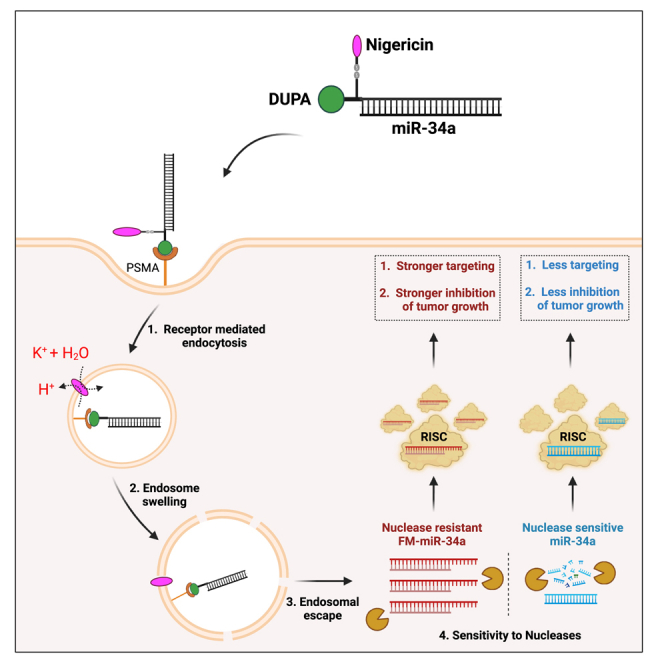
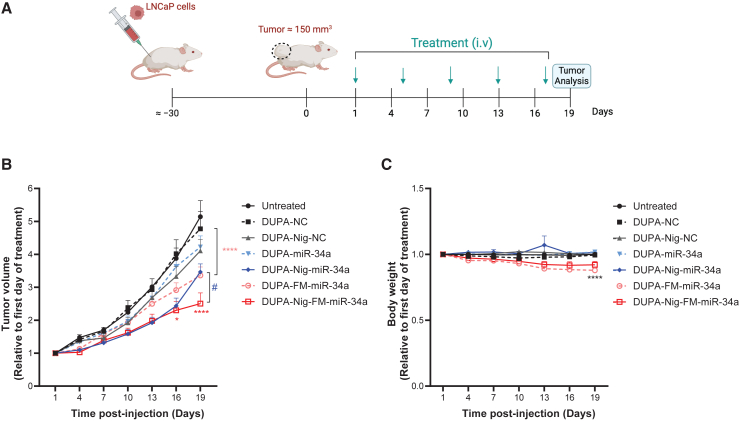
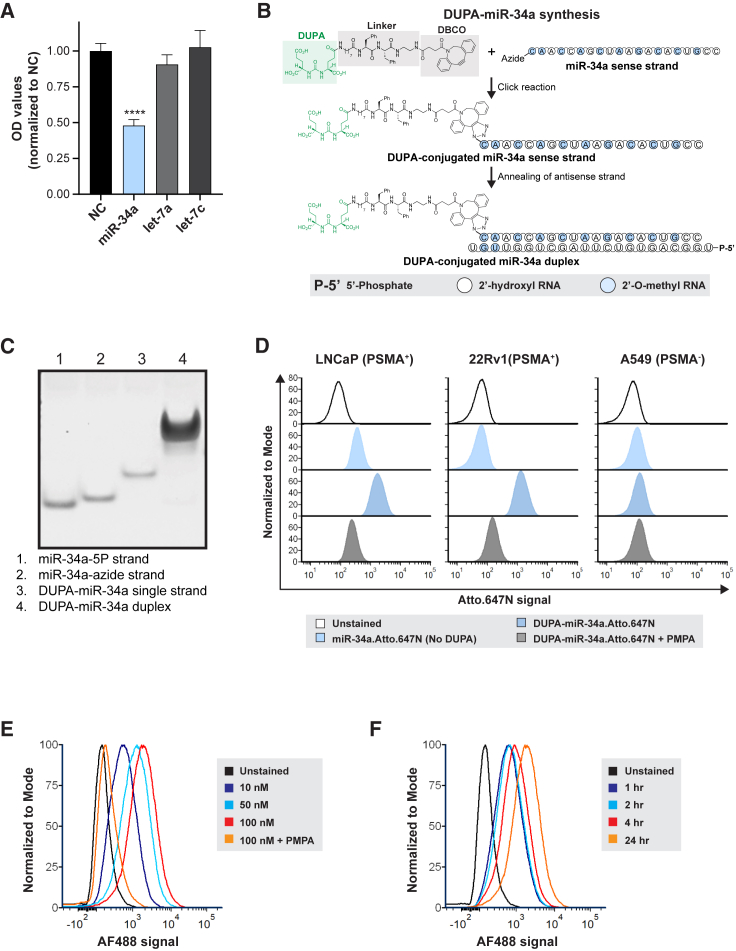
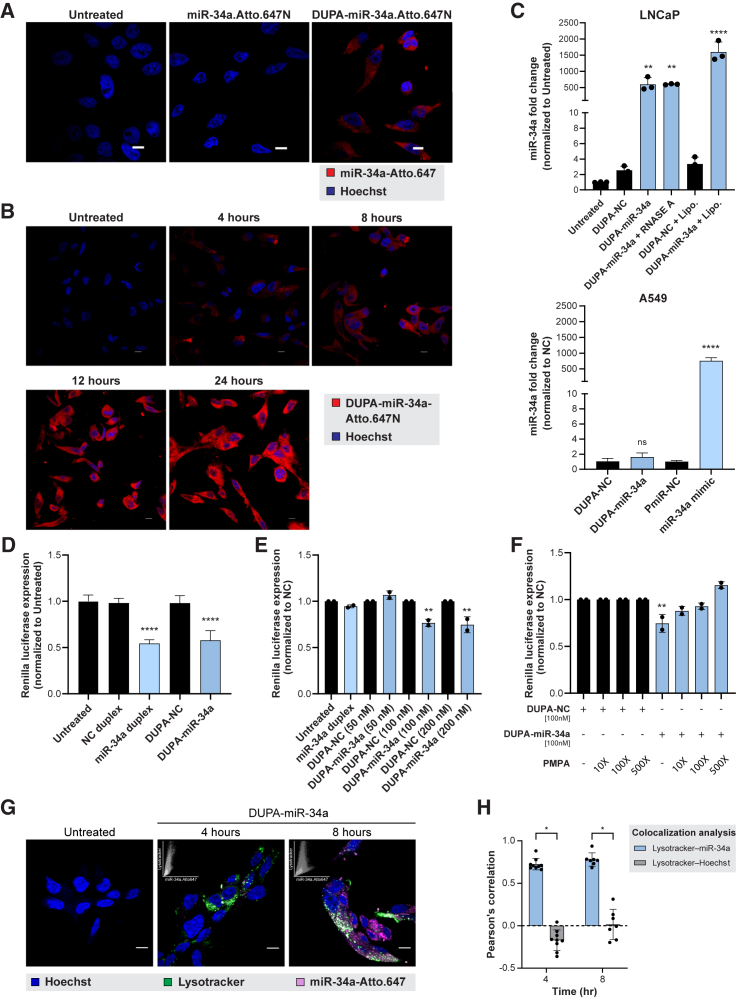
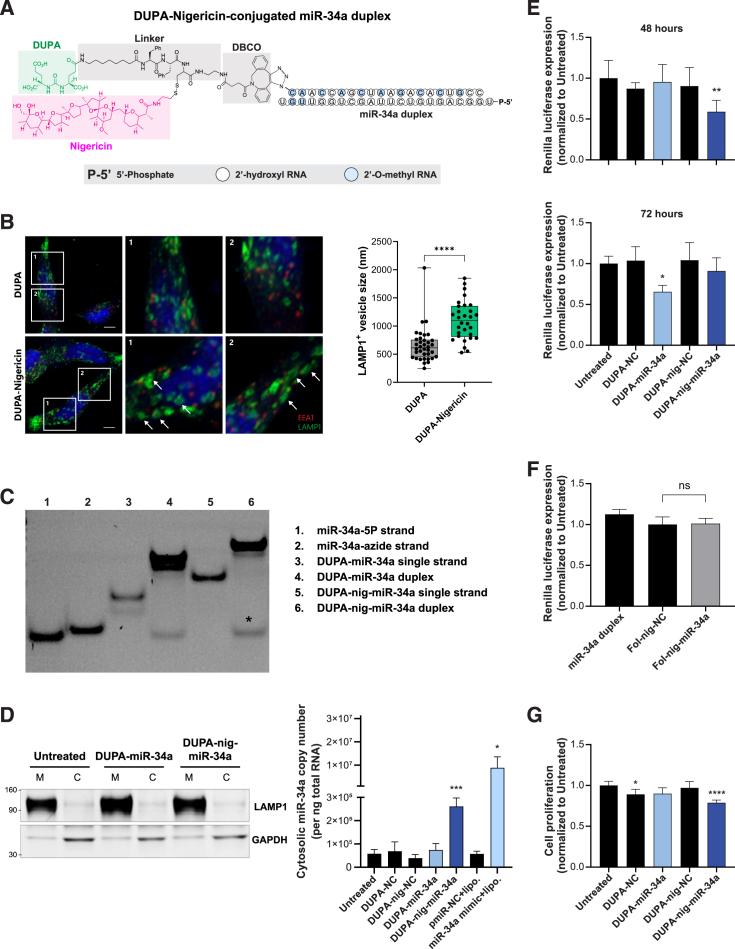
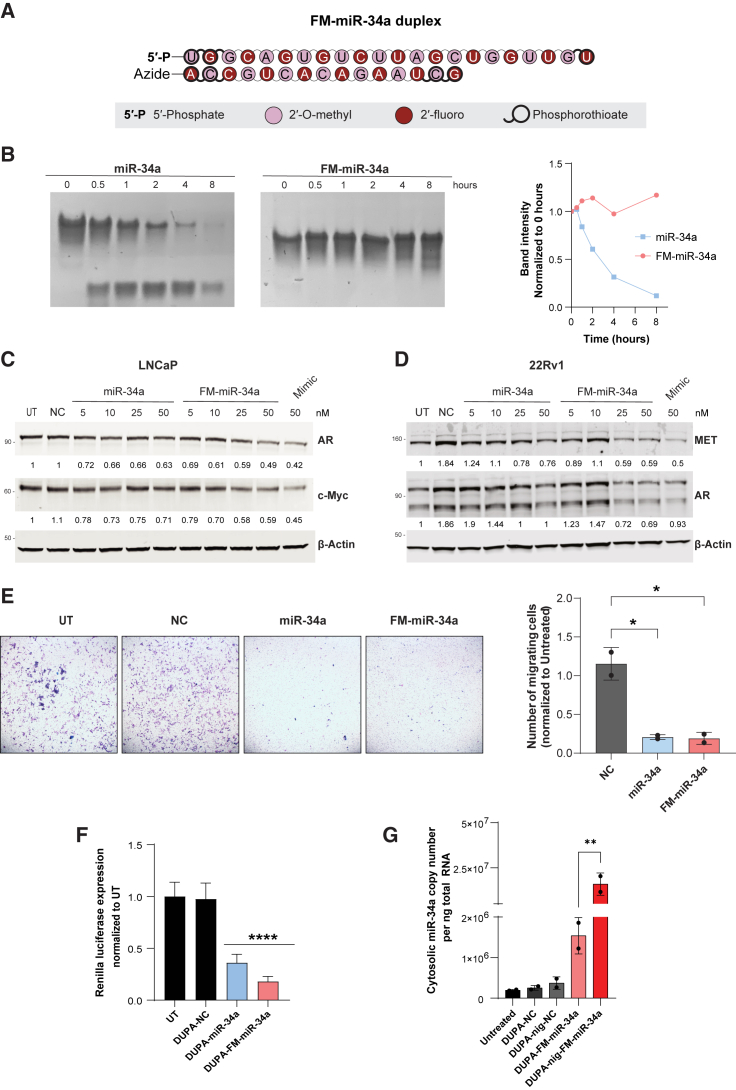
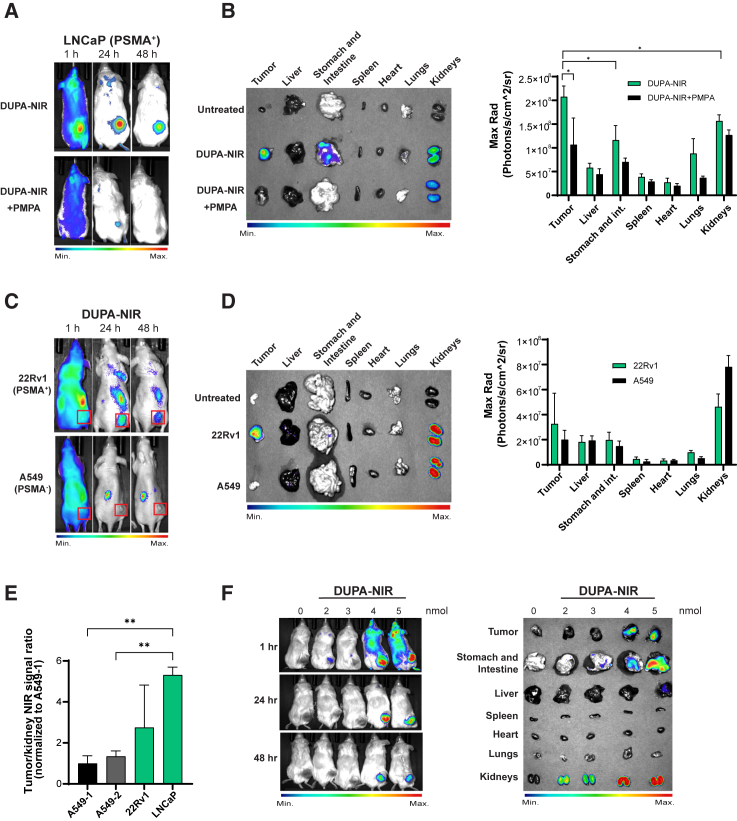
Use of tumor-suppressive microRNAs (miRNAs) as anti-cancer agents is hindered by the lack of effective delivery vehicles, entrapment of the miRNA within endocytic compartments, and rapid degradation of miRNA by nucleases. To address these issues, we developed a miRNA delivery strategy that includes (1) a targeting ligand, (2) an endosomal escape agent, nigericin and (3) a chemically modified miRNA. The delivery ligand, DUPA (2-[3-(1,3-dicarboxy propyl) ureido] pentanedioic acid), was selected based on its specificity for prostate-specific membrane antigen (PSMA), a receptor routinely upregulated in prostate cancer-one of the leading causes of cancer death among men. DUPA was conjugated to the tumor suppressive miRNA, miR-34a (DUPA-miR-34a) based on the ability of miR-34a to inhibit prostate cancer cell proliferation. To mediate endosomal escape, nigericin was incorporated into the complex, resulting in DUPA-nigericin-miR-34a. Both DUPA-miR-34a and DUPA-nigericin-miR-34a specifically bound to, and were taken up by, PSMA-expressing cells and . And while both DUPA-miR-34a and DUPA-nigericin-miR-34a downregulated miR-34a target genes, only DUPA-nigericin-miR-34a decreased cell proliferation and delayed tumor growth Tumor growth was further reduced using a fully modified version of miR-34a that has significantly increased stability.
肿瘤抑制性微小RNA(miRNA)作为抗癌药物的应用受到多种因素的阻碍,包括缺乏有效的递送载体、miRNA被内吞小室截留以及被核酸酶快速降解。为了解决这些问题,我们开发了一种miRNA递送策略,该策略包括:(1)一种靶向配体;(2)一种内体逃逸剂尼日利亚菌素;(3)一种化学修饰的miRNA。递送配体DUPA(2-[3-(1,3-二羧基丙基)脲基]戊二酸)是基于其对前列腺特异性膜抗原(PSMA)的特异性而选择的,PSMA是一种在前列腺癌中经常上调的受体,前列腺癌是男性癌症死亡的主要原因之一。基于miR-34a抑制前列腺癌细胞增殖的能力,将DUPA与肿瘤抑制性miRNA miR-34a偶联(DUPA-miR-34a)。为了介导内体逃逸,将尼日利亚菌素掺入复合物中,得到DUPA-尼日利亚菌素-miR-34a。DUPA-miR-34a和DUPA-尼日利亚菌素-miR-34a均特异性结合并被表达PSMA的细胞摄取。虽然DUPA-miR-34a和DUPA-尼日利亚菌素-miR-34a均下调了miR-34a的靶基因,但只有DUPA-尼日利亚菌素-miR-34a降低了细胞增殖并延缓了肿瘤生长。使用稳定性显著提高的miR-34a的完全修饰版本,肿瘤生长进一步受到抑制。