Guo Susu, Hu Xiaodi, Cotton Jennifer L, Ma Lifang, Li Qi, Cui Jiangtao, Wang Yongjie, Thakare Ritesh P, Tao Zhipeng, Ip Y Tony, Wu Xu, Wang Jiayi, Mao Junhao
Department of Clinical Laboratory, Shanghai Chest Hospital, Shanghai Jiao Tong University School of Medicine, No 241, West Huaihai Road, Shanghai, P. R., 200030, China.
Department of Molecular, Cell and Cancer Biology, University of Massachusetts Chan Medical School, Worcester, Massachusetts, 01605, USA.
bioRxiv. 2025 Feb 18:2024.05.01.592016. doi: 10.1101/2024.05.01.592016.
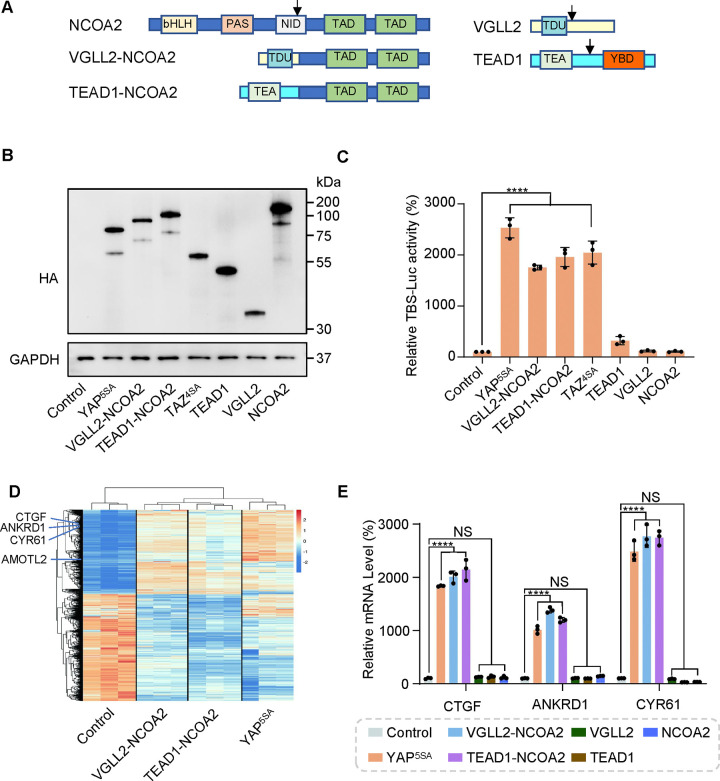
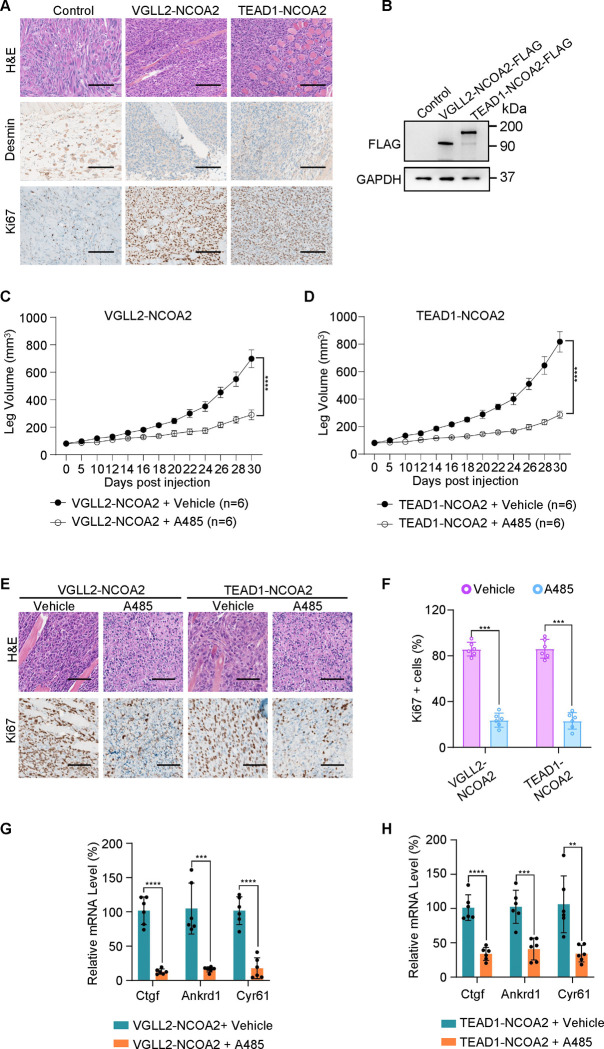
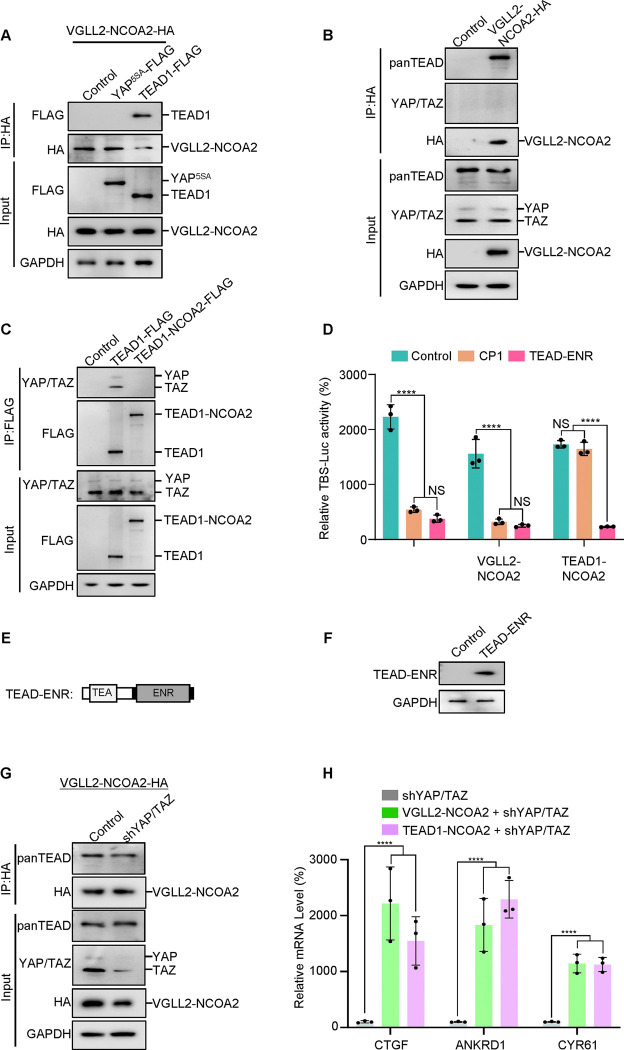
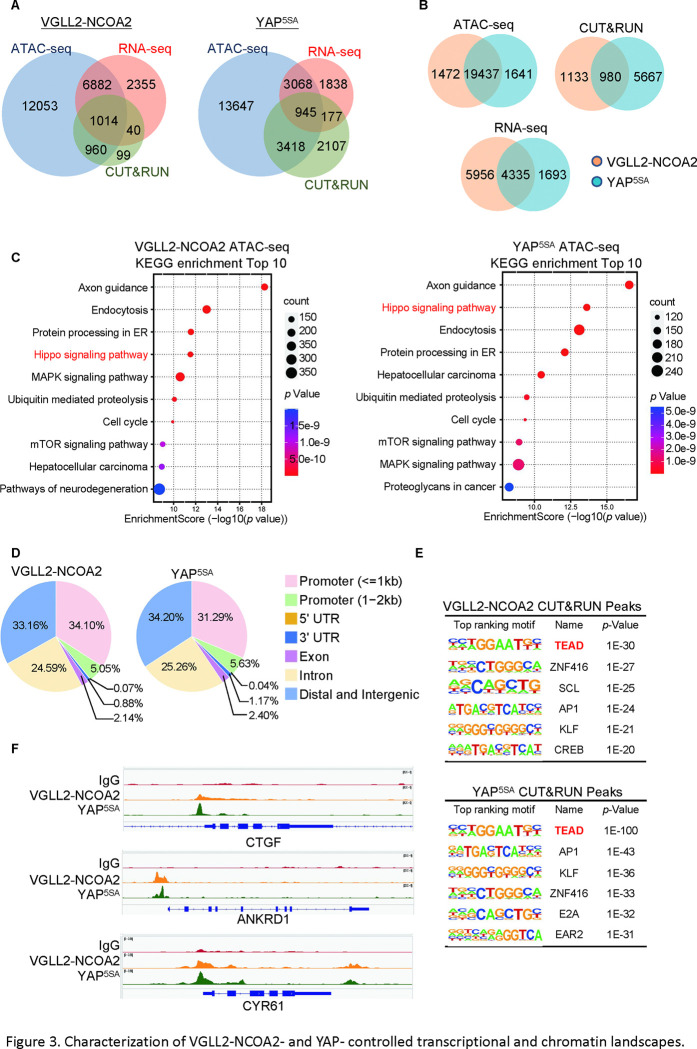
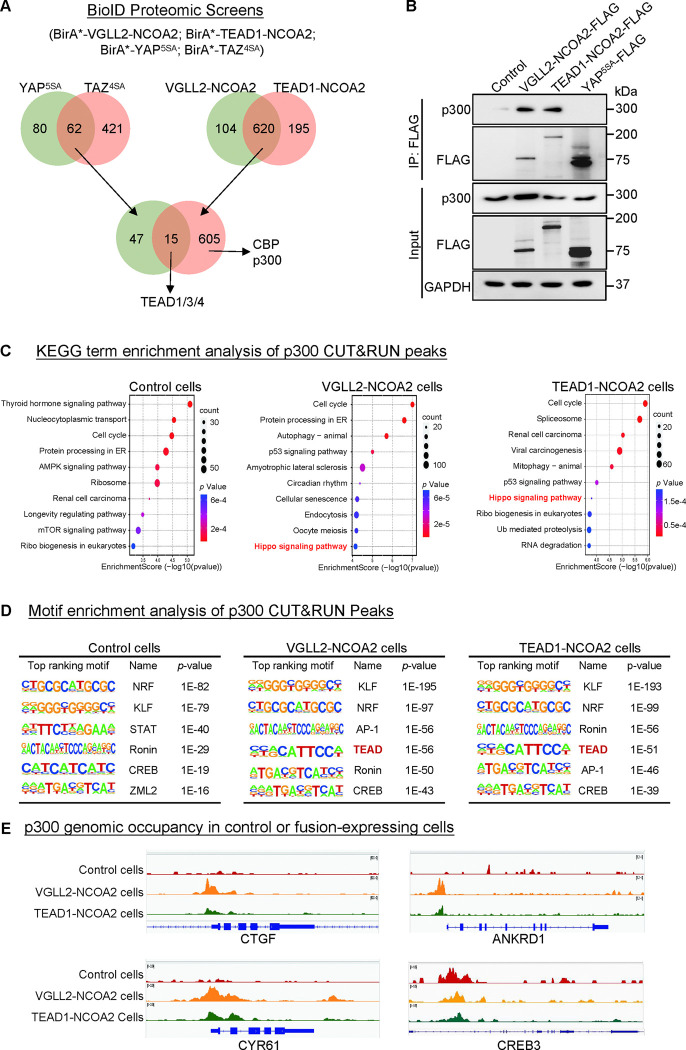
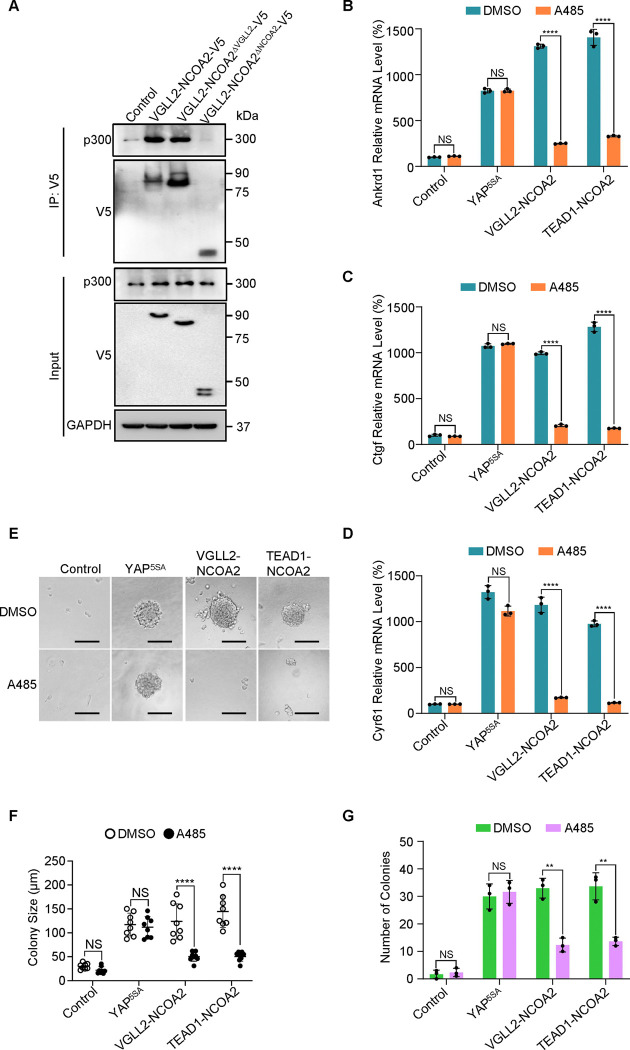
Studies on Hippo pathway regulation of tumorigenesis largely center on YAP and TAZ, the transcriptional co-regulators of TEAD. Here, we present an oncogenic mechanism involving VGLL and TEAD fusions that is Hippo pathway-related but YAP/TAZ-independent. We characterize two recurrent fusions, VGLL2-NCOA2 and TEAD1-NCOA2, recently identified in spindle cell rhabdomyosarcoma. We demonstrate that in contrast to VGLL2 and TEAD1, the fusion proteins are strong activators of TEAD-dependent transcription, and their function does not require YAP/TAZ. Furthermore, we identify that VGLL2 and TEAD1 fusions engage specific epigenetic regulation by recruiting histone acetyltransferase p300 to control TEAD-mediated transcriptional and epigenetic landscapes. We showed that small molecule p300 inhibition can suppress fusion proteins-induced oncogenic transformation both and . Overall, our study reveals a molecular basis for VGLL involvement in cancer and provides a framework for targeting tumors carrying VGLL, TEAD, or NCOA translocations.
对Hippo信号通路调控肿瘤发生的研究主要集中在TEAD的转录共调节因子YAP和TAZ上。在此,我们提出了一种涉及VGLL和TEAD融合的致癌机制,该机制与Hippo信号通路相关,但不依赖YAP/TAZ。我们鉴定了两种在梭形细胞横纹肌肉瘤中最近发现的重复性融合基因,即VGLL2-NCOA2和TEAD1-NCOA2。我们证明,与VGLL2和TEAD1不同,融合蛋白是TEAD依赖性转录的强激活剂,其功能不需要YAP/TAZ。此外,我们发现VGLL2和TEAD1融合蛋白通过招募组蛋白乙酰转移酶p300参与特定的表观遗传调控,以控制TEAD介导的转录和表观遗传格局。我们表明,小分子p300抑制剂可以在体内和体外抑制融合蛋白诱导的致癌转化。总的来说,我们的研究揭示了VGLL参与癌症的分子基础,并为靶向携带VGLL、TEAD或NCOA易位的肿瘤提供了一个框架。