The Second Affiliated Hospital of Nanchang University, Nanchang, China.
The Second Clinical College, Medical College of Nanchang University, Nanchang, China.
Aging (Albany NY). 2024 May 13;16(9):8155-8170. doi: 10.18632/aging.205809.
Osteosarcoma (OS) is a primary malignant bone tumor arising from mesenchymal cells. The standard clinical treatment for OS involves extensive tumor resection combined with neoadjuvant chemotherapy or radiotherapy. OS's invasiveness, lung metastasis, and drug resistance contribute to a low cure rate and poor prognosis with this treatment. Metallothionein 1G (MT1G), observed in various cancers, may serve as a potential therapeutic target for OS.
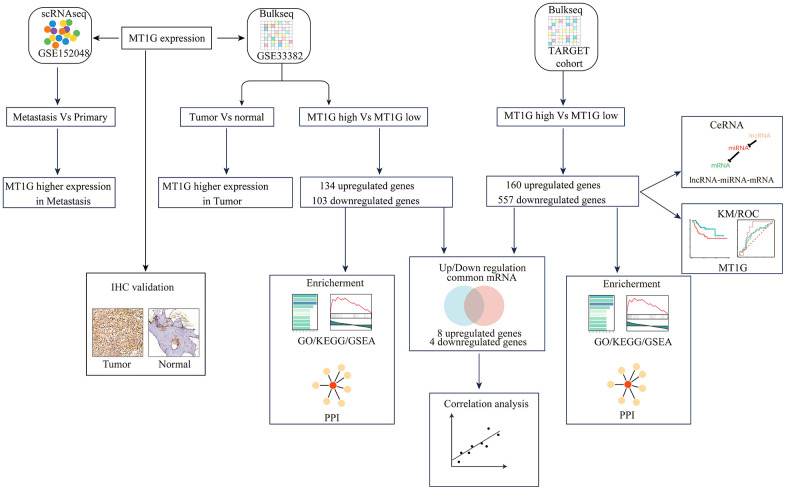
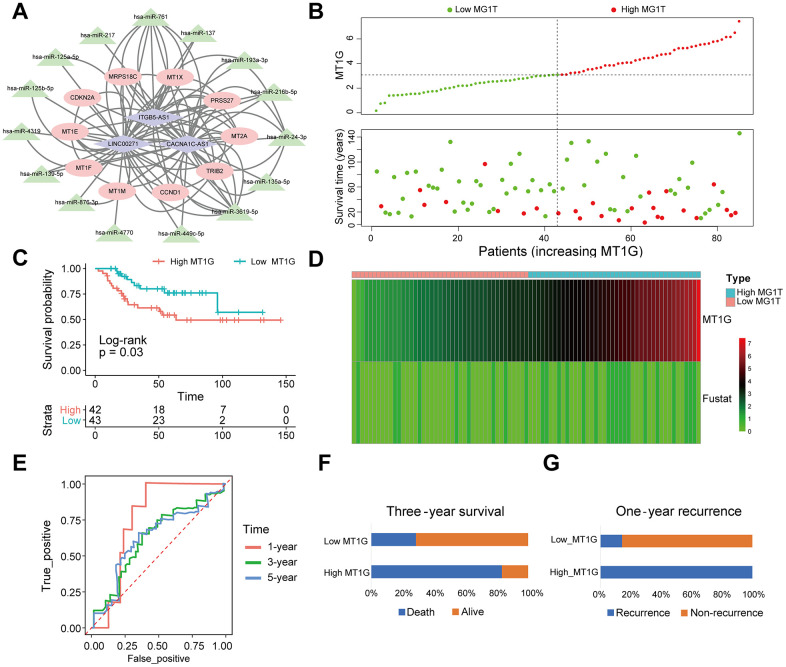
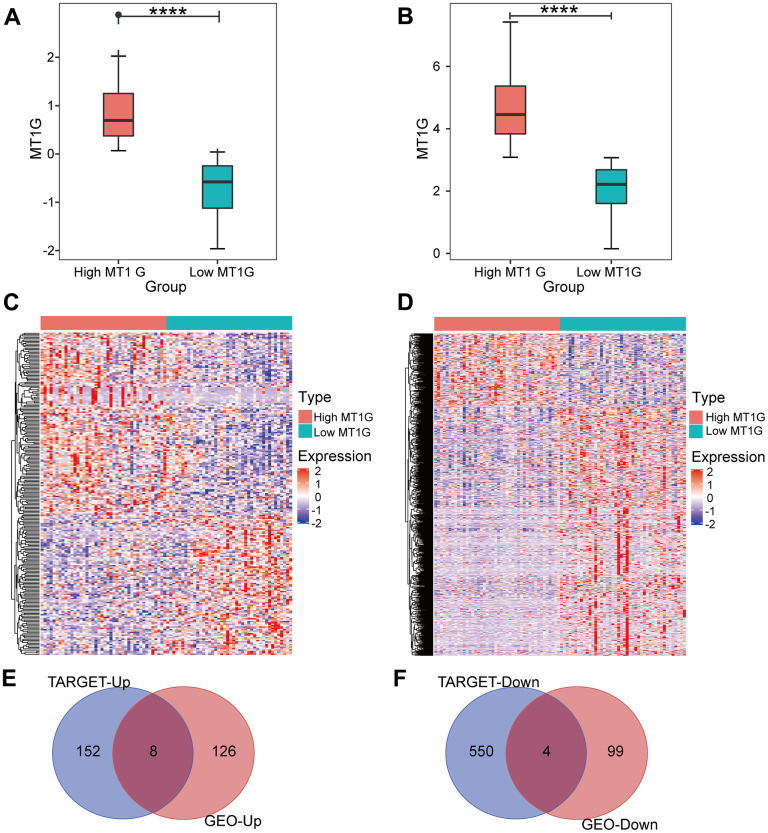
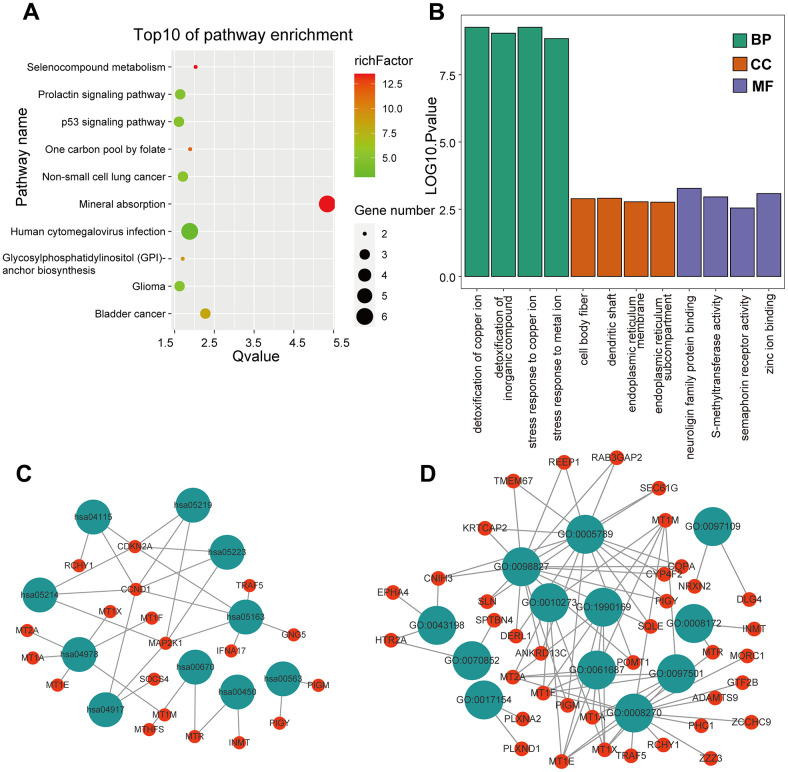
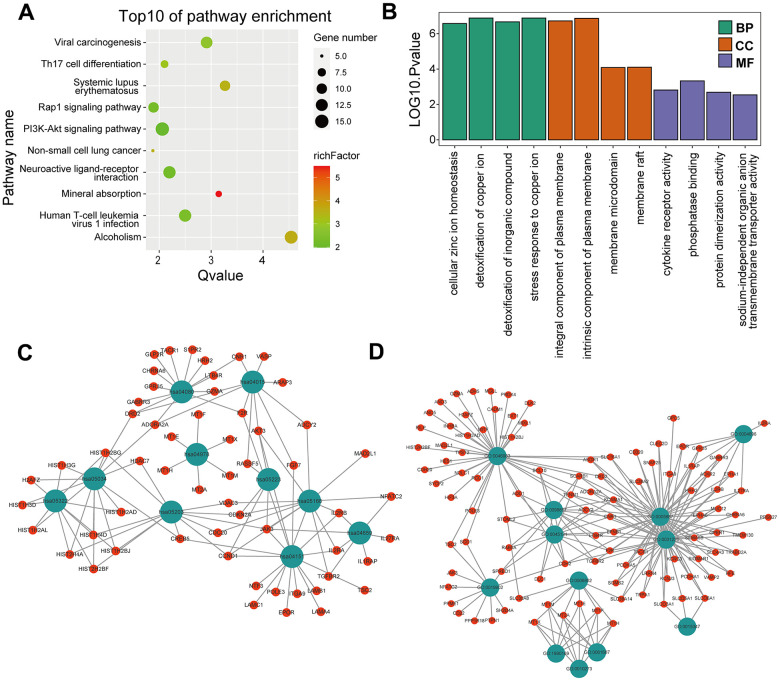
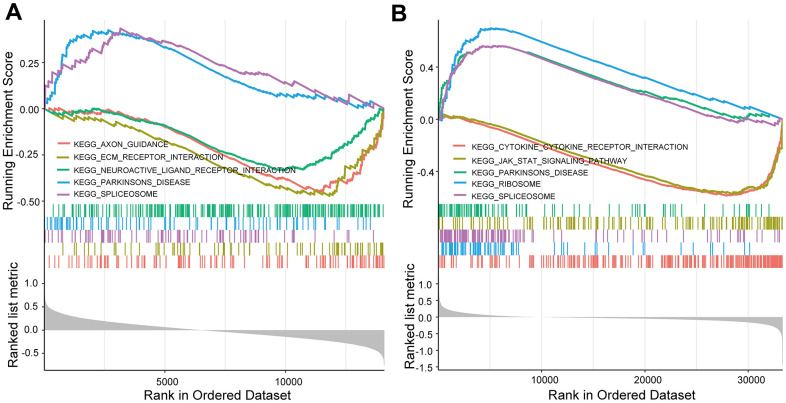
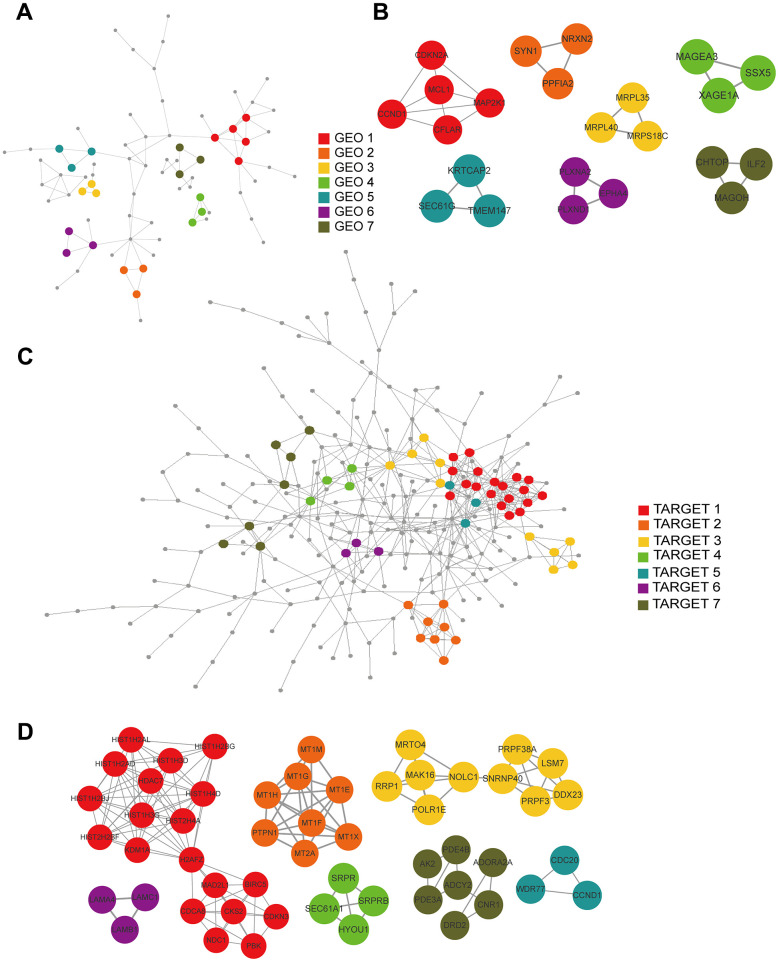
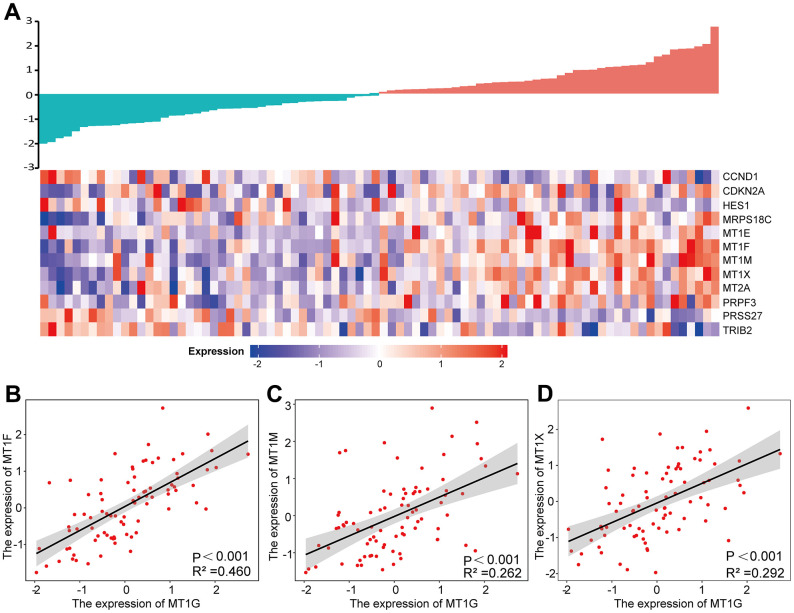
OS samples in GSE33382 and TARGET datasets were selected as the test cohorts. As the external validation cohort, 13 OS tissues and 13 adjacent cancerous tissues from The Second Affiliated Hospital of Nanchang University were collected. Patients with OS were divided into high and low MT1G mRNA-expression groups; differentially expressed genes (DEGs) were identified as MT1G-related genes. The biological function of MT1G was annotated using Kyoto Encyclopedia of Genes and Genomes (KEGG), Gene Ontology (GO) and gene set enrichment analysis (GSEA). Gene expression correlation analysis and competing endogenous RNA (ceRNA) regulatory network construction were used to determine potential biological regulatory relationships of DEGs. Survival analysis assessed the prognostic value of MT1G.
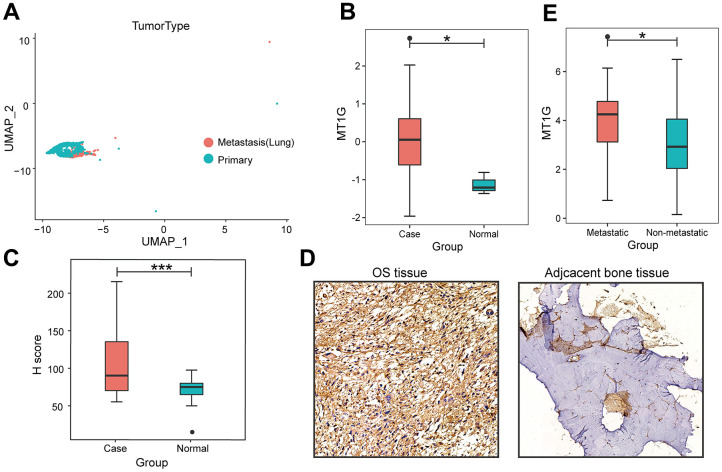
MT1G expression increased in OS samples and presented higher in metastatic OS compared with non-metastatic OS. Functional analyses indicated that MT1G was mainly associated with spliceosome. A ceRNA network with DEGs was constructed. MT1G is an effective biomarker predicting survival and correlated with increased recurrence rates and poorer survival.
This research identified MT1G as a potential biomarker for OS prognosis, highlighting its potential as a therapy target.
骨肉瘤(OS)是一种起源于间充质细胞的原发性恶性骨肿瘤。OS 的标准临床治疗方法包括广泛的肿瘤切除,联合新辅助化疗或放疗。OS 的侵袭性、肺转移和耐药性导致这种治疗方法的治愈率低,预后差。金属硫蛋白 1G(MT1G)在各种癌症中都有观察到,可能是 OS 的一个潜在治疗靶点。
选择 GSE33382 和 TARGET 数据集的 OS 样本作为测试队列。南昌大学第二附属医院的 13 例 OS 组织和 13 例相邻癌组织作为外部验证队列。将 OS 患者分为 MT1G mRNA 高表达和低表达组;鉴定差异表达基因(DEGs)作为 MT1G 相关基因。京都基因与基因组百科全书(KEGG)、基因本体论(GO)和基因集富集分析(GSEA)用于注释 MT1G 的生物学功能。基因表达相关性分析和竞争性内源 RNA(ceRNA)调控网络构建用于确定 DEGs 的潜在生物学调控关系。生存分析评估 MT1G 的预后价值。
MT1G 在 OS 样本中的表达增加,转移性 OS 中的表达高于非转移性 OS。功能分析表明,MT1G 主要与剪接体有关。构建了包含 DEGs 的 ceRNA 网络。MT1G 是预测生存的有效生物标志物,与复发率增加和生存率降低相关。
本研究将 MT1G 鉴定为 OS 预后的潜在生物标志物,强调了其作为治疗靶点的潜力。