Rainey Jacob C, Satcher Lacee, Nechuta Sarah J
Johns Hopkins University, Bloomberg School of Public Health, Department of Mental Health, 615 North Wolfe Street, Baltimore, MD 21205, United States.
Tennessee Department of Health, Office of Informatics and Analytics, 710 James Robertson Parkway, Nashville, TN 37243, United States.
J Subst Use. 2023;28(5):789-796. doi: 10.1080/14659891.2022.2098841. Epub 2022 Jul 14.
Neonatal abstinence syndrome (NAS), largely a consequence of prenatal opioid exposure, results in substantial morbidity. Population-based studies of NAS going beyond Medicaid populations and hospital discharge data (HDD) alone are limited. Using statewide Tennessee (TN) HDD and birth certificate (BC) data, we examined trends and evaluated maternal and infant factors associated with NAS.
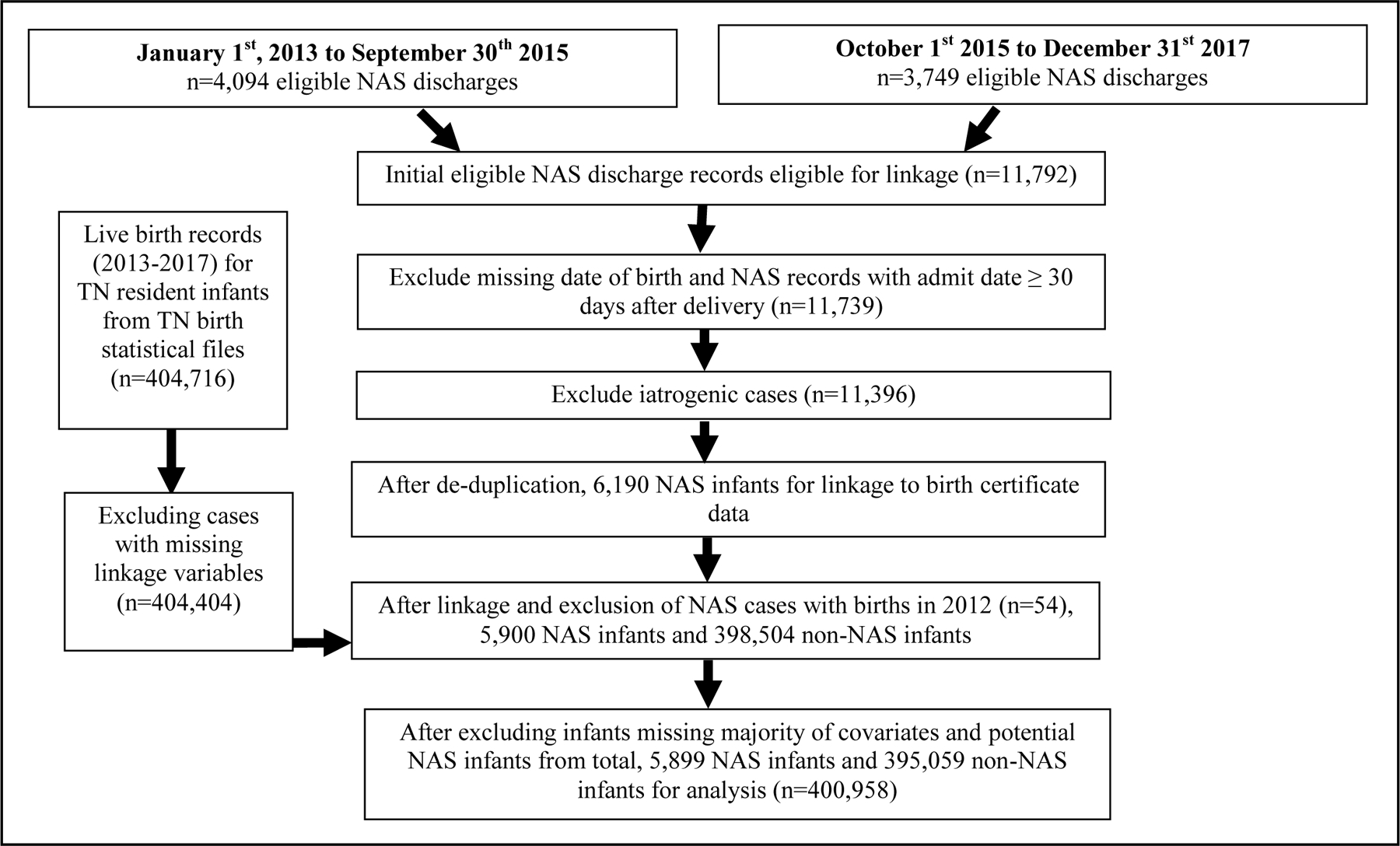
We conducted a population-based descriptive study during 2013-2017 in TN. NAS infants were identified with International Classification of Diseases (ICD)-9-Clinical Modification (CM) and ICD-10-CM codes in HDD and linked to BC data using iterative deterministic matching algorithms. Descriptive analyses were conducted for infant and maternal factors (exposures) by NAS (outcome). Multivariable logistic regression models were used to estimate adjusted ORs and 95% CIs.
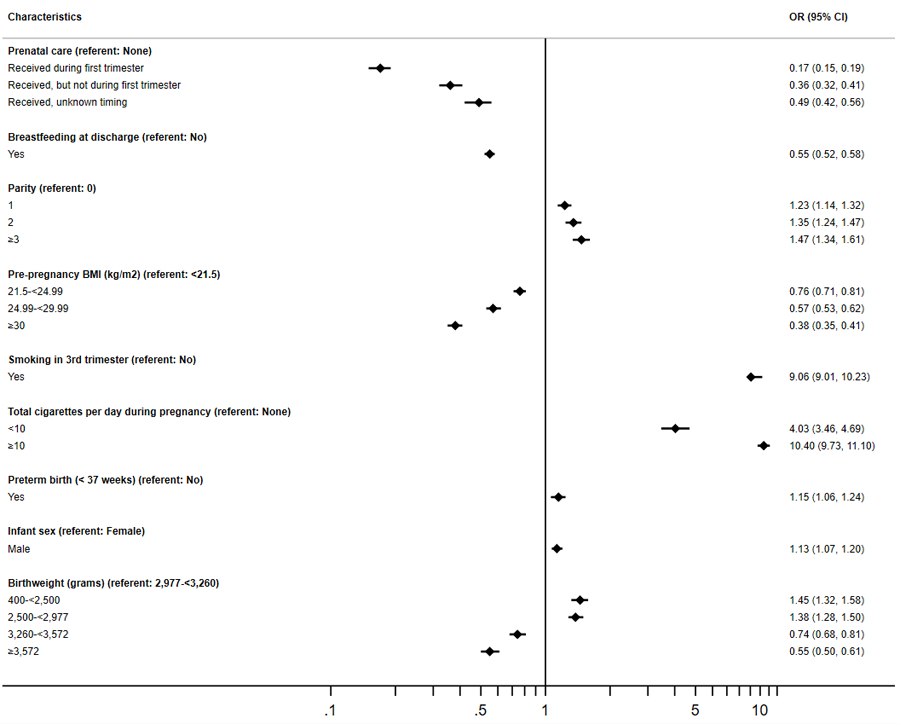
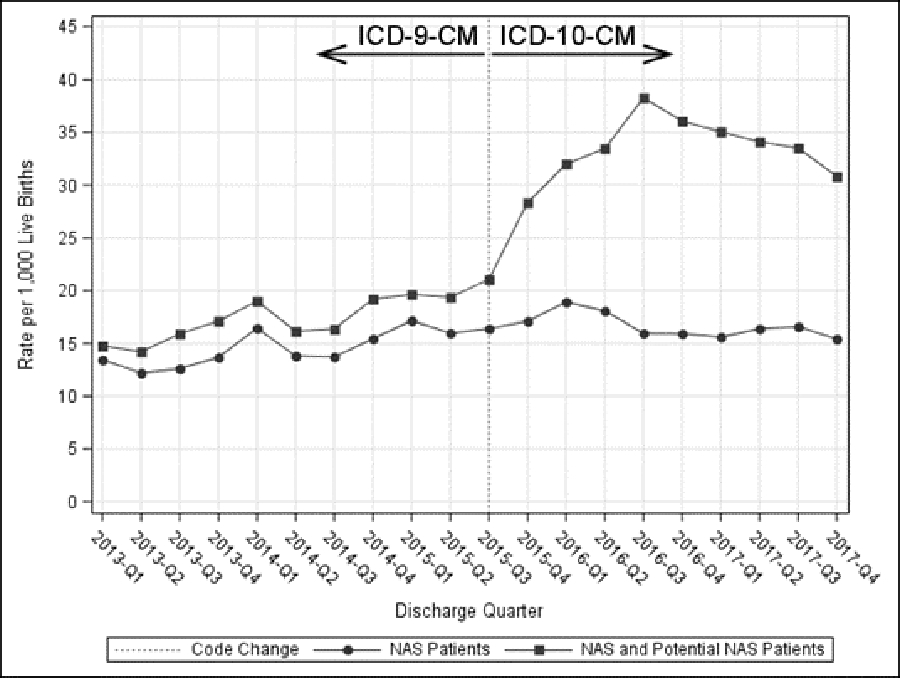
NAS incidence increased from 13.4 to 15.4 per 1,000 live births between 2013-2017 (15% increase; <0.001), but remained stable in 2017. In adjusted models, maternal factors associated with reduced odds of NAS included breastfeeding (OR:0.55, 95%CI:0.52-0.59) and prenatal care (OR:0.36, 95%CI:0.32-0.41). Smoking, preterm birth and lower birthweight were associated with increased odds of NAS.
This study highlights the value of utilizing surveillance data to monitor trends and correlates of NAS to inform prevention efforts and targeting of public health resources.
新生儿戒断综合征(NAS)主要是产前阿片类药物暴露的结果,会导致严重的发病率。仅基于医疗补助人群和医院出院数据(HDD)的NAS人群研究有限。我们利用田纳西州(TN)全州范围的HDD和出生证明(BC)数据,研究了NAS的趋势,并评估了与之相关的母婴因素。
我们于2013年至2017年在TN开展了一项基于人群的描述性研究。在HDD中使用国际疾病分类(ICD)-9-临床修订版(CM)和ICD-10-CM编码识别出NAS婴儿,并使用迭代确定性匹配算法将其与BC数据相链接。针对婴儿和母亲因素(暴露因素)按NAS(结果)进行描述性分析。使用多变量逻辑回归模型来估计调整后的比值比(OR)和95%置信区间(CI)。
2013年至2017年期间,NAS发病率从每1000例活产中的13.4例增至15.4例(增长15%;P<0.001),但在2017年保持稳定。在调整模型中,与NAS几率降低相关的母亲因素包括母乳喂养(OR:0.55,95%CI:0.52-0.59)和产前护理(OR:0.36,95%CI:0.32-0.41)。吸烟、早产和低出生体重与NAS几率增加相关。
本研究强调了利用监测数据来监测NAS趋势及其相关因素以指导预防工作和公共卫生资源靶向定位的价值。