The Frame-Corr Laboratory, Department of Clinical Research and Leadership, The George Washington University School of Medicine and Health Sciences, Washington, DC, United States.
Department of Biotechnology, Harrisburg University of Science and Technology, Harrisburg, PA, United States.
Front Immunol. 2024 May 2;15:1365871. doi: 10.3389/fimmu.2024.1365871. eCollection 2024.
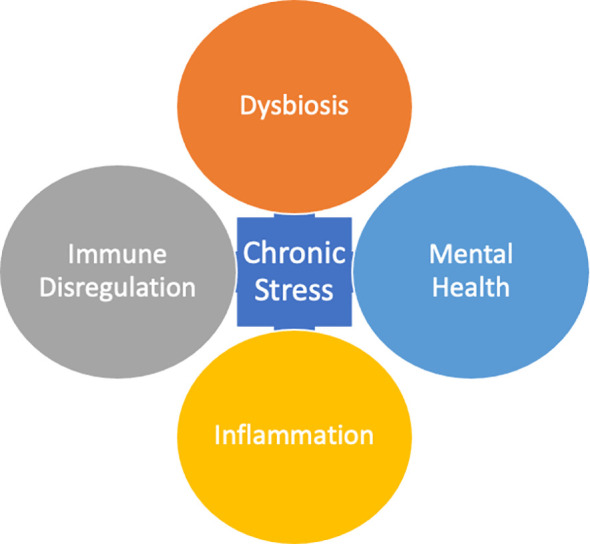
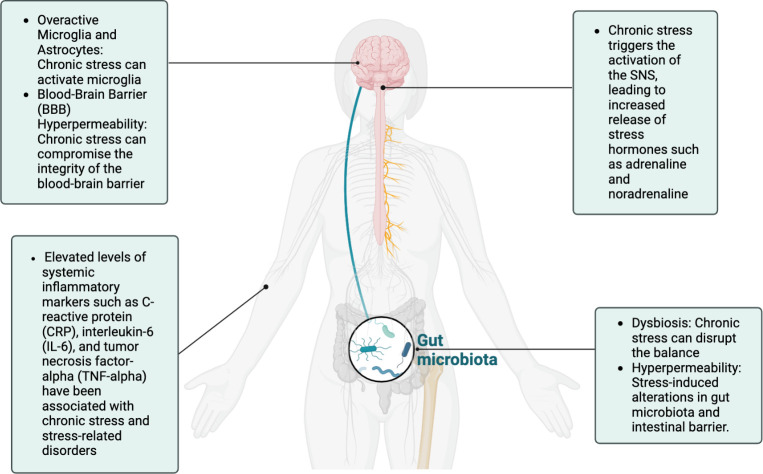
More than 20% of American adults live with a mental disorder, many of whom are treatment resistant or continue to experience symptoms. Other approaches are needed to improve mental health care, including prevention. The role of the microbiome has emerged as a central tenet in mental and physical health and their interconnectedness (well-being). Under normal conditions, a healthy microbiome promotes homeostasis within the host by maintaining intestinal and brain barrier integrity, thereby facilitating host well-being. Owing to the multidirectional crosstalk between the microbiome and neuro-endocrine-immune systems, dysbiosis within the microbiome is a main driver of immune-mediated systemic and neural inflammation that can promote disease progression and is detrimental to well-being broadly and mental health in particular. In predisposed individuals, immune dysregulation can shift to autoimmunity, especially in the presence of physical or psychological triggers. The chronic stress response involves the immune system, which is intimately involved with the gut microbiome, particularly in the process of immune education. This interconnection forms the microbiota-gut-immune-brain axis and promotes mental health or disorders. In this brief review, we aim to highlight the relationships between stress, mental health, and the gut microbiome, along with the ways in which dysbiosis and a dysregulated immune system can shift to an autoimmune response with concomitant neuropsychological consequences in the context of the microbiota-gut-immune-brain axis. Finally, we aim to review evidenced-based prevention strategies and potential therapeutic targets.
超过 20%的美国成年人患有精神障碍,其中许多人对治疗有抗药性或继续出现症状。需要采取其他方法来改善精神卫生保健,包括预防。微生物组的作用已成为精神和身体健康及其相互关联(健康)的核心原则。在正常情况下,健康的微生物组通过维持肠道和大脑屏障的完整性来促进宿主的体内平衡,从而促进宿主的健康。由于微生物组和神经内分泌免疫之间的多向串扰,微生物组内的生态失调是免疫介导的全身和神经炎症的主要驱动因素,这种炎症会促进疾病进展,对广泛的健康,特别是心理健康有害。在易患个体中,免疫失调可转向自身免疫,尤其是在存在身体或心理触发因素的情况下。慢性应激反应涉及免疫系统,而免疫系统与肠道微生物组密切相关,特别是在免疫教育过程中。这种相互联系形成了微生物群-肠道-免疫-大脑轴,并促进了心理健康或障碍。在这篇简短的综述中,我们旨在强调压力、心理健康和肠道微生物组之间的关系,以及在微生物群-肠道-免疫-大脑轴的背景下,生态失调和失调的免疫系统如何转向自身免疫反应以及随之而来的神经心理后果。最后,我们旨在审查基于证据的预防策略和潜在的治疗靶点。