Department of Molecular Cell Biology, University of California, Merced, California, USA.
mSystems. 2024 Jun 18;9(6):e0134223. doi: 10.1128/msystems.01342-23. Epub 2024 May 17.
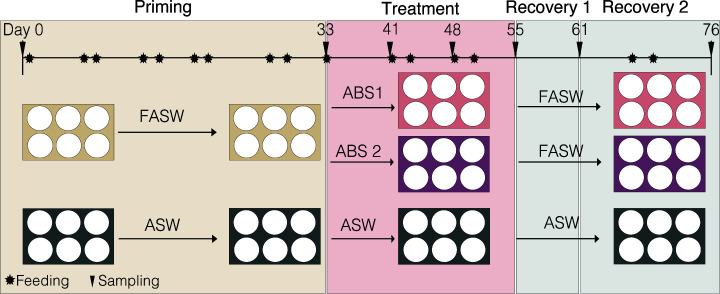
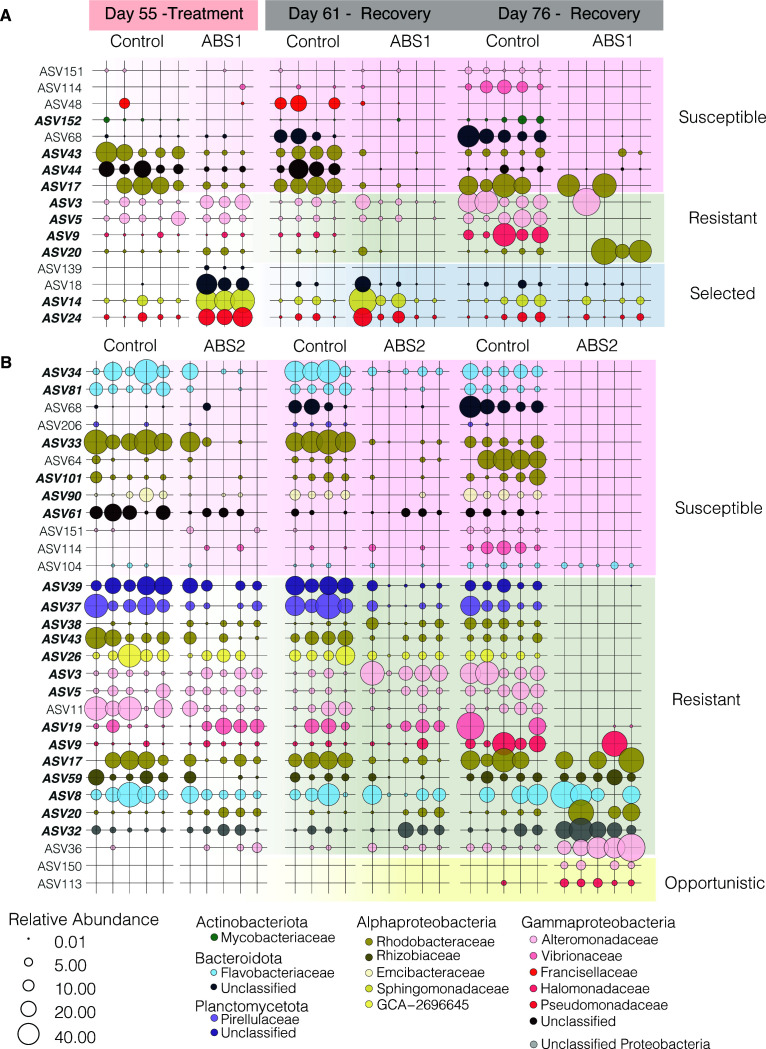
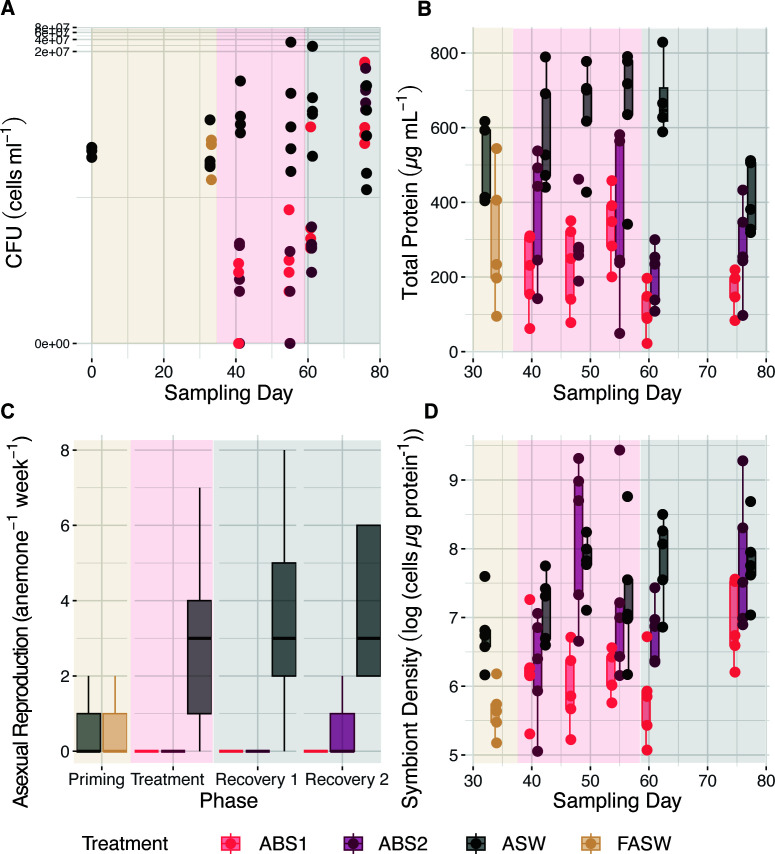
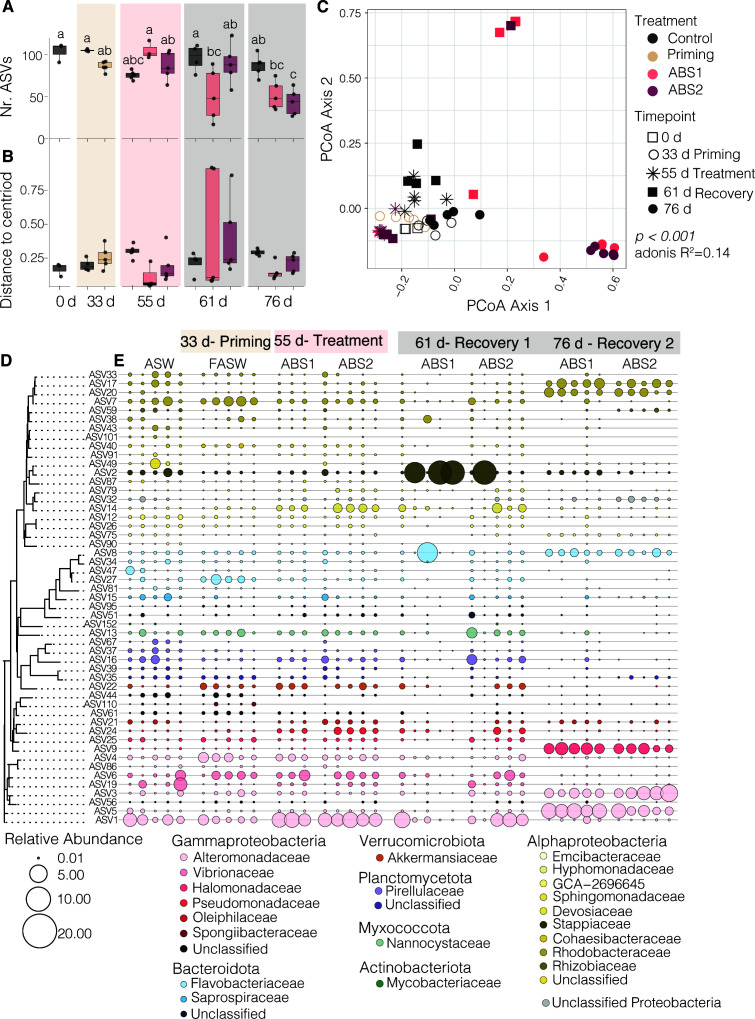
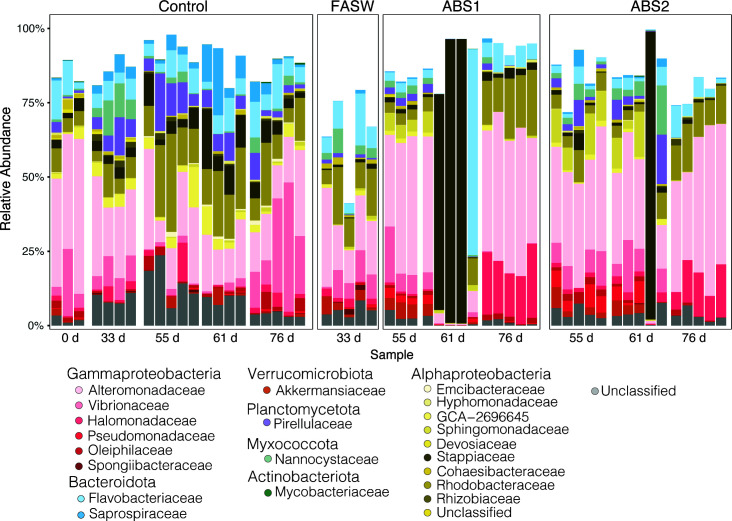
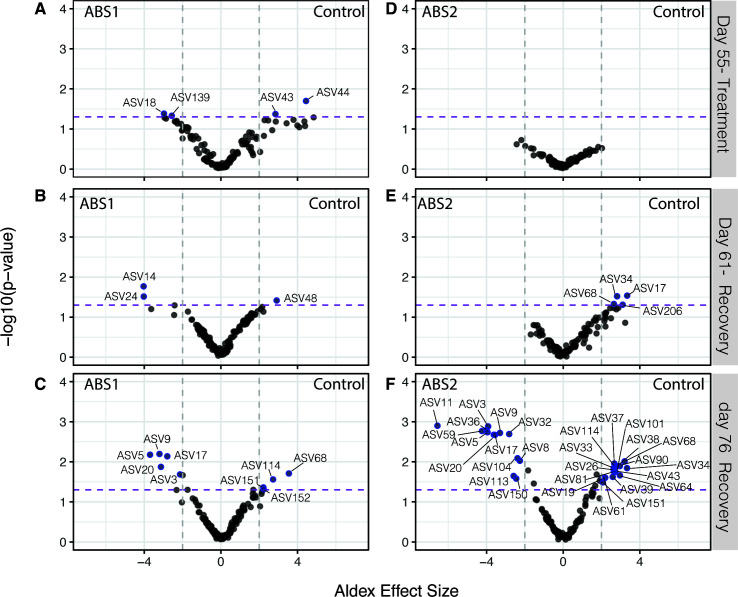
Microbial species that comprise host-associated microbiomes play an essential role in maintaining and mediating the health of plants and animals. While defining the role of individual or even complex communities is important toward quantifying the effect of the microbiome on host health, it is often challenging to develop causal studies that link microbial populations to changes in host fitness. Here, we investigated the impacts of reduced microbial load following antibiotic exposure on the fitness of the anemone, and subsequent recovery of the host's microbiome. Anemones were exposed to two different types of antibiotic solutions for 3 weeks and subsequently held in sterilized seawater for a 3-week recovery period. Our results revealed that both antibiotic treatments reduced the overall microbial load during and up to 1 week post-treatment. The observed reduction in microbial load was coupled with reduced anemone biomass, halted asexual reproduction rates, and for one of the antibiotic treatments, the partial removal of the anemone's algal symbiont. Finally, our amplicon sequencing results of the 16S rRNA gene revealed that anemone bacterial composition only shifted in treated individuals during the recovery phase of the experiment, where we also observed a significant reduction in the overall diversity of the microbial community. Our work implies that the microbiome contributes to host fitness and that the recovery of the host's microbiome following disturbance with antibiotics leads to a reduced, but stable microbial state.IMPORTANCE is an emerging model used to define the cellular and molecular mechanisms of coral-algal symbioses. also houses a diverse microbiome, consisting of hundreds of microbial partners with undefined function. Here, we applied antibiotics to quantify the impact of microbiome removal on host fitness as well as define trajectories in microbiome recovery following disturbance. We showed that reduction of the microbiome leads to negative impacts on host fitness, and that the microbiome does not recover to its original composition while held under aseptic conditions. Rather the microbiome becomes less diverse, but more consistent across individuals. Our work is important because it suggests that anemone microbiomes play a role in maintaining host fitness, that they are susceptible to disturbance events, and that it is possible to generate gnotobiotic individuals that can be leveraged in microbiome manipulation studies to investigate the role of individual species on host health.
构成宿主相关微生物组的微生物物种在维持和调节动植物健康方面发挥着重要作用。虽然定义单个甚至复杂群落的作用对于量化微生物组对宿主健康的影响很重要,但通常很难开展将微生物种群与宿主适应性变化联系起来的因果研究。在这里,我们研究了抗生素暴露后微生物负荷降低对海葵适应性的影响,以及随后宿主微生物组的恢复情况。海葵暴露于两种不同类型的抗生素溶液中 3 周,随后在无菌海水中恢复 3 周。我们的结果表明,两种抗生素处理都在处理期间和处理后 1 周内降低了总体微生物负荷。观察到的微生物负荷减少与海葵生物量减少、无性繁殖率停止以及其中一种抗生素处理导致海葵藻类共生体部分去除有关。最后,我们对 16S rRNA 基因的扩增子测序结果表明,只有在实验的恢复阶段,处理过的个体中海葵的细菌组成发生了变化,在该阶段,我们还观察到微生物群落的总体多样性显著降低。我们的工作表明,微生物组有助于宿主适应性,并且在抗生素干扰后宿主微生物组的恢复会导致微生物状态减少,但更稳定。是一种新兴的模型,用于定义珊瑚-藻类共生关系的细胞和分子机制。 还拥有一个多样化的微生物组,由数百种具有未定义功能的微生物伙伴组成。在这里,我们应用抗生素来量化微生物组去除对宿主适应性的影响,并确定在干扰后微生物组恢复的轨迹。我们表明,微生物组的减少会对宿主适应性产生负面影响,并且在无菌条件下保持时,微生物组不会恢复到其原始组成。相反,微生物组的多样性减少,但个体间更一致。我们的工作很重要,因为它表明海葵微生物组在维持宿主适应性方面发挥作用,它们容易受到干扰事件的影响,并且可以产生无菌个体,可用于微生物组操纵研究,以调查单个物种对宿主健康的作用。