Ma Ahyeon, Lee Yongsoon, Seo Dongho, Kim Jiyoon, Park Soohyeok, Son Jihoon, Kwon Woosuck, Nam Dae-Hyun, Lee Hyosung, Kim Yong-Il, Um Han-Don, Shin Hyeyoung, Nam Ki Min
Department of Chemistry and Institute for Future Earth, Pusan National University, Geumjeong-gu, Busan, 46241, Republic of Korea.
Graduate School of Energy Science and Technology (GEST), Chungnam National University, Daejeon, 34134, Republic of Korea.
Adv Sci (Weinh). 2024 Jul;11(28):e2400874. doi: 10.1002/advs.202400874. Epub 2024 May 17.
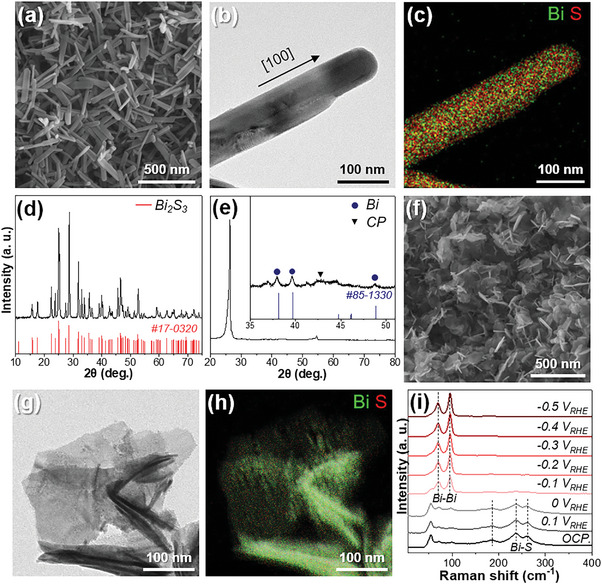
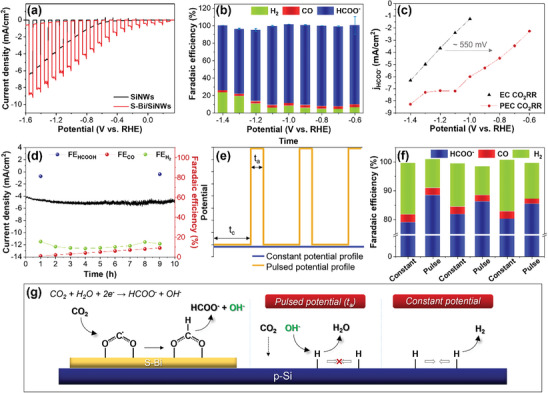
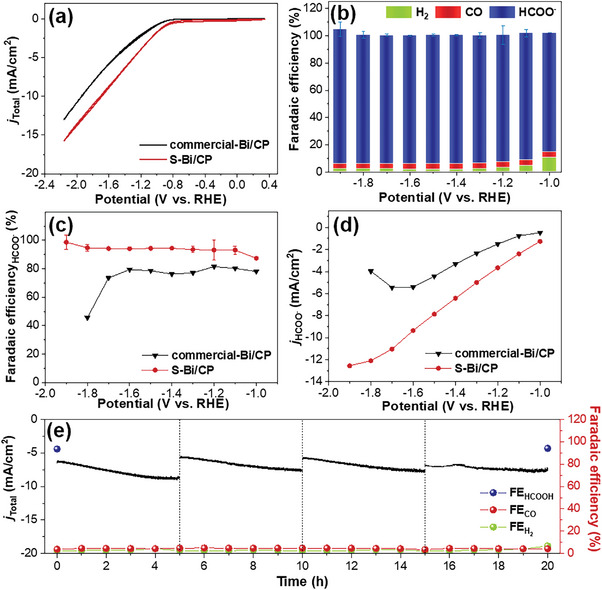
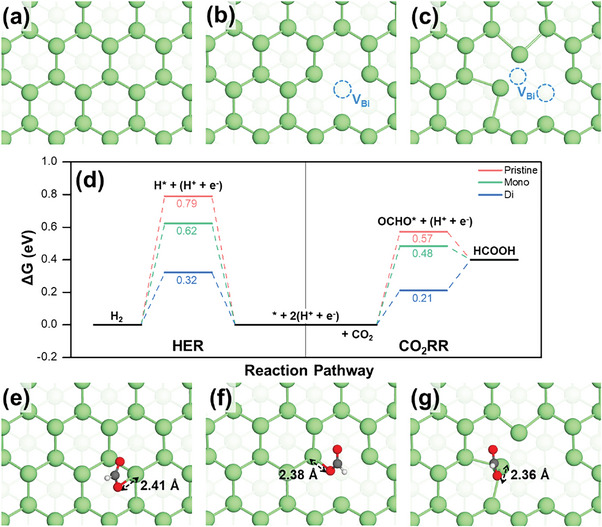
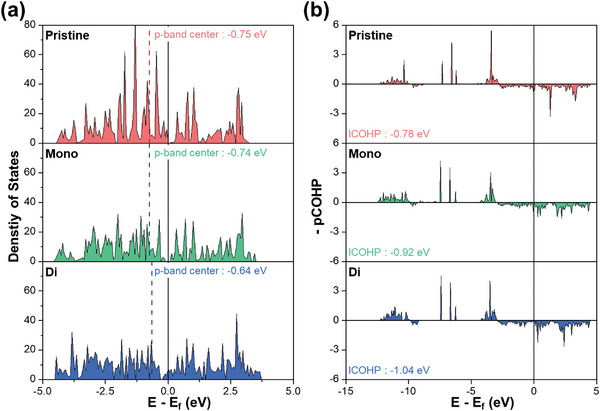
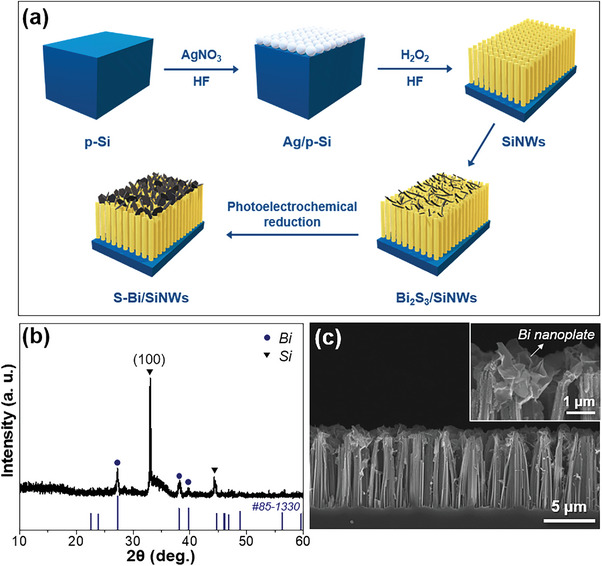
Various electrocatalysts are extensively examined for their ability to selectively produce desired products by electrochemical CO reduction reaction (CORR). However, an efficient CORR electrocatalyst doesn't ensure an effective co-catalyst on the semiconductor surface for photoelectrochemical CORR. Herein, BiS nanorods are synthesized and electrochemically reduced to Bi nanoplates that adhere to the substrates for application in the electrochemical and photoelectrochemical CORR. Compared with commercial-Bi, the BiS-derived Bi (S-Bi) nanoplates on carbon paper exhibit superior electrocatalytic activity and selectivity for formate (HCOO) in the electrochemical CORR, achieving a Faradaic efficiency exceeding 93%, with minimal H production over a wide potential range. This highly selective S-Bi catalyst is being employed on the Si photocathode to investigate the behavior of electrocatalysts during photoelectrochemical CORR. The strong adhesion of the S-Bi nanoplates to the Si nanowire substrate and their unique catalytic properties afford exceptional activity and selectivity for HCOO under simulated solar irradiation. The selectivity observed in electrochemical CORR using the S-Bi catalyst correlates with that seen in the photoelectrochemical CORR system. Combined pulsed potential methods and theoretical analyses reveal stabilization of the OCHO* intermediate on the S-Bi catalyst under specific conditions, which is critical for developing efficient catalysts for CO-to-HCOO conversion.
人们广泛研究了各种电催化剂通过电化学CO还原反应(CORR)选择性生产所需产物的能力。然而,高效的CORR电催化剂并不能确保在半导体表面用于光电化学CORR的有效助催化剂。在此,合成了BiS纳米棒并将其电化学还原为附着在基底上的Bi纳米片,用于电化学和光电化学CORR。与商业Bi相比,碳纸上BiS衍生的Bi(S-Bi)纳米片在电化学CORR中对甲酸盐(HCOO)表现出优异的电催化活性和选择性,法拉第效率超过93%,在很宽的电位范围内析氢量极少。这种高选择性的S-Bi催化剂被用于硅光电阴极,以研究光电化学CORR过程中电催化剂的行为。S-Bi纳米片与硅纳米线基底的强附着力及其独特的催化性能,使其在模拟太阳光照下对HCOO具有出色的活性和选择性。使用S-Bi催化剂在电化学CORR中观察到的选择性与在光电化学CORR系统中观察到的选择性相关。联合脉冲电位方法和理论分析表明,在特定条件下,OCHO*中间体在S-Bi催化剂上稳定,这对于开发用于CO转化为HCOO的高效催化剂至关重要。