Yang Fan, Zhang Kailun, Dai Xiaohua, Jiang Weimin
Department of Cardiology, Affiliated Hospital of Nanjing University of Chinese Medicine, Nanjing, Jiangsu 210023, China.
Department of Cardiology, The First Affiliated Hospital, Anhui University of Chinese Medicine, Hefei, Anhui 230000, China.
J Anal Methods Chem. 2024 May 10;2024:7967999. doi: 10.1155/2024/7967999. eCollection 2024.
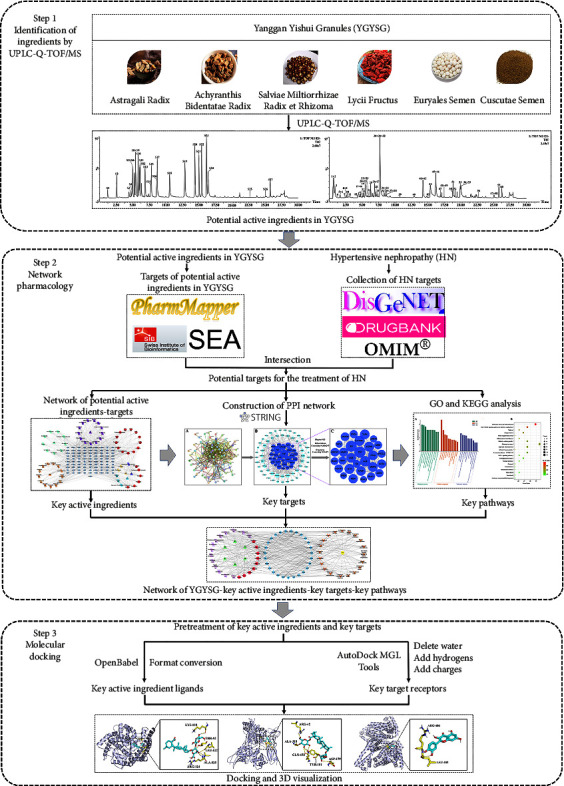
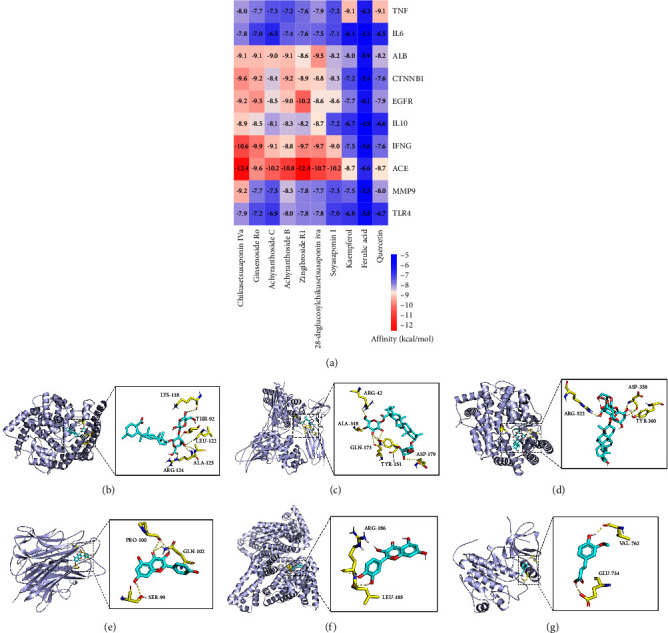
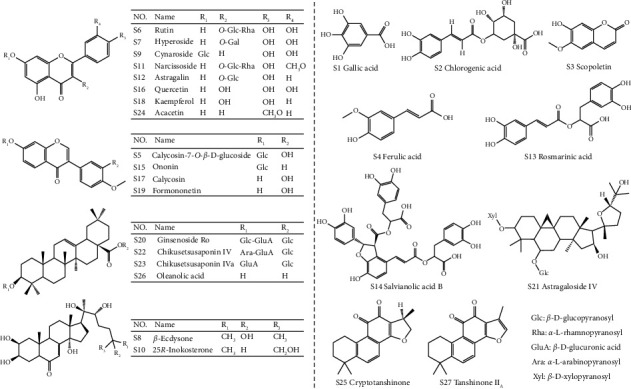
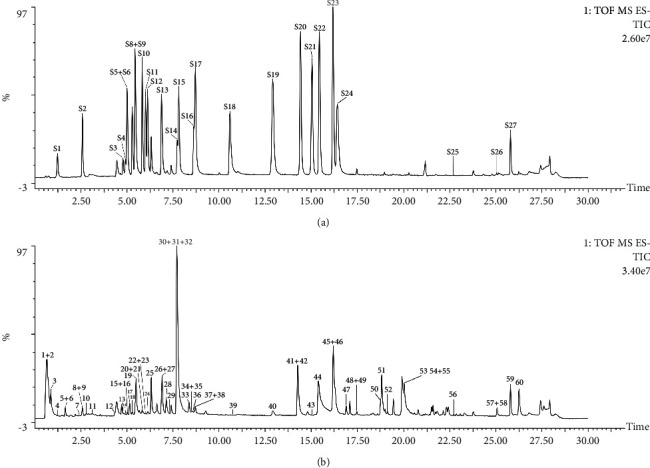
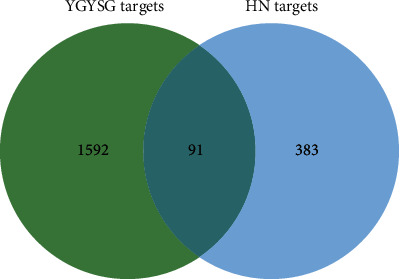
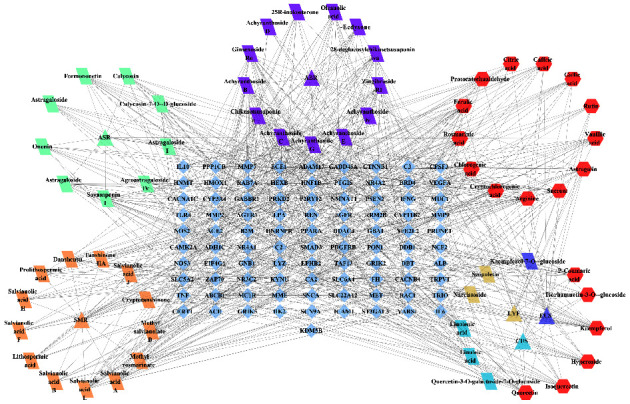
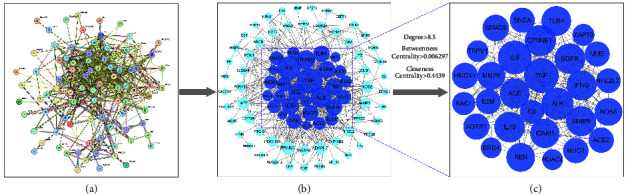
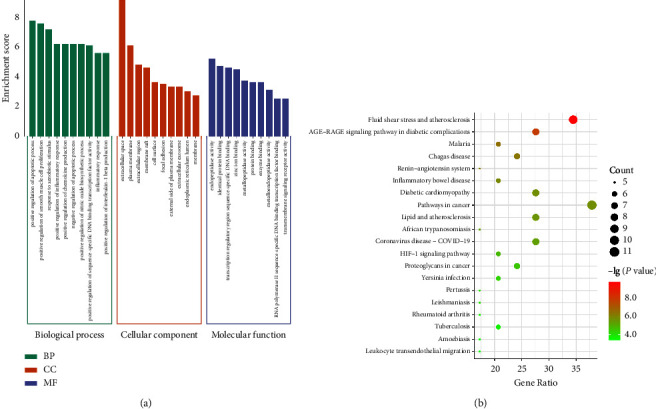
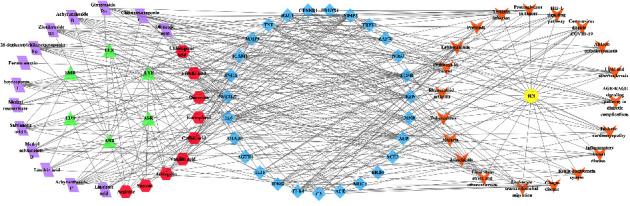
Hypertensive nephropathy (HN) is a prevalent complication of hypertension and stands as the second primary reason for end-stage renal disease. Research in clinical settings has revealed that Yanggan Yishui Granule (YGYSG) has significant therapeutic effects on HN. However, the material basis and action mechanisms of YGYSG against HN remain unclear. Consequently, this study utilized a comprehensive method integrating ultraperformance liquid chromatography-quadrupole time-of-flight mass spectrometry (UPLC-Q-TOF/MS), network pharmacology, and molecular docking to delineate the active ingredients and potential therapeutic mechanisms of YGYSG for treating HN. Firstly, sixty distinct components were recognized in total as potential active ingredients in YGYSG by UPLC-Q-TOF/MS. Subsequently, the mechanisms of YGYSG against HN were revealed for the first time using network pharmacology. 23 ingredients played key roles in the complete network and were the key active ingredients, which could affect the renin-angiotensin system, fluid shear stress and atherosclerosis, HIF-1 signaling pathway, and AGE-RAGE signaling pathway in diabetic complications by regulating 29 key targets such as TNF, IL6, ALB, EGFR, ACE, and MMP2. YGYSG could treat HN through the suppression of inflammatory response and oxidative stress, attenuating the proliferation of renal vascular smooth muscle cells, lessening glomerular capillary systolic pressure, and ameliorating renal dysfunction and vascular damage through the aforementioned targets and pathways. Molecular docking results revealed that most key active ingredients exhibited a high affinity for binding to the key targets. This study pioneers in clarifying the bioactive compounds and molecular mechanisms of YGYSG against HN and offers scientific reference into the clinical application.
高血压肾病(HN)是高血压常见的并发症,是终末期肾病的第二大主要原因。临床研究表明,养肝益肾颗粒(YGYSG)对高血压肾病具有显著的治疗作用。然而,YGYSG治疗高血压肾病的物质基础和作用机制尚不清楚。因此,本研究采用超高效液相色谱-四极杆飞行时间质谱(UPLC-Q-TOF/MS)、网络药理学和分子对接相结合的综合方法,阐明YGYSG治疗高血压肾病的活性成分和潜在治疗机制。首先,通过UPLC-Q-TOF/MS共鉴定出60种不同成分作为YGYSG中的潜在活性成分。随后,首次利用网络药理学揭示了YGYSG治疗高血压肾病的机制。23种成分在完整网络中起关键作用,是关键活性成分,可通过调节TNF、IL6、ALB、EGFR、ACE和MMP2等29个关键靶点,影响糖尿病并发症中的肾素-血管紧张素系统、流体切应力与动脉粥样硬化、HIF-1信号通路和AGE-RAGE信号通路。YGYSG可通过上述靶点和途径抑制炎症反应和氧化应激,减轻肾血管平滑肌细胞增殖,降低肾小球毛细血管收缩压,改善肾功能和血管损伤,从而治疗高血压肾病。分子对接结果表明,大多数关键活性成分与关键靶点具有较高的结合亲和力。本研究首次阐明了YGYSG治疗高血压肾病的生物活性化合物和分子机制,为其临床应用提供了科学参考。