Department of Biology, University of Konstanz , Konstanz 78464, Germany.
Centre for the Advanced Study of Collective Behaviour, University of Konstanz , Konstanz 78464, Germany.
Philos Trans R Soc Lond B Biol Sci. 2024 Jul 8;379(1905):20230188. doi: 10.1098/rstb.2023.0188. Epub 2024 May 20.
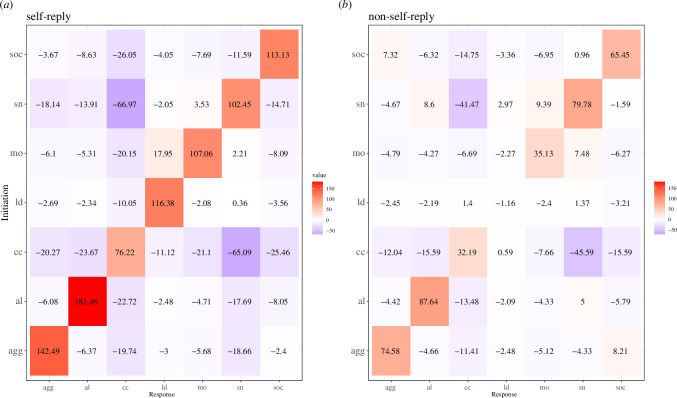
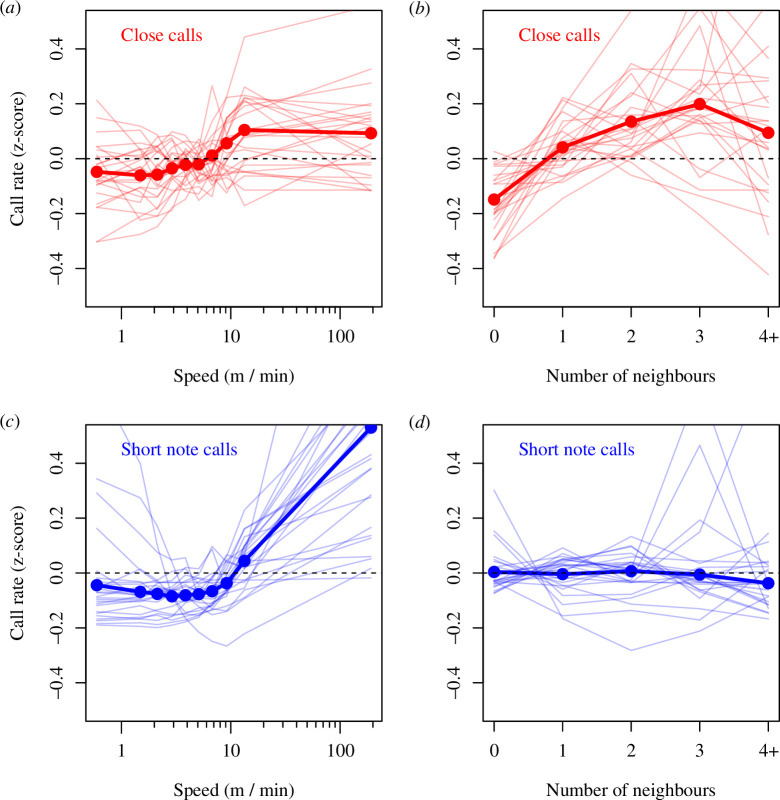
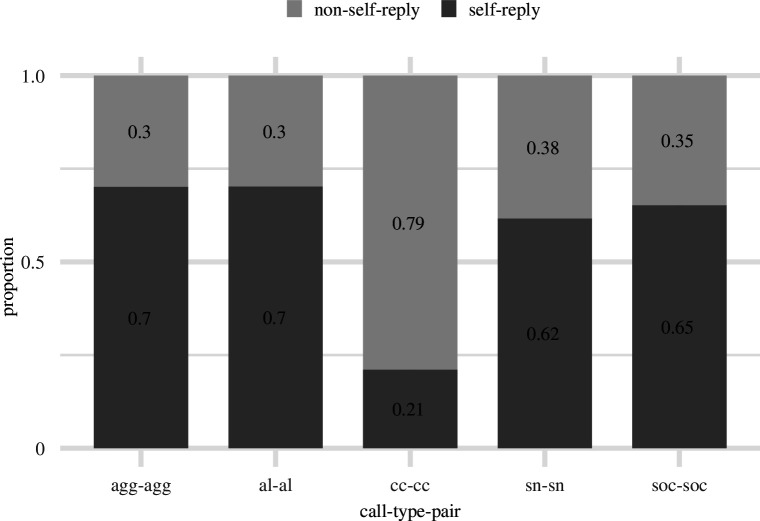
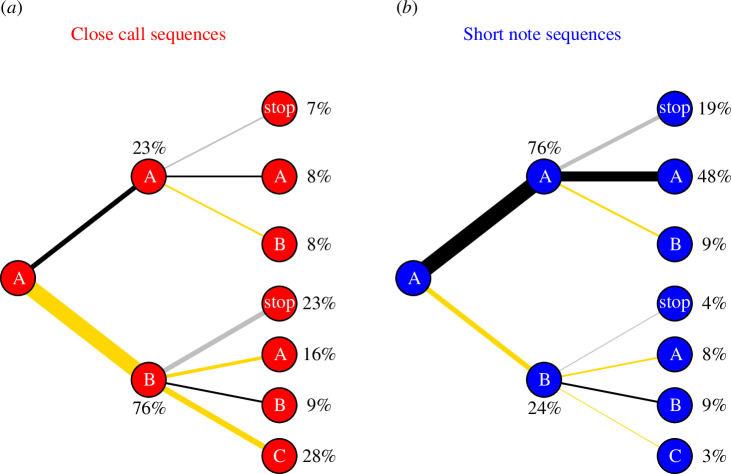
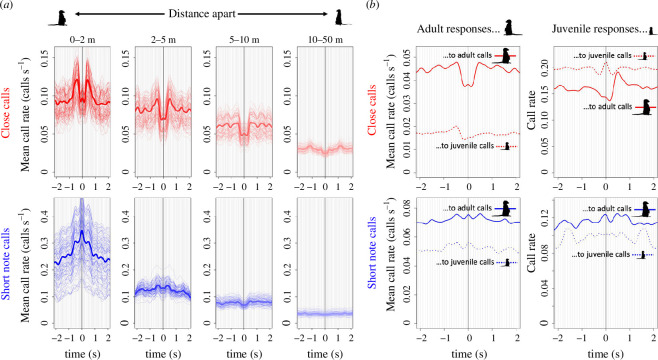
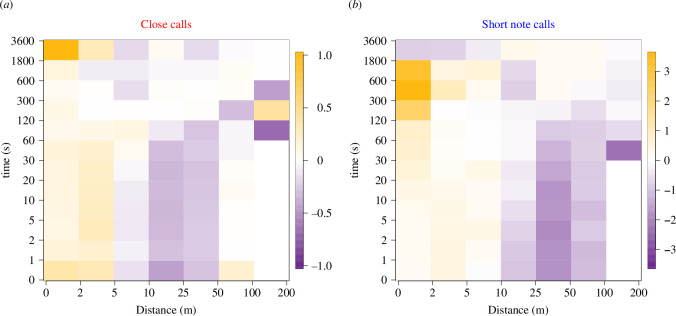
Animal vocal communication research traditionally focuses on acoustic and contextual features of calls, yet substantial information is also contained in response selectivity and timing during vocalization events. By examining the spatiotemporal structure of vocal interactions, we can distinguish between 'broadcast' and 'exchange' signalling modes, with the former potentially serving to transmit signallers' general state and the latter reflecting more interactive signalling behaviour. Here, we tracked the movements and vocalizations of wild meerkat () groups simultaneously using collars to explore this distinction. We found evidence that (used for maintaining group cohesion) are given as signal exchanges. They are typically given in temporally structured call-response sequences and are also strongly affected by the social environment, with individuals calling more when they have more neighbours and juveniles responding more to adults than the reverse. In contrast, appear mainly in sequences produced by single individuals and show little dependence on social surroundings, suggesting a broadcast signalling mode. Despite these differences, both call categories show similar clustering in space and time at a group level. Our results highlight how the fine-scale structure of vocal interactions can give important insights into the usage and function of signals in social groups. This article is part of the theme issue 'The power of sound: unravelling how acoustic communication shapes group dynamics.'
动物声音交流研究传统上侧重于叫声的声学和语境特征,但在发声事件中,响应选择性和时间也包含了大量信息。通过检查声音相互作用的时空结构,我们可以区分“广播”和“交换”信号模式,前者可能用于传输信号发出者的一般状态,后者反映了更具互动性的信号行为。在这里,我们使用项圈同时跟踪野生猫鼬()群体的运动和叫声,以探索这种区别。我们发现有证据表明(用于维持群体凝聚力)是作为信号交换发出的。它们通常以时间结构的叫声-回应序列发出,并且也受到社会环境的强烈影响,个体的邻居越多,它们的叫声就越多,而青少年对成年人的回应比相反的情况要多。相比之下,(用于个体间的识别和交流)似乎主要出现在单个个体产生的序列中,并且对社会环境的依赖很小,表明是广播信号模式。尽管存在这些差异,但这两种叫声类别在群体层面上都表现出类似的空间和时间聚类。我们的研究结果强调了声音相互作用的精细结构如何为研究社会群体中信号的使用和功能提供重要的见解。本文是主题为“声音的力量:揭示声学通讯如何塑造群体动态”的一部分。