State Key Laboratory for Diagnosis and Treatment of Infectious Diseases, National Clinical Research Center for Infectious Diseases, National Medical Center for Infectious Diseases, Collaborative Innovation Center for Diagnosis and Treatment of Infectious Diseases, The First Affiliated Hospital, Zhejiang University School of Medicine,79 Qingchun Rd., Hangzhou City 310003, China.
Department of Geriatrics, The Second Affiliated Hospital, Zhejiang University School of Medicine, Hangzhou 310000, China.
Virus Res. 2024 Jul;345:199402. doi: 10.1016/j.virusres.2024.199402. Epub 2024 May 21.
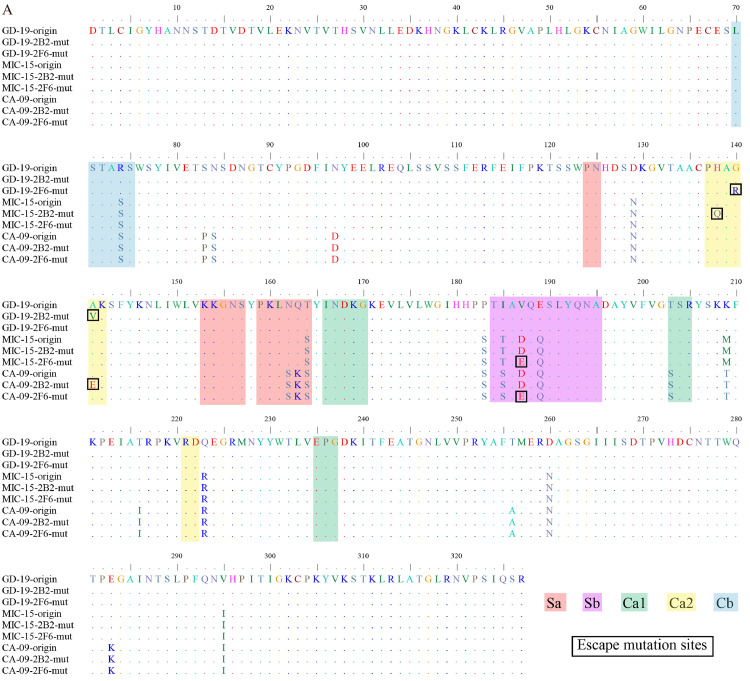
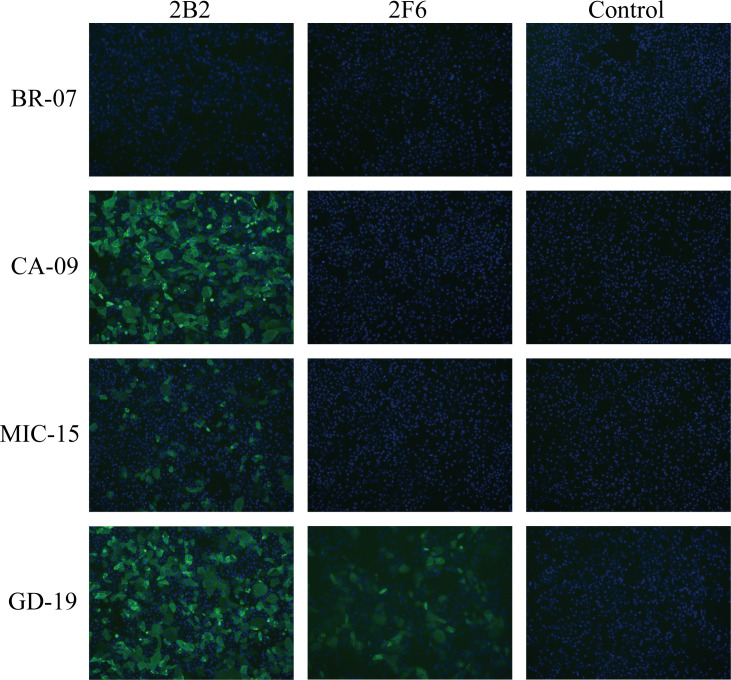
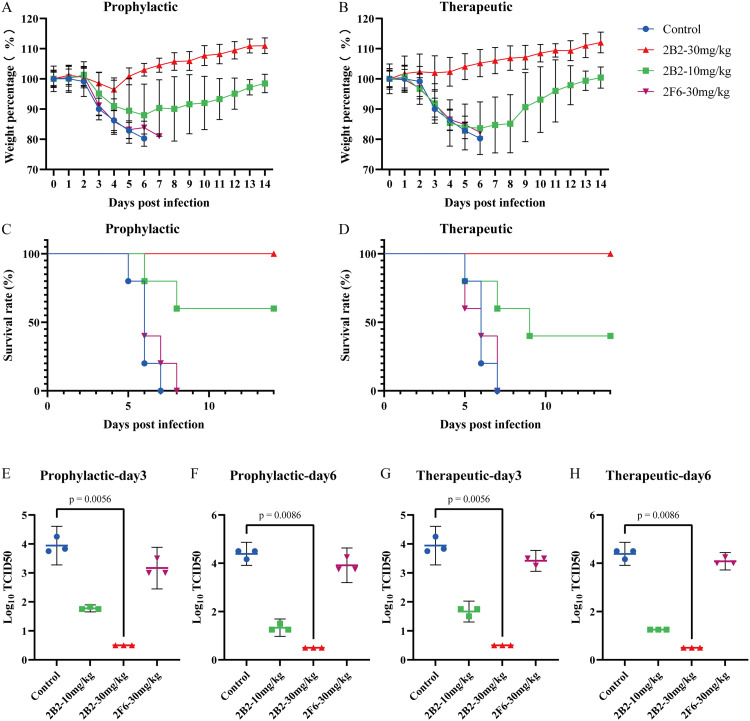
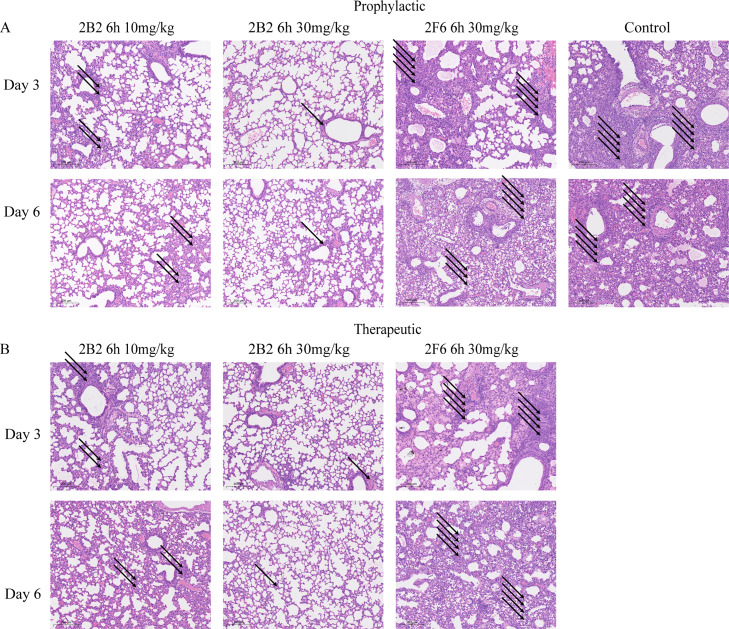
H1N1 influenza virus is a significant global public health concern. Monoclonal antibodies (mAbs) targeting specific viral proteins such as hemagglutinin (HA) have become an important therapeutic strategy, offering highly specific targeting to block viral transmission and infection. This study focused on the development of mAbs targeting HA of the A/Victoria/2570/2019 (H1N1pdm09, VIC-19) strain by utilizing hybridoma technology to produce two mAbs with high binding capacity. Notably, mAb 2B2 has demonstrated a strong affinity for HA proteins in recent H1N1 influenza vaccine strains. In vitro assessments showed that both mAbs exhibited broad-spectrum hemagglutination inhibition and potent neutralizing effects against various vaccine strains of H1N1pdm09 viruses. 2B2 was also effective in animal models, offering both preventive and therapeutic protection against infections caused by recent H1N1 strains, highlighting its potential for clinical application. By individually co-cultivating each of the aforementioned mAbs with the virus in chicken embryos, four amino acid substitution sites in HA (H138Q, G140R, A141E/V, and D187E) were identified in escape mutants, three in the antigenic site Ca2, and one in Sb. The identification of such mutations is pivotal, as it compels further investigation into how these alterations could undermine the binding efficacy and neutralization capacity of antibodies, thereby impacting the design and optimization of mAb therapies and influenza vaccines. This research highlights the necessity for continuous exploration into the dynamic interaction between viral evolution and antibody response, which is vital for the formulation of robust therapeutic and preventive strategies against influenza.
H1N1 流感病毒是一个重大的全球公共卫生关注问题。针对特定病毒蛋白(如血凝素 (HA))的单克隆抗体 (mAbs)已成为一种重要的治疗策略,提供了高度特异性的靶向作用,以阻止病毒传播和感染。本研究利用杂交瘤技术开发针对 A/Victoria/2570/2019(H1N1pdm09,VIC-19)株 HA 的 mAbs,生产出两种具有高结合能力的 mAbs。值得注意的是,mAb 2B2 对最近的 H1N1 流感疫苗株中的 HA 蛋白表现出很强的亲和力。体外评估表明,两种 mAb 均对各种 H1N1pdm09 病毒疫苗株表现出广谱血凝抑制和强大的中和作用。2B2 在动物模型中也有效,对最近的 H1N1 株感染提供了预防和治疗保护,突出了其在临床应用中的潜力。通过将上述每种 mAb 分别与鸡胚中的病毒共同培养,在逃逸突变体中鉴定出 HA 中的四个氨基酸取代位点(H138Q、G140R、A141E/V 和 D187E),三个在抗原位点 Ca2 中,一个在 Sb 中。鉴定出这些突变非常重要,因为它迫使进一步研究这些改变如何削弱抗体的结合效力和中和能力,从而影响 mAb 治疗和流感疫苗的设计和优化。这项研究强调了需要不断探索病毒进化和抗体反应之间的动态相互作用,这对于制定针对流感的强大治疗和预防策略至关重要。