Department of Neurosurgery, Renmin Hospital of Wuhan University, Wuhan, Hubei 430060, China.
Department of Orthodontics, Wuhan First Stomatological Hospital, Wuhan, Hubei 430060, China.
Aging (Albany NY). 2024 May 21;16(10):8732-8746. doi: 10.18632/aging.205836.
Parkinson's disease (PD) is a neurodegenerative disease characterized by the loss of dopaminergic neurons in substantia nigra pars compacta (SNpc). This study focuses on deciphering the role of microRNA (miR)-101a-3p in the neuronal injury of PD and its regulatory mechanism.
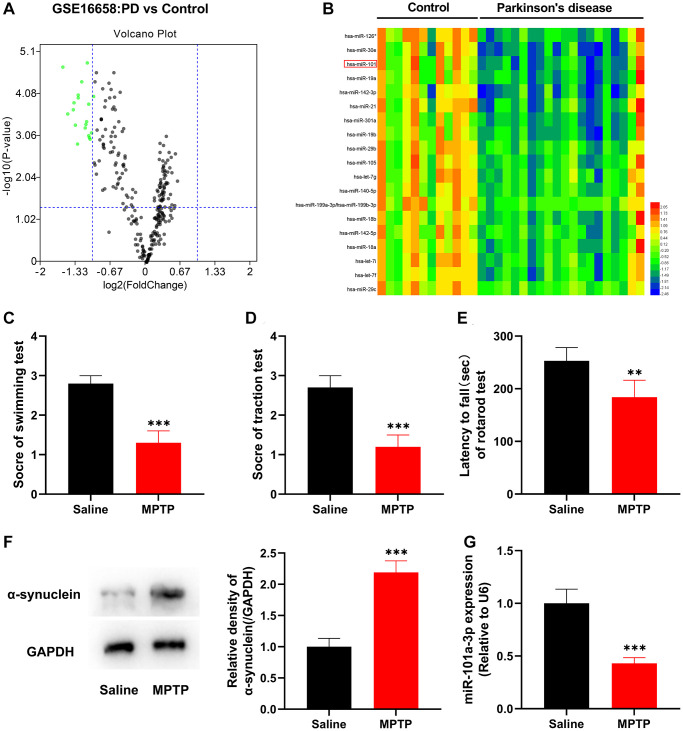
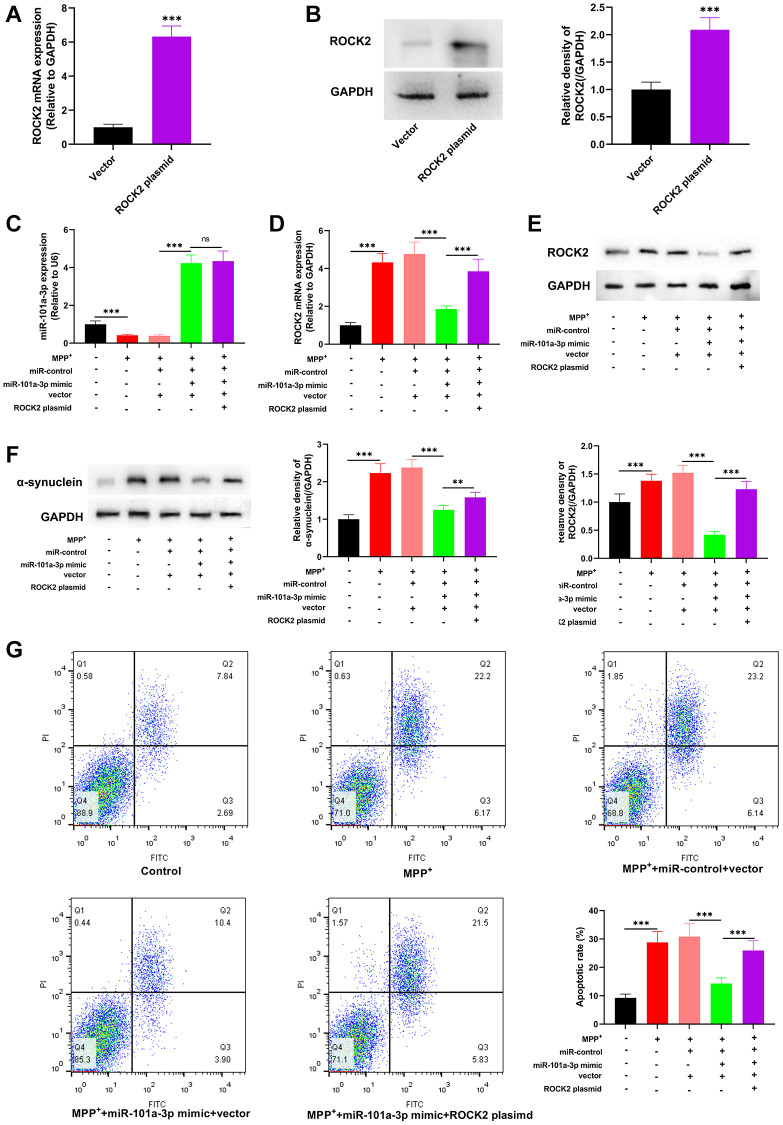
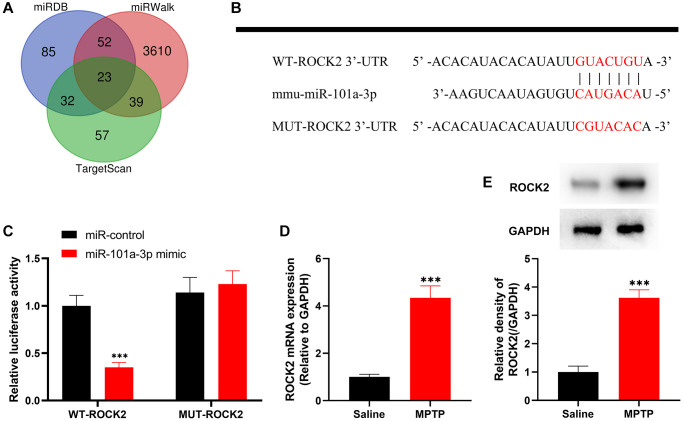
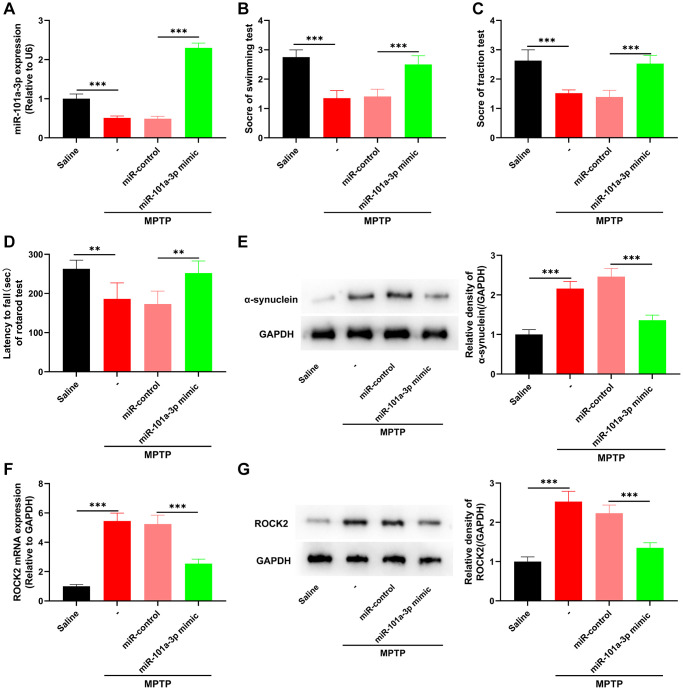
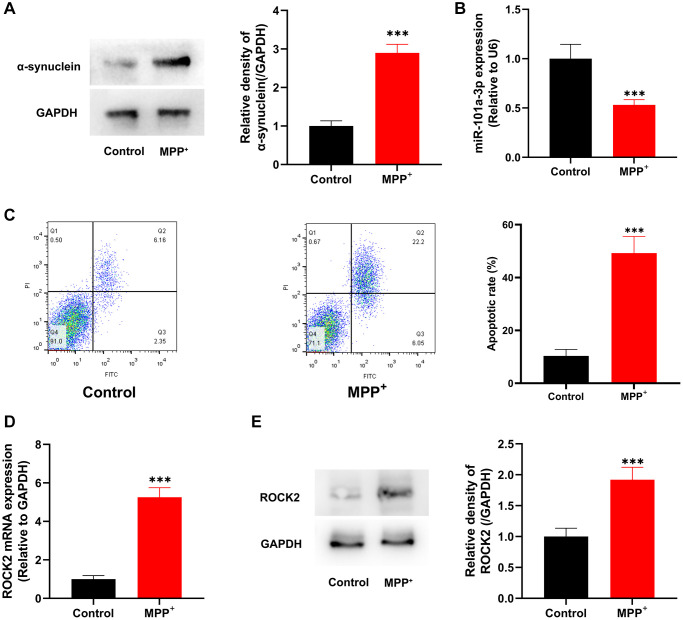
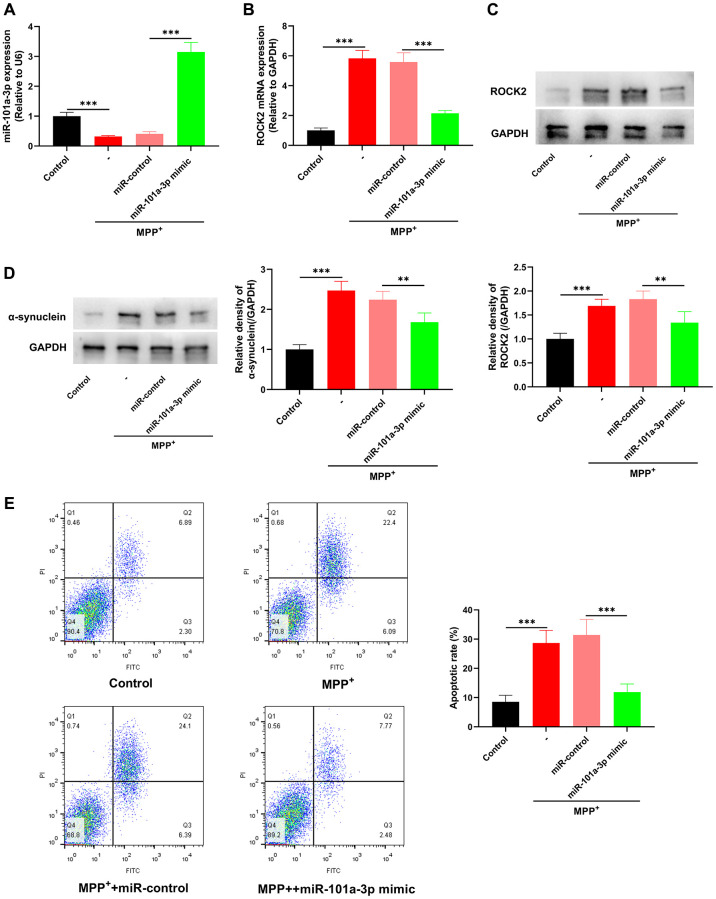
We constructed a mouse model of PD by intraperitoneal injection of 1-methyl 4-phenyl 1, 2, 3, 6-tetrahydropyridine hydrochloride (MPTP), and used 1-methyl-4-phenylpyridinium (MPP+) to treat Neuro-2a cells to construct an PD model. Neurological dysfunction in mice was evaluated by swimming test and traction test. qRT-PCR was utilized to examine miR-101a-3p expression and ROCK2 expression in mouse brain tissues and Neuro-2a cells. Western blot was conducted to detect the expression of α-synuclein protein and ROCK2 in mouse brain tissues and Neuro-2a cells. The targeting relationship between miR-101a-3p and ROCK2 was determined by dual-luciferase reporter gene assay. The apoptosis of neuro-2a cells was assessed by flow cytometry.
Low miR-101a-3p expression and high ROCK2 expression were found in the brain tissues of PD mice and MPP+-treated Neuro-2a cells; PD mice showed decreased neurological disorders, and apoptosis of Neuro-2a cells was increased after MPP+ treatment, both of which were accompanied by increased accumulation of α-synuclein protein. After miR-101a-3p was overexpressed, the neurological function of PD mice was improved, and the apoptosis of Neuro-2a cells induced by MPP+ was alleviated, and the accumulation of α-synuclein protein was reduced; ROCK2 overexpression counteracted the protective effect of miR-101a-3p. Additionally, ROCK2 was identified as the direct target of miR-101a-3p.
MiR-101a-3p can reduce neuronal apoptosis and neurological deficit in PD mice by inhibiting ROCK2 expression, suggesting that miR-101a-3p is a promising therapeutic target for PD.
帕金森病(PD)是一种神经退行性疾病,其特征是黑质致密部(SNpc)中的多巴胺能神经元丧失。本研究旨在解析 microRNA(miR)-101a-3p 在 PD 神经元损伤中的作用及其调控机制。
通过腹腔注射 1-甲基-4-苯基-1,2,3,6-四氢吡啶盐酸盐(MPTP)构建 PD 小鼠模型,并用 1-甲基-4-苯基吡啶鎓(MPP+)处理 Neuro-2a 细胞构建 PD 模型。通过游泳试验和牵引试验评估小鼠的神经功能障碍。利用 qRT-PCR 检测小鼠脑组织和 Neuro-2a 细胞中 miR-101a-3p 表达和 ROCK2 表达。利用 Western blot 检测小鼠脑组织和 Neuro-2a 细胞中α-突触核蛋白和 ROCK2 的表达。通过双荧光素酶报告基因检测确定 miR-101a-3p 与 ROCK2 的靶向关系。通过流式细胞术评估神经-2a 细胞的凋亡。
PD 小鼠脑组织和 MPP+处理的 Neuro-2a 细胞中 miR-101a-3p 表达降低,ROCK2 表达升高;PD 小鼠神经功能障碍减轻,MPP+处理后 Neuro-2a 细胞凋亡增加,α-突触核蛋白蛋白积累增加;过表达 miR-101a-3p 后,PD 小鼠的神经功能改善,MPP+诱导的 Neuro-2a 细胞凋亡减轻,α-突触核蛋白蛋白积累减少;ROCK2 过表达逆转了 miR-101a-3p 的保护作用。此外,ROCK2 被鉴定为 miR-101a-3p 的直接靶标。
miR-101a-3p 通过抑制 ROCK2 表达减少 PD 小鼠神经元凋亡和神经功能缺损,提示 miR-101a-3p 是 PD 的有前途的治疗靶点。