Department of Experimental Therapeutics, The University of Texas MD Anderson Cancer Center, Houston, Texas.
Department of Pathology/Laboratory Medicine, The University of Texas MD Anderson Cancer Center, Houston, Texas.
Mol Cancer Res. 2024 Sep 4;22(9):840-851. doi: 10.1158/1541-7786.MCR-23-0680.
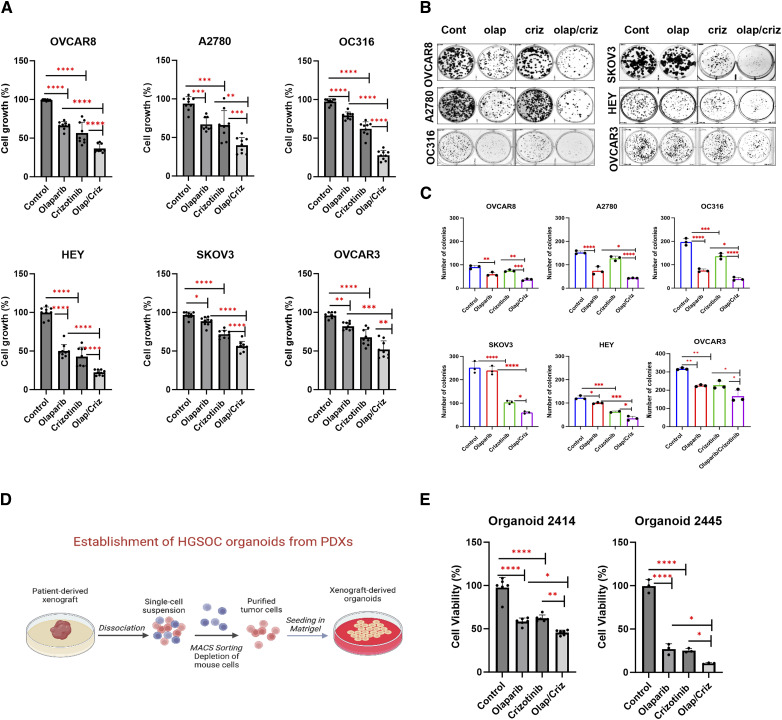
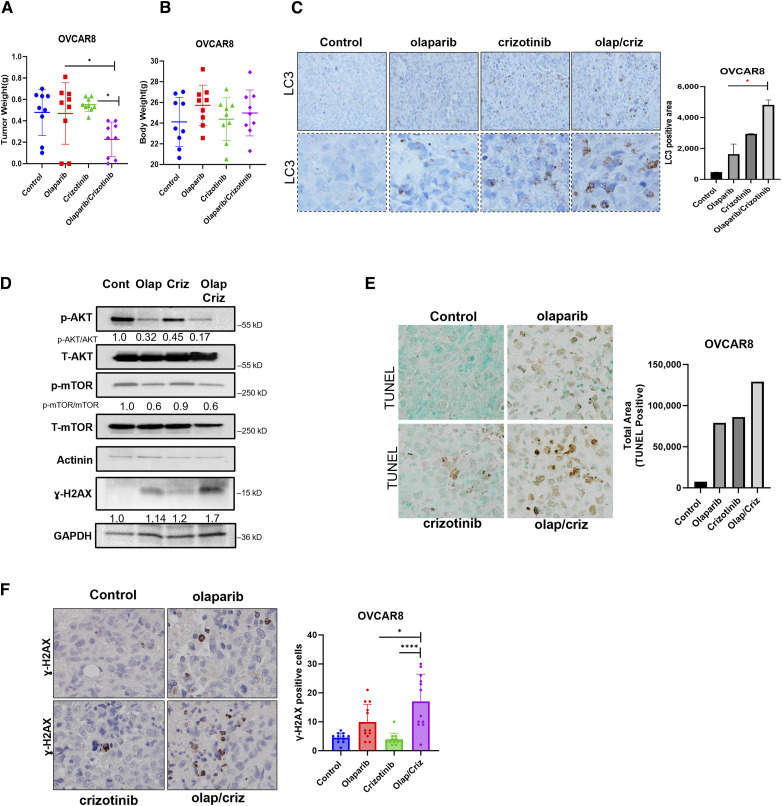
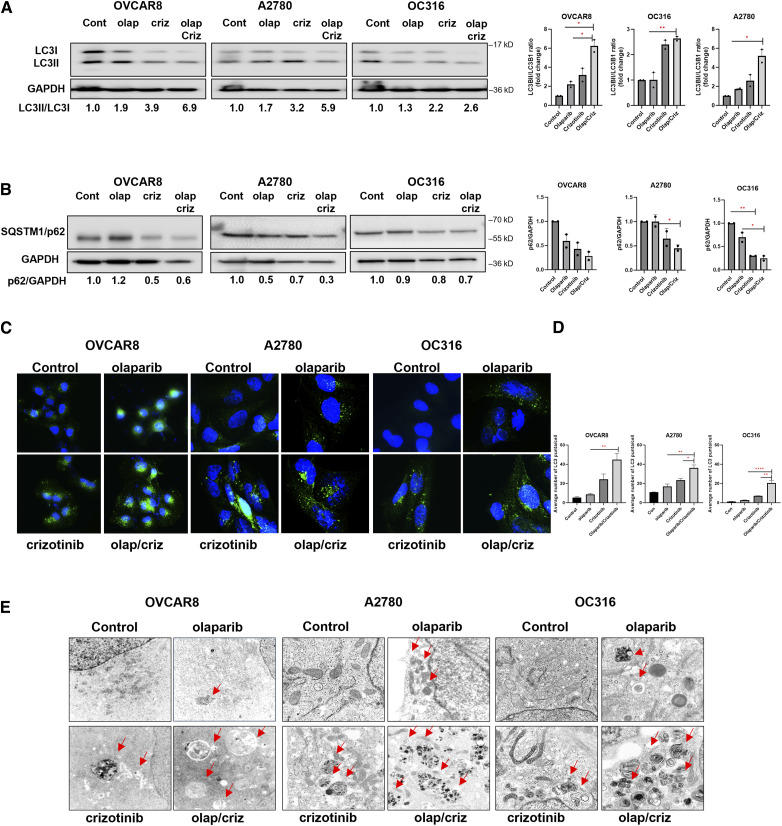
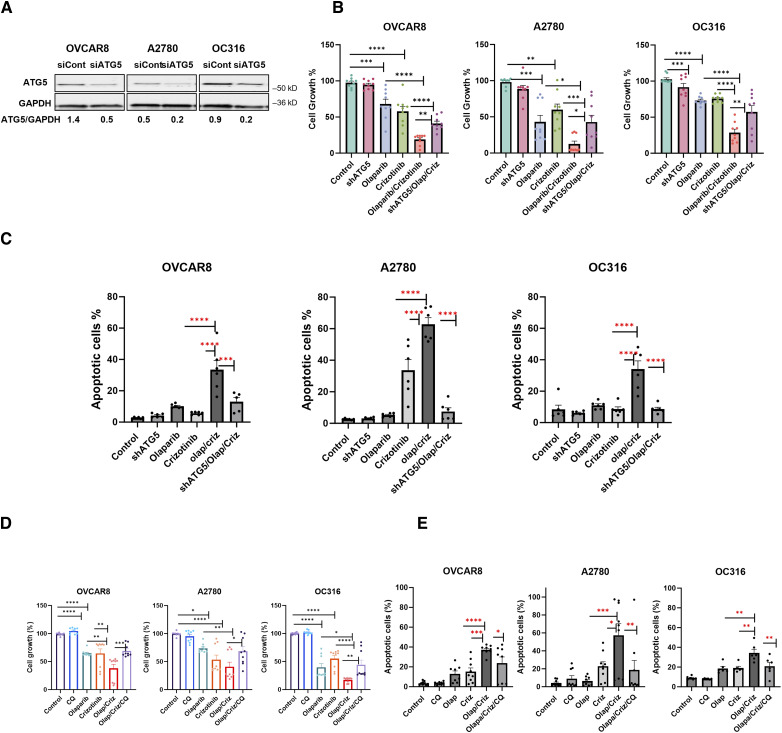
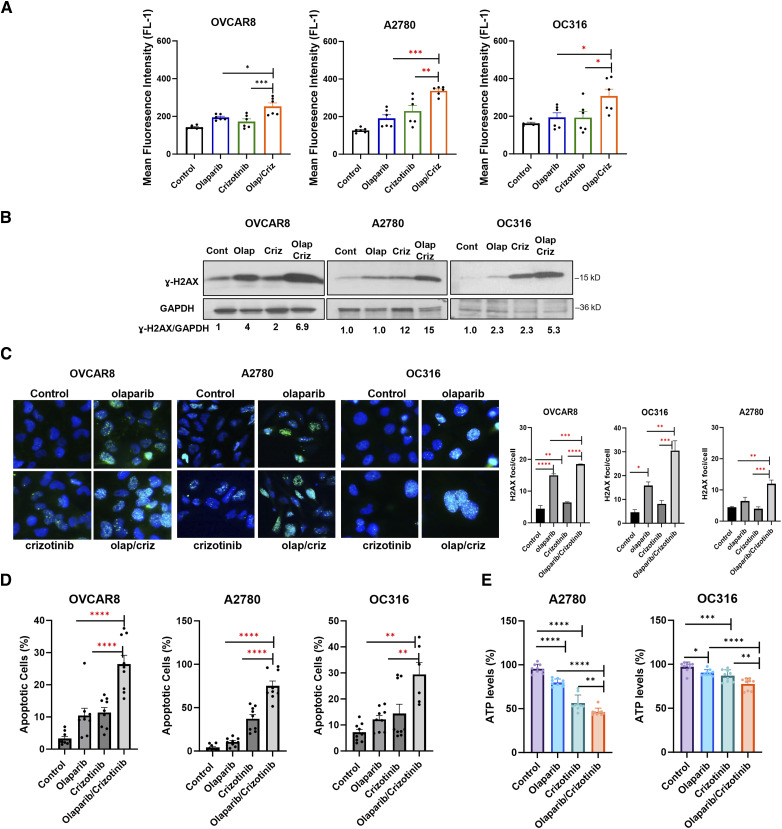
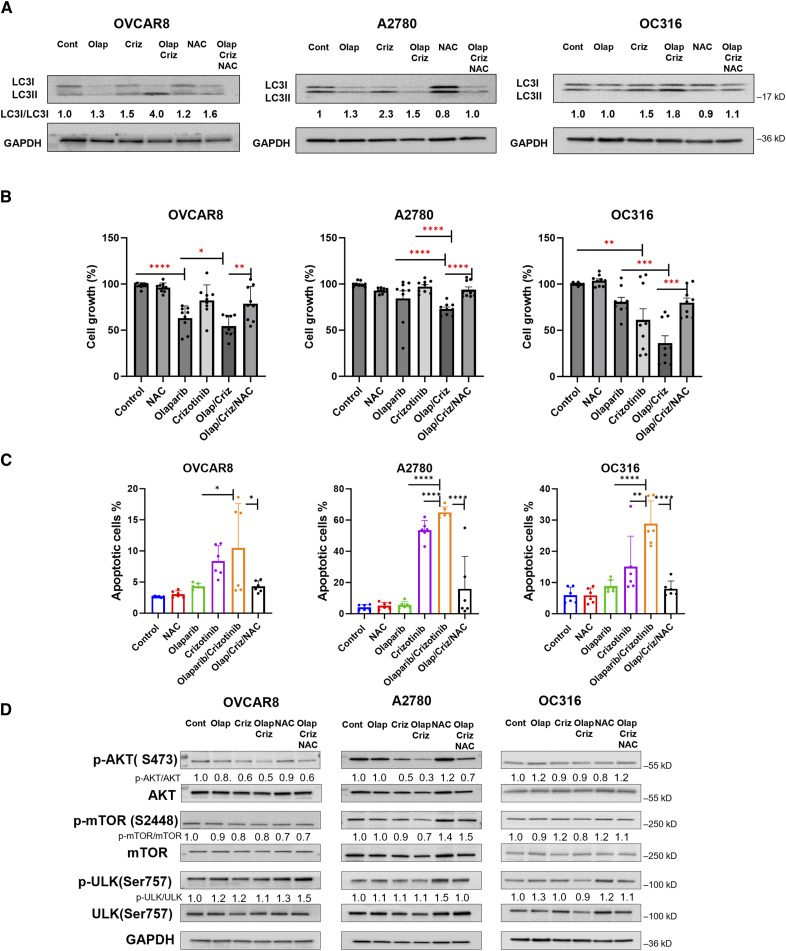
Poly (ADP-ribose) polymerase inhibitors (PARPi) can encounter resistance through various mechanisms, limiting their effectiveness. Our recent research showed that PARPi alone can induce drug resistance by promoting autophagy. Moreover, our studies have revealed that anaplastic lymphoma kinase (ALK) plays a role in regulating the survival of ovarian cancer cells undergoing autophagy. Here, we explored whether the ALK-inhibitor crizotinib could enhance the efficacy of PARPi by targeting drug-induced autophagic ovarian cancer cell and xenograft models. Our investigation demonstrates that crizotinib enhances the anti-tumor activity of PARPi across multiple ovarian cancer cells. Combination therapy with crizotinib and olaparib reduced cell viability and clonogenic growth in two-olaparib resistant cell lines. More importantly, this effect was consistently observed in patient-derived organoids. Furthermore, combined treatment with crizotinib and olaparib led to tumor regression in human ovarian xenograft models. Mechanistically, the combination resulted in increased levels of reactive oxygen species (ROS), induced DNA damage, and decreased the phosphorylation of AKT, mTOR, and ULK-1, contributing to increased olaparib-induced autophagy and apoptosis. Notably, pharmacologic, or genetic inhibition or autophagy reduced the sensitivity of ovarian cancer cell lines to olaparib and crizotinib treatment, underscoring the role of autophagy in cell death. Blocking ROS mitigated olaparib/crizotinib-induced autophagy and cell death while restoring levels of phosphorylated AKT, mTOR and ULK-1. These findings suggest that crizotinib can improve the therapeutic efficacy of olaparib by enhancing autophagy. Implications: The combination of crizotinib and PARPi presents a promising strategy, that could provide a novel approach to enhance outcomes for patients with ovarian cancer.
聚(ADP-核糖)聚合酶抑制剂(PARPi)可能会通过多种机制产生耐药性,从而限制其疗效。我们最近的研究表明,PARPi 本身可以通过促进自噬来诱导耐药性。此外,我们的研究表明,间变性淋巴瘤激酶(ALK)在调节发生自噬的卵巢癌细胞的存活中发挥作用。在这里,我们探讨了 ALK 抑制剂克唑替尼是否可以通过靶向药物诱导的自噬卵巢癌细胞和异种移植模型来增强 PARPi 的疗效。我们的研究表明,克唑替尼增强了多种卵巢癌细胞对 PARPi 的抗肿瘤活性。克唑替尼和奥拉帕利联合治疗降低了两种奥拉帕利耐药细胞系的细胞活力和集落生长。更重要的是,这种效应在患者来源的类器官中也得到了一致观察。此外,联合使用克唑替尼和奥拉帕利导致人卵巢异种移植模型中的肿瘤消退。从机制上讲,联合治疗导致活性氧(ROS)水平升高,诱导 DNA 损伤,并降低 AKT、mTOR 和 ULK-1 的磷酸化,导致奥拉帕利诱导的自噬和凋亡增加。值得注意的是,药理学或遗传抑制或自噬降低了卵巢癌细胞系对奥拉帕利和克唑替尼治疗的敏感性,突出了自噬在细胞死亡中的作用。阻断 ROS 减轻了奥拉帕利/克唑替尼诱导的自噬和细胞死亡,同时恢复了磷酸化 AKT、mTOR 和 ULK-1 的水平。这些发现表明,克唑替尼可以通过增强自噬来提高奥拉帕利的治疗效果。意义:克唑替尼联合 PARPi 提出了一种有前途的策略,可能为卵巢癌患者提供一种增强治疗效果的新方法。