Department of Medical Oncology, Catalan Institute of Oncology (ICO), L'Hospitalet de Llobregat, Barcelona, Spain.
Department of Radiation Oncology, Catalan Institute of Oncology (ICO), L'Hospitalet de Llobregat, Barcelona, Spain.
Clin Transl Oncol. 2024 Dec;26(12):3003-3012. doi: 10.1007/s12094-024-03526-0. Epub 2024 May 23.
Radiotherapy (RT) with concomitant cisplatin (CRT) or cetuximab (ERT) are accepted treatment options for locally advanced squamous cell carcinoma of the head and neck (LA-SCCHN). Long-term adverse events (AEs) have a vast impact on patients' quality of life. This study explored tissue biomarkers which could help predict late toxicity.
METHODS/PATIENTS: Single-institution prospective study including patients aged ≥ 18 with histologically confirmed newly diagnosed LA-SCCHN treated with RT and either concomitant cisplatin q3w or weekly cetuximab, according to institutional protocols. All patients underwent pre- and post-treatment skin biopsies of neck regions included in the clinical target volume. Angiogenesis, macrophages, and extracellular matrix (ECM) markers were evaluated by immunohistochemistry (IHC).
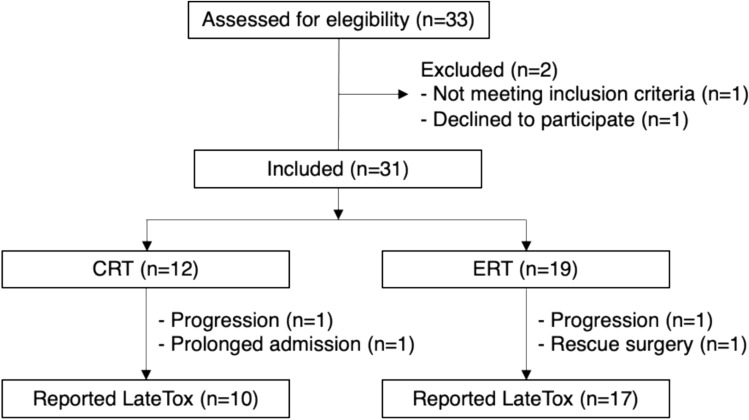
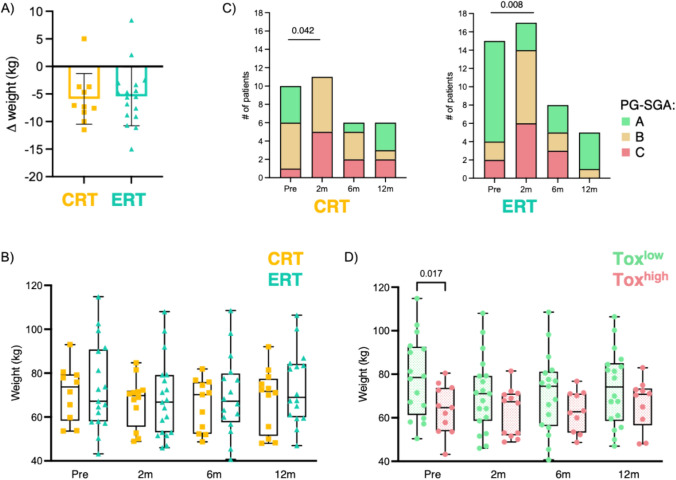
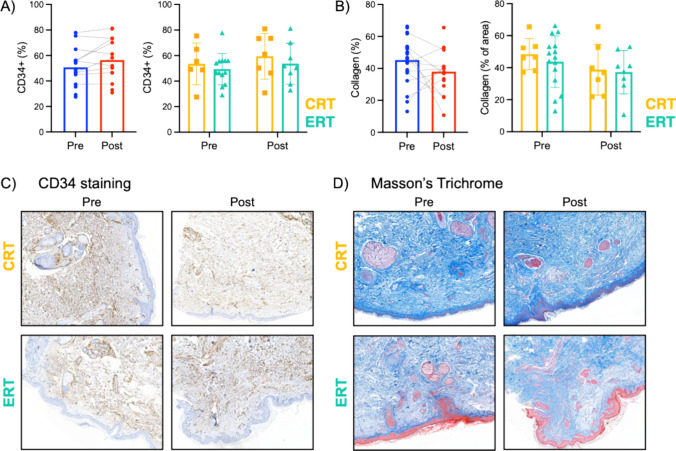
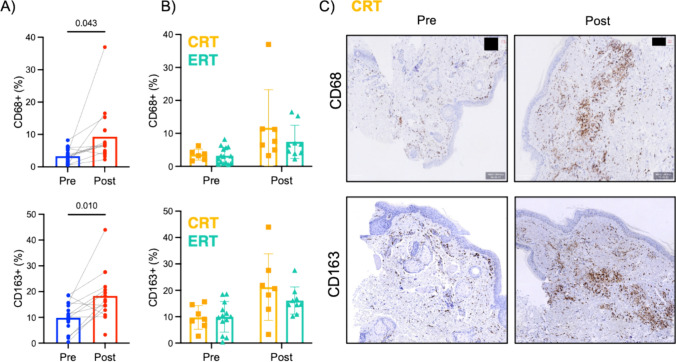
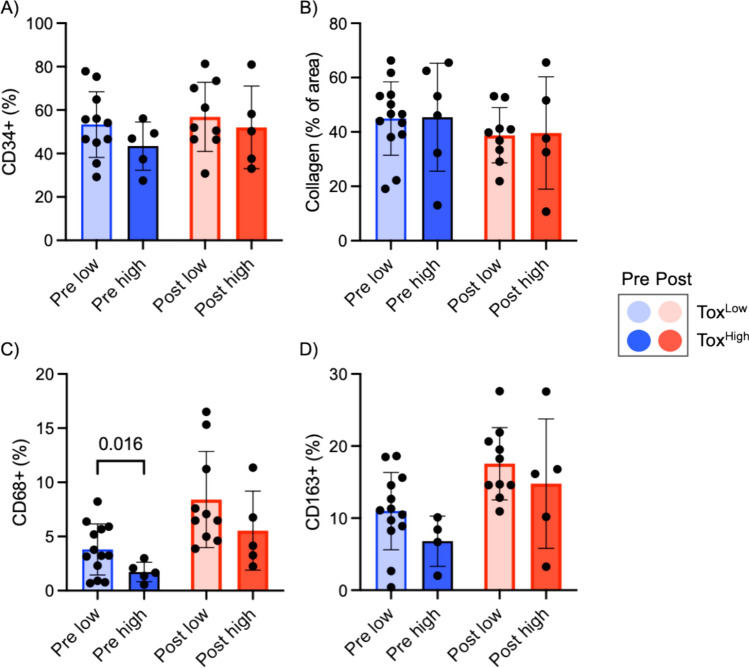
From April 15, 2016, to December 11, 2017; 31 patients were evaluated [CRT = 12 (38.7%) and ERT = 19 (61.3%)]. 27 patients (87%) had received induction chemotherapy. All patients finished RT as planned. IHC expression of vasculature (CD34) and collagen (Masson's Trichrome) did not differ significantly between and within CRT and ERT arms. Conversely, an increased CD68 and CD163 macrophage infiltration expression was observed after treatment, without significant impact of treatment modality. Patients with higher late toxicity showed lower expression of macrophage markers in pre-treatment samples compared with those with lower late toxicity, with statistically significant differences for CD68.
Angiogenesis and ECM biomarkers did not differ significantly between CRT and ERT. Macrophage markers increased after both treatments and deserve further investigation as predictors of late toxicity in LA-SCCHN patients. [Protocol code: TOX-TTCC-2015-01/Spanish registry of clinical studies (REec): 2015-003012-21/Date of registration: 27/01/2016].
同期放化疗(CRT)或同期西妥昔单抗(ERT)是局部晚期头颈部鳞状细胞癌(LA-SCCHN)的标准治疗选择。长期不良反应(AE)对患者的生活质量有很大影响。本研究探索了有助于预测晚期毒性的组织生物标志物。
方法/患者:这是一项单中心前瞻性研究,纳入了年龄≥18 岁、经组织学证实为新诊断的 LA-SCCHN 患者,根据机构方案接受放疗和同期顺铂(q3w)或每周西妥昔单抗治疗。所有患者在接受颈部区域包括临床靶区的放疗前和放疗后进行皮肤活检。采用免疫组化(IHC)评估血管生成、巨噬细胞和细胞外基质(ECM)标志物。
2016 年 4 月 15 日至 2017 年 12 月 11 日,共评估了 31 例患者[CRT=12(38.7%),ERT=19(61.3%)]。27 例(87%)患者接受了诱导化疗。所有患者均按计划完成放疗。CRT 和 ERT 组之间以及组内的血管生成(CD34)和胶原(马松三色染色)的 IHC 表达无显著差异。相反,治疗后观察到 CD68 和 CD163 巨噬细胞浸润表达增加,但治疗方式无显著影响。晚期毒性较高的患者与晚期毒性较低的患者相比,在治疗前样本中巨噬细胞标志物的表达较低,差异具有统计学意义。
CRT 和 ERT 之间的血管生成和 ECM 生物标志物无显著差异。两种治疗方法后巨噬细胞标志物均增加,作为 LA-SCCHN 患者晚期毒性的预测因子值得进一步研究。[方案编号:TOX-TTCC-2015-01/西班牙临床试验注册处(REec):2015-003012-21/注册日期:2016 年 1 月 27 日]。