The Affiliated Nanhua Hospital, Hengyang Medical School, University of South China, Hengyang, 421000, China.
Key Specialty of Clinical Pharmacy, The First Affiliated Hospital of Guangdong Pharmaceutical University, Guangzhou, 510000, China.
BMC Complement Med Ther. 2024 May 23;24(1):202. doi: 10.1186/s12906-024-04497-z.
6-Methoxydihydrosanguinarine (6-MDS) has shown promising potential in fighting against a variety of malignancies. Yet, its anti‑lung adenocarcinoma (LUAD) effect and the underlying mechanism remain largely unexplored. This study sought to explore the targets and the probable mechanism of 6-MDS in LUAD through network pharmacology and experimental validation.
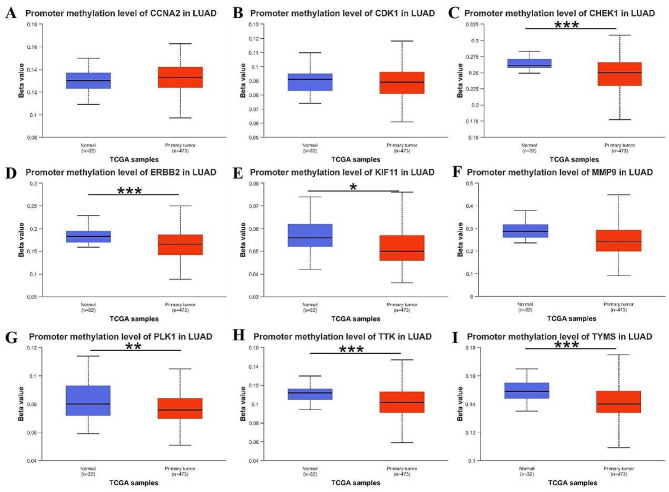
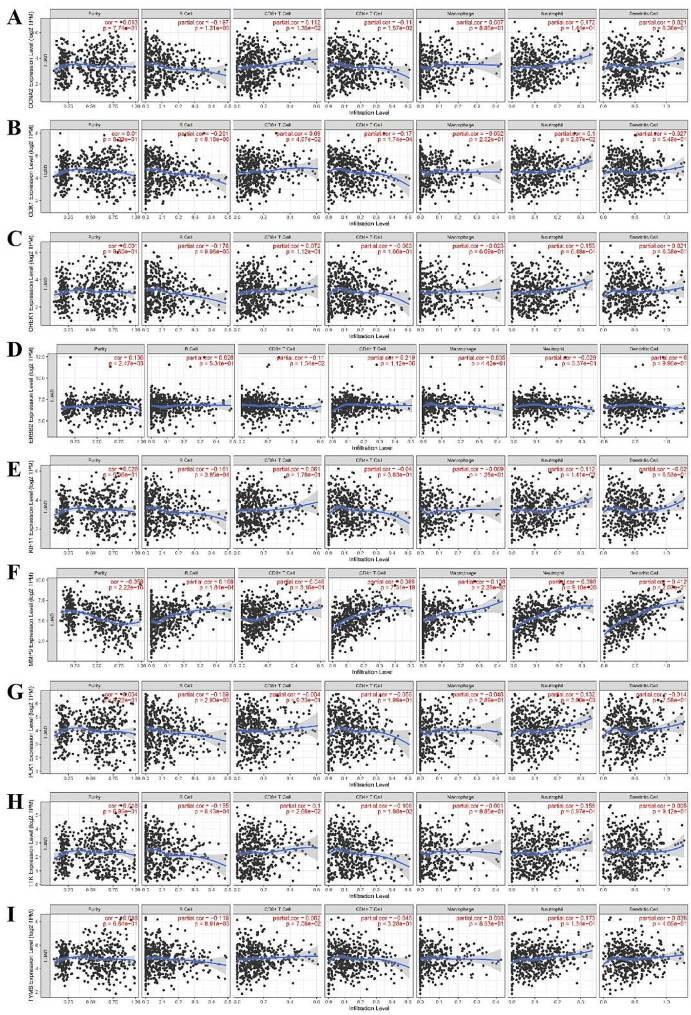
The proliferative activity of human LUAD cell line A549 was evaluated by Cell Counting Kit-8 (CCK8) assay. LUAD related targets, potential targets of 6-MDS were obtained from databases. Venn plot analysis were performed on 6-MDS target genes and LUAD related genes to obtain potential target genes for 6-MDS treatment of LUAD. The Search Tool for the Retrieval of Interacting Genes/Proteins (STRING) database was utilized to perform a protein-protein interaction (PPI) analysis, which was then visualized by Cytoscape. The hub genes in the network were singled out by CytoHubba. Metascape was employed for GO and KEGG enrichment analyses. molecular docking was carried out using AutoDock Vina 4.2 software. Gene expression levels, overall survival of hub genes were validated by the GEPIA database. Protein expression levels, promotor methylation levels of hub genes were confirmed by the UALCAN database. Timer database was used for evaluating the association between the expression of hub genes and the abundance of infiltrating immune cells. Furthermore, correlation analysis of hub genes expression with immune subtypes of LUAD were performed by using the TISIDB database. Finally, the results of network pharmacology analysis were validated by qPCR.
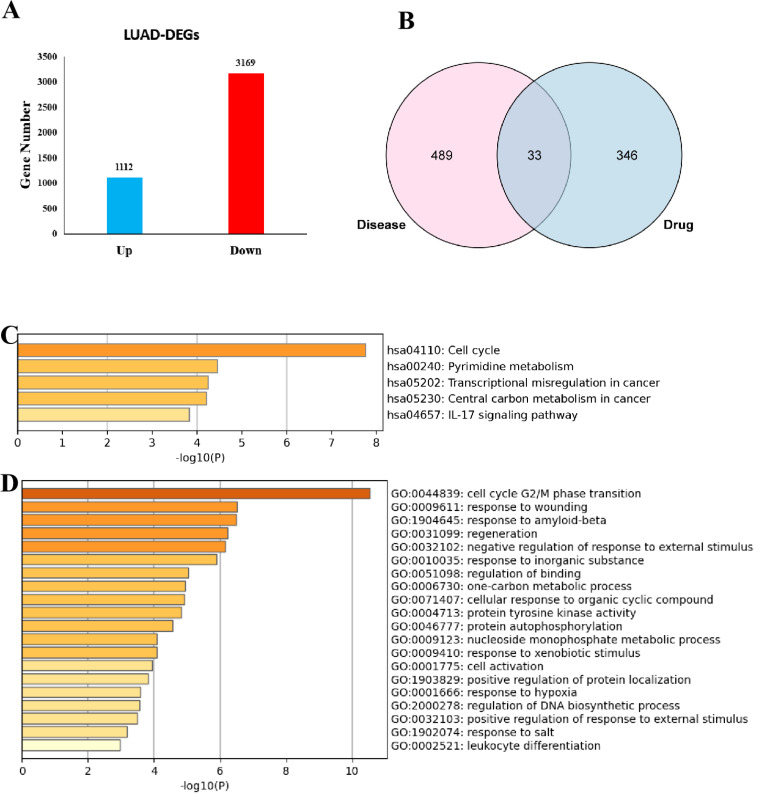
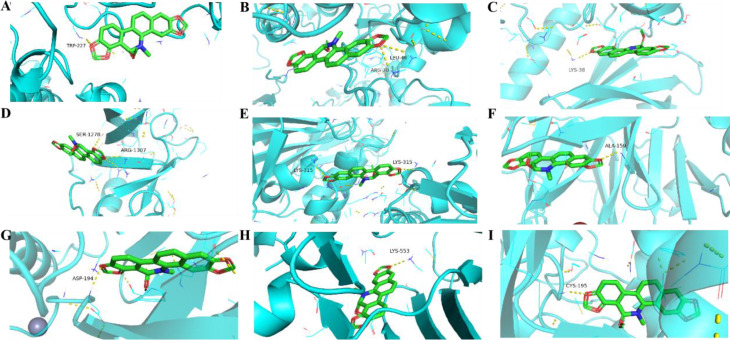
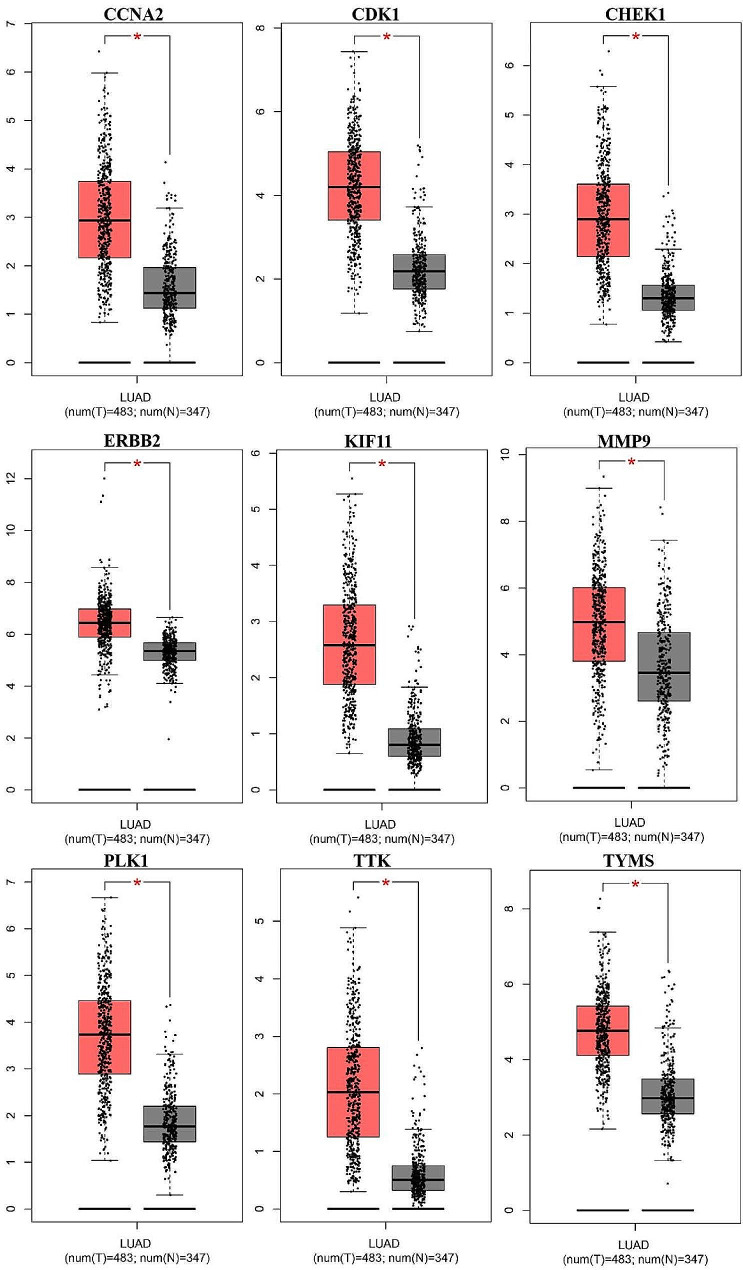
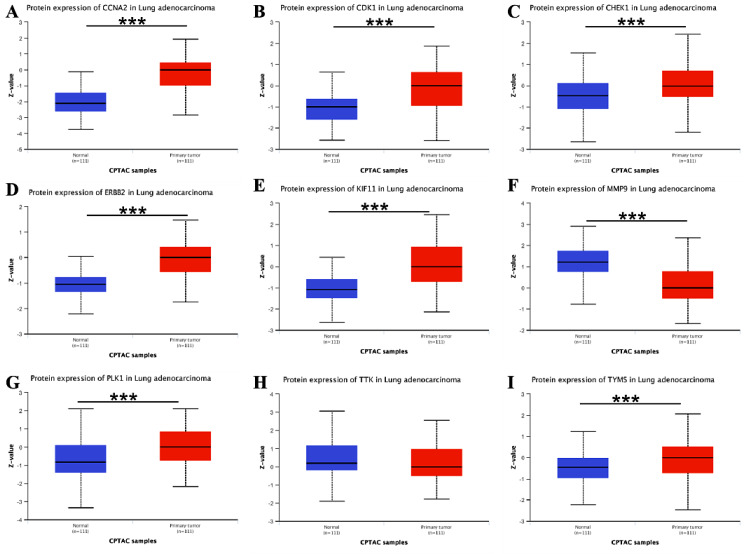
Experiments in vitro revealed that 6-MDS significantly reduced tumor growth. A total of 33 potential targets of 6-MDS in LUAD were obtained by crossing the LUAD related targets with 6-MDS targets. Utilizing CytoHubba, a network analysis tool, the top 10 genes with the highest centrality measures were pinpointed, including MMP9, CDK1, TYMS, CCNA2, ERBB2, CHEK1, KIF11, AURKB, PLK1 and TTK. Analysis of KEGG enrichment hinted that these 10 hub genes were located in the cell cycle signaling pathway, suggesting that 6-MDS may mainly inhibit the occurrence of LUAD by affecting the cell cycle. Molecular docking analysis revealed that the binding energies between 6-MDS and the hub proteins were all higher than - 6 kcal/Mol with the exception of AURKB, indicating that the 9 targets had strong binding ability with 6-MDS.These results were corroborated through assessments of mRNA expression levels, protein expression levels, overall survival analysis, promotor methylation level, immune subtypes andimmune infiltration. Furthermore, qPCR results indicated that 6-MDS can significantly decreased the mRNA levels of CDK1, CHEK1, KIF11, PLK1 and TTK.
According to our findings, it appears that 6-MDS could possibly serve as a promising option for the treatment of LUAD. Further investigations in live animal models are necessary to confirm its potential in fighting cancer and to delve into the mechanisms at play.
6-甲氧基二氢血根碱(6-MDS)在对抗多种恶性肿瘤方面显示出巨大的潜力。然而,其抗肺腺癌(LUAD)的作用及其潜在机制仍在很大程度上尚未得到探索。本研究旨在通过网络药理学和实验验证来探索 6-MDS 在 LUAD 中的靶点和可能的机制。
通过 Cell Counting Kit-8(CCK8)测定法评估人 LUAD 细胞系 A549 的增殖活性。从数据库中获得 LUAD 相关靶点和 6-MDS 的潜在靶点。通过 Venn 图分析 6-MDS 靶基因和 LUAD 相关基因,获得 6-MDS 治疗 LUAD 的潜在靶基因。利用 Search Tool for the Retrieval of Interacting Genes/Proteins(STRING)数据库进行蛋白质-蛋白质相互作用(PPI)分析,然后使用 Cytoscape 可视化。利用 CytoHubba 筛选网络中的枢纽基因。使用 Metascape 进行 GO 和 KEGG 富集分析。利用 AutoDock Vina 4.2 软件进行分子对接。利用 GEPIA 数据库验证枢纽基因的基因表达水平和总生存率。利用 UALCAN 数据库验证枢纽基因的蛋白表达水平和启动子甲基化水平。利用 Timer 数据库评估枢纽基因表达与浸润免疫细胞丰度之间的相关性。此外,使用 TISIDB 数据库对 LUAD 免疫亚型与枢纽基因表达的相关性进行了分析。最后,通过 qPCR 验证网络药理学分析的结果。
体外实验表明,6-MDS 可显著抑制肿瘤生长。通过 LUAD 相关靶点与 6-MDS 靶点交叉,获得了 33 个 LUAD 中 6-MDS 的潜在靶点。利用 CytoHubba 网络分析工具,确定了前 10 个具有最高中心性度量的基因,包括 MMP9、CDK1、TYMS、CCNA2、ERBB2、CHEK1、KIF11、AURKB、PLK1 和 TTK。KEGG 富集分析提示这 10 个枢纽基因位于细胞周期信号通路中,表明 6-MDS 可能主要通过影响细胞周期来抑制 LUAD 的发生。分子对接分析显示,除 AURKB 外,6-MDS 与枢纽蛋白的结合能均高于-6 kcal/mol,表明 9 个靶点与 6-MDS 具有较强的结合能力。这些结果通过评估 mRNA 表达水平、蛋白表达水平、总生存率分析、启动子甲基化水平、免疫亚型和免疫浸润得到了验证。此外,qPCR 结果表明,6-MDS 可显著降低 CDK1、CHEK1、KIF11、PLK1 和 TTK 的 mRNA 水平。
根据我们的研究结果,6-MDS 可能是治疗 LUAD 的一种很有前途的选择。有必要在活体动物模型中进一步研究以确认其抗癌潜力,并深入研究其作用机制。