Lencastre Pedro, Lotfigolian Maryam, Lind Pedro G
Department of Computer Science, Oslo Metropolitan University, N-0130 Oslo, Norway.
OsloMet Artificial Intelligence Lab, Pilestredet 52, N-0166 Oslo, Norway.
Diagnostics (Basel). 2024 May 18;14(10):1047. doi: 10.3390/diagnostics14101047.
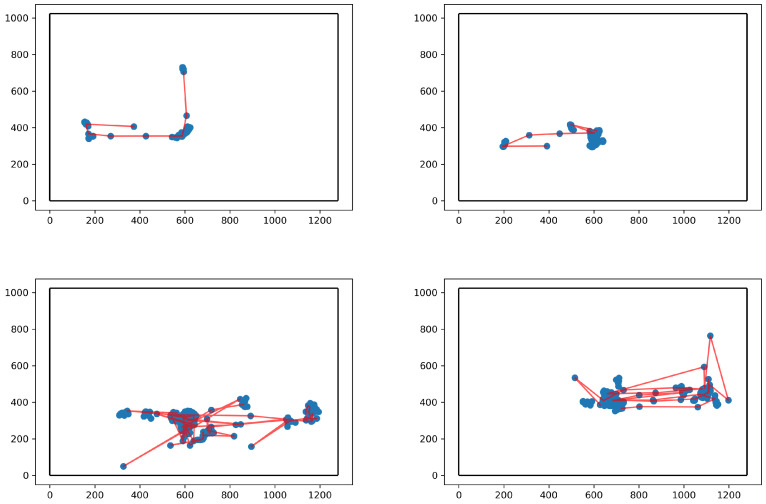
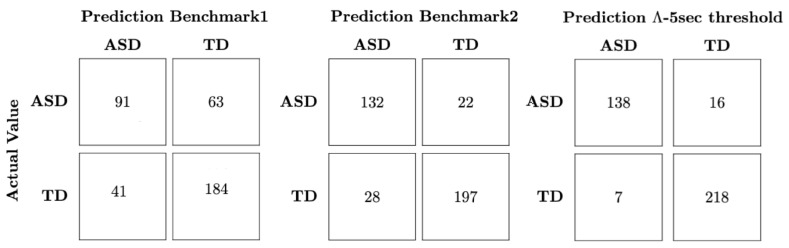
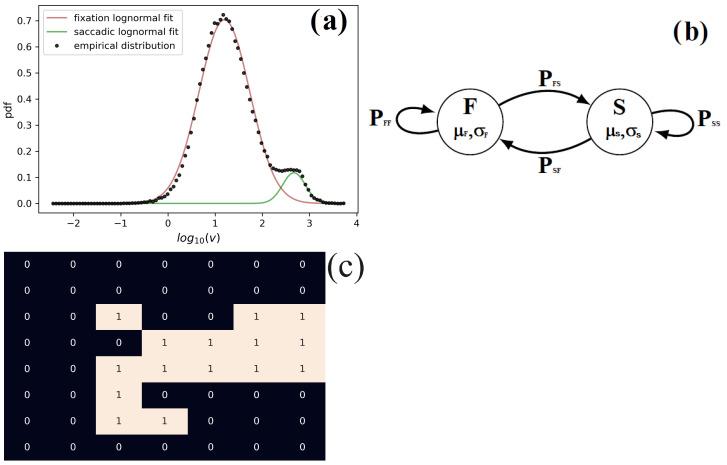
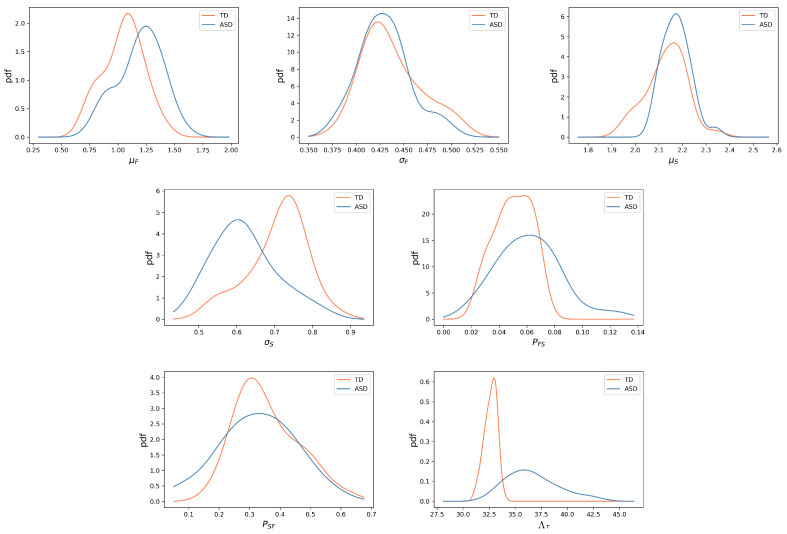
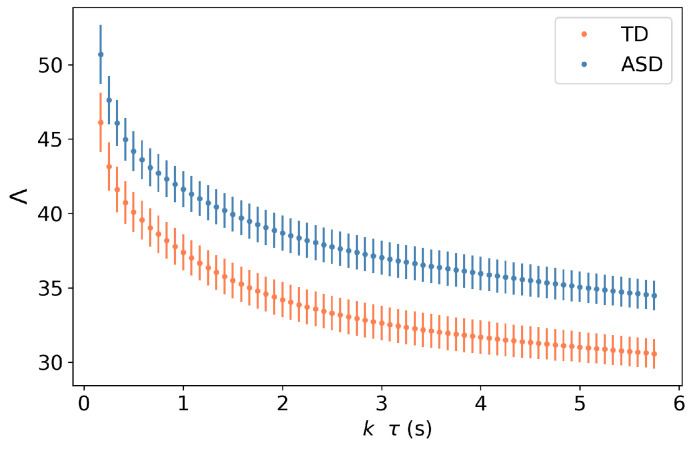
One of the most challenging problems when diagnosing autism spectrum disorder (ASD) is the need for long sets of data. Collecting data during such long periods is challenging, particularly when dealing with children. This challenge motivates the investigation of possible classifiers of ASD that do not need such long data sets. In this paper, we use eye-tracking data sets covering only 5 s and introduce one metric able to distinguish between ASD and typically developed (TD) gaze patterns based on such short time-series and compare it with two benchmarks, one using the traditional eye-tracking metrics and one state-of-the-art AI classifier. Although the data can only track possible disorders in visual attention and our approach is not a substitute to medical diagnosis, we find that our newly introduced metric can achieve an accuracy of 93% in classifying eye gaze trajectories from children with ASD surpassing both benchmarks while needing fewer data. The classification accuracy of our method, using a 5 s data series, performs better than the standard metrics in eye-tracking and is at the level of the best AI benchmarks, even when these are trained with longer time series. We also discuss the advantages and limitations of our method in comparison with the state of the art: besides needing a low amount of data, this method is a simple, understandable, and straightforward criterion to apply, which often contrasts with "black box" AI methods.
诊断自闭症谱系障碍(ASD)时最具挑战性的问题之一是需要大量的长期数据。在如此长的时间内收集数据具有挑战性,尤其是在处理儿童时。这一挑战促使人们研究不需要如此长数据集的ASD可能分类器。在本文中,我们使用仅涵盖5秒的眼动追踪数据集,并引入一种能够基于此类短时间序列区分ASD和典型发育(TD)注视模式的指标,并将其与两个基准进行比较,一个使用传统的眼动追踪指标,另一个是最先进的人工智能分类器。尽管这些数据只能追踪视觉注意力方面的可能障碍,且我们的方法不能替代医学诊断,但我们发现,我们新引入的指标在对ASD儿童的注视轨迹进行分类时,准确率可达93%,超过了两个基准,同时所需数据更少。我们的方法使用5秒的数据序列,其分类准确率比眼动追踪中的标准指标更高,即使在使用更长的时间序列进行训练时,也能达到最佳人工智能基准的水平。我们还讨论了与现有技术相比我们方法的优点和局限性:除了需要少量数据外,该方法是一种简单、易懂且直接适用的标准,这与“黑箱”人工智能方法形成鲜明对比。