Manera Maurizio, Giari Luisa
Department of Biosciences, Food and Environmental Technologies, University of Teramo, St. R. Balzarini 1, 64100 Teramo, Italy.
Department of Environmental and Prevention Sciences, University of Ferrara, St. L. Borsari 46, 44121 Ferrara, Italy.
Toxics. 2024 May 17;12(5):369. doi: 10.3390/toxics12050369.
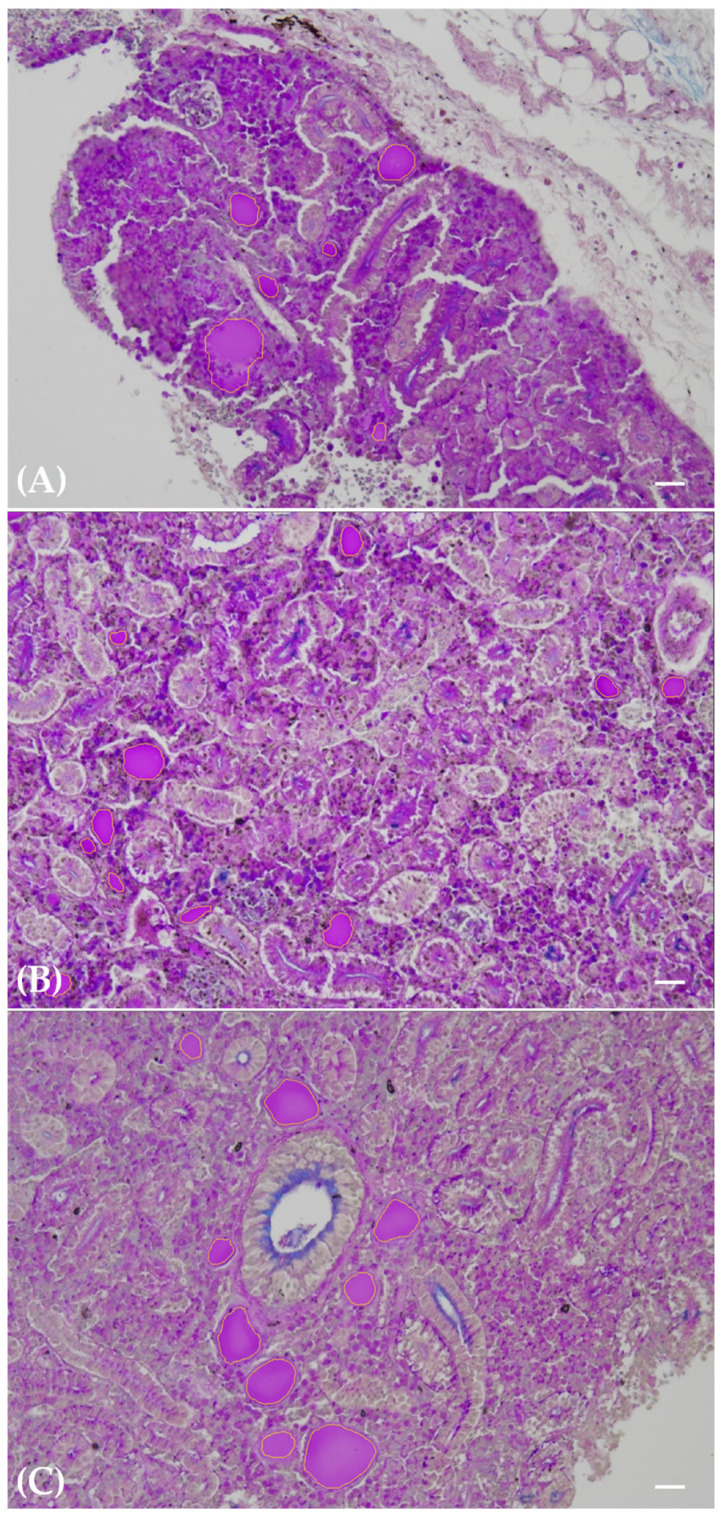
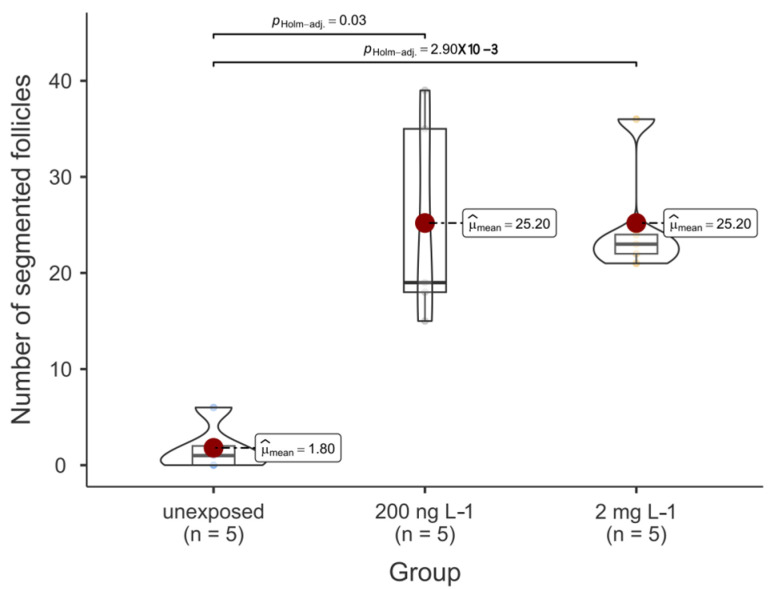
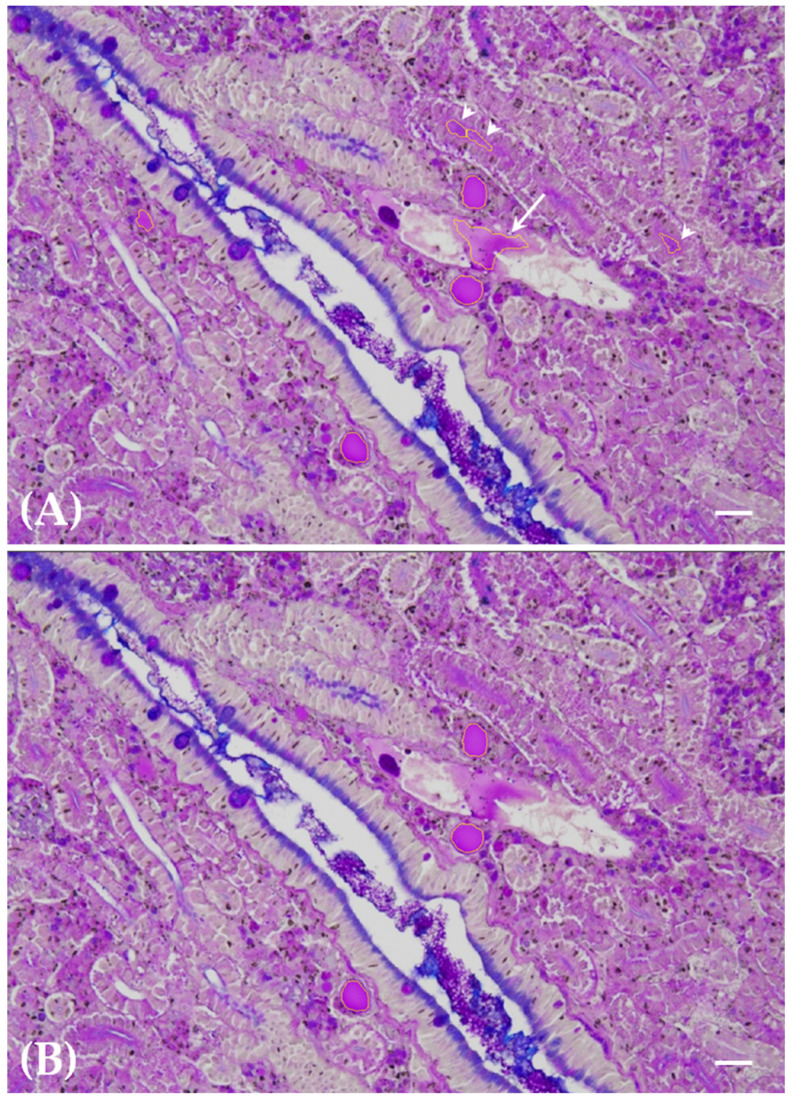
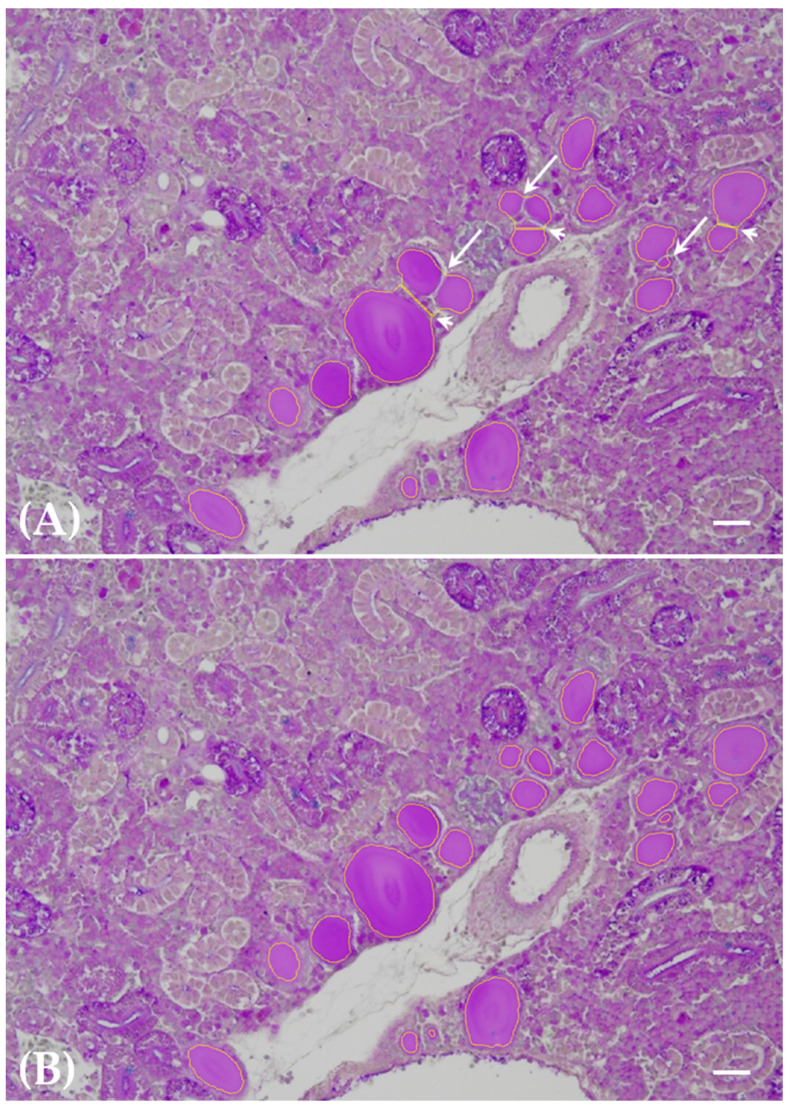
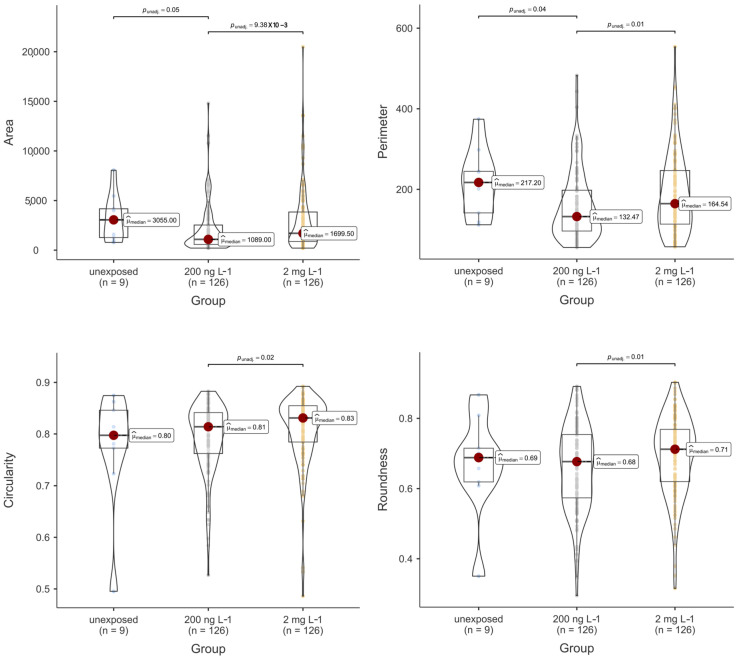
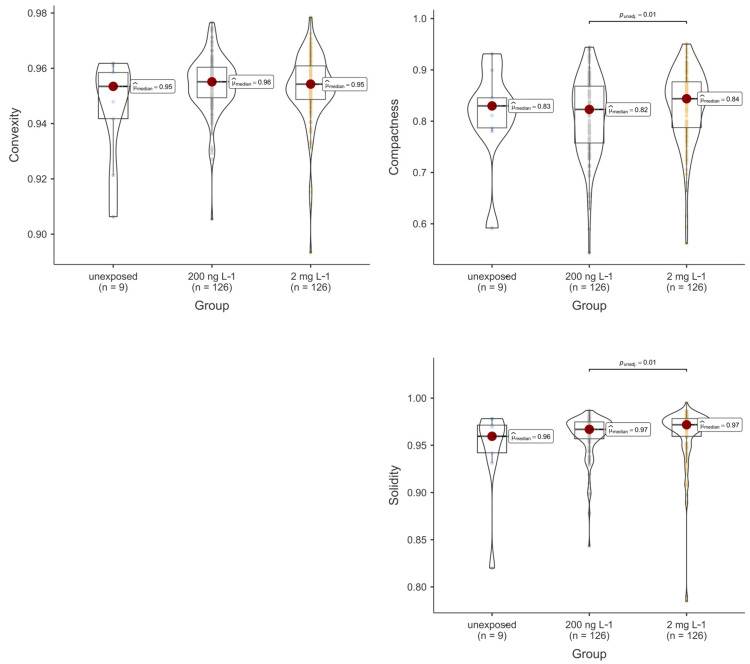
Perfluorooctanoic acid (PFOA) is a globally prevalent contaminant of concern recognised for its persistence and detrimental effects on both wildlife and humans. While PFOA has been established as a disruptor of thyroid function, limited data exist regarding its impact on thyroid morphology. The kidney of the common carp () harbours numerous thyroid follicles, rendering it a valuable biomarker organ for investigating PFOA-induced thyroid alterations. Renal tissue slides, stained with the Alcian blue/PAS method, were examined from carp in three experimental groups: unexposed, exposed to 200 ng L, and exposed to 2 mg L of PFOA over 56 days. Thyroid follicle colloids were segmented, and related morphometric parameters, including perimeter, area, and shape descriptors, were obtained. Statistical analyses revealed significant reductions in thyroid follicle colloid perimeter and area in the 200 ng L PFOA group compared to the unexposed and 2 mg L PFOA groups. Additionally, the fish exposed to PFOA exhibited a significantly higher follicle count compared to the unexposed fish. These findings collectively suggest that PFOA induces thyroid folliculogenesis, emphasising its impact on thyroid morphology even at an environmentally relevant concentration (200 ng L).
全氟辛酸(PFOA)是一种全球普遍存在的受关注污染物,因其持久性以及对野生动物和人类的有害影响而为人所知。虽然PFOA已被确认为甲状腺功能的干扰物,但关于其对甲状腺形态影响的数据有限。鲤鱼()的肾脏含有大量甲状腺滤泡,使其成为研究PFOA诱导的甲状腺改变的重要生物标志物器官。用阿尔辛蓝/过碘酸希夫(Alcian blue/PAS)法染色的肾脏组织切片,取自三个实验组的鲤鱼:未暴露组、暴露于200 ng/L的组以及在56天内暴露于2 mg/L PFOA的组。对甲状腺滤泡胶体进行分割,并获得包括周长、面积和形状描述符在内的相关形态计量学参数。统计分析显示,与未暴露组和2 mg/L PFOA组相比,200 ng/L PFOA组的甲状腺滤泡胶体周长和面积显著减小。此外,与未暴露的鱼相比,暴露于PFOA的鱼的滤泡计数显著更高。这些发现共同表明,PFOA可诱导甲状腺滤泡生成,强调了其即使在环境相关浓度(200 ng/L)下对甲状腺形态的影响。