School of Biological Sciences, University of California, San Diego, La Jolla, CA, USA.
Department of Biological Sciences, University of North Carolina at Charlotte, Charlotte, NC, USA.
Cell Rep. 2024 Jun 25;43(6):114279. doi: 10.1016/j.celrep.2024.114279. Epub 2024 May 24.
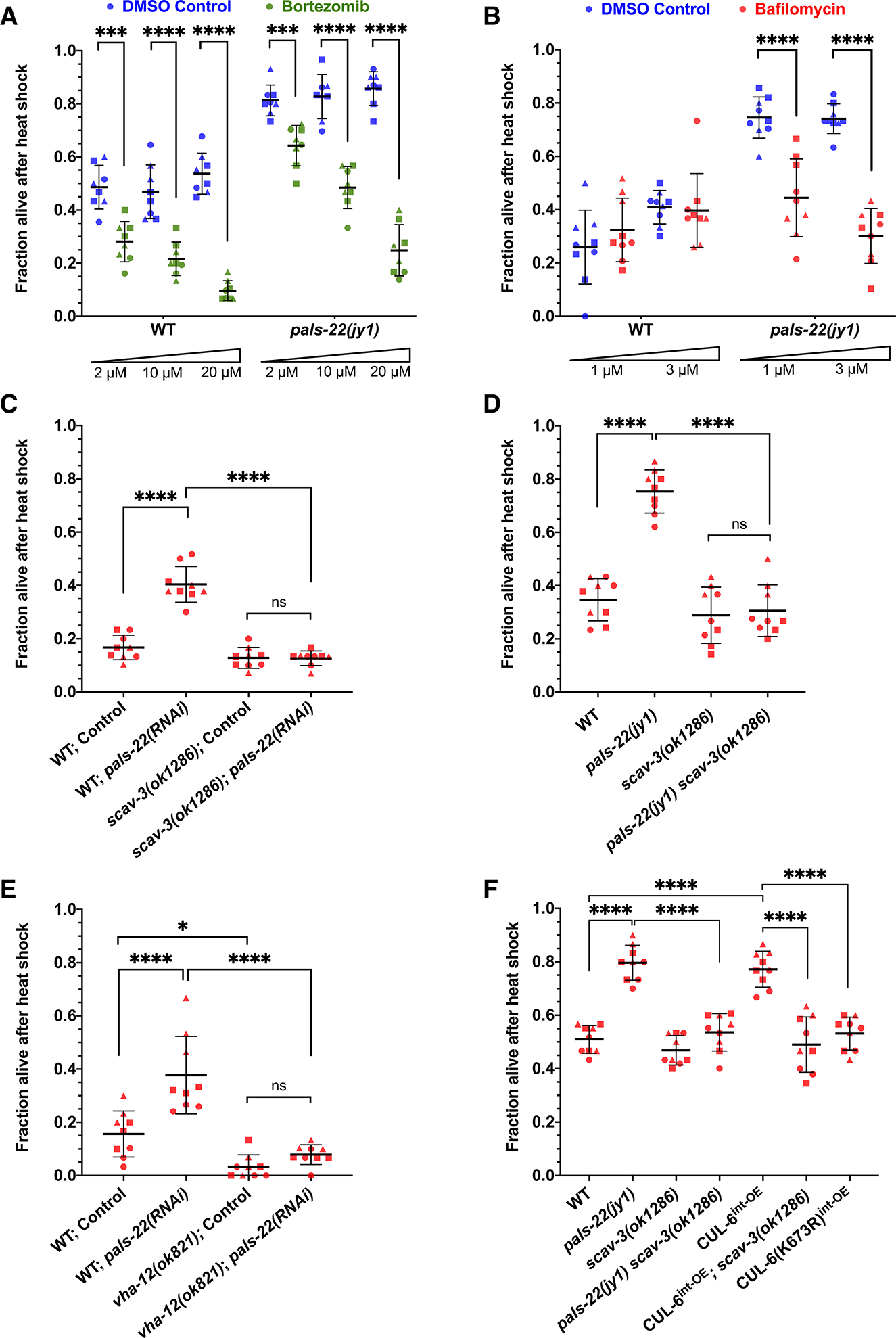
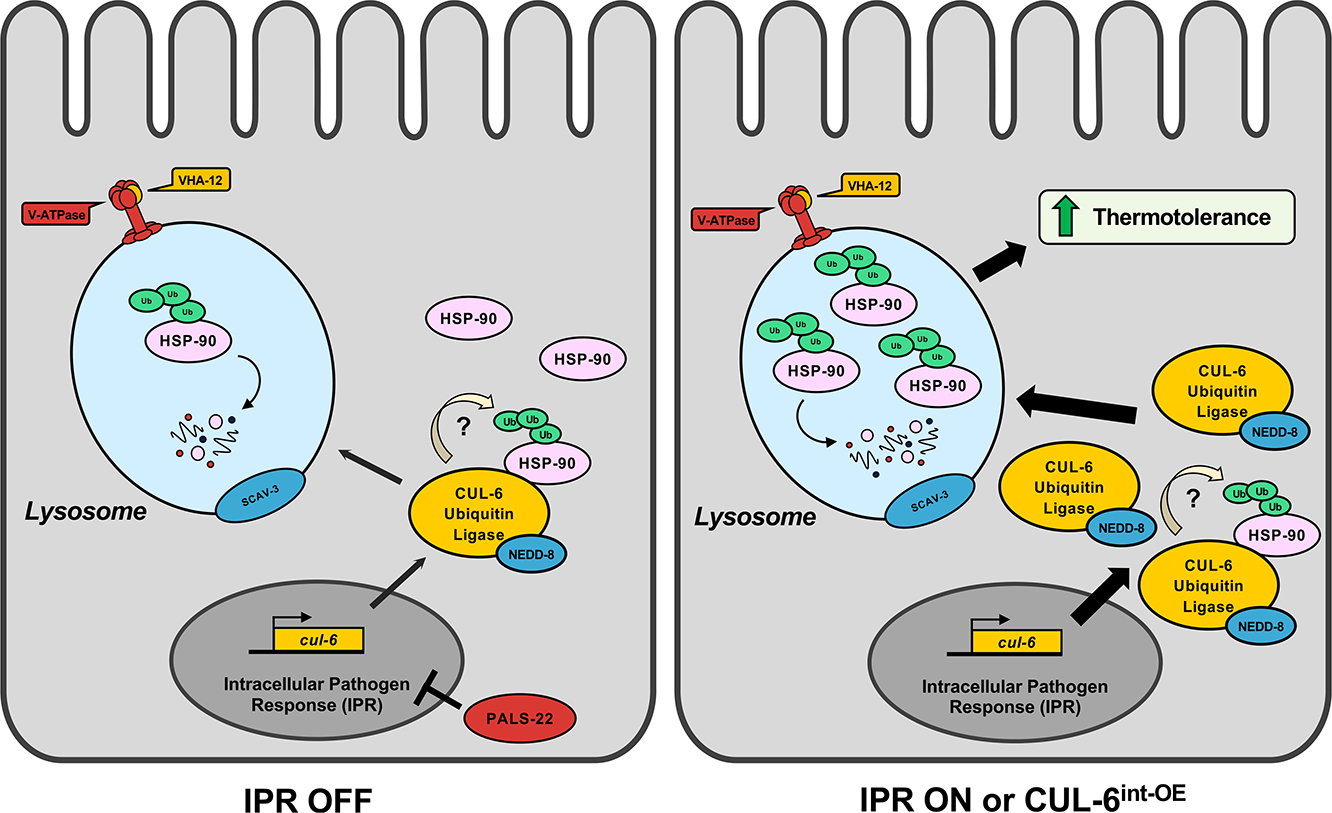
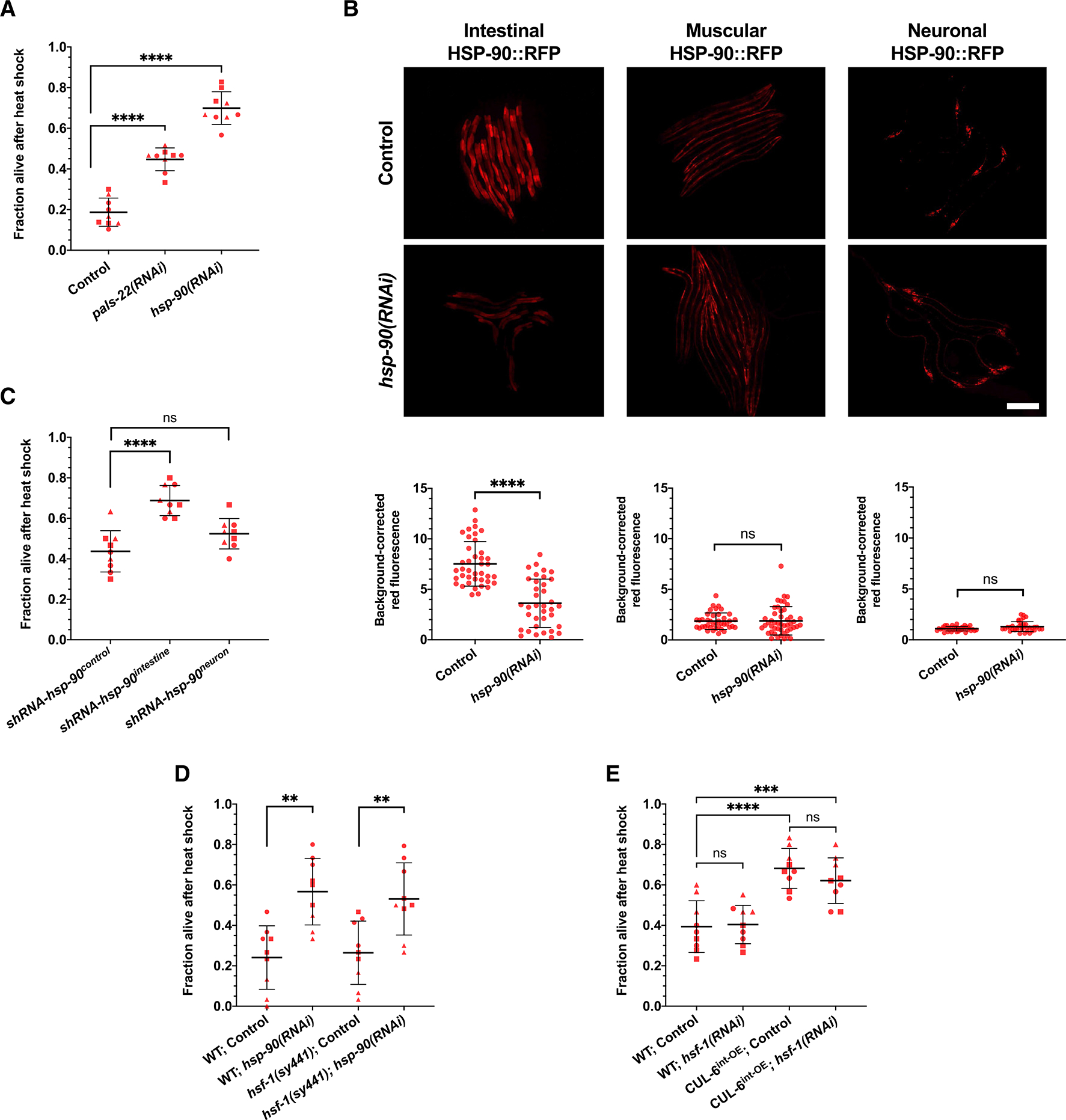
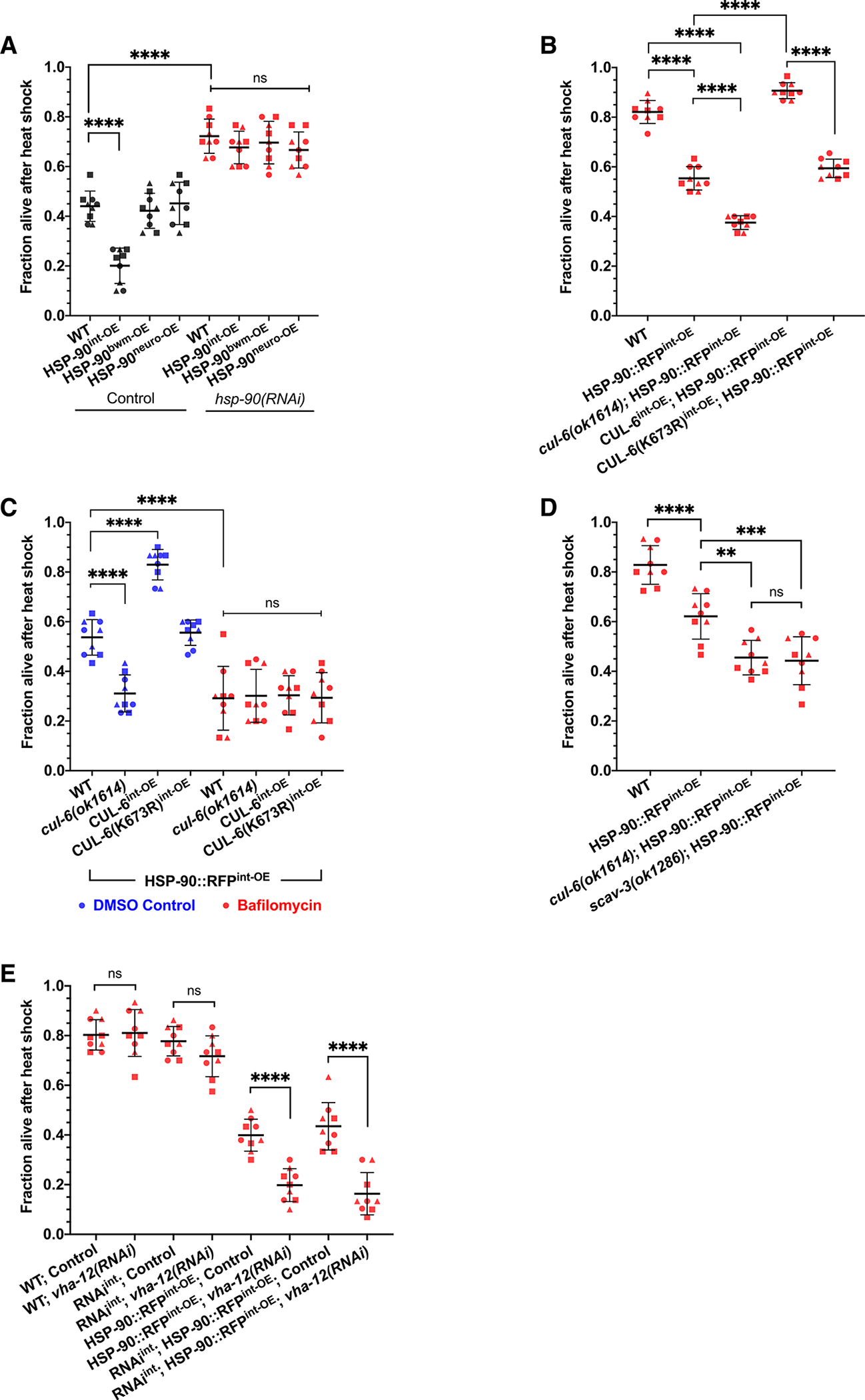
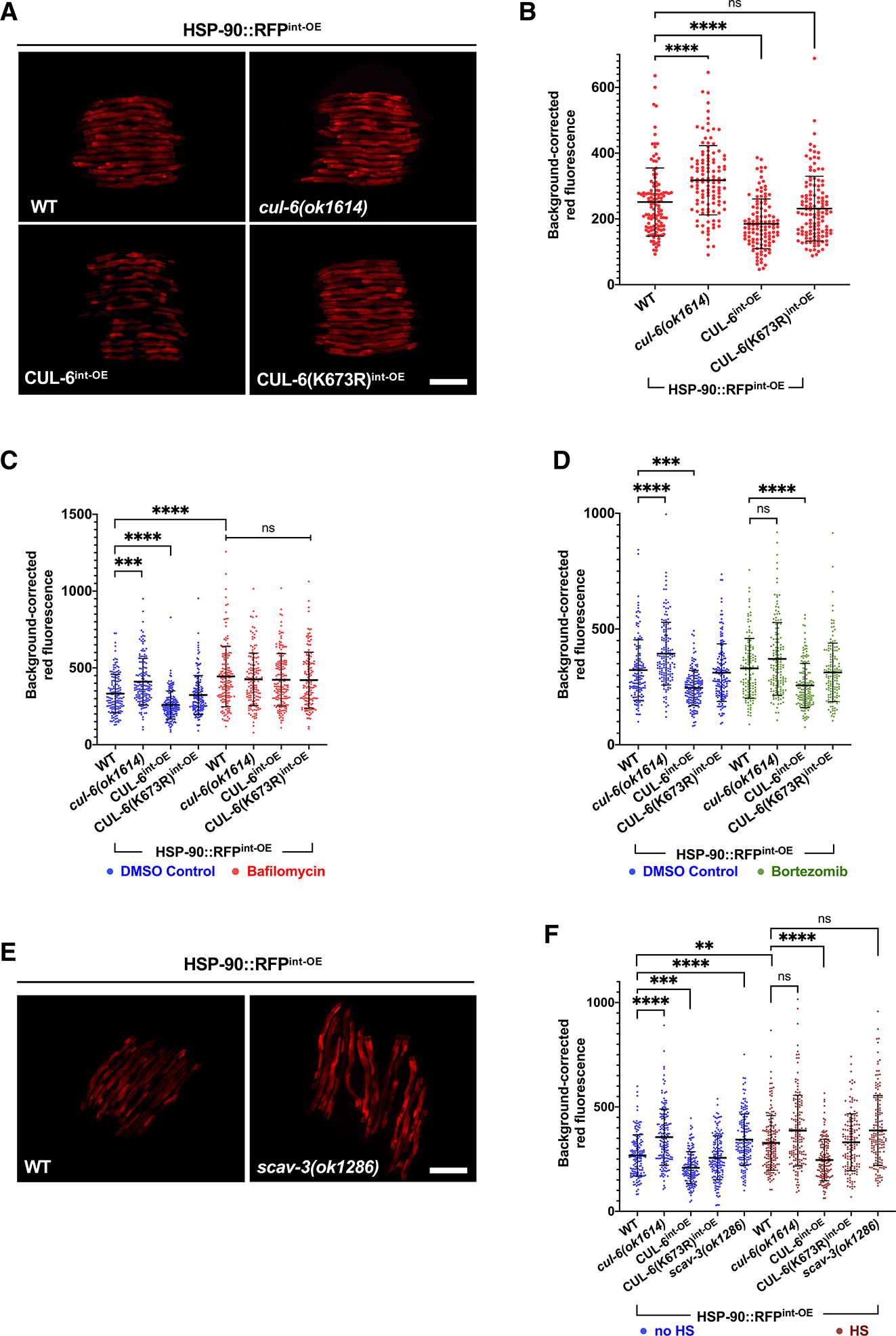
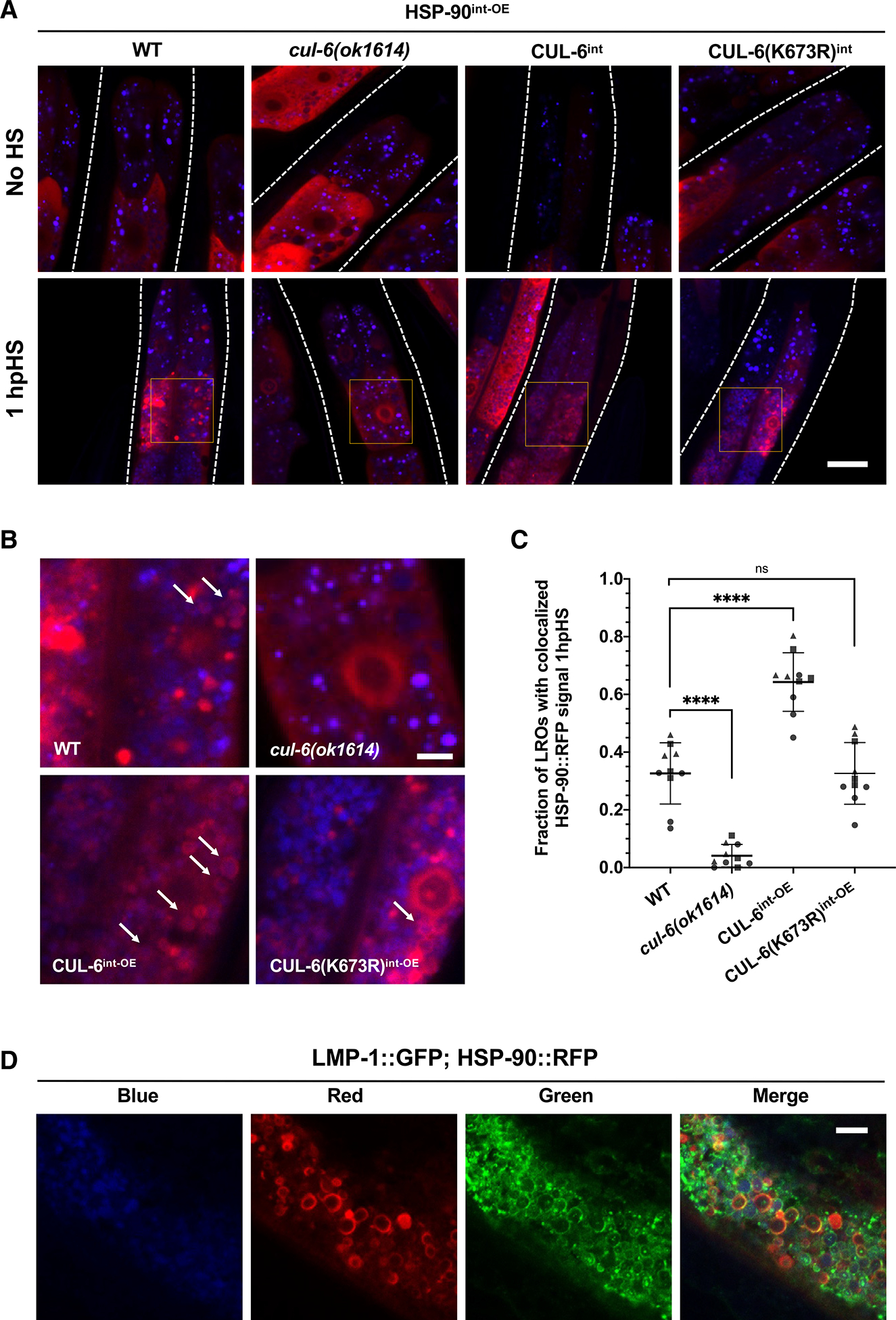
Heat shock can be a lethal stressor. Previously, we described a CUL-6/cullin-ring ubiquitin ligase complex in the nematode Caenorhabditis elegans that is induced by intracellular intestinal infection and proteotoxic stress and that promotes improved survival upon heat shock (thermotolerance). Here, we show that CUL-6 promotes thermotolerance by targeting the heat shock protein HSP-90 for degradation. We show that CUL-6-mediated lowering of HSP-90 protein levels, specifically in the intestine, improves thermotolerance. Furthermore, we show that lysosomal function is required for CUL-6-mediated promotion of thermotolerance and that CUL-6 directs HSP-90 to lysosome-related organelles upon heat shock. Altogether, these results indicate that a CUL-6 ubiquitin ligase promotes organismal survival upon heat shock by promoting HSP-90 degradation in intestinal lysosomes. Thus, HSP-90, a protein commonly associated with protection against heat shock and promoting degradation of other proteins, is itself degraded to protect against heat shock.
热休克可能是一种致命的应激源。之前,我们在秀丽隐杆线虫(Caenorhabditis elegans)中描述了一个 CUL-6/连接酶环泛素连接酶复合物,它可以被细胞内肠道感染和蛋白毒性应激诱导,并在热休克(耐热性)时促进提高存活率。在这里,我们发现 CUL-6 通过靶向热休克蛋白 HSP-90 进行降解来促进耐热性。我们发现 CUL-6 介导的 HSP-90 蛋白水平降低,特别是在肠道中,可提高耐热性。此外,我们发现溶酶体功能对于 CUL-6 介导的耐热性促进是必需的,并且 CUL-6 在热休克时将 HSP-90 导向溶酶体相关细胞器。总的来说,这些结果表明,CUL-6 泛素连接酶通过促进肠道溶酶体中 HSP-90 的降解,在热休克时促进生物体的存活。因此,通常与抵抗热休克和促进其他蛋白质降解有关的 HSP-90 蛋白本身被降解以抵抗热休克。