Newcastle University Biosciences Institute, Newcastle University, NE2 4HH, Newcastle-upon-Tyne, UK.
Institute of Environmental Science and Research, Wellington, New Zealand.
Nat Commun. 2024 May 25;15(1):4462. doi: 10.1038/s41467-024-48933-7.
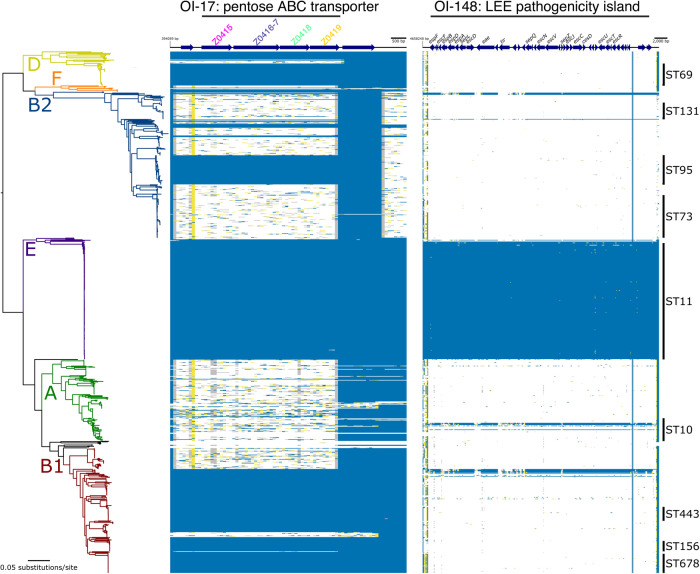
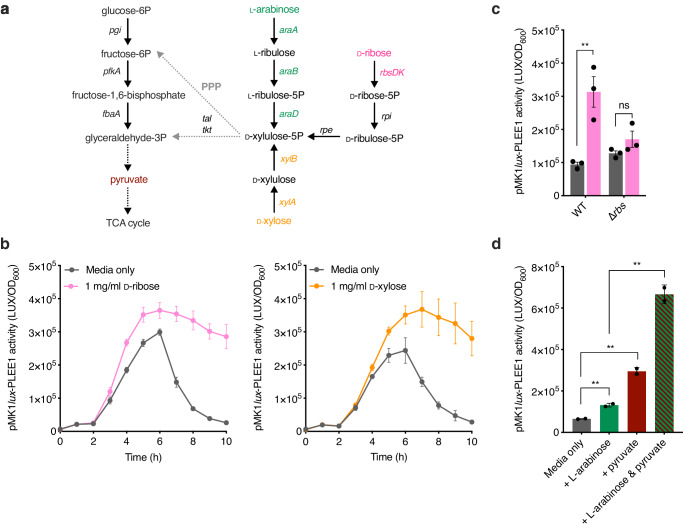
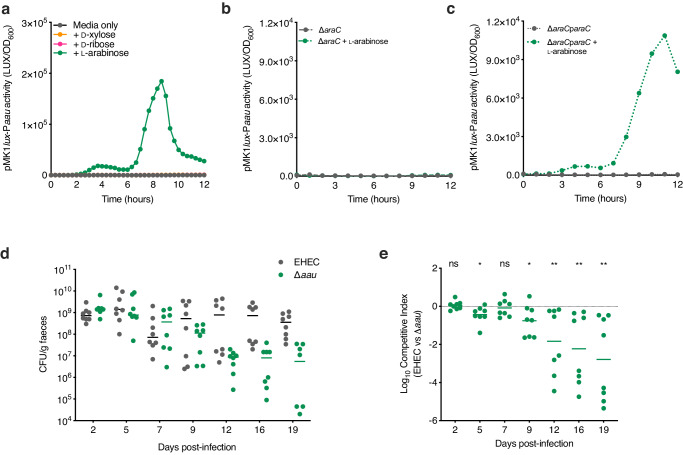
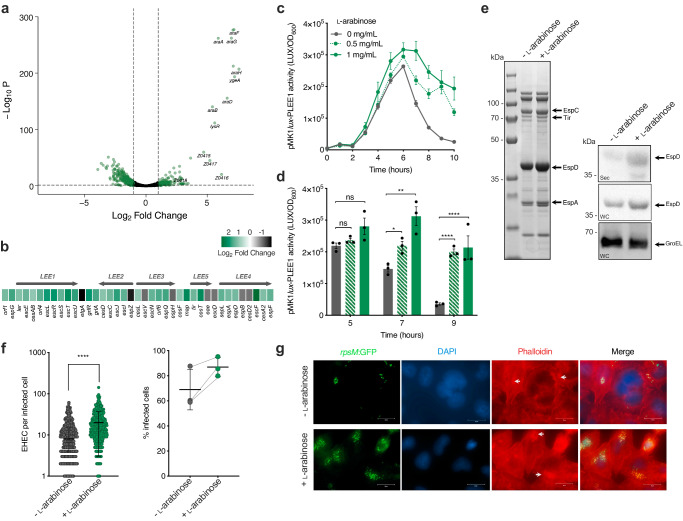
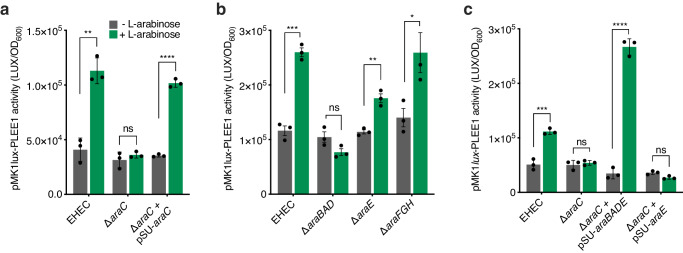
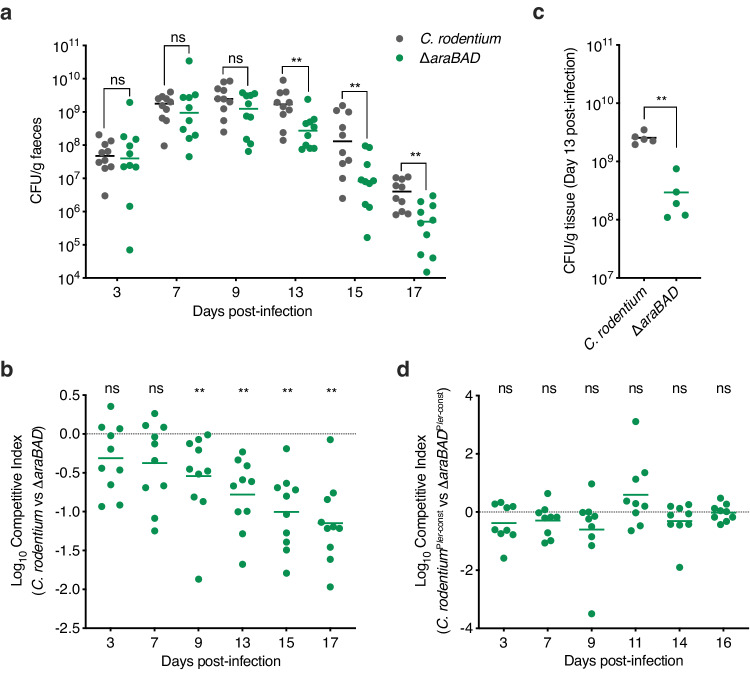
Virulence and metabolism are often interlinked to control the expression of essential colonisation factors in response to host-associated signals. Here, we identified an uncharacterised transporter of the dietary monosaccharide ʟ-arabinose that is widely encoded by the zoonotic pathogen enterohaemorrhagic Escherichia coli (EHEC), required for full competitive fitness in the mouse gut and highly expressed during human infection. Discovery of this transporter suggested that EHEC strains have an enhanced ability to scavenge ʟ-arabinose and therefore prompted us to investigate the impact of this nutrient on pathogenesis. Accordingly, we discovered that ʟ-arabinose enhances expression of the EHEC type 3 secretion system, increasing its ability to colonise host cells, and that the underlying mechanism is dependent on products of its catabolism rather than the sensing of ʟ-arabinose as a signal. Furthermore, using the murine pathogen Citrobacter rodentium, we show that ʟ-arabinose metabolism provides a fitness benefit during infection via virulence factor regulation, as opposed to supporting pathogen growth. Finally, we show that this mechanism is not restricted to ʟ-arabinose and extends to other pentose sugars with a similar metabolic fate. This work highlights the importance integrating central metabolism with virulence regulation in order to maximise competitive fitness of enteric pathogens within the host-niche.
毒力和代谢通常是相互关联的,以控制对宿主相关信号的必需定植因子的表达。在这里,我们鉴定了一种未被表征的膳食单糖 L-阿拉伯糖转运蛋白,它广泛存在于动物源性病原体肠出血性大肠杆菌(EHEC)中,是其在小鼠肠道中完全竞争适应所必需的,并且在人类感染期间高度表达。这种转运蛋白的发现表明,EHEC 菌株具有增强的摄取 L-阿拉伯糖的能力,因此促使我们研究这种营养物质对发病机制的影响。相应地,我们发现 L-阿拉伯糖增强了 EHEC 型 3 分泌系统的表达,从而增加了其定植宿主细胞的能力,而这种机制依赖于其分解代谢产物,而不是对 L-阿拉伯糖作为信号的感知。此外,我们使用鼠源病原体柠檬酸杆菌 rodentium 表明,L-阿拉伯糖代谢通过调节毒力因子在感染过程中提供适应性优势,而不是支持病原体生长。最后,我们表明,这种机制不仅限于 L-阿拉伯糖,而且扩展到其他具有相似代谢命运的戊糖。这项工作强调了将中心代谢与毒力调节相结合以最大化肠病原体在宿主生态位中的竞争适应性的重要性。