Nie Wenyang, Zhao Zhijie, Liu Yuhang, Wang Youcao, Zhang Jingwen, Hu Ying, Liu Yang, Wang Yong, Wang Zhen
Department of Cardiovascular Diseases, Affiliated Hospital of Shandong University of Traditional Chinese Medicine, 16369 Jing 10 Rd, Jinan 250000, China.
First Clinical Medical College, Shandong University of Traditional Chinese Medicine, 16369 Jing 10 Rd, Jinan 250000, China.
Cardiol Res Pract. 2024 May 18;2024:3131633. doi: 10.1155/2024/3131633. eCollection 2024.
Cardiomyopathy encompasses a broad spectrum of diseases affecting myocardial tissue, characterized clinically by abnormalities in cardiac structure, heart failure, and/or arrhythmias. Clinically heterogeneous, major types include dilated cardiomyopathy (DCM), hypertrophic cardiomyopathy (HCM), restrictive cardiomyopathy (RM), ischemic cardiomyopathy (ICM), among which DCM is more prevalent, while ICM exhibits higher incidence and mortality rates. Myocardial injury during cardiomyopathy progression may lead to myocardial fibrosis. Failure to intervene early and inhibit the process of myocardial fibrosis may culminate in heart failure. Cardiac fibroblasts constitute crucial cellular components determining the extent and quality of myocardial fibrosis, with various subpopulations exerting diverse roles in cardiomyopathy progression. Despite this, understanding of the cellular plasticity and transcriptional regulatory networks of cardiac fibroblasts in cardiomyopathy remains limited. Therefore, in this study, we conducted comprehensive single-cell analysis of cardiac fibroblasts in cardiomyopathy to explore differences in cellular plasticity and transcriptional regulatory networks among fibroblast subpopulations, with the aim of providing as many useful references as possible for the diagnosis, prognosis, and treatment of cardiomyopathy.
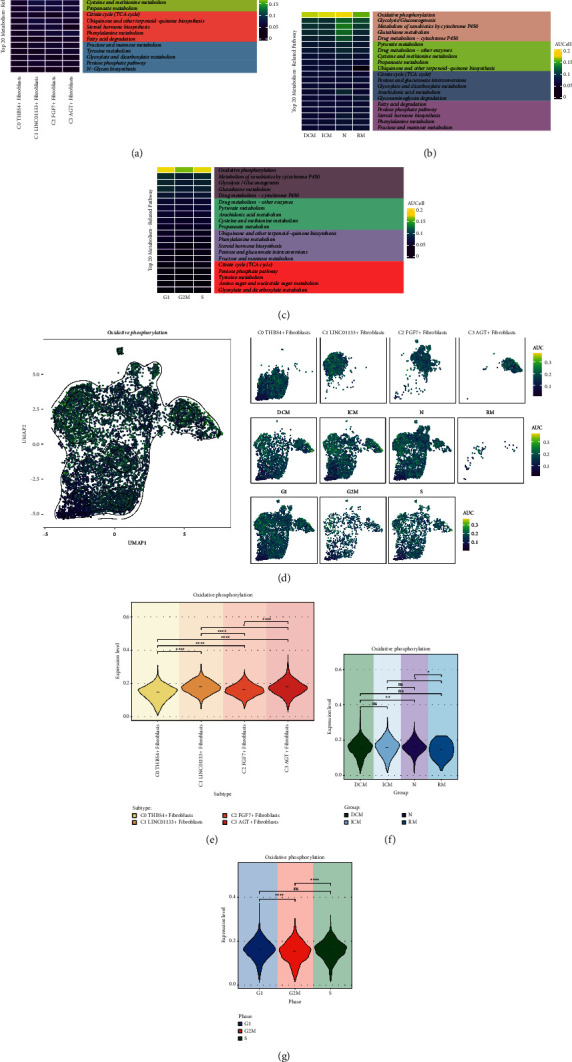
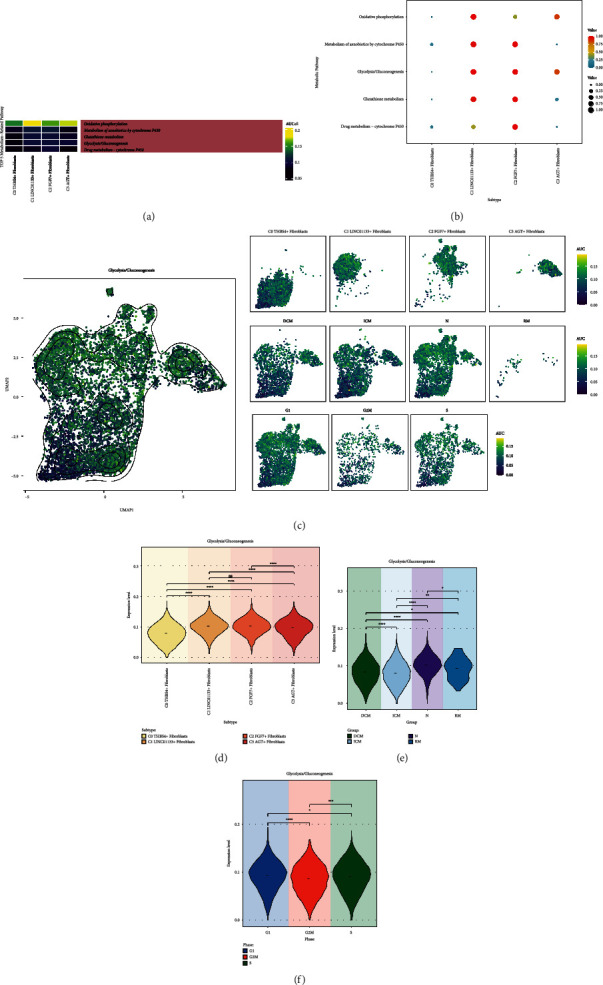
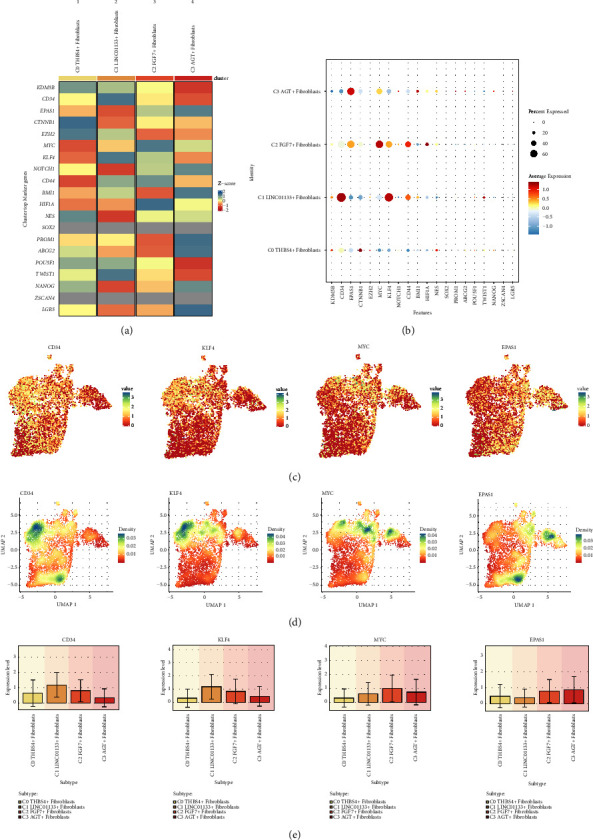
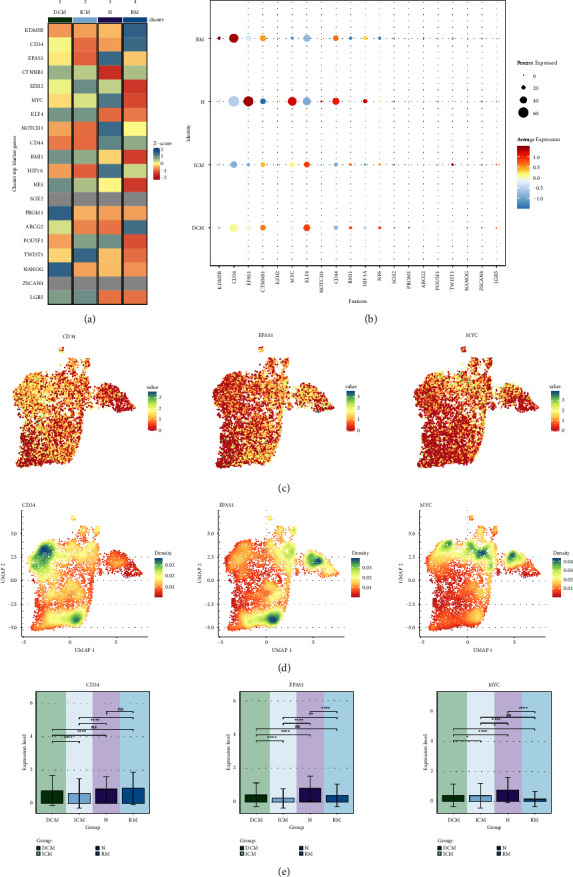
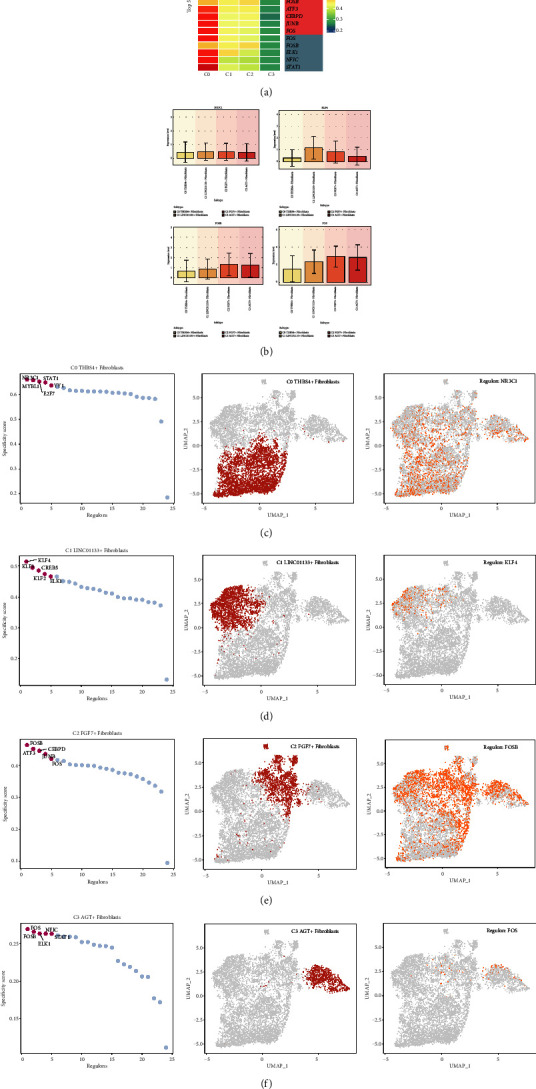
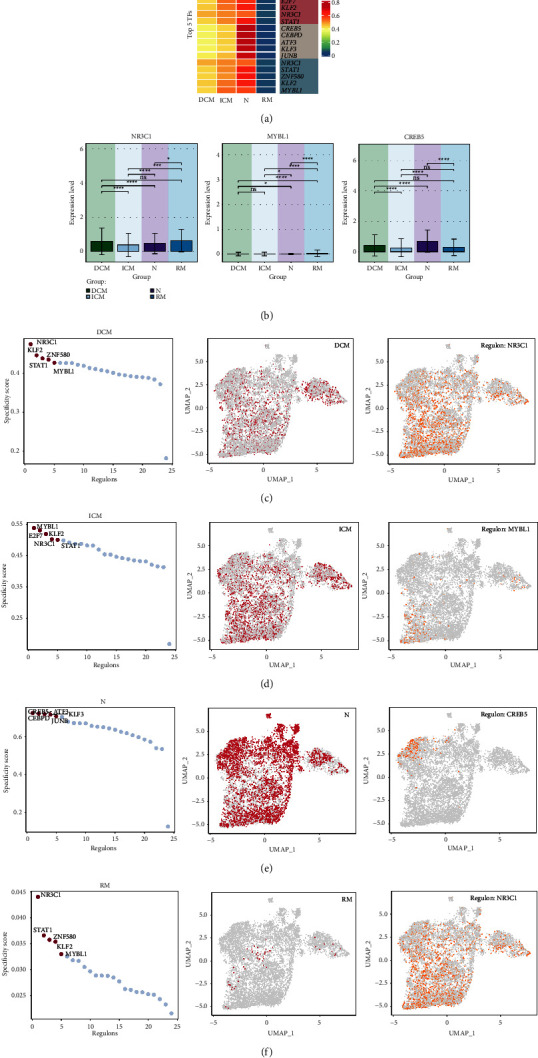
Cells with mitochondrial gene expression comprising >20% of total expressed genes were excluded. Differential expression genes (DEGs) and stemness genes within cardiac fibroblast subpopulations were subjected to Gene Ontology (GO) analysis of biological processes (BP) and AUCell analysis. Monocle software was employed to analyze the pseudo-temporal trajectory of cardiac fibroblasts in cardiomyopathy. Additionally, the Python package SCENIC was utilized to assess enrichment of transcription factors and activity of regulators within cardiac fibroblast subpopulations in cardiomyopathy.
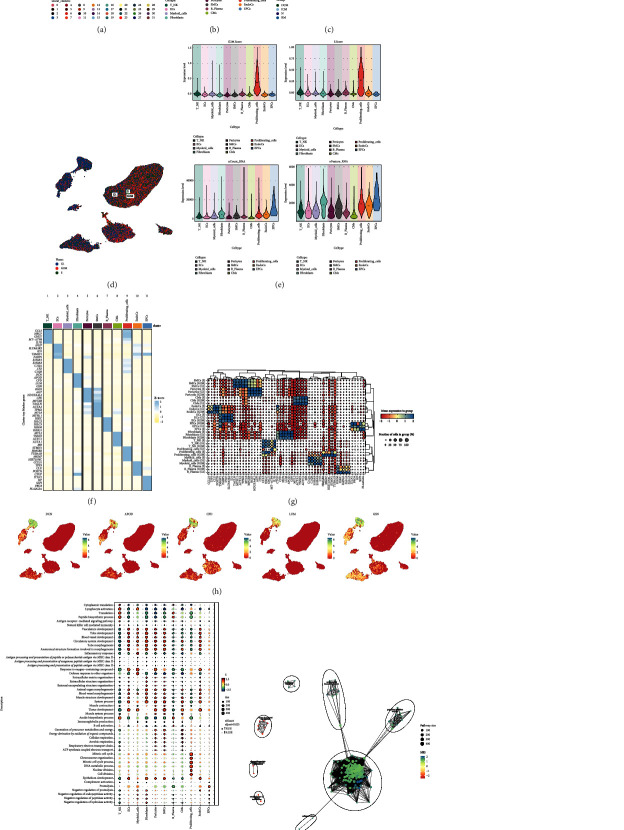
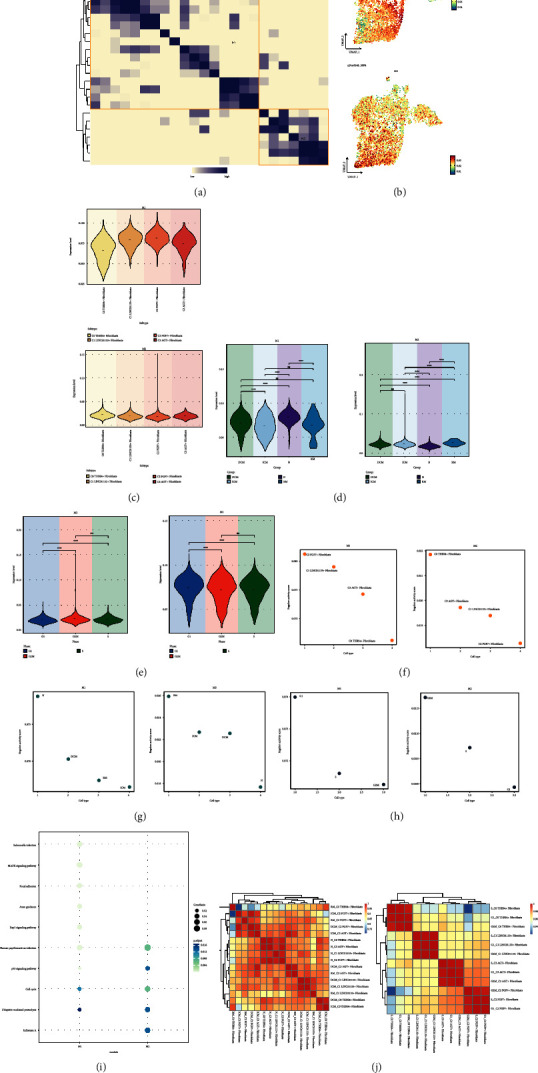
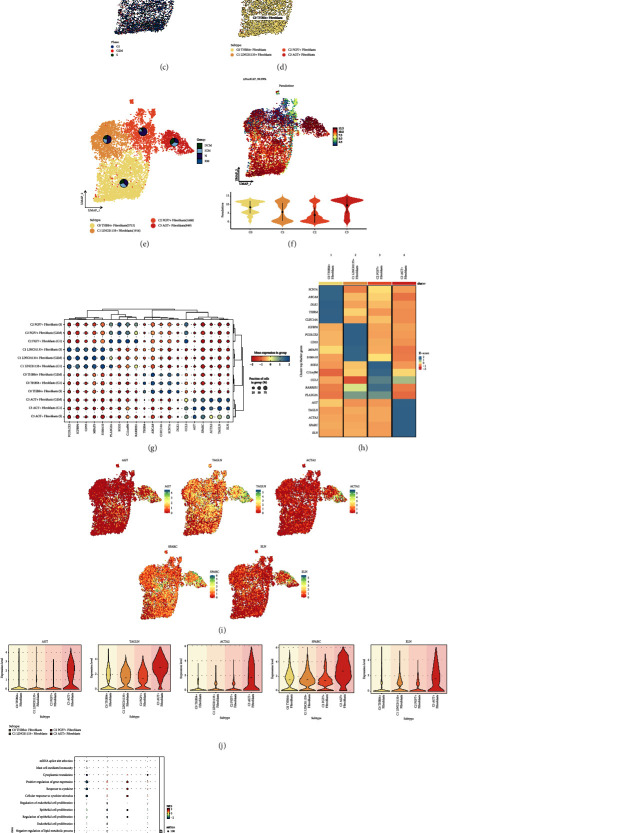
Following batch effect correction, 179,927 cells were clustered into 32 clusters, designated as T_NK cells, endothelial cells, myeloid cells, fibroblasts, pericytes, SMCs, CMs, proliferating cells, EndoCs, and EPCs. Among them, 8148 fibroblasts were further subdivided into 4 subpopulations, namely C0 THBS4+ Fibroblasts, C1 LINC01133+ Fibroblasts, C2 FGF7+ Fibroblasts, and C3 AGT + Fibroblasts. Results from GO_BP and AUCell analyses suggest that C3 AGT + Fibroblasts may be associated with immune response activation, protein transport, and myocardial contractile function, correlating with disease progression in cardiomyopathy. Transcription factor enrichment analysis indicates that FOS is the most significant TF in C3 AGT + Fibroblasts, also associated with the M1 module, possibly implicated in protein hydrolysis, intracellular DNA replication, and cell proliferation. Moreover, correlation analysis of transcriptional regulatory activity between fibroblast subpopulations reveals a more pronounced heterogeneity within C3 AGT + Fibroblasts in cardiomyopathy.
C3 AGT + Fibroblasts exhibit increased sensitivity towards adverse outcomes in cardiomyopathy, such as myocardial fibrosis and impaired cardiac contractile function, compared to other cardiac fibroblast subpopulations. The differential cellular plasticity and transcriptional regulatory activity between C3 AGT + Fibroblasts and other subgroups offer new perspectives for targeting fibroblast subpopulation activity to treat cardiomyopathy. Additionally, stemness genes EPAS1 and MYC, along with the regulator FOS, may play roles in modulating the biological processes of cardiac fibroblasts in cardiomyopathy.
心肌病涵盖了一系列影响心肌组织的疾病,临床特征为心脏结构异常、心力衰竭和/或心律失常。临床上具有异质性,主要类型包括扩张型心肌病(DCM)、肥厚型心肌病(HCM)、限制型心肌病(RM)、缺血性心肌病(ICM),其中DCM更为常见,而ICM的发病率和死亡率更高。心肌病进展过程中的心肌损伤可能导致心肌纤维化。未能早期干预并抑制心肌纤维化过程可能最终导致心力衰竭。心脏成纤维细胞是决定心肌纤维化程度和质量的关键细胞成分,不同亚群在心肌病进展中发挥着不同作用。尽管如此,对心肌病中心脏成纤维细胞的细胞可塑性和转录调控网络的了解仍然有限。因此,在本研究中,我们对心肌病中的心脏成纤维细胞进行了全面的单细胞分析,以探索成纤维细胞亚群之间在细胞可塑性和转录调控网络方面的差异,旨在为心肌病的诊断、预后和治疗提供尽可能多的有用参考。
排除线粒体基因表达占总表达基因>20%的细胞。对心脏成纤维细胞亚群内的差异表达基因(DEGs)和干性基因进行生物学过程(BP)的基因本体(GO)分析和AUCell分析。使用Monocle软件分析心肌病中心脏成纤维细胞的拟时间轨迹。此外,利用Python包SCENIC评估心肌病中心脏成纤维细胞亚群内转录因子的富集和调控因子的活性。
经过批次效应校正后,179,927个细胞聚为32个簇,分别命名为T_NK细胞、内皮细胞、髓样细胞、成纤维细胞、周细胞、平滑肌细胞、心肌细胞、增殖细胞、内皮祖细胞和内皮集落形成细胞。其中,8148个成纤维细胞进一步细分为4个亚群,即C0 THBS4+成纤维细胞、C1 LINC01133+成纤维细胞、C2 FGF7+成纤维细胞和C3 AGT+成纤维细胞。GO_BP和AUCell分析结果表明,C3 AGT+成纤维细胞可能与免疫反应激活、蛋白质转运和心肌收缩功能相关,与心肌病的疾病进展相关。转录因子富集分析表明,FOS是C3 AGT+成纤维细胞中最显著的转录因子,也与M1模块相关,可能参与蛋白质水解、细胞内DNA复制和细胞增殖。此外,成纤维细胞亚群之间转录调控活性的相关性分析显示,心肌病中C3 AGT+成纤维细胞内的异质性更为明显。
与其他心脏成纤维细胞亚群相比,C3 AGT+成纤维细胞对心肌病中的不良结局,如心肌纤维化和心脏收缩功能受损,表现出更高的敏感性。C3 AGT+成纤维细胞与其他亚群之间不同的细胞可塑性和转录调控活性为靶向成纤维细胞亚群活性治疗心肌病提供了新的视角。此外,干性基因EPAS1和MYC以及调控因子FOS可能在调节心肌病中心脏成纤维细胞的生物学过程中发挥作用。