DeGue Sarah, Singleton Robyn, Kearns Megan
Division of Violence Prevention, National Center for Injury Prevention and Control, Centers for Disease Control and Prevention.
Banyan Communications, Inc.
Psychol Men Masc. 2023 Oct 5;25(2):152-164. doi: 10.1037/men0000450.
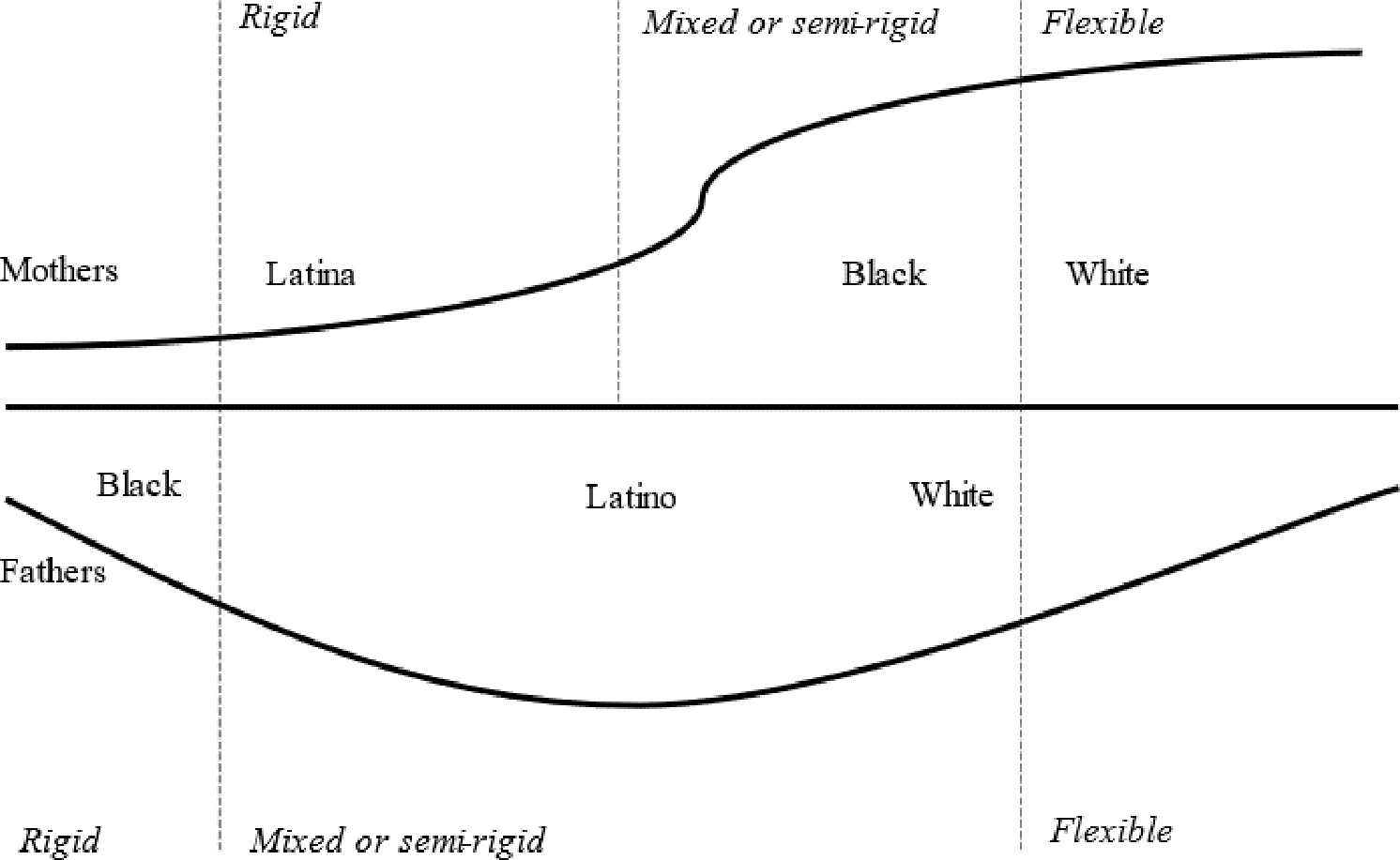
Internalization of culturally dominant masculine gender role norms can have harmful impacts on the physical and emotional health of men and boys. Although parents play an important role in influencing gender-related beliefs in their children, limited research has examined how contemporary parents conceptualize masculinity and their role in gender socialization. The current study conducted 13 focus groups with Black, Latino, and White parents ( = 83) of school-age boys from rural and urban areas in a large southeastern state in the US. Parent beliefs about masculinity existed across a spectrum from "rigid" (representing narrow, culturally dominant masculine norms) to "flexible" (defining a broader set of behaviors and attitudes as masculine). In general, more flexible beliefs were expressed by mothers than fathers, and by White than Black and Latino parents. Most parents reacted positively to messages about potential harms associated with restrictive masculinity norms; however, many saw these issues primarily as parenting challenges (e.g., teaching boys to resist negative peer influences) rather than related to gender socialization. Some unique themes also emerged within racial/ethnic groups, with Black parents noting the impact of racial discrimination on societal expectations for Black men and fathers, and Latino parents describing generational shifts towards more equitable gender role attitudes and parenting practices. These findings highlight the need for more complex and nuanced messages about masculinity norms and their relationship to health and well-being and can help inform the development of interventions to promote healthy masculine gender socialization, increase health equity, and prevent injury and violence.
文化上占主导地位的男性性别角色规范的内化会对男性和男孩的身心健康产生有害影响。尽管父母在影响孩子的性别相关观念方面发挥着重要作用,但仅有有限的研究探讨了当代父母如何理解男子气概以及他们在性别社会化中的角色。本研究在美国东南部一个大州的农村和城市地区,对黑人、拉丁裔和白人父母(共83人)进行了13次焦点小组访谈,这些父母均有学龄男孩。父母对男子气概的看法存在一个范围,从“刻板”(代表狭隘的、文化上占主导地位的男性规范)到“灵活”(将更广泛的一系列行为和态度定义为男性化)。总体而言,母亲比父亲表达了更灵活的观念,白人父母比黑人和拉丁裔父母表达了更灵活的观念。大多数父母对与限制性男性规范相关的潜在危害信息持积极态度;然而许多人主要将这些问题视为育儿挑战(例如,教导男孩抵制负面的同伴影响),而非与性别社会化相关。在不同种族/族裔群体中也出现了一些独特的主题,黑人父母指出种族歧视对社会对黑人男性和父亲期望的影响,拉丁裔父母描述了代际向更平等的性别角色态度和育儿方式的转变。这些发现凸显了需要关于男性规范及其与健康和幸福关系的更复杂、更细致入微的信息,并有助于为促进健康的男性性别社会化、提高健康公平性以及预防伤害和暴力的干预措施的制定提供参考。