Rare Tumors and Melanoma Unit, IRCCS Istituto Tumori Giovanni Paolo II, Bari, Italy.
Pathology Unit, IRCCS Istituto Tumori Giovanni Paolo II, Bari, Italy.
Front Immunol. 2024 May 10;15:1369531. doi: 10.3389/fimmu.2024.1369531. eCollection 2024.
Desmoplastic melanoma (DM) is a rare subtype of melanoma characterized by high immunogenicity which makes it particularly suitable for immune checkpoint inhibitors (ICIs) treatment.
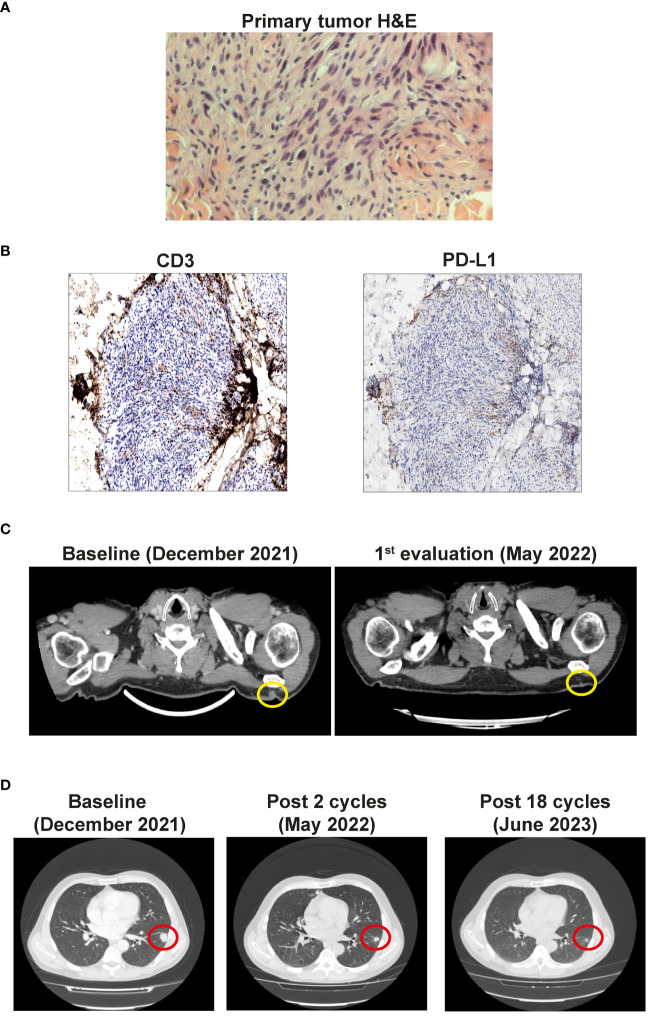
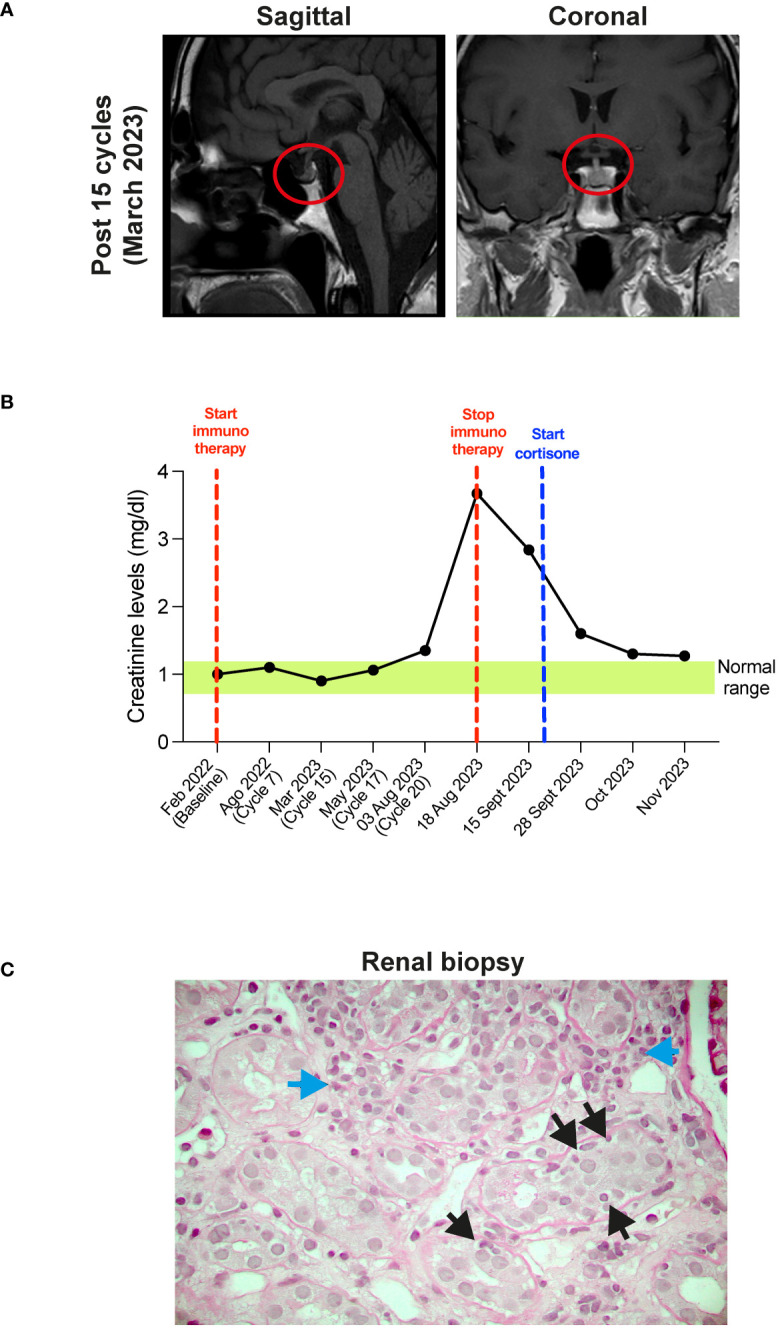
We report the case of a 53-year-old man with metastatic DM successfully treated with the combination of anti-CTLA-4 and anti-PD-1 antibodies, who developed serious immune-related adverse events (irAEs). The primary tumor was characterized by absent PD-L1 expression and no-brisk lymphocytes infiltration. NGS showed absence of BRAF mutation, a high tumor mutational burden, and an UV-induced DNA damage signature. Metastatic lesions regressed rapidly after few cycles of ICIs until complete response, however the patient developed serious irAEs including hypothyroidism, adrenal deficiency, and acute interstitial nephritis which led to the definitive suspension of treatment. Currently, the patient has normal renal functionality and no disease relapse after 26 months from starting immunotherapy, and after 9 months from its definitive suspension.
Efficacy and toxicity are two sides of the same coin of high sensitivity to ICIs in DM. For this reason, these patients should be closely monitored during ICIs therapy to promptly identify serious side effects and to correctly manage them.
促结缔组织增生性黑色素瘤(DM)是一种罕见的黑色素瘤亚型,其特点是高免疫原性,使其特别适合免疫检查点抑制剂(ICI)治疗。
我们报告了一例 53 岁男性转移性 DM 患者的病例,该患者成功接受了抗 CTLA-4 和抗 PD-1 抗体联合治疗,出现了严重的免疫相关不良事件(irAEs)。原发肿瘤的特点是 PD-L1 表达缺失和无风险淋巴细胞浸润。NGS 显示无 BRAF 突变、高肿瘤突变负担和紫外线诱导的 DNA 损伤特征。ICIs 治疗几个周期后,转移性病变迅速消退,直至完全缓解,但患者出现严重的 irAEs,包括甲状腺功能减退、肾上腺功能不全和急性间质性肾炎,导致治疗最终停止。目前,该患者肾功能正常,免疫治疗开始后 26 个月无疾病复发,治疗停止后 9 个月无疾病复发。
在 DM 中,对 ICI 的高敏感性既是疗效的体现,也是毒性的体现。因此,在 ICI 治疗期间应密切监测这些患者,以便及时发现严重的副作用,并正确处理。