School of Medicine, Baylor College of Medicine, Houston, TX, USA.
Baylor Global Health, Houston, TX, USA.
Ann Glob Health. 2024 May 20;90(1):31. doi: 10.5334/aogh.3930. eCollection 2024.
The Gambia has the 12 highest maternal mortality rate in the world, with 80% of deaths resulting from avoidable causes. Unawareness of pregnancy danger signs (DS) has been shown to be a barrier to seeking obstetric care, while app-based education intervention has shown promise.
We aim to assess patient awareness of DS, identify barriers to awareness, and evaluate potential for implementing smartphone-based technologies for education.
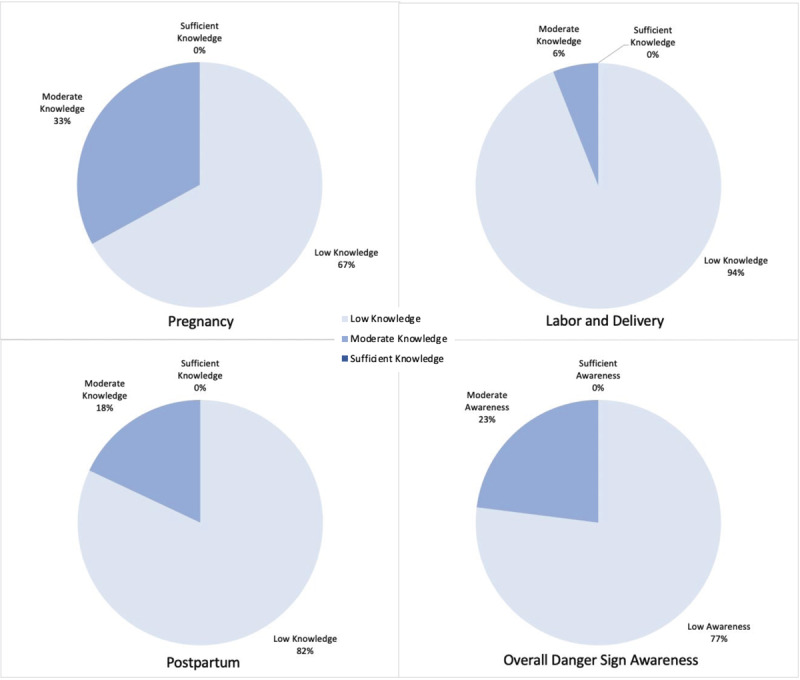
A cross-sectional semi-structured survey was administered to Gambian women (n = 100) across five hospitals/health centers. Data and informed consent were collected via an online survey portal. Analysis included bivariate analysis and descriptive statistics with p < 0.05 significance level. Recall of 0-2 DS per category was classified as "low" knowledge, 3-5 as "moderate" knowledge, and 6+ as "sufficient" knowledge. Cross-category recall was quantified for overall awareness level (0-6 = "low", 7-12 = "moderate", 13+ = "sufficient". N = 28 total DS).
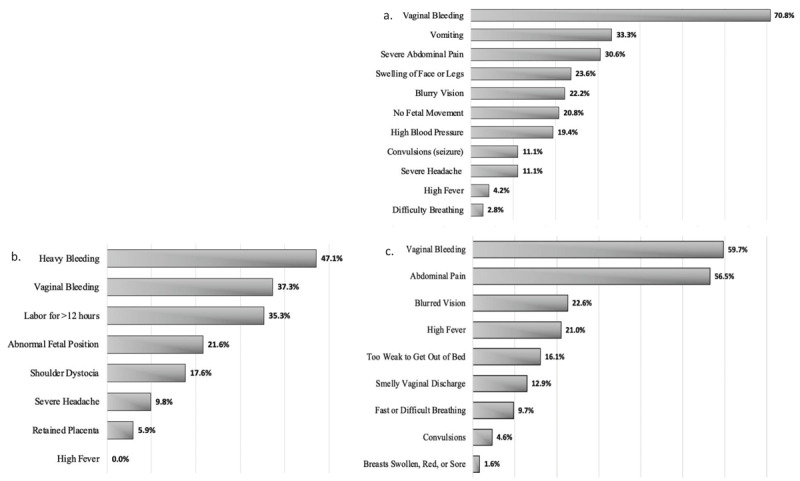
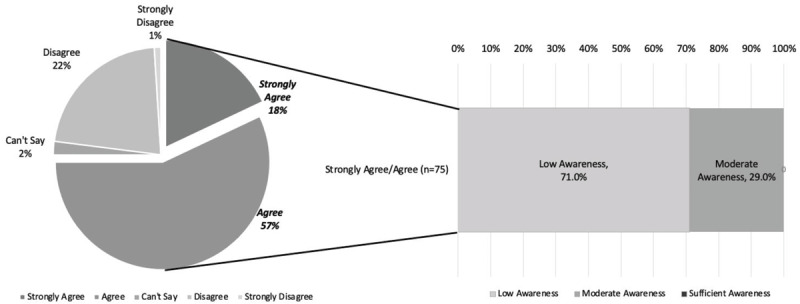
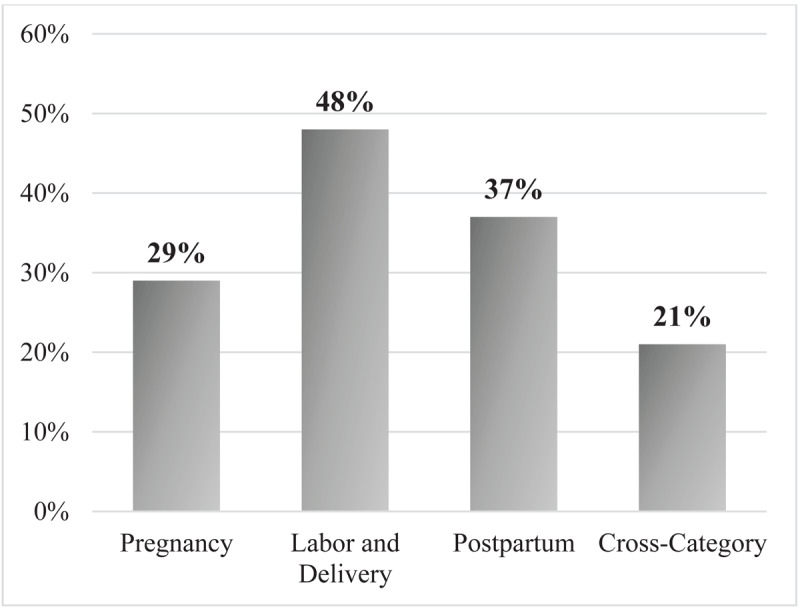
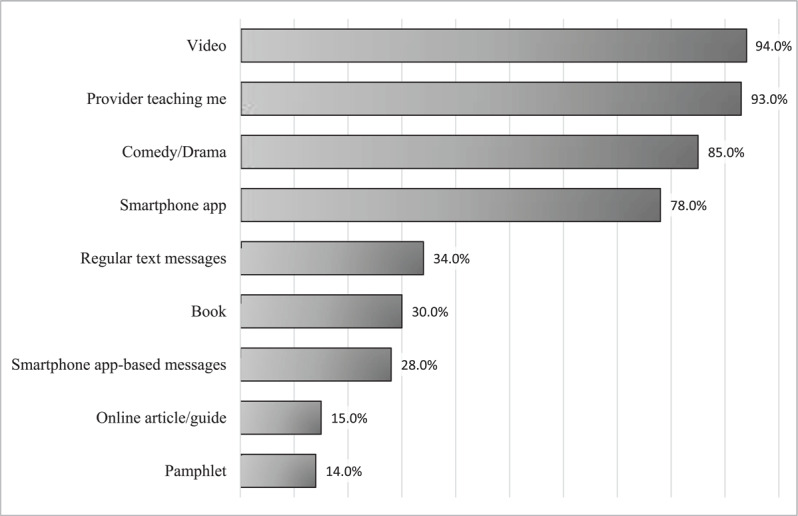
Although 75% of participants (n = 100) self-perceived "sufficient" knowledge of DS, the average recall was only two (SD = 2, n = 11) pregnancy DS, one labor and delivery DS (SD = 1, n = 8), and one postpartum DS (SD = 1, n = 9). Twenty-one women were unable to recall any danger signs. "Low" awareness was identified in 77% of women, while 23%, and 0% of women showed "moderate" and "sufficient" overall awareness, respectively. Education level was significantly correlated with overall danger sign recall (ρ(98) = .243, p = .015) and awareness level (ρ(98) = .265, p = .008). Monthly income was significantly correlated with awareness level (ρ(97) = .311, p = .002). Smartphone ownership was reported by 76% of women, and 97% expressed interest in using app-based video (94%) or provider (93%) teaching.
Women had low knowledge of obstetric danger signs, and true awareness of danger signs was remarkably lower than self-perceived knowledge. However, patients exhibited proper healthcare-seeking behavior when danger signs arose. Findings suggest that video- or messaging-based education from local healthcare providers may be effective DS educational interventions.
冈比亚的孕产妇死亡率位居世界第 12 位,其中 80%的死亡是可以避免的。对妊娠危险信号(DS)的认识不足已被证明是寻求产科护理的障碍,而基于应用程序的教育干预已显示出前景。
我们旨在评估患者对 DS 的认识,确定认识障碍,并评估为教育实施基于智能手机的技术的潜力。
对冈比亚的 100 名妇女在五家医院/保健中心进行了横断面半结构式调查。通过在线调查门户收集数据和知情同意书。分析包括双变量分析和描述性统计,p 值<0.05。每个类别中回忆 0-2 个 DS 被归类为“低”知识,3-5 个被归类为“中等”知识,6 个以上被归类为“足够”知识。跨类别回忆用于量化整体意识水平(0-6 =“低”,7-12 =“中等”,13+ =“足够”)。共有 28 个 DS(总计 28 个 DS)。
尽管 75%的参与者(n=100)自我评估对 DS 的“足够”认识,但平均回忆只有两个(SD=2,n=11)妊娠 DS,一个分娩和分娩 DS(SD=1,n=8),一个产后 DS(SD=1,n=9)。21 名妇女无法回忆起任何危险信号。77%的妇女意识“低”,而 23%和 0%的妇女分别表现出“中等”和“足够”的整体意识。教育水平与整体危险信号回忆(ρ(98)=。243,p=。015)和意识水平(ρ(98)=。265,p=。008)显著相关。月收入与意识水平显著相关(ρ(97)=。311,p=。002)。76%的妇女报告拥有智能手机,97%的妇女对使用基于视频的应用程序(94%)或提供者(93%)教学表示感兴趣。
妇女对产科危险信号的认识较低,对危险信号的真正认识明显低于自我认知的知识。但是,当出现危险信号时,患者表现出适当的寻求医疗保健的行为。研究结果表明,来自当地医疗保健提供者的基于视频或消息的教育可能是有效的 DS 教育干预措施。