Weill Cornell Medicine-Qatar, Qatar Foundation, Education City, Doha, 24144, Qatar.
Vegetative Anatomy, Institute of Anatomy, Faculty of Medicine, LMU Munich, Pettenkoferstr. 11, D-80336, Munich, Germany.
Cancer Metastasis Rev. 2024 Dec;43(4):1297-1314. doi: 10.1007/s10555-024-10192-9. Epub 2024 May 27.
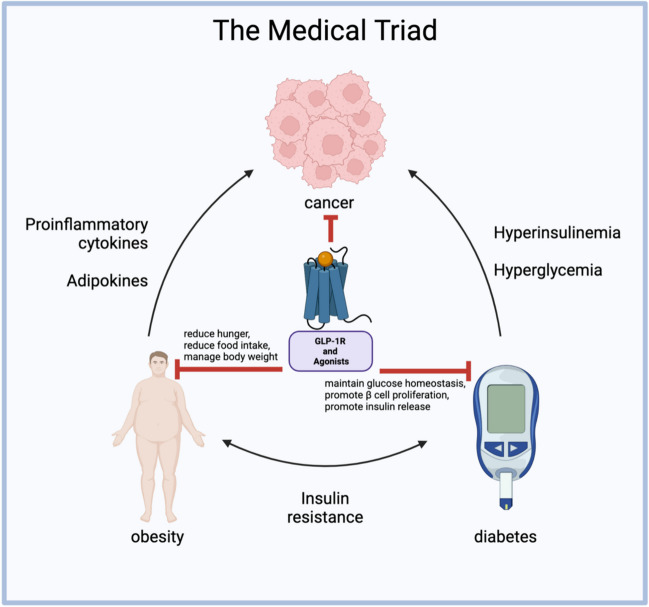
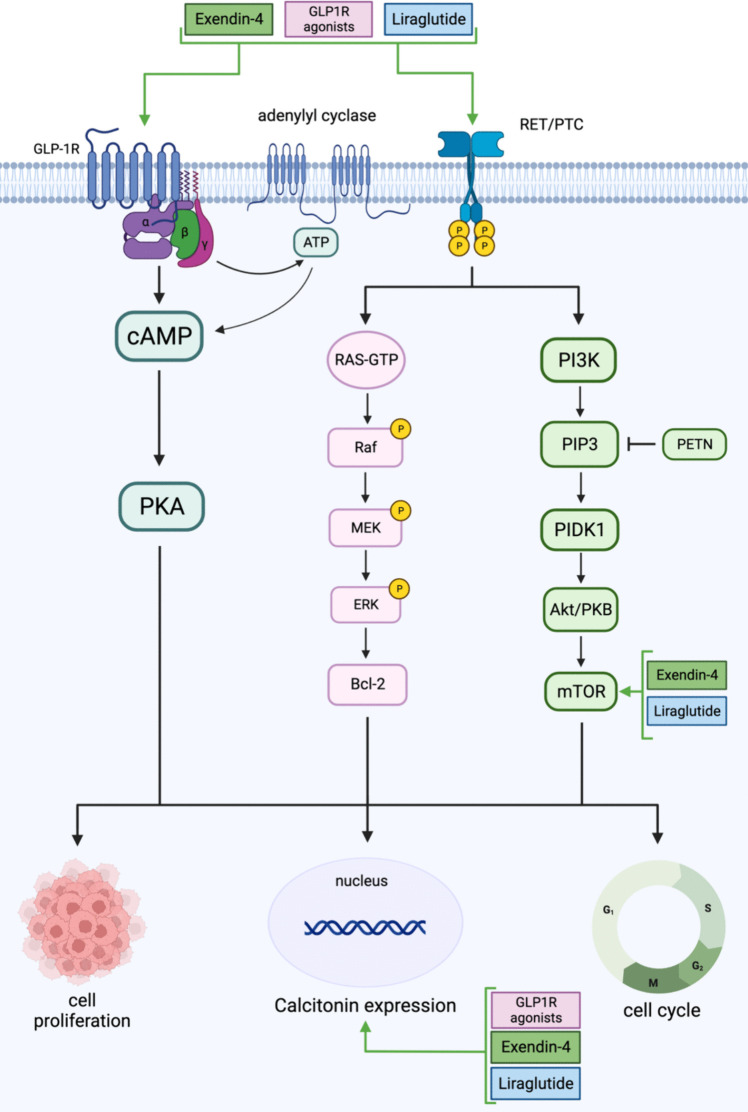
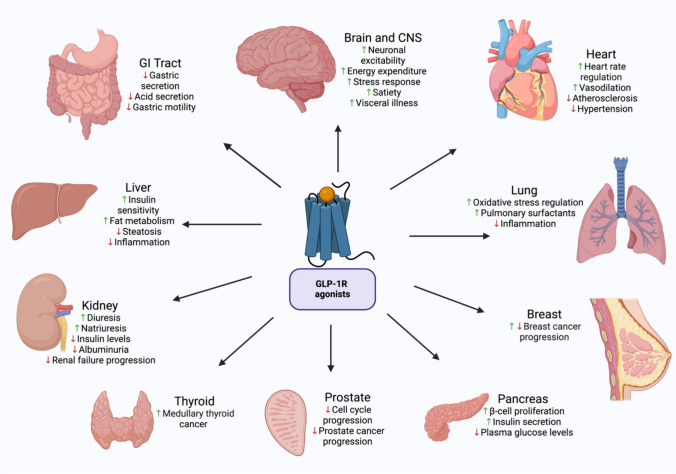
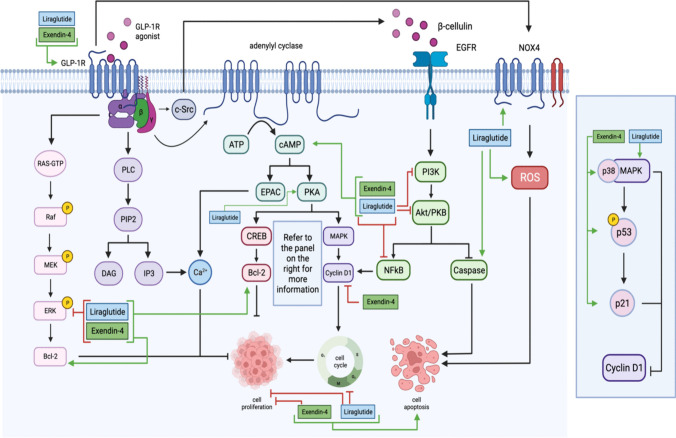
Glucagon-like peptide-1 receptor (GLP-1R) agonists have garnered significant attention for their therapeutic potential in addressing the interconnected health challenges of diabetes, obesity, and cancer. The role of GLP-1R in type 2 diabetes mellitus (T2DM) is highlighted, emphasizing its pivotal contribution to glucose homeostasis, promoting β-cell proliferation, and facilitating insulin release. GLP-1R agonists have effectively managed obesity by reducing hunger, moderating food intake, and regulating body weight. Beyond diabetes and obesity, GLP-1R agonists exhibit a multifaceted impact on cancer progression across various malignancies. The mechanisms underlying these effects involve the modulation of signaling pathways associated with cell growth, survival, and metabolism. However, the current literature reveals a lack of in vivo studies on specific GLP-1R agonists such as semaglutide, necessitating further research to elucidate its precise mechanisms and effects, particularly in cancer. While other GLP-1R agonists have shown promising outcomes in mitigating cancer progression, the association between some GLP-1R agonists and an increased risk of cancer remains a topic requiring more profound investigation. This calls for more extensive research to unravel the intricate relationships between the GLP-1R agonist and different cancers, providing valuable insights for clinicians and researchers alike.
胰高血糖素样肽-1 受体 (GLP-1R) 激动剂因其在解决糖尿病、肥胖症和癌症等相互关联的健康挑战方面的治疗潜力而备受关注。GLP-1R 在 2 型糖尿病 (T2DM) 中的作用得到强调,其对葡萄糖稳态的关键贡献、促进β细胞增殖和促进胰岛素释放。GLP-1R 激动剂通过减少饥饿感、调节食物摄入和控制体重,有效地治疗了肥胖症。除了糖尿病和肥胖症,GLP-1R 激动剂对多种恶性肿瘤的癌症进展也具有多方面的影响。这些作用的机制涉及与细胞生长、存活和代谢相关的信号通路的调节。然而,目前的文献表明,缺乏关于特定 GLP-1R 激动剂(如司美格鲁肽)的体内研究,需要进一步研究以阐明其确切的机制和作用,特别是在癌症方面。虽然其他 GLP-1R 激动剂在减轻癌症进展方面显示出了有希望的结果,但一些 GLP-1R 激动剂与癌症风险增加之间的关联仍然是一个需要更深入研究的主题。这需要更广泛的研究来揭示 GLP-1R 激动剂与不同癌症之间的复杂关系,为临床医生和研究人员提供有价值的见解。